


Equestrian Rubber Boots: Practical Strengths & Drawbacks for Riding and Casual Use
Aug 13, 2026
View: 0
Leave a message
Meta Description: This article delves into the practical strengths and drawbacks of equestrian rubber boots, exploring diverse product knowledge, materials, and processes. It serves riders and casual users seeking guidance on rubber boot selection, usage, and maintenance. Professional Rain Boot Manufacturer offers insights to help you make informed decisions.
Keywords: Equestrian Boots, Rubber Boots, Boot Materials, Boot Maintenance, Riding Boots
1. Core Problem Analysis
1.1 Common Causes of the Problem
When it comes to equestrian rubber boots, users may encounter several issues. One common problem is the lack of proper fit. If the boots are too tight, they can restrict blood circulation and cause discomfort or even injury to the feet. On the other hand, if they are too loose, they may not provide adequate support during riding, increasing the risk of slipping out of the stirrups. Another issue is durability. Equestrian activities can be rough on boots, and if the rubber material is of low quality or the manufacturing process is sub - standard, the boots may tear, crack, or develop leaks over time. Additionally, foot odor can be a problem, especially if the boots do not have proper ventilation, as sweat can accumulate inside the boots.
1.2 Affected Usage Scenarios
The problems associated with equestrian rubber boots can affect various usage scenarios. For riders, whether they are engaging in leisurely trail rides or competitive events like horse shows or racing, ill - fitting or low - quality boots can significantly impact their performance and safety. In a casual setting, such as when handling horses in the stable or during light agricultural work around the equestrian facility, users may also face discomfort or a reduced lifespan of the boots. For example, in a muddy stable environment, poor - quality boots may quickly let in water, making the feet wet and cold, which is both uncomfortable and a potential health hazard.
2. Product and Process Principle
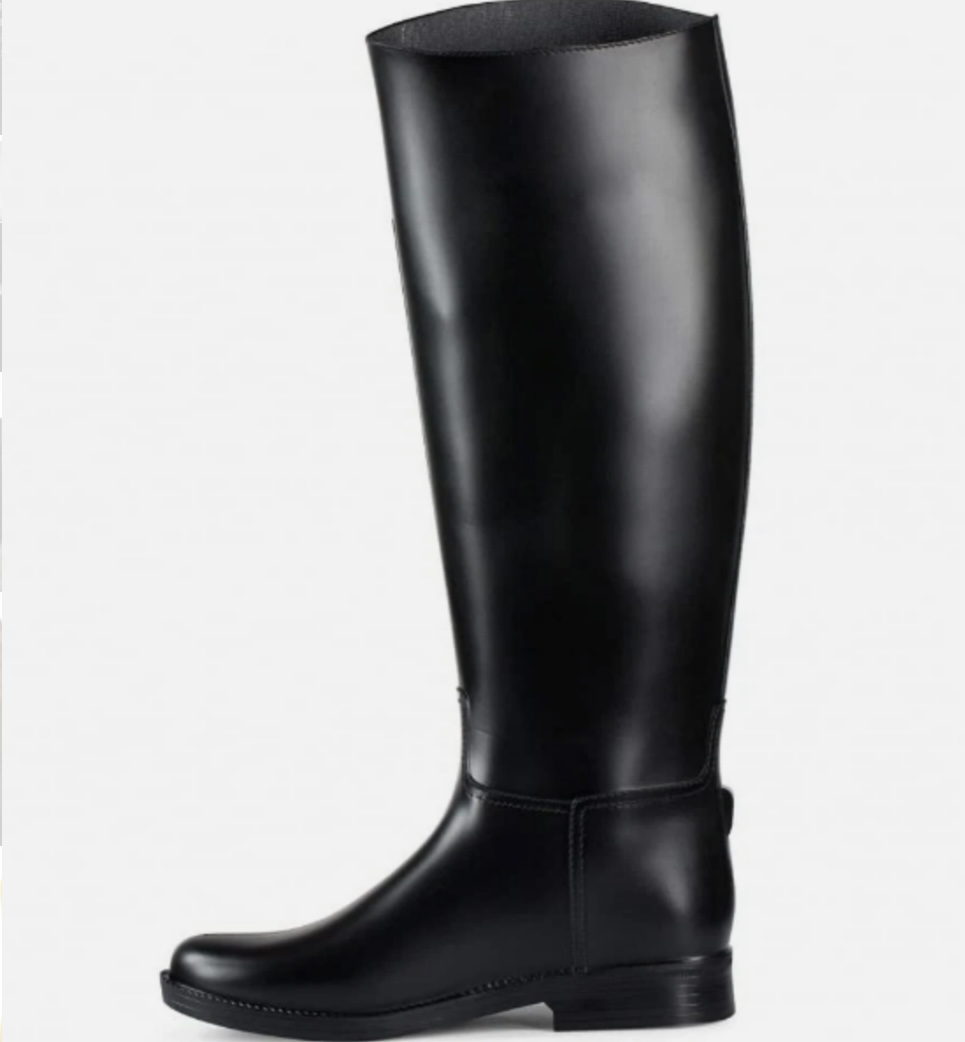
Equestrian rubber boots are typically made from a variety of materials, with natural rubber and synthetic polymers being the most common. Natural rubber is harvested from the latex of rubber trees, mainly in tropical regions like Thailand and Indonesia [6]. It is known for its excellent elasticity and flexibility, which allows the boots to conform to the shape of the foot and provide a comfortable fit for long - term wear. After the latex is collected, it undergoes a series of processes, including coagulation, drying, and shaping, to form the base material for the boots [6].
Synthetic materials such as polyvinyl chloride (PVC) are also widely used. PVC is a cost - effective alternative to natural rubber. It is derived from petrochemicals and can be highly customized. By adding additives like plasticizers, manufacturers can make PVC boots softer and more flexible. Other additives can enhance its resistance to chemicals, making it suitable for specific industrial or agricultural applications around the equestrian area [3].
In terms of manufacturing processes, there are several methods. One common process is injection molding, which is often used for PVC boots. In injection molding, the molten material is injected into a mold under high pressure. This process is highly efficient and suitable for mass - production, ensuring consistent quality across a large number of boots. Another important process is vulcanization, mainly used for natural rubber boots. Vulcanization involves heating the rubber with sulfur, which cross - links the rubber molecules, making the material more durable, resistant to heat, and less likely to deform. Professional Rain Boot Manufacturer can use these processes to ensure the quality and performance of the equestrian rubber boots.
3. Practical Solutions and Operation Steps
When choosing equestrian rubber boots, consider the following steps:
- Material selection: If you prioritize comfort and long - term use, natural rubber boots are a good choice due to their elasticity and flexibility. However, if cost is a major concern or you need boots with high chemical resistance, PVC boots may be more suitable [3, 6].
- Shaft height: For riding, a higher shaft is generally better as it provides more protection to the lower legs from rubbing against the saddle and also keeps dirt and water out. A shaft that reaches just below the knee is a common and practical height for most riders [8].
- Sole pattern: Look for boots with a deep and intricate sole pattern. A good sole pattern provides better traction on various surfaces, such as wet grass, muddy ground, or stable floors, reducing the risk of slipping [8].
- Lining: A breathable lining, such as cotton or a moisture - wicking fabric, can help keep your feet dry and reduce odor. Some boots also have a padded lining for added comfort [3].
- Size selection: Measure your feet accurately and refer to the manufacturer's size chart. It's important to try on the boots if possible, as different brands may fit slightly differently. Make sure there is enough room for your toes to move freely, but the boots should also fit snugly around the heel and ankle to provide support [1].
- Cleaning: After each use, remove any dirt or mud from the boots using a soft brush or cloth. For more stubborn stains, you can use a mild soap and water solution. Avoid using harsh chemicals or abrasive cleaners, as they can damage the rubber material [4].
- Storage: Store the boots in a cool, dry place away from direct sunlight. You can stuff the boots with newspaper to help them keep their shape. Avoid storing them in a compressed or folded position, as this can cause the rubber to crack or deform over time [4].
4. Daily Maintenance and Precautions
Proper daily maintenance of equestrian rubber boots is crucial to ensure their longevity and performance. Here are some tips:
- Cleaning: Regularly clean the boots after use to prevent dirt and grime from building up. As mentioned before, use a soft brush or cloth and a mild soap solution. Rinse the boots thoroughly and let them air - dry naturally. Avoid using a dryer or placing them near a heat source, as this can cause the rubber to shrink or crack [4].
- Drying: Make sure the boots are completely dry before storing them. If they are wet, moisture can cause mold and mildew to grow, which not only damages the boots but also creates an unpleasant odor. You can stuff the boots with newspaper to absorb excess moisture and help them dry faster [4].
- Deodorizing: To reduce foot odor, you can sprinkle baking soda inside the boots or use a specialized boot deodorizer. Leave it overnight and then shake out the powder in the morning [4].
- Anti - aging: Protect the boots from prolonged exposure to sunlight, as UV rays can cause the rubber to deteriorate and become brittle over time. You can apply a rubber protectant or conditioner to help keep the rubber soft and supple [4].
- Anti - deformation: As mentioned, store the boots in a way that maintains their shape. Avoid stacking heavy objects on top of them. If the boots start to lose their shape, you can use a boot tree to help restore it [4].
- Low - temperature storage: In cold weather, make sure to store the boots in a place where the temperature does not drop below freezing for an extended period. Some rubber materials can become stiff and crack in extremely cold conditions [4].
- Handling chemicals: If the boots come into contact with chemicals, rinse them immediately with plenty of water. Some chemicals can damage the rubber, so it's important to take prompt action. Do not use regular rubber boots in situations where safety - certified boots are required, such as in industrial settings with specific safety hazards [4].
5. Industry Standard and Parameter Reference
Here is a table of important industry standards and parameters related to equestrian rubber boots:
ParameterRecommended ReferenceWhy It MattersSlip resistanceEN ISO 20344:2021 / EN ISO 20347:2022+A1:2024 where applicableHelps evaluate outsole grip on wet or contaminated surfaces, which is crucial for rider safety in various equestrian environments.Occupational footwear requirementsISO 20347:2021 or EN ISO 20347:2022+A1:2024Supports non - safety occupational footwear selection, which can be relevant for individuals working around horses in a professional capacity.Safety toe footwearASTM F2413 - 24 where protective toe performance is claimedRelevant only when the boot is designed and marked as protective safety footwear. In some equestrian activities, there may be a risk of foot injury from heavy objects, so this standard can be important.Chemical protective footwearEN 13832 - 3:2018 where prolonged chemical contact is claimedUseful for chemical degradation and permeation evaluation, especially in situations where the boots may come into contact with cleaning agents or other chemicals in the equestrian facility.
It's important to note that these standards are based on international recognized testing methods and provide a reliable way to evaluate the performance of equestrian rubber boots.
6. Customer Common FAQ
Q: How do I choose the right material for equestrian rubber boots?
A: If you want maximum comfort and flexibility for long - term wearing, natural rubber is a great option. However, if you are on a budget or need chemical - resistant boots, PVC or other synthetic materials would be more suitable. Professional Rain Boot Manufacturer can offer more detailed advice based on your specific needs.
Q: Are equestrian rubber boots slip - resistant?
A: Slip resistance depends on the sole design and material of the boots. Look for boots that meet the EN ISO 20344:2021 / EN ISO 20347:2022+A1:2024 standards for slip resistance. A deep and well - designed sole pattern also enhances traction on wet or muddy surfaces.
Q: How do I know if the boots fit me properly?
A: Measure your feet accurately and compare with the manufacturer's size chart. When trying on the boots, make sure there is enough space for your toes to move, and the boots fit snugly around the heel and ankle. You should be able to walk comfortably without the boots slipping off or feeling too tight.
Q: Why do my equestrian rubber boots have a strong odor?
A: The odor may be due to sweat accumulation inside the boots, especially if they lack proper ventilation. You can try using a boot deodorizer or sprinkling baking soda inside the boots to reduce the smell. Also, make sure to dry the boots thoroughly after each use.
Q: Can I use my equestrian rubber boots in cold weather?
A: It depends on the material of the boots. Natural rubber boots generally perform well in cold weather, but some synthetic materials may become stiff and crack. If you plan to use the boots in cold conditions, look for boots with a good cold - resistance rating or take extra care to store them properly in a warm place when not in use.
Conclusion
In conclusion, equestrian rubber boots offer both practical strengths and drawbacks. Understanding the core problems such as fit, durability, and odor, as well as the product and process principles, is essential for making an informed choice. By following the practical solutions for selection, usage, and maintenance, you can ensure that your boots serve you well in various equestrian and casual scenarios. Professional Rain Boot Manufacturer can provide valuable insights and guidance to help you select the right boots and maintain them properly.
References
- Hua Hongyun. A Processing Method for Rain Boots Combining Rubber Vulcanization and PU Injection Molding: China, CN119458997A[P]. 18 Feb. 2025.
- Current Market Data Analysis and Prospect Forecast Report for China Men’s Rain Boot Industry (2026 and the Next Five Years)[R]. 2026.
- Uncovering Rain Boot Manufacturing Processes: Technical Comparison Between Injection Molding and Hand Sewing[J]. 13 Sep. 2025.
- What Are the Primary Raw Materials for Rubber Rain Boots? Analysis of Natural Rubber and Synthetic Rubber[J]. 10 Feb. 2026.
- Market Development Analysis, Prospect Trend and Investment Research Report on China Rubber Rain Shoe Industry, 2026–2030[R]. 2025.
- In rainy seasons or specific working environments in 2026, a reliable pair of rain boots is far more than basic waterproof footwear[J]. 24 Jun. 2026.