


High Shaft Knee-Length Men’s Latex Work Boots: Deep Water Mud Protection & Durable Industrial Performance for Field Workwear Procurers
Aug 13, 2026
View: 0
Leave a message
Meta Description: This article focuses on men's knee-high latex boots, analyzing common problems in use, such as leakage and poor foot - feel. It explains the material and manufacturing process of these boots, and provides practical selection and maintenance suggestions. The content is suitable for field workwear procurers and those in need of high - performance rain boots. Professional Rain Boot Manufacturer.
Keywords: Men knee - high latex boots, rain boots, rubber boots, latex material, boot maintenance
1. Core Problem Analysis
1.1 Common Causes of the Problem
When users search for men's knee - high latex boots, they often aim to solve several key problems. Leakage is a frequent issue. This can occur if the latex material has small holes or cracks, which may be caused by improper use or long - term wear and tear. For instance, if the boots are used in an environment with sharp objects, the latex can be easily punctured. Another problem is foot - feel discomfort. Latex boots may feel stuffy, especially during long - term wear. This is because latex has relatively poor breathability, and sweat cannot be effectively discharged, leading to a hot and humid environment inside the boots. Additionally, the foot may feel cramped if the boots are not of the right size. Incorrect sizing can also cause blisters and calluses on the feet, affecting the user's experience and work efficiency.
Another common problem is related to the durability of the boots. The latex material may age over time, resulting in reduced elasticity and increased brittleness. Factors such as exposure to sunlight, high temperatures, and chemicals can accelerate this aging process. In some cases, the soles may wear out quickly, especially if the boots are used in rough or abrasive environments. For example, working on rocky or uneven terrain can cause the soles to lose their grip and become thinner.
1.2 Affected Usage Scenarios
These problems can significantly affect various usage scenarios. In farming, knee - high latex boots are often used to protect feet from mud, water, and pesticides. However, if the boots leak or are uncomfortable, farmers may experience foot problems, and the pesticides may come into contact with their skin, posing a health risk. In fishing, fishermen need boots that can withstand long - term immersion in water. Leaky boots can make their feet wet and cold, reducing their comfort and potentially leading to health problems such as frostbite.
For those engaged in muddy outdoor work, such as construction or road maintenance, the durability of the boots is crucial. Worn - out soles can lead to slipping, increasing the risk of accidents. In food processing, the hygienic requirements are high. Uncomfortable boots may cause workers to move around more than necessary, increasing the risk of cross - contamination. Rainy commuting is another scenario. People need boots that are not only waterproof but also comfortable to wear for long periods, so that they can move around easily during their commute.
2. Product and Process Principle
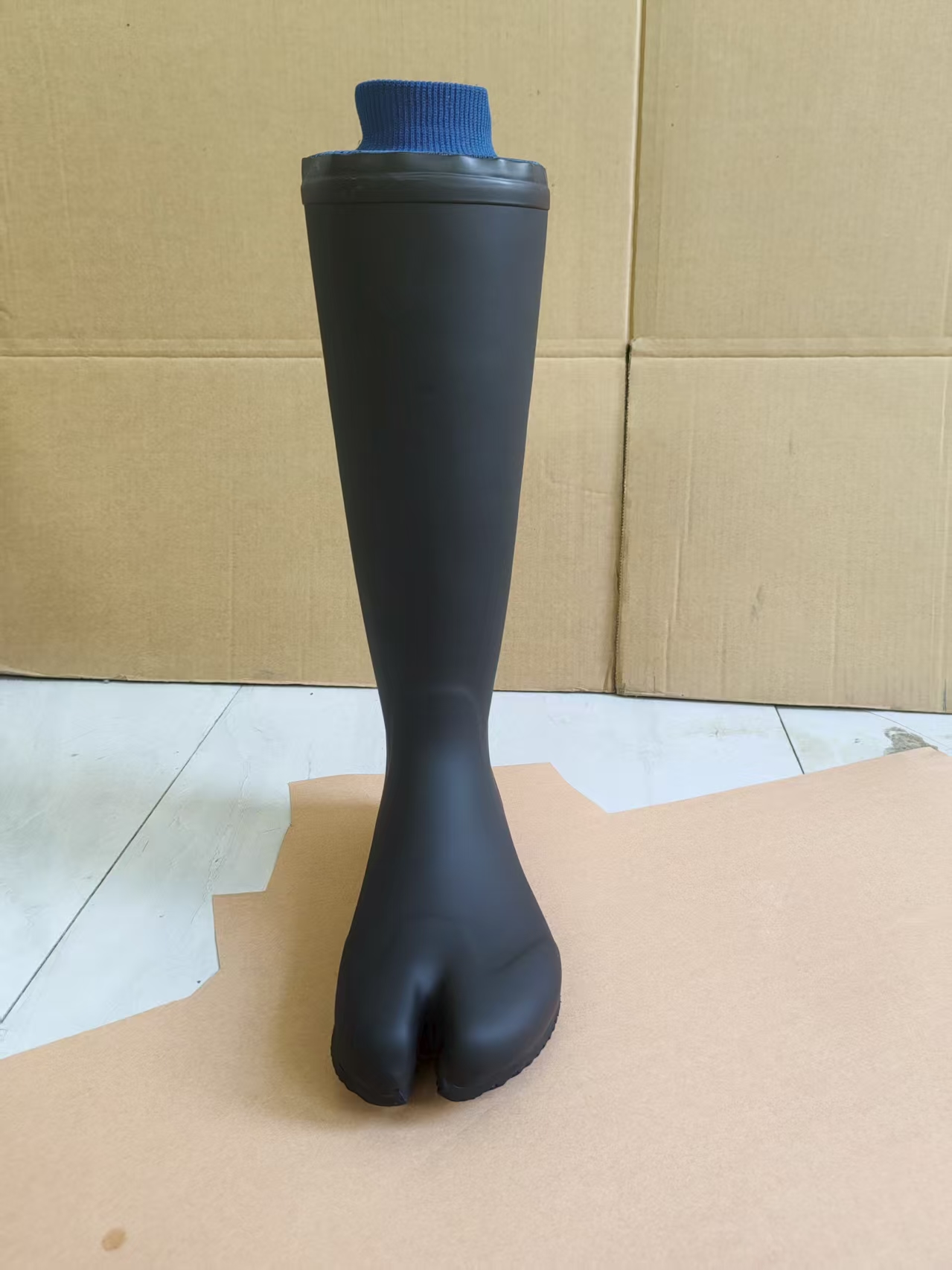
Men's knee - high latex boots are mainly made of latex, a material with excellent elasticity and waterproofness. Latex is a natural polymer, and its molecular structure is relatively dense, which can effectively prevent water from penetrating. The manufacturing process of latex boots usually starts with the preparation of raw materials. The latex needs to be treated with various additives, such as sulfur for vulcanization, which can improve the strength and durability of the latex. Vulcanization is a crucial step in the production of latex boots. During vulcanization, the latex is heated in the presence of sulfur or other vulcanizing agents. This process causes the latex molecules to cross - link, forming a three - dimensional network structure. As a result, the boots become more resistant to wear, tear, and aging.
The shaft height of knee - high boots is designed to provide protection up to the knee, which is suitable for wading through deep water or mud. The lining of the boots can be made of different materials, such as fabric or synthetic fibers. The lining helps to improve the comfort of the boots by absorbing sweat and reducing friction between the foot and the latex. Some high - end latex boots may also have a special treatment on the lining to enhance its antibacterial and odor - control properties.
As a Professional Rain Boot Manufacturer, understanding these materials and processes is essential for producing high - quality products. The selection of the right latex and additives, as well as the control of the vulcanization process, can have a significant impact on the performance of the boots.
3. Practical Solutions and Operation Steps
When choosing men's knee - high latex boots, the following steps and suggestions can be followed. First, consider the material. High - quality latex is the key to good performance. You can check the product description or ask the manufacturer about the origin and quality of the latex. Generally, natural latex from regions with good rubber - growing conditions is preferred. It is more likely to have better elasticity and durability. Second, pay attention to the shaft height. A knee - high design is suitable for most deep - water and muddy scenarios, but if you need to wade through even deeper water, you may choose boots with a higher shaft.
The sole pattern is also important. For environments with a high risk of slipping, such as wet or muddy surfaces, boots with a deep and complex sole pattern are recommended. These patterns can increase friction and provide better grip. When it comes to the lining, choose a lining material that is comfortable and breathable, such as cotton or moisture - wicking synthetic fibers. This can help keep your feet dry and comfortable during long - term wear.
In terms of sizing, it is crucial to measure your feet accurately. Try on the boots if possible, and make sure there is enough room for your toes to move freely. Do not choose boots that are too tight, as this can lead to discomfort and foot problems. Also, consider the thickness of the boots. Thicker boots may provide better protection but can be heavier and less flexible. In cold environments, you may need boots with better insulation, which can be achieved through a thicker lining or special insulating materials.
4. Daily Maintenance and Precautions
For daily maintenance of men's knee - high latex boots, proper cleaning is the first step. After use, rinse the boots with clean water to remove dirt, mud, and chemicals. Avoid using harsh chemicals or strong detergents, as they can damage the latex material. Instead, use a mild soap or a special shoe cleaner. After cleaning, let the boots dry naturally. Do not expose them to direct sunlight or high - temperature heat sources, as this can cause the latex to age and crack.
To prevent the boots from deforming, you can stuff them with newspaper or a boot tree when they are not in use. This helps to maintain their shape. To control odor, you can use odor - absorbing products or sprinkle baking soda inside the boots. However, make sure to clean the boots thoroughly before the next use.
There are also some precautions to take. Do not use the boots in an environment that is too hot or too cold for an extended period. Extreme temperatures can damage the latex. Also, avoid contact with sharp objects, as they can easily puncture the boots. And remember, ordinary latex boots cannot be used as a substitute for certified safety boots in high - risk work environments.
5. Industry Standard and Parameter Reference
The following table lists some important parameters, their recommended references, and the reasons for their significance:
ParameterRecommended ReferenceWhy It MattersSlip resistanceEN ISO 20344:2021 / EN ISO 20347:2022+A1:2024 where applicableHelps evaluate outsole grip on wet or contaminated surfaces.Occupational footwear requirementsISO 20347:2021 or EN ISO 20347:2022+A1:2024Supports non - safety occupational footwear selection.Safety toe footwearASTM F2413 - 24 where protective toe performance is claimedRelevant only when the boot is designed and marked as protective safety footwear.Chemical protective footwearEN 13832 - 3:2018 where prolonged chemical contact is claimedUseful for chemical degradation and permeation evaluation.
These standards provide a reliable basis for evaluating the performance and quality of men's knee - high latex boots. When purchasing boots, it is advisable to check if the products meet these relevant standards.
6. Customer Common FAQ
Q: How can I choose the right material for my men's knee - high latex boots?
A: As a Professional Rain Boot Manufacturer, high - quality natural latex is generally a good choice. It offers better elasticity and durability. You can also consider boots with a small amount of synthetic latex added, which can sometimes improve certain performance aspects, such as resistance to chemicals. Check the product description or ask the manufacturer about the material composition and quality.
Q: Are men's knee - high latex boots slip - resistant?
A: The slip - resistance of latex boots depends on the sole pattern and the material of the sole. Boots that meet the EN ISO 20344:2021 / EN ISO 20347:2022+A1:2024 standards usually have good slip - resistance on wet or contaminated surfaces. Look for boots with a deep and complex sole pattern for better grip.
Q: What size should I choose for my men's knee - high latex boots?
A: Accurately measure your feet using a foot measuring tool. Consider that your feet may swell slightly during long - term use. There should be about 1 - 1.5 cm of space between your longest toe and the front of the boot. If possible, try on the boots before purchasing.
Q: Do men's knee - high latex boots have an odor?
A: New latex boots may have a slight odor. You can air them out in a well - ventilated area to reduce the odor. Placing odor - absorbing products like activated carbon or baking soda inside the boots can also help. However, if the odor is extremely strong and does not fade over time, it may indicate a problem with the material or the manufacturing process.
Q: Can men's knee - high latex boots be used in cold environments?
A: Latex boots have a certain degree of cold - resistance, but if the environment is extremely cold, you may need boots with better insulation. You can choose boots with a thicker lining or special insulating materials. Also, be aware that latex may become stiffer in cold temperatures, which can affect the comfort and flexibility of the boots.
Conclusion
In conclusion, men's knee - high latex boots offer excellent protection in deep - water and muddy environments. Understanding the common problems, such as leakage and discomfort, and their causes is crucial for users. The material and process principle of these boots, including the use of latex and vulcanization, determine their performance. When selecting boots, factors such as material, shaft height, sole pattern, and sizing should be carefully considered. Daily maintenance, following the correct cleaning and storage methods, can extend the lifespan of the boots. By referring to industry standards, users can ensure they are getting high - quality products. As a Professional Rain Boot Manufacturer, providing this knowledge can help users make better - informed decisions when purchasing and using men's knee - high latex boots.
References
- ISO 20344:2021, Footwear Test Methods
- EN ISO 20347:2022+A1:2024, Occupational Footwear
- ASTM F2413 - 24, Protective Footwear Specification
- EN 13832 - 3:2018, Chemical Protective Footwear