


How Acid and Oil Resistant Boots Meet the Demands of Corrosive Industrial Environments
Sep 18, 2026
View: 0
Leave a message
Meta Description: This article delves into the world of acid and oil resistant boots, exploring how they meet the challenges of corrosive industrial environments. It provides insights into the causes of related problems, affected usage scenarios, product and process principles, practical solutions, maintenance tips, industry standards, and answers common FAQs. Professional Rain Boot Manufacturer offers valuable expertise in this field.
Keywords: Acid and Oil Resistant Boots, Rain Boots, Waterproof Boots, Rubber Boots, Industrial Environments, Boot Maintenance, Boot Material
1. Core Problem Analysis
1.1 Common Causes of the Problem
When users search for acid and oil resistant boots, they are typically aiming to solve a variety of problems. In corrosive industrial environments, boots may face issues such as chemical degradation. Exposure to acids and oils can break down the boot material over time, leading to reduced durability, leaks, and a compromised protective barrier. Another common problem is the lack of proper grip. Oily or acidic substances on the ground can make surfaces slippery, increasing the risk of slips and falls. Additionally, the comfort of the boots can be affected. Prolonged contact with chemicals may cause skin irritation, and the boots may become heavy and cumbersome due to absorbed substances.
1.2 Affected Usage Scenarios
These problems are particularly relevant in several industrial usage scenarios. In chemical manufacturing plants, workers are exposed to a wide range of acids and oils during the production process. For example, in the production of fertilizers, sulfuric acid is commonly used, which can be highly corrosive to ordinary boots. In oil refineries, employees work with various petroleum products, and spills are a common occurrence, posing a threat to the boots. Food processing industries also use acids and oils in their operations. For instance, in the production of pickles, vinegar (an acid) is used, and in the frying process, cooking oil is present. In automotive maintenance workshops, mechanics deal with engine oil, brake fluid, and other chemicals that can damage boots.
2. Product and Process Principle
Acid and oil resistant boots are typically made from materials that can withstand the corrosive effects of these substances. Rubber is a common choice due to its excellent chemical resistance. Natural rubber has good flexibility and resilience, but synthetic rubbers such as neoprene and nitrile rubber are often preferred for their superior resistance to acids and oils. Neoprene is resistant to a wide range of chemicals, including acids, oils, and solvents. Nitrile rubber, on the other hand, has high resistance to oils and fuels.
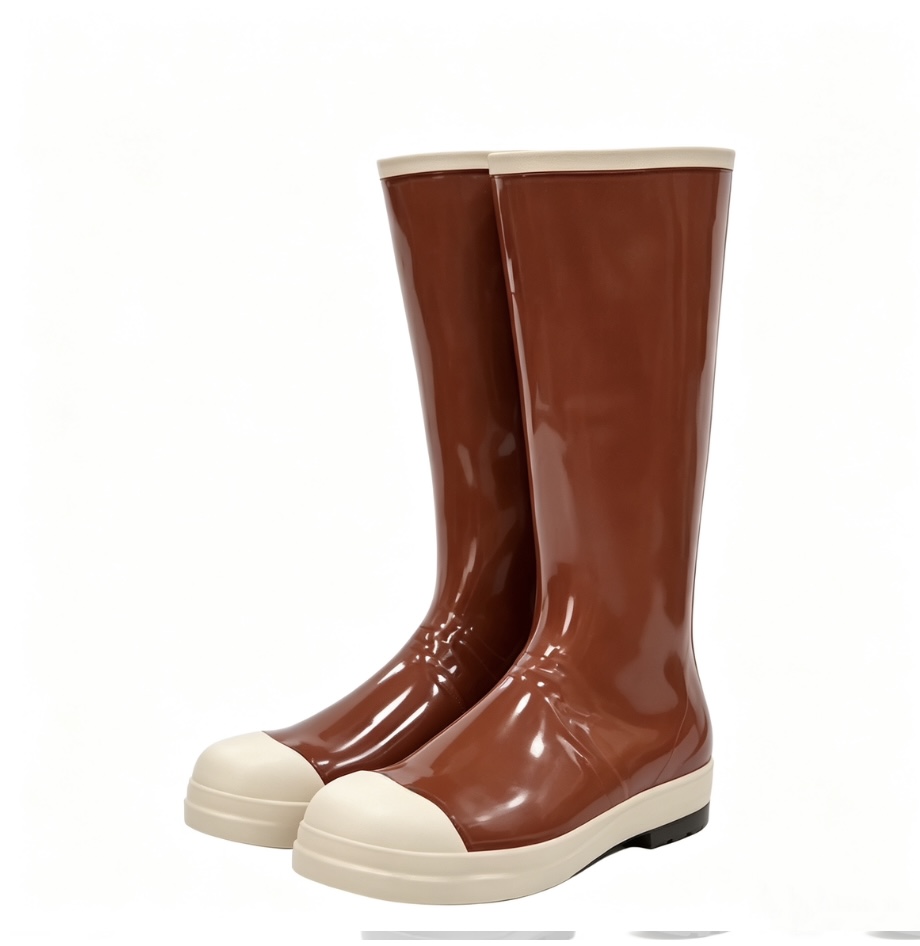
The manufacturing process of these boots is also crucial. Vulcanization is a common process used to enhance the properties of rubber. During vulcanization, rubber is heated with sulfur or other vulcanizing agents, which creates cross - links between the rubber molecules. This results in a more durable, elastic, and chemical - resistant material. Injection molding is another important process. It allows for the precise shaping of the boots and can ensure a seamless structure, which is essential for preventing chemical penetration. Professional Rain Boot Manufacturer understands these processes well and uses them to produce high - quality acid and oil resistant boots.
3. Practical Solutions and Operation Steps
When choosing acid and oil resistant boots, several factors should be considered.
- Material selection: As mentioned earlier, neoprene and nitrile rubber are good choices for their chemical resistance. For environments with high acid exposure, neoprene may be more suitable, while nitrile rubber is better for oil - dominated environments.
- Sole pattern: A deep and aggressive sole pattern is essential for providing good grip on slippery surfaces. Look for patterns with wide channels to disperse liquids and prevent hydroplaning.
- Height: The height of the boots should be appropriate for the working environment. In environments where there is a risk of splashing, taller boots are recommended to protect the lower legs.
- Lining: A comfortable and breathable lining is important to prevent skin irritation. Materials like moisture - wicking fabrics can help keep the feet dry.
- Size: The boots should fit properly. A too - tight boot can cause discomfort and restrict blood circulation, while a too - loose boot may not provide adequate protection and can increase the risk of tripping.
When using the boots, it is important to follow proper procedures. Before entering a corrosive environment, check the boots for any signs of damage. After use, clean the boots thoroughly with soap and water to remove any chemical residues.
4. Daily Maintenance and Precautions
Proper daily maintenance can extend the lifespan of acid and oil resistant boots.
- Cleaning: After each use, wash the boots with mild soap and water. Use a soft brush to remove stubborn stains. Avoid using harsh chemicals or solvents, as they can damage the boot material.
- Drying: Allow the boots to dry naturally in a well - ventilated area. Do not expose them to direct sunlight or heat sources, as this can cause the material to harden and crack.
- Deodorizing: If the boots develop an odor, you can place odor - absorbing materials such as baking soda inside the boots.
- Anti - aging: Store the boots in a cool, dry place away from chemicals and direct sunlight. This can help prevent the material from aging prematurely.
- Preventing deformation: Do not stack heavy objects on top of the boots. You can use boot trees to help maintain their shape.
Some precautions should also be taken. Do not use these boots in environments that require specialized safety boots, such as environments with a risk of electrical hazards or falling objects, unless the boots are specifically certified for such use.
5. Industry Standard and Parameter Reference
The following are some important industry standards and parameters for acid and oil resistant boots:
ParameterRecommended ReferenceWhy It MattersSlip resistanceEN ISO 20344:2021 / EN ISO 20347:2022+A1:2024 where applicableHelps evaluate outsole grip on wet or contaminated surfaces.Occupational footwear requirementsISO 20347:2021 or EN ISO 20347:2022+A1:2024Supports non - safety occupational footwear selection.Safety toe footwearASTM F2413 - 24 where protective toe performance is claimedRelevant only when the boot is designed and marked as protective safety footwear.Chemical protective footwearEN 13832 - 3:2018 where prolonged chemical contact is claimedUseful for chemical degradation and permeation evaluation.
These standards ensure that the boots meet certain quality and performance requirements, providing a reliable reference for users when selecting boots.
6. Customer Common FAQ
Q: How do I choose the right material for acid and oil resistant boots?
A: Consider the type of chemicals you will be exposed to. If it's mostly acids, neoprene may be a good choice. For oils and fuels, nitrile rubber is more suitable. Professional Rain Boot Manufacturer can also provide valuable advice based on your specific working environment.
Q: Are these boots slip - resistant?
A: Acid and oil resistant boots should be tested for slip resistance according to standards such as EN ISO 20344:2021 / EN ISO 20347:2022+A1:2024. Look for boots with a good sole pattern that can provide grip on slippery surfaces.
Q: How do I determine the correct size of the boots?
A: It's best to try on the boots. Measure your feet according to the manufacturer's size chart. Consider leaving a little extra room for socks and comfort, but not too much that the boots are loose.
Q: Do these boots have an odor?
A: New boots may have a slight odor, but this should dissipate over time. If the odor persists, you can try using odor - absorbing materials like baking soda.
Q: Can I use these boots in cold temperatures?
A: It depends on the material. Some materials may harden in cold temperatures. Check the product specifications to see if the boots are suitable for cold environments.
Conclusion
In conclusion, acid and oil resistant boots are essential in corrosive industrial environments. Understanding the core problems, such as chemical degradation and lack of grip, and the affected usage scenarios, helps in making informed decisions. The product and process principles involve choosing the right materials like neoprene and nitrile rubber and using proper manufacturing processes such as vulcanization and injection molding. Practical solutions for selection, and daily maintenance tips can extend the lifespan of the boots. Industry standards provide a reliable reference for quality and performance. Professional Rain Boot Manufacturer plays a crucial role in providing high - quality boots and relevant expertise.
References
- 2026 - 2032年中国橡胶雨靴行业发展现状分析与前景趋势预测报告
- 雨靴的主要生产材料是什么?耐用性与舒适性指南
- ISO 20347:2021 Occupational Footwear
- EN ISO 20344:2021 Footwear Test Methods
- ASTM F2413 - 24 Protective Footwear Specification