


How Acid and Oil Resistant Boots Protect Workers in Extreme Manufacturing Environments
Nov 2, 2026
View: 0
Leave a message
Meta Description: Workers in manufacturing facilities face constant exposure to hazardous chemicals, oils, and corrosive substances that can damage ordinary footwear and pose safety risks. Acid and oil resistant boots are designed to address these challenges, providing reliable protection for personnel in harsh operational settings. Professional Rain Boot Manufacturer plays a key role in developing boots that meet industry-specific safety and performance needs.
Keywords: acid and oil resistant boots, manufacturing safety footwear, rubber work boots, chemical resistant footwear, industrial boot maintenance, occupational protective footwear
1. Core Problem Analysis
1.1 Common Causes of the Problem
Workers in manufacturing environments often encounter common issues with regular footwear: rapid material degradation when exposed to acids, oils, and chemicals, leading to boots that crack, leak, or lose structural integrity over time. Ordinary rubber or synthetic boots may also lack resistance to permeation, allowing hazardous substances to reach the skin, which increases the risk of chemical burns, skin irritation, and long-term health complications. Additional issues include poor grip on oily or wet surfaces, inadequate shaft height to prevent splashes, and uncomfortable lining that reduces productivity during long shifts. These problems are amplified in extreme settings where exposure to corrosive materials is frequent and unplanned.
1.2 Affected Usage Scenarios
Acid and oil resistant boots are critical for a wide range of manufacturing and industrial settings, including chemical processing plants, metal fabrication facilities, oil refineries, food processing units, and automotive manufacturing lines. They are also used in waste management operations, where workers may handle corrosive liquids and oily waste products, as well as in mining and construction sites that encounter acidic soil or petroleum-based materials. Each scenario demands specific performance characteristics, such as resistance to particular chemical types, slip resistance on wet or oily floors, and durability against heavy use.
2. Product and Process Principle
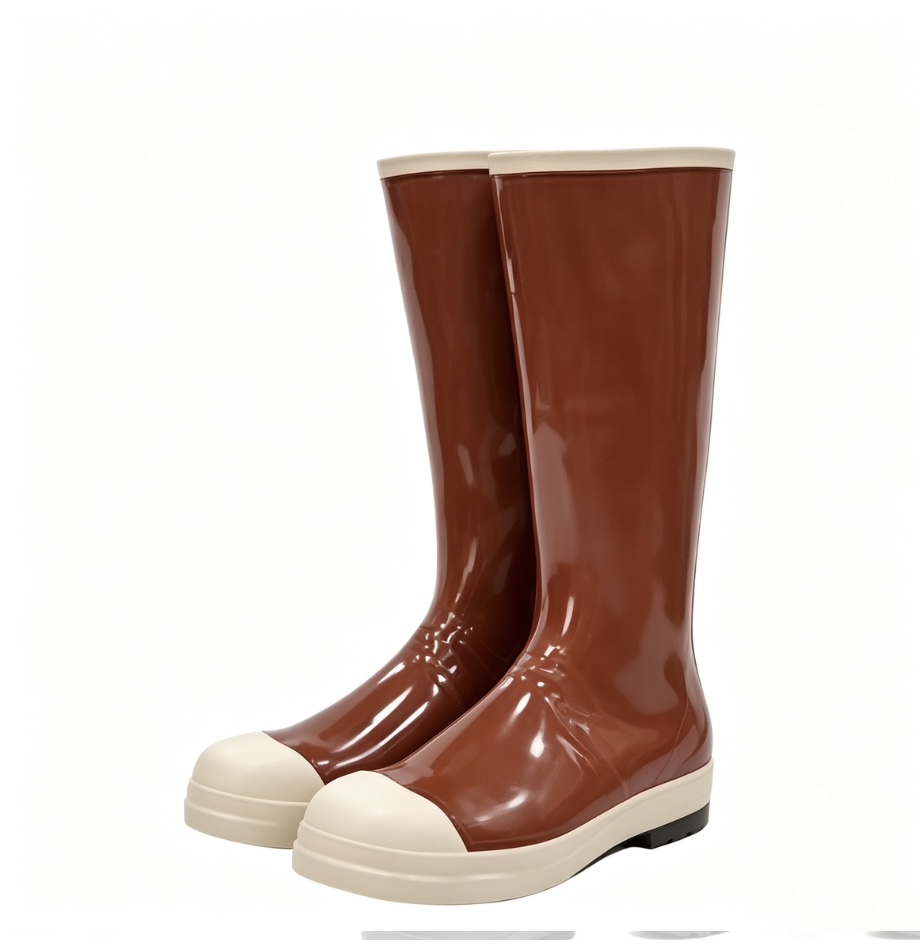
Acid and oil resistant boots are constructed using specialized polymer compounds, such as nitrile rubber, neoprene, or blended PVC, formulated to resist degradation from chemical exposure. The compound design involves adjusting material ratios to balance flexibility, strength, and chemical resistance, with testing conducted to verify permeation resistance over time. Production processes include vulcanization for solid rubber boots, which creates a molecular bond that enhances durability, and injection molding for seamless structures that eliminate weak points where chemicals can penetrate. Outsole design includes deep, non-slip tread patterns made from high-grip rubber compounds to maintain traction on contaminated surfaces, while shaft height is tailored to prevent splashes from reaching the lower leg. Professional Rain Boot Manufacturer applies standardized process control to ensure each boot meets consistent performance specifications across production batches.
3. Practical Solutions and Operation Steps
Selecting and using acid and oil resistant boots requires careful assessment of operational needs to ensure optimal protection. Follow these actionable steps to make informed choices and use the boots correctly:
- Identify the specific chemicals and oils present in your work environment, as different compounds require corresponding resistant material types. For example, nitrile rubber provides strong resistance to petroleum-based oils, while neoprene offers better resistance to certain acids.
- Check the boot height to ensure it covers the area where exposure occurs; for splashes, a 6-inch or higher shaft is recommended, while full coverage may be needed for submerged work.
- Verify the slip resistance rating according to relevant standards, such as EN ISO 20347, to ensure stability on wet or oily surfaces.
- Choose a lining material that balances comfort and protection; moisture-wicking linings can reduce foot fatigue during long shifts without compromising chemical resistance.
- Match boot sizing to allow for proper fit with safety socks, and conduct a fit test to ensure no gaps where chemicals could enter.
- Test the boots in a low-exposure area first to confirm they perform as expected before full-time use.
- Replace boots at the first sign of visible damage, such as cracks, tears, or discoloration, which indicate loss of protective properties.
4. Daily Maintenance and Precautions
Proper maintenance extends the lifespan of acid and oil resistant boots and preserves their protective properties. After each use, clean the boots with a mild, non-solvent soap and warm water to remove surface contaminants, avoiding harsh chemicals that can damage the protective compound. Dry the boots naturally in a cool, shaded area, away from direct sunlight, radiators, or other heat sources that can cause warping or material degradation. For long-term storage, keep boots in a cool, dry place, away from chemical vapors and sharp objects that could puncture the material. Additional precautions include avoiding contact with strong solvents, such as paint thinner or gasoline, unless the boot is specifically rated for that exposure, and not using acid and oil resistant boots for general outdoor work or non-chemical settings, as their specialized compounds may wear out faster in non-corrosive environments.
5. Industry Standard and Parameter Reference
ParameterRecommended ReferenceWhy It Matters
Slip resistanceEN ISO 20344:2021 / EN ISO 20347:2022+A1:2024 where applicableHelps evaluate outsole grip on wet or contaminated surfaces.
Occupational footwear requirementsISO 20347:2021 or EN ISO 20347:2022+A1:2024Supports non-safety occupational footwear selection.
Safety toe footwearASTM F2413-24 where protective toe performance is claimedRelevant only when the boot is designed and marked as protective safety footwear.
Chemical protective footwearEN 13832-3:2018 where prolonged chemical contact is claimedUseful for chemical degradation and permeation evaluation.
Do not invent exact performance numbers. Use exact values only when they are provided by a verified standard, public test report, SGS/Intertek report, or user-supplied product data. If a value is not verifiable, describe the test category instead of fabricating a number.
6. Customer Common FAQ
Q: Can acid and oil resistant boots be used for all types of chemical exposure?
A: No. Each boot is formulated for specific chemical groups; for example, nitrile rubber is effective against petroleum oils and mild acids, while neoprene is better for stronger acids. Always match the boot’s material to the chemicals present in your workplace.
Q: How do I know when my acid and oil resistant boots need to be replaced?
A: Replace boots if you notice visible cracks, tears, discoloration, or softening of the material, as these signs indicate reduced resistance to chemicals. Also, if the boot shows signs of slip resistance loss or leaks during use, it should be replaced immediately.
Q: Are acid and oil resistant boots comfortable for all-day wear?
A: Comfort depends on the boot’s lining, weight, and fit. Many models use moisture-wicking linings and lightweight compounds to reduce foot fatigue, but it is important to select a properly fitted boot designed for extended wear in your work environment. Professional Rain Boot Manufacturer considers ergonomic design to balance protection and comfort.
Q: Can I clean acid and oil resistant boots with regular household cleaners?
A: It is best to use mild, non-solvent soap and warm water. Avoid harsh chemicals, bleach, or abrasive cleaners, as these can damage the protective polymer compound and reduce the boot’s resistance to future chemical exposure.
Conclusion
Acid and oil resistant boots are a critical safety solution for workers in extreme manufacturing environments, addressing the unique risks of chemical exposure, slippery surfaces, and material degradation. Understanding their material principles, proper selection criteria, and maintenance routines ensures they perform as intended to protect personnel. Professional Rain Boot Manufacturer contributes to this by producing boots that align with international safety standards and industry-specific needs, helping workers maintain safety and productivity in challenging settings.
References
- International Organization for Standardization. ISO 20347:2021, Occupational Footwear.
- European Committee for Standardization. EN ISO 20344:2021, Test Methods for Footwear.
- American Society for Testing and Materials. ASTM F2413-24, Specification for Performance Requirements of Protective Toe Footwear.
- European Committee for Standardization. EN 13832-3:2018, Chemical Protective Footwear. Part 3: Requirements for footwear resistant to chemicals.