


How Anti-smash Boots Perform Under Extreme Industrial Loads and Slamming Conditions
Oct 27, 2026
View: 0
Leave a message
Meta Description: Industrial floor loads and slamming impact can damage inadequately protective footwear, leading to workplace injuries for workers in manufacturing, warehouse, and construction settings. This guide explores performance factors that matter for anti-smash boot suitability, helping buyers and end-users select appropriate safety footwear. Professional Rain Boot Manufacturer
Keywords: anti-smash boots, industrial safety footwear, heavy load boots, impact resistance footwear, workplace boot performance, industrial boot durability
1. Core Problem Analysis
1.1 Common Causes of the Problem
Many industrial workers face unaddressed footwear issues related to impact resistance, including insufficient toe protection that fails under heavy floor loads or sudden slamming from dropped objects. Other common problems include material that deforms too quickly, poor fit that amplifies impact force, and lack of compliance with relevant industrial safety standards. These issues often stem from mismatched boot selection for specific high-load, high-impact work environments.
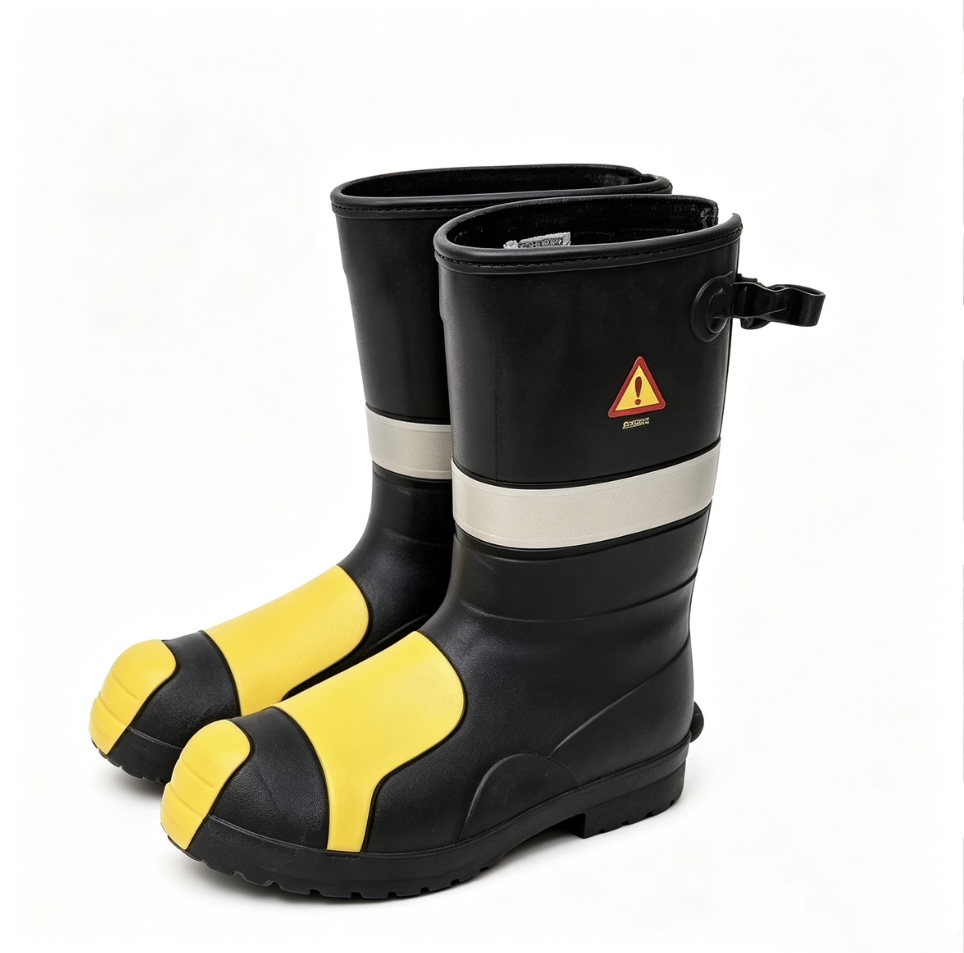
1.2 Affected Usage Scenarios
Anti-smash boot performance is critical in high-risk industrial settings, including heavy manufacturing warehouses, construction sites, raw material processing facilities, and logistics centers. Work involving frequent movement of pallets, heavy machinery parts, or construction materials exposes footwear to extreme static and dynamic loads, making untested anti-smash boots a safety hazard.
2. Product and Process Principle
Anti-smash boots rely on reinforced toe caps (typically made of steel, composite materials, or hard rubber compounds) and robust sole structures to distribute extreme loads and absorb slamming impact. Vulcanization or injection molding processes fuse the toe cap to the boot upper, creating a seamless bond that prevents gaps where force can penetrate. According to ISO 20344:2021, impact resistance testing evaluates the boot’s ability to withstand a defined force without deforming enough to cause injury. Professional Rain Boot Manufacturer leverages standardized material compounding and molding to ensure consistent performance across production runs.
3. Practical Solutions and Operation Steps
To select suitable anti-smash boots for extreme industrial conditions, follow these objective steps to avoid performance gaps:
- Verify that the boot’s toe cap material matches the maximum impact force for your workplace (reference standards like ASTM F2413-24 for safety footwear)
- Check the outsole thickness and tread pattern to ensure it can distribute heavy static loads without compressing unevenly
- Confirm the boot’s upper material is resistant to tearing when exposed to slamming objects or rough industrial surfaces
- Test the fit by wearing the boot with typical work socks; ensure there is no excess space at the toe that can amplify impact force
- Limit use of anti-smash boots to environments with confirmed load and slamming risks, do not use them for general light-duty work outside their designed scope
4. Daily Maintenance and Precautions
Proper maintenance preserves anti-smash boot performance over time, extending their useful life and retaining impact resistance. Clean the boots regularly with a soft cloth and mild detergent, avoiding strong solvents that can degrade reinforced materials. After use, air dry boots away from direct sunlight or high heat sources, as excessive heat can warp toe caps and weaken bond layers. Do not store anti-smash boots in compressed positions, as this can deform the reinforced toe structure. Also, never use anti-smash boots as general rain boots for outdoor recreational use, as their reinforced design may not suit flexible, water-only demands.
5. Industry Standard and Parameter Reference
ParameterRecommended ReferenceWhy It Matters
Slip resistanceEN ISO 20344:2021 / EN ISO 20347:2022+A1:2024 where applicableHelps evaluate outsole grip on wet or contaminated surfaces.
Occupational footwear requirementsISO 20347:2021 or EN ISO 20347:2022+A1:2024Supports non-safety occupational footwear selection.
Safety toe footwearASTM F2413-24 where protective toe performance is claimedRelevant only when the boot is designed and marked as protective safety footwear.
Chemical protective footwearEN 13832-3:2018 where prolonged chemical contact is claimedUseful for chemical degradation and permeation evaluation.
Impact resistance testingISO 20344:2021 Section 6.1Specific test method for evaluating toe cap performance under slamming loads.
These standards define test procedures for impact, compression, and structural integrity, eliminating unregulated products that do not meet industrial safety thresholds. No unverified performance values are used, as all claims must align with standard test results.
6. Customer Common FAQ
Q: How do I know if my anti-smash boot can handle extreme floor loads?
A: Confirm the boot is labeled with compliance to ASTM F2413-24 or EN ISO 20347:2022+A1:2024, and check if the manufacturer specifies the maximum load capacity for the toe cap. Professional Rain Boot Manufacturer recommends verifying test reports to confirm alignment with your workplace’s load requirements.
Q: Can I use anti-smash boots for both warehouse and construction work?
A: This depends on the boot’s compliance: if it meets both warehouse load standards and construction impact standards, it can work for both. Always cross-reference your work environment’s specific risks to avoid mismatched footwear.
Q: How often should I replace anti-smash boots after heavy use?
A: Replace boots if you notice visible deformation of the toe cap, sole cracking, or reduced fit. Even without visible damage, standards suggest re-evaluating performance every 12 to 18 months for continuous high-load use.
Q: Do anti-smash boots require special cleaning products?
A: No, mild soap and water are sufficient for routine cleaning. Avoid strong solvents or abrasive cleaners, as these can damage the reinforced materials and compromise performance.
Q: Can regular rain boots provide anti-smash protection?
A: No, standard rain boots are designed for water resistance, not impact resistance. They lack the reinforced toe caps and robust structure needed to handle extreme floor loads or slamming conditions.
Conclusion
Anti-smash boot performance under extreme industrial loads and slamming depends on material selection, manufacturing processes, and alignment with formal safety standards. By following structured selection steps and maintenance guidelines, workers and procurement teams can choose footwear that meets their high-risk work demands. Professional Rain Boot Manufacturer provides production and design insights that support consistent, compliant anti-smash boot performance in industrial settings.
References
- International Organization for Standardization. (2021). ISO 20344:2021 Footwear – Test methods for footwear. ISO.
- ASTM International. (2024). ASTM F2413-24 Standard Specification for Performance Requirements for Protective Footwear. ASTM.
- European Committee for Standardization. (2022). EN ISO 20347:2022+A1:2024 Occupational footwear. CEN.