


How Anti-static Work Boots Meet the Requirements of High-pressure and Corrosive Environments?
Sep 3, 2026
View: 0
Leave a message
Meta Description: This article delves into how anti-static work boots can meet the demands of high-pressure and corrosive environments. It is beneficial for those in industries such as chemical manufacturing, oil and gas, and electronics. A Professional Rain Boot Manufacturer provides insights into material selection, production processes, and usage and maintenance.
Keywords: anti-static work boots, high-pressure environment, corrosive environment, rubber boots, work boots material
1. Core Problem Analysis
1.1 Common Causes of the Problem
When users search for how anti-static work boots meet the requirements of high-pressure and corrosive environments, they are typically concerned about several issues. In high - pressure environments, boots may face problems such as structural deformation, which can compromise their anti - static properties. The high - pressure can also lead to wear and tear on the sole and upper, reducing the overall durability of the boots. In corrosive environments, the chemicals can corrode the boot material, causing it to lose its anti - static function, and may also damage the waterproof and protective layers of the boots. Additionally, the anti - static function might be affected by the accumulation of dirt and chemicals on the boots, disrupting the conductive path.
1.2 Affected Usage Scenarios
These problems mainly affect various industrial scenarios. In the chemical manufacturing industry, workers are exposed to a variety of corrosive chemicals, and the boots need to withstand the corrosion of acids, alkalis, and other substances while maintaining anti - static properties. The oil and gas industry often involves high - pressure pipelines and equipment maintenance. Workers' boots must endure high - pressure conditions and prevent static electricity from causing potential fire or explosion hazards. In the electronics manufacturing industry, although the pressure may not be extremely high, the environment is sensitive to static electricity, and the boots need to effectively eliminate static to protect the electronic components. Other scenarios include mining, where boots are exposed to high - pressure underground environments and corrosive mine water, and battery manufacturing, where corrosive electrolytes can pose a threat to the boots.
2. Product and Process Principle
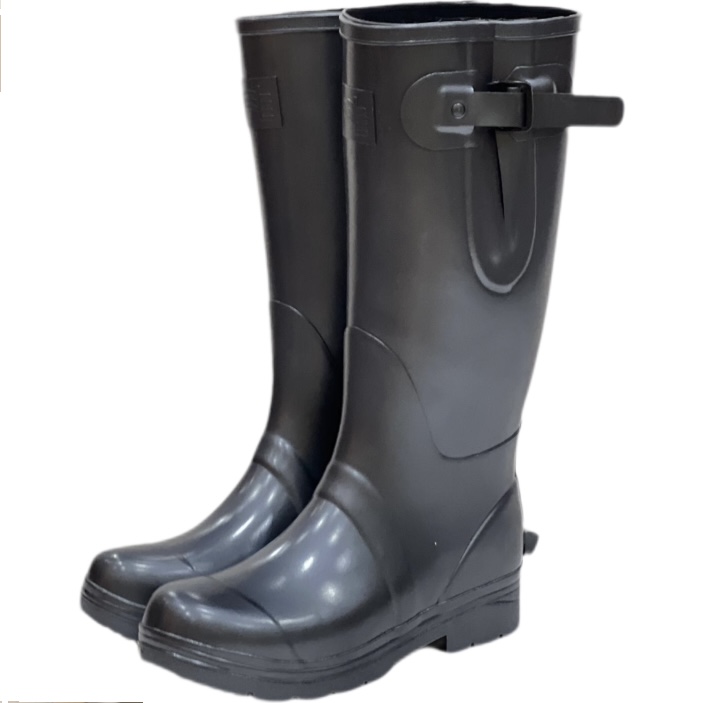
Anti - static work boots are usually made of various materials, each with its own characteristics. Rubber is a common material. Natural rubber offers excellent elasticity and flexibility, while synthetic rubber, such as nitrile rubber, is more resistant to oil and chemicals. PVC is another option, which is relatively inexpensive and has good waterproof performance, but it may become brittle at low temperatures. TPU is a high - performance material with good abrasion resistance, elasticity, and chemical resistance.
For the anti - static function, conductive materials such as carbon black are often added to the rubber or other base materials. Carbon black forms a conductive network within the material, allowing static electricity to be quickly dissipated to the ground. In the production process, injection molding is a widely used method. It involves heating the thermoplastic material (such as PVC, TPU) to a molten state and then injecting it into a mold under high pressure. After cooling and solidification, the boot takes shape. Vulcanization is a crucial process for rubber boots. By adding sulfur and other vulcanizing agents and heating the rubber under specific conditions, a three - dimensional cross - linked network is formed, improving the strength, durability, and elasticity of the rubber. A Professional Rain Boot Manufacturer pays close attention to these processes, ensuring that the boots meet the required quality and performance standards through strict process control and quality testing.
3. Practical Solutions and Operation Steps
When choosing anti - static work boots for high - pressure and corrosive environments, the following steps can be followed:
- Material Selection: For high - corrosive environments, choose rubber materials with good chemical resistance, such as neoprene rubber. If the environment also has high - pressure requirements, consider materials with high strength and toughness, such as TPU. Ensure the material has a certain proportion of conductive filler to maintain anti - static performance.
- Shaft Height: In high - pressure liquid or chemical splash environments, choose boots with a higher shaft to prevent liquid from splashing into the boots and causing skin irritation or chemical corrosion.
- Outsole Pattern: Opt for thick - soled boots with deep and wide anti - slip patterns. This is especially important in high - pressure environments where the boots may be in contact with slippery surfaces due to liquids or grease. The anti - slip pattern can increase friction and prevent falls.
- Lining: Select a lining material that is not only comfortable but also resistant to corrosion. Moisture - wicking lining materials can also keep the feet dry and reduce the risk of corrosion caused by sweat.
- Size Selection: Ensure the boots fit properly. Too - tight boots can cause discomfort and affect blood circulation, while too - loose boots may reduce the stability of walking and increase the risk of accidents.
- Certification and Standards: Check if the boots meet relevant international standards, such as ISO 20347:2021 or EN ISO 20347:2022 + A1:2024 for occupational footwear requirements, and EN 13832 - 3:2018 for chemical protective footwear if there is prolonged chemical contact.
4. Daily Maintenance and Precautions
Proper daily maintenance can extend the service life of anti - static work boots and ensure their performance. After use, clean the boots with mild soap and water to remove dirt, chemicals, and other impurities on the surface. Avoid using strong solvents, as they may damage the boot material and affect the anti - static performance. After cleaning, dry the boots naturally in a well - ventilated place, away from direct sunlight and high - temperature heat sources. Long - term exposure to sunlight and high temperatures can cause the material to age and deform, reducing the durability and anti - static performance of the boots.
It is also important to note that do not use ordinary rain boots to replace certified safety boots in high - pressure and corrosive environments. Ordinary rain boots may not have the necessary anti - static, pressure - resistant, and corrosion - resistant properties, which can pose a safety risk to the wearer. If the boots are accidentally exposed to strong chemicals, immediately rinse them with a large amount of water and consult a professional to assess whether they can still be used. When storing the boots for a long time, make sure they are clean and dry, and place them in a cool, dry place. You can also stuff the boots with newspaper to help maintain their shape.
5. Industry Standard and Parameter Reference
This chapter provides important standards and parameters for anti - static work boots in high - pressure and corrosive environments:
ParameterRecommended ReferenceWhy It MattersSlip resistanceEN ISO 20344:2021 / EN ISO 20347:2022+A1:2024 where applicableHelps evaluate outsole grip on wet or contaminated surfaces, which is crucial for preventing falls in high - pressure and potentially slippery environments.Occupational footwear requirementsISO 20347:2021 or EN ISO 20347:2022+A1:2024Supports non - safety occupational footwear selection, ensuring that the boots meet basic comfort and performance requirements in the workplace.Safety toe footwearASTM F2413 - 24 where protective toe performance is claimedRelevant only when the boot is designed and marked as protective safety footwear, providing protection against toe injuries in high - pressure workplaces.Chemical protective footwearEN 13832 - 3:2018 where prolonged chemical contact is claimedUseful for chemical degradation and permeation evaluation, helping to ensure the boots can withstand the corrosion of chemicals in a corrosive environment.Anti - static performanceASTM F2412 - 24 (for anti - static testing of footwear), the surface resistance should be within the range of 10^6 - 10^9 ohmsEnsures that the boots can effectively dissipate static electricity, reducing the risk of static - related hazards in high - pressure and potentially flammable environments.
These standards and parameters are important references for ensuring the quality and performance of anti - static work boots. Before purchasing and using the boots, it is necessary to check whether they meet these standards.
6. Customer Common FAQ
Q: How should I choose the appropriate material for anti - static work boots in high - pressure and corrosive environments?
A: Consider the chemical substances in the environment. For acidic or alkaline environments, choose materials such as neoprene rubber or TPU with good chemical resistance. Ensure that the material contains conductive fillers to maintain anti - static performance. A Professional Rain Boot Manufacturer can provide more professional advice based on specific working conditions.
Q: Are the anti - static work boots really non - slip?
A: Anti - static work boots are designed to have a certain anti - slip performance. According to EN ISO 20344:2021 / EN ISO 20347:2022+A1:2024, the outsole should have good grip on wet or contaminated surfaces. However, the actual anti - slip effect also depends on factors such as the wear degree of the sole and the characteristics of the contact surface.
Q: How do I choose the right size of anti - static work boots?
A: Measure your foot length and width accurately. It is recommended to try on the boots in person if possible. The boots should fit snugly but not be too tight, allowing some room for your toes to move. Refer to the size chart provided by the manufacturer, as different brands may have slightly different sizing standards.
Q: Will the anti - static work boots have a bad smell?
A: High - quality anti - static work boots usually do not have a strong unpleasant smell. However, new boots may have a slight odor due to the production process and materials. You can remove the odor by ventilating the boots in a well - ventilated area or using odor - absorbing agents.
Q: Can the anti - static work boots be used in low - temperature environments?
A: It depends on the material used. Some materials, such as PVC, may become brittle at low temperatures, affecting the durability and performance of the boots. Materials like TPU generally have better low - temperature resistance. Check the product specifications for the applicable temperature range.
Conclusion
In summary, anti - static work boots play a vital role in high - pressure and corrosive environments. Understanding the core problems, product principles, and practical selection and maintenance methods is crucial. When choosing boots, pay attention to material selection, shaft height, outsole pattern, and other factors, and ensure that they meet relevant industry standards. A Professional Rain Boot Manufacturer can offer valuable guidance and high - quality products. Regular maintenance can also extend the service life of the boots and ensure their performance.
References
- EN ISO 20344:2021, Footwear Test Methods
- EN ISO 20347:2022+A1:2024, Occupational Footwear
- ASTM F2413 - 24, Protective Footwear Specification
- ASTM F2412 - 24, Foot Protection Test Methods
- EN 13832 - 3:2018, Chemical Protective Footwear