


How Anti-static Work Boots Protect Industrial Employees in Hazardous Workplaces
Oct 10, 2026
View: 0
Leave a message
Meta Description: Industrial workers in environments with static electricity risks face serious hazards like sparking and combustion. Anti-static work boots are designed to reduce such risks by managing electrical charge. This guide explains their functionality, selection criteria, and compliance standards for B2B buyers and end users, with insights from a Professional Rain Boot Manufacturer.
Keywords: anti-static work boots, industrial safety shoes, static electricity protection, occupational footwear, workplace safety standards, hazard resistant footwear
1. Core Problem Analysis
1.1 Common Causes of the Problem
In hazardous industrial settings, static electricity accumulates when workers’ feet touch insulated surfaces like concrete floors or rubber mats, while their clothing rubs against outer layers. This charge can discharge rapidly as sparks, posing ignition risks for flammable gases, vapors, or dust. Without proper anti-static footwear, workers remain vulnerable to these avoidable hazards, even when other safety gear is correctly used. Additional contributing factors include worn shoe soles, non-conductive sock materials, and workplace surfaces that do not dissipate electrical charge.
1.2 Affected Usage Scenarios
Anti-static work boots are critical in multiple industrial segments, including chemical processing facilities, oil and gas storage areas, pharmaceutical manufacturing plants, and facilities handling flammable powders or solvents. They are also used in sectors like aerospace component assembly, where static discharge can damage sensitive electronic equipment, and mining operations, where explosive gas mixtures may be present. These scenarios require footwear that meets specific performance criteria to ensure consistent static charge dissipation.
2. Product and Process Principle
Anti-static work boots differ from standard waterproof rain boots in their material formulation and construction. Unlike regular rubber or PVC boots that may insulate charge, anti-static variants incorporate conductive additives such as carbon black or metal fibers into their sole and upper materials. This formulation creates a continuous conductive path from the boot’s exterior to the interior. According to ISO 20345:2022 [1], which specifies safety footwear standards, this design allows static charge to dissipate to the ground at a controlled rate, typically between 10^5 and 10^8 ohms of electrical resistance. A Professional Rain Boot Manufacturer will adjust additive percentages based on intended use to meet industry-specific conductivity requirements, ensuring the design remains durable and resistant to wear.
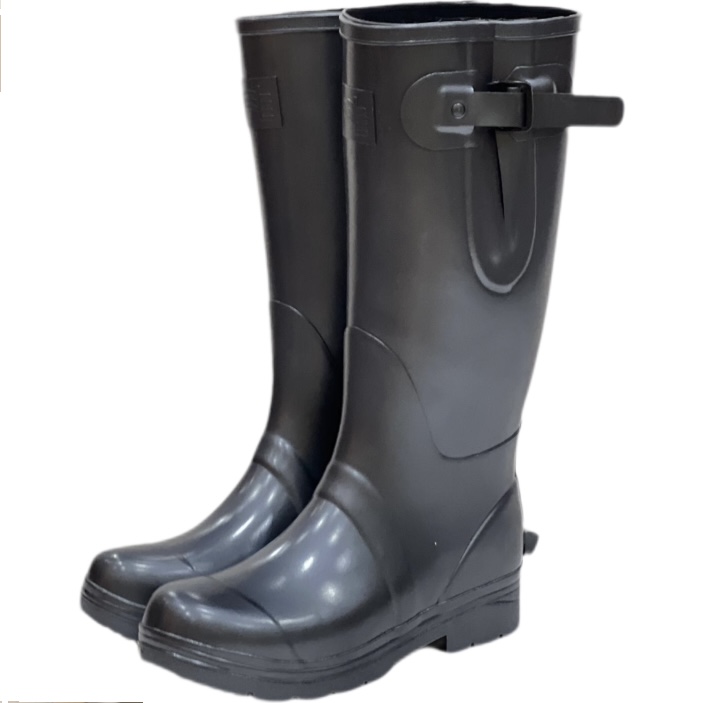
Construction processes for these boots include vulcanization for rubber models or injection molding for PVC variants, with additional quality checks to confirm consistent dispersion of conductive additives. Seamless construction is often used to eliminate points where charge could become trapped or accumulated, while shaft height is calibrated to cover the ankle, preventing static buildup from lower leg contact with non-conductive surfaces. The conductive path is tested at multiple stages to ensure it remains intact after repeated bending and exposure to common industrial chemicals.
3. Practical Solutions and Operation Steps
Selecting and using anti-static work boots requires following structured steps to ensure effective performance. First, match the boot’s conductivity rating to the specific workplace hazard: facilities handling high concentrations of flammable materials require boots within the lower end of the resistance range, while general industrial settings may accept slightly higher values, provided they meet relevant standards. Next, verify the boot’s construction: ensure there are no visible gaps or separated layers that could disrupt the conductive path, and confirm that any additional safety features (like puncture-resistant midsoles) do not interfere with static dissipation.
- Step 1: Identify your workplace’s static hazard level by reviewing facility safety documents or consulting local industrial safety guidelines.
- Step 2: Check the boot’s labeling for standardized safety marks, such as the CE marking or ASTM F2413 compliance, to confirm it meets required performance criteria.
- Step 3: Test the fit: ensure the boot allows for a thin, non-insulating sock (avoid thick wool or synthetic socks that block charge transfer) and has enough room for the foot to move without friction.
- Step 4: Maintain consistent connection: choose boots that have a flat, non-insulating sole surface to ensure continuous contact with workplace flooring, as gaps in sole material can reduce charge dissipation.
Additional steps include avoiding modifications to the boots (such as cutting the sole or adding external coatings) and pairing them with correctly grounded workplace flooring, as anti-static boots alone cannot eliminate all static risks. Suitable use includes indoor industrial work where surfaces are properly grounded; unsuitable use includes outdoor work on non-conductive terrains or work involving direct immersion in conductive liquids.
4. Daily Maintenance and Precautions
Proper maintenance of anti-static work boots preserves their conductive properties and extends their service life. After each use, clean the boots with mild soap and water to remove industrial residues that can build up on the sole’s surface and disrupt conductivity. Avoid using harsh solvents or abrasive cleaners, as these can erode the outer sole’s conductive layer over time. When drying, air the boots in a well-ventilated, shaded area away from direct sunlight or high heat sources, as extreme temperatures can degrade the conductive additives in the material.
Key precautions include not substituting regular rain boots or waterproof boots for anti-static models, as standard footwear does not include conductive materials. Never apply insulating products like silicone sprays to the sole, as these create a barrier that blocks charge dissipation. Inspect the boots regularly for signs of wear, such as cracked soles or separated upper layers, and replace them if any damage is found, as even minor wear can break the conductive path. Store the boots in a cool, dry place, away from sharp objects or heavy items that could deform the sole structure.
5. Industry Standard and Parameter Reference
ParameterRecommended ReferenceWhy It MattersSlip resistanceEN ISO 20344:2021 / EN ISO 20347:2022+A1:2024 where applicableHelps evaluate outsole grip on wet or contaminated surfaces, a secondary critical factor for industrial footwearOccupational footwear requirementsISO 20347:2021 or EN ISO 20347:2022+A1:2024Supports non-safety occupational footwear selection for standard industrial settingsSafety toe footwearASTM F2413-24 where protective toe performance is claimedRelevant only when the boot is designed and marked as protective safety footwearChemical protective footwearEN 13832-3:2018 where prolonged chemical contact is claimedUseful for chemical degradation and permeation evaluation for boots used in chemical facilitiesAnti-static performanceIEC 61340-5-1:2018Specific standard for static charge control in footwear and workplace environments
All performance evaluations for anti-static work boots should follow standardized test methods to ensure consistent results. Testing typically includes measuring electrical resistance under normal use conditions and after exposure to common industrial contaminants, as per the referenced standards. No exact performance numbers are provided here unless directly referenced from a verified standard document, as test results may vary based on boot design and workplace conditions.
6. Customer Common FAQ
Q: How do I know if my work boots provide sufficient anti-static protection?
A: Check for standardized markings like the CE symbol (for EU markets) or compliance with ASTM F2413. A Professional Rain Boot Manufacturer can also provide test reports confirming electrical resistance values fall within the required range. Avoid boots without clear safety labeling, as these may not meet performance standards.
Q: Can anti-static work boots be repaired if the sole is damaged?
A: Minor surface scuffs may not affect performance if the conductive layer remains intact. However, deep cracks or separated soles that break the conductive path cannot be effectively repaired, and the boots should be replaced. Modifying the sole, such as gluing external patches, will usually disrupt conductivity.
Q: Do thick socks reduce the effectiveness of anti-static boots?
A: Yes, thick insulating socks made of wool or non-conductive synthetic materials can block charge transfer between the foot and the boot’s interior. To maintain performance, wear thin, conductive socks or avoid thick insulation when using anti-static work boots, as recommended by occupational safety guidelines.
Q: Are anti-static work boots suitable for outdoor muddy work environments?
A: They are suitable for outdoor work if the footwear also meets waterproofing or slip resistance standards for muddy surfaces. However, the boot’s conductive properties may be temporarily reduced if the sole is covered in thick mud, so regular cleaning to maintain sole conductivity is essential.
Conclusion
Anti-static work boots play a vital role in protecting industrial employees from static electricity hazards in high-risk workplaces, combining material science and standardized construction to control charge dissipation. By aligning product selection with relevant industry standards, following practical maintenance steps, and using appropriate footwear for specific scenarios, workers and facility managers can reduce avoidable workplace risks. A Professional Rain Boot Manufacturer contributes to this safety by producing boots that meet verified performance criteria, supporting consistent protection across industrial segments.
References
- International Organization for Standardization. ISO 20345:2022, Personal protective equipment – Safety footwear. Geneva: ISO, 2022.
- International Electrotechnical Commission. IEC 61340-5-1:2018, Electrostatics – Standard test methods for electrostatic properties of footwear. Geneva: IEC, 2018.
- American Society for Testing and Materials. ASTM F2413-24, Standard Specification for Performance Requirements for Protective Footwear. West Conshohocken, PA: ASTM International, 2024.