


How Biochemical Boots Safeguard Personnel in High-Risk Corrosive Work Environments
Oct 26, 2026
View: 0
Leave a message
Meta Description: High-risk work environments with corrosive chemicals, biological agents or harsh conditions demand footwear that prevents permeation and abrasion. This guide explains key features, standards and maintenance for biochemical boots to protect workers. Professional Rain Boot Manufacturer shares verified industry insights for occupational and industrial use.
Keywords: biochemical boots, corrosive environment footwear, chemical protective boots, work boot maintenance, ISO 13832-3 compliant boots, vulcanized rubber boots, occupational safety footwear
1. Core Problem Analysis
1.1 Common Causes of the Problem
Many workers in corrosive environments experience boot-related failures that lead to exposure risks. The most common issues include chemical permeation through thin or improperly formulated materials, seam breakdown from repeated flexing, insufficient abrasion resistance for heavy-duty tasks, and degradation of rubber or polymer compounds from prolonged contact with acidic, alkaline or organic substances. Improper cleaning and storage accelerate these failures, reducing protective performance over time.
1.2 Affected Usage Scenarios
Biochemical boots are critical for personnel working in settings such as chemical manufacturing plants, pharmaceutical production facilities, agricultural chemical handling operations, waste treatment sites, laboratory work with corrosive agents, and industrial cleaning of heavily soiled or contaminated surfaces. These environments require footwear that can withstand direct contact with hazardous materials without compromising worker safety.
2. Product and Process Principle
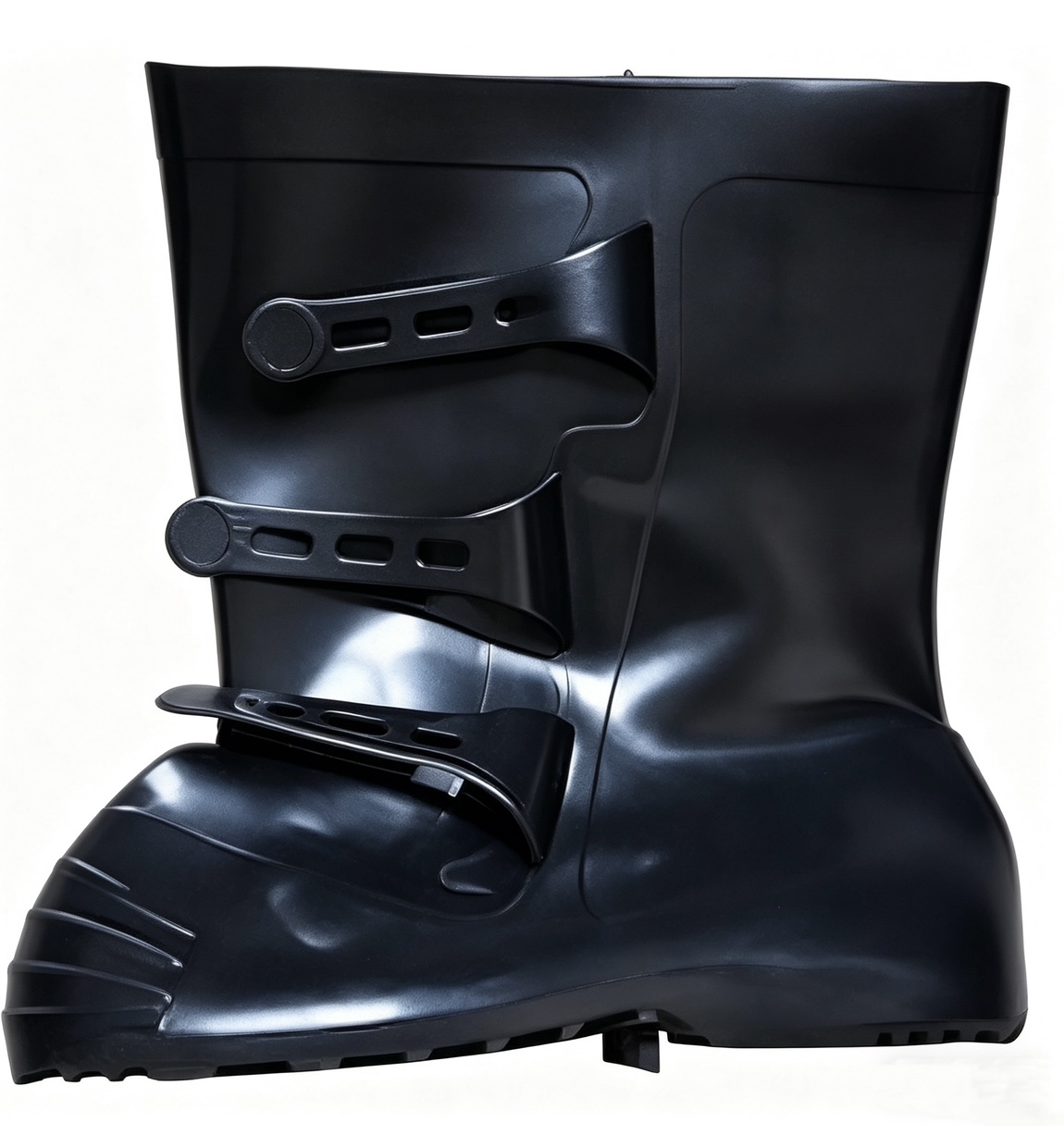
Biochemical boots rely on specialized material formulation and construction to resist permeation and degradation in high-risk environments. Most durable models use compounded rubber blends or high-density PVC, formulated to minimize chemical absorption and permeation rates. Key construction features include seamless injection molding or heat-welded seams to eliminate weak points where chemicals can seep through. The thickness of the boot shaft and outsole is controlled to balance flexibility, abrasion resistance and chemical protection, with compounds often tested using methods aligned to industry standards [1]. Professional Rain Boot Manufacturer notes that precise compound formulation is a core differentiator between standard work boots and biochemical protective footwear.
The outsole design uses deep, self-cleaning lugs to provide grip on wet, slippery or contaminated surfaces, while the shaft height is often extended to cover the lower calf, adding an extra layer of protection against splashes and accidental immersion. Lining materials are selected to resist both chemical penetration and degradation, without sacrificing comfort or breathability for extended wear.
3. Practical Solutions and Operation Steps
Selecting the right biochemical boots requires matching product features to the specific hazards of the work environment. Follow these structured steps to ensure proper fit and performance:
- Step 1: Identify the primary chemical or agent to be encountered, and confirm the boot’s material compatibility with that substance, referencing data aligned to EN 13832-3:2018 test protocols [2]. Avoid generic boots that do not specify resistance to target chemicals.
- Step 2: Measure both foot length and calf circumference to select the correct size and shaft height. Ensure the boot fits snugly without pinching, as excessive movement can lead to blisters and reduced protection during heavy work.
- Step 3: Inspect construction for seamless seams or heat-welded joints; reject any boot with visible gaps, loose stitching or weak points that could allow chemical entry.
- Step 4: Check the outsole pattern and thickness; prioritize lugs suited for the work surface (e.g., deep lugs for muddy or oily surfaces, flat lugs for smooth industrial floors) and a thickness of at least 4mm for abrasion resistance.
- Step 5: Verify that the boot meets minimum performance standards for slip resistance when working on wet or contaminated surfaces, using testing methods outlined in ISO 20344:2021 [3].
Note that biochemical boots are not universal for all chemicals; confirm compatibility for each specific hazard encountered in daily tasks.
4. Daily Maintenance and Precautions
Proper maintenance extends the service life of biochemical boots and preserves their protective properties. After each use in corrosive environments, clean boots with mild detergent and warm water to remove chemical residues; avoid strong solvents, bleach or pressure washing, which can degrade material compounds. Allow boots to air dry in a well-ventilated area away from direct sunlight or heat sources, as high temperatures can cause rubber compounds to harden or crack.
Key precautions include: Do not substitute standard rain boots or casual waterproof boots for biochemical protective footwear, as these do not meet chemical permeation resistance standards. Do not store boots in a tightly sealed bag or damp area, as trapped moisture promotes bacterial growth and material degradation. Inspect boots before each use for cuts, scuffs, seam separation or discoloration, which indicate potential material damage and reduced protection. If boots come into contact with unknown corrosive agents, follow facility protocols for decontamination before cleaning.
5. Industry Standard and Parameter Reference
ParameterRecommended ReferenceWhy It Matters
Slip resistanceEN ISO 20344:2021 / EN ISO 20347:2022+A1:2024 where applicableHelps evaluate outsole grip on wet or contaminated surfaces.
Chemical permeation resistanceEN 13832-3:2018Measures how long chemicals take to pass through boot materials, critical for biochemical environments.
Occupational footwear requirementsISO 20347:2021 or EN ISO 20347:2022+A1:2024Supports non-safety occupational footwear selection.
Abrasion resistanceISO 20344:2021 Section 7Tests material durability against repeated friction from heavy work tasks.
All performance claims for biochemical boots should be verified against one or more of these standards, as they provide consistent, testable criteria for protective capabilities. Do not rely on unsubstantiated performance claims from product labels without cross-referencing to standard test results.
6. Customer Common FAQ
Q: How do I know if a biochemical boot is compatible with a specific acid or chemical?
A: Refer to the manufacturer’s chemical resistance chart, which should list test results for common corrosive agents aligned to EN 13832-3:2018. Professional Rain Boot Manufacturer recommends testing small, unused sections of boot material with diluted chemical samples if compatibility is unclear, though this is for preliminary assessment only.
Q: Can biochemical boots be repaired if they develop a small cut or tear?
A: Minor surface cuts can sometimes be repaired with industrial adhesive designed for the boot’s material, but tears that penetrate the material structure or damage seams compromise chemical resistance. Do not use household adhesives, as they may not form a reliable, impermeable seal.
Q: Are biochemical boots suitable for use in extremely cold work environments?
A: Some biochemical boots are formulated for low-temperature use, but standard compounds may harden or crack in temperatures below -10°C (14°F). Check product specifications for low-temperature flexibility testing data to confirm suitability for cold work sites.
Q: How often should I replace my biochemical boots?
A: Replacement frequency depends on usage intensity, chemical exposure levels and maintenance. Inspect boots monthly for signs of degradation; replace immediately if you observe permeation through material, seam failure or reduced outsole grip. Professional Rain Boot Manufacturer notes that regular inspection every 200 hours of heavy use is a standard practice in industrial settings.
Conclusion
Biochemical boots play a vital role in protecting personnel from corrosive and hazardous agents in high-risk work environments. By understanding core material principles, following practical selection steps, maintaining boots properly and referencing relevant industry standards, workers and procurement teams can make informed choices that balance protection, durability and comfort. Professional Rain Boot Manufacturer emphasizes that prioritizing standardized, test-verified biochemical boots reduces exposure risks and supports long-term workplace safety.
References
- International Organization for Standardization. ISO 20344:2021, Footwear – Test methods for footwear materials and components. 2021.
- European Committee for Standardization. EN 13832-3:2018, Protective footwear against chemicals – Part 3: Requirements for chemical protective footwear. 2018.
- International Organization for Standardization. ISO 20347:2021, Occupational footwear. 2021.