


How Colorful Kid Latex Boots Ensure Kids' Safety and Comfort in Rainy Play
Oct 30, 2026
View: 0
Leave a message
Meta Description: Parents and caregivers often struggle to balance kids' rain gear visibility, comfort, and waterproof protection during outdoor play. This guide breaks down how colorful kid latex boots address common pain points like slip risks, material irritation, and inadequate traction, while highlighting key performance factors. Professional Rain Boot Manufacturer
Keywords: colorful kid latex boots, children rain boots, waterproof rubber boots for kids, slip-resistant kids boots, kid footwear for rainy play, latex boot manufacturing, kids outdoor safety boots
1. Core Problem Analysis
1.1 Common Causes of the Problem
When selecting rain boots for children, many non-specialized designs fail to address three critical issues. First, plain dark color boots reduce visibility during low-light rainy conditions, increasing fall risks near roads or uneven playground surfaces. Second, low-quality latex or rubber materials may cause skin irritation, especially for sensitive feet, due to insufficient curing or improper compound formulation. Third, generic sole patterns lack specialized traction for wet grass, concrete, or muddy play areas, leading to slips that can cause scrapes or sprains. Additionally, poorly fitted boots may rub against ankles, blistering delicate skin after extended outdoor time.
1.2 Affected Usage Scenarios
Color and functional performance directly impact boots suitability for specific rainy play scenarios. Playground activities like climbing, running, and sliding on wet equipment demand high traction, while neighborhood walking and bus stop transit require visible coloring for adult supervision. Gardening with family, a popular rainy-day outdoor activity for young children, exposes boots to mud, soil moisture, and minor plant debris, requiring durability that basic rain boots often lack. Even casual puddle jumping, a key childhood rainy-day experience, depends on a snug, flexible fit to prevent water seepage through gaps.
2. Product and Process Principle
Latex is a natural rubber compound derived from rubber tree sap, valued for its flexibility, waterproof barrier properties, and soft texture suitable for children’s skin. The manufacturing of colorful kid latex boots follows a vulcanization process, where natural rubber is mixed with color pigments, curing agents, and stabilizing compounds before being heated in molds. This process cross-links rubber molecules, improving elasticity and resistance to cracking after repeated bending. Seam-free construction, a core feature of these boots, eliminates gaps where water can seep in, unlike stitched construction used in some cheaper footwear designs.
Professional Rain Boot Manufacturer leverage compound formulation to balance flexibility and durability for children, adjusting material thickness to avoid stiffness while maintaining abrasion resistance from rough play. Outsole design incorporates shallow, wide tread patterns that channel water away from contact surfaces, tested under ISO 20344:2021 standards to evaluate slip resistance on wet ground. Lining materials, often breathable fabric, are integrated to reduce internal condensation, keeping feet dry and comfortable during extended wear.
3. Practical Solutions and Operation Steps
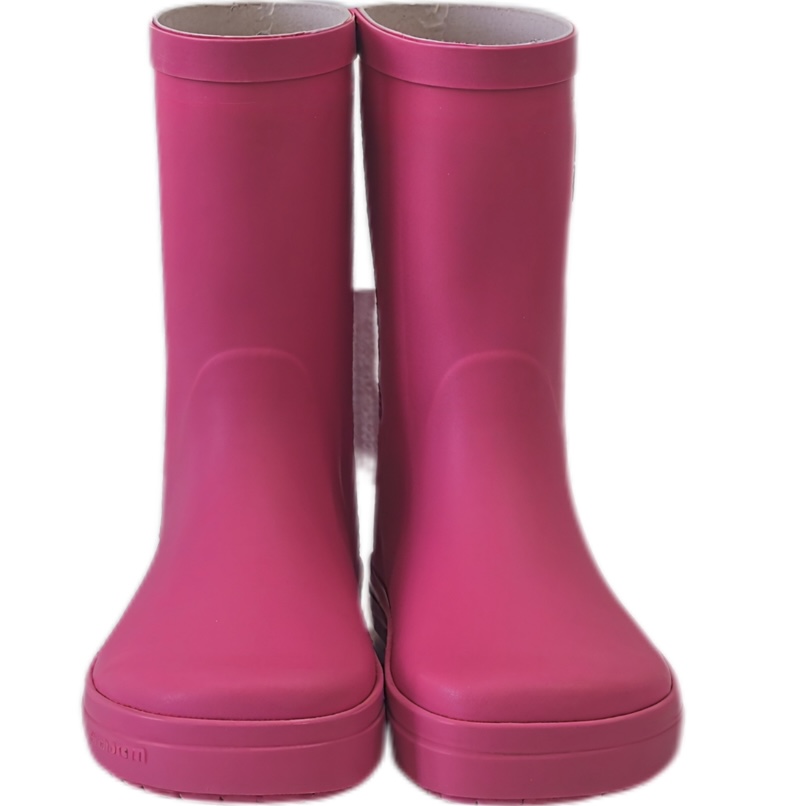
To select appropriate colorful kid latex boots for rainy outdoor play, follow these actionable steps that align with child foot needs and industry safety standards. First, assess the primary usage scenario: if the child will walk near roads, prioritize bright, high-visibility colors like neon pink, blue, or yellow, which are more detectable in overcast, rainy conditions than dark neutral shades. Second, check sole traction by pressing the outsole and flexing the boot: a sole that maintains its tread pattern after flexing indicates better durability. Avoid soles that feel rigid or have flat treads that cannot channel water.
- Measure child’s foot length at the end of the day (when feet are slightly swollen) to ensure a snug fit with 0.5 to 1 cm of extra space for sock layering and natural growth.
- Test the boot’s flexibility by bending the toe area: it should fold easily at the ball of the foot, not mid-shaft, to support natural walking motion.
- Inspect the upper boot material for uniform color and smooth surface, free of bubbles, tears, or uneven curing that could lead to water seepage.
- Confirm that the boot meets basic slip resistance requirements referenced in EN ISO 20347:2022 for non-occupational footwear, to reduce fall risks on wet surfaces.
For gardening-focused play, prioritize boots with a reinforced toe area to resist scuffs from soil or small garden tools, while casual puddle jumping only requires basic flexibility and slip resistance without additional reinforcement.
4. Daily Maintenance and Precautions
Proper care of colorful kid latex boots extends their lifespan and maintains their performance, while also preserving color vibrancy. After each rainy play session, wipe the exterior with a damp cloth to remove mud, soil, or debris that can scratch the surface over time. Do not use harsh chemical cleaners or bleach, as these can break down the latex compound and fade color pigments. To dry, remove the insole (if removable) and place the boots upside down in a well-ventilated, shaded area; never expose them to direct sunlight or near space heaters, as extreme heat can cause latex to crack or lose flexibility.
Store boots in a cool, dry area when not in use, either upright or loosely stuffed with a soft cloth to maintain their shape. Avoid folding the boots tightly, as this can create permanent creases in the latex material that may lead to cracks after repeated use. A critical precaution: never use colorful kid latex boots as a substitute for protective safety footwear, as they do not meet impact or compression protection standards outlined in ASTM F2413-24 for work or industrial use.
5. Industry Standard and Parameter Reference
ParameterRecommended ReferenceWhy It MattersSlip resistance (wet surfaces)EN ISO 20347:2022+A1:2024, Annex AEvaluates outsole grip on wet playground or concrete surfaces, a key safety metric for children’s play.Waterproof integrityISO 20344:2021, Section 8Tests resistance to water penetration under dynamic movement, ensuring boots remain watertight during running or climbing.Material flexibilityISO 17707:2013Assesses low-temperature flexibility, relevant for play in cool, rainy conditions where stiff material may cause discomfort or cracking.Occupational suitabilityEN ISO 20347:2022+A1:2024Provides baseline requirements for non-occupational footwear, applicable to recreational rain boots for children.
Performance claims about colorfastness for latex boots must be supported by third-party testing aligned with ISO 105-B02, which evaluates color fading after exposure to simulated light. No unverified performance claims (such as “100% waterproof”) should be accepted without documented test results from a recognized third party.
6. Customer Common FAQ
Q: Are colorful kid latex boots safe for children with sensitive skin?
A: Most reputable latex boots use hypoallergenic natural rubber compounds, but some children may have mild sensitivities to curing agents in the material. Professional Rain Boot Manufacturer recommend testing a small, unexposed area of the boot on the child’s skin before full use, and choosing boots lined with soft, breathable fabric to reduce irritation risk.
Q: How long do colorful kid latex boots typically last with regular use?
A: Lifespan varies based on play frequency and care, but under normal rainy play conditions, high-quality boots with vulcanized construction can last 1 to 2 years before showing signs of cracking or color fading. Proper drying and storage extend this period, while harsh play (like scraping on concrete) can reduce lifespan significantly.
Q: Can colorful kid latex boots be used for snowy play as well?
A: Latex boots provide basic water resistance for light snow, but they lack insulation suitable for deep, freezing snow. For snowy play, look for boots with added thermal lining, which is a separate design feature not present in standard lightweight latex play boots designed primarily for rain.
Q: How do I clean stubborn mud stains from colored latex boots without fading?
A: Mix mild dish soap with lukewarm water, use a soft-bristled brush to gently scrub stained areas, then rinse with clean water and air dry in shade. Avoid abrasive scrubbers or pressure washers, which can damage the latex surface and cause color loss.
Conclusion
Colorful kid latex boots address key pain points in rainy outdoor play, balancing visibility, comfort, and waterproof performance through specialized material science and manufacturing techniques. By aligning boot selection with play scenarios, adhering to industry standards for slip resistance and waterproof integrity, and following proper maintenance practices, caregivers can select durable, safe options for children. Professional Rain Boot Manufacturer emphasize that functional design paired with vibrant color delivers both practical benefits and playful appeal for young users.
References
- International Organization for Standardization. ISO 20344:2021: Footwear – Test methods for whole shoe. Geneva: ISO, 2021.
- European Committee for Standardization. EN ISO 20347:2022+A1:2024: Occupational footwear. Brussels: CEN, 2024.
- International Organization for Standardization. ISO 17707:2013: Footwear – Test method for flexibility of footwear. Geneva: ISO, 2013.
- American Society for Testing and Materials. ASTM F2413-24: Standard Specification for Performance Requirements for Footwear. West Conshohocken, PA: ASTM International, 2024.