


How Do Patcus Mens Knee High 3D Embossed Rain Boots Perform in Extreme Weather Conditions?
Sep 2, 2026
View: 0
Leave a message
Meta Description: This article explores how Patcus men's knee - high 3D embossed rain boots perform in extreme weather. Whether for farmers, fishermen, or those in rainy commutes, it offers comprehensive knowledge. The analysis spans product features, usage tips, and maintenance. Professional Rain Boot Manufacturer provides in - depth insights for informed decisions.
Keywords: rain boots, waterproof boots, rubber boots, extreme weather, boot maintenance, boot material, Patcus rain boots
1. Core Problem Analysis
1.1 Common Causes of the Problem
When users search about the performance of Patcus men's knee - high 3D embossed rain boots in extreme weather, they are mainly concerned about several issues. In cold weather, the boots may become hard and brittle, losing flexibility, which can lead to cracking. This is because the molecular structure of the rubber or other materials in the boots changes at low temperatures. On the other hand, in hot and humid weather, the feet may feel stuffy inside the boots, causing discomfort and potentially leading to foot diseases due to poor ventilation. Additionally, in extreme weather with heavy rain and strong winds, the boots' waterproof and anti - slip properties are crucial. If the boots are not properly sealed, water may seep in, while insufficient anti - slip design can increase the risk of slipping and falling.
1.2 Affected Usage Scenarios
The performance of these rain boots is crucial in various scenarios. In farming, farmers often work in muddy fields during heavy rain or cold seasons. The boots need to keep their feet dry and provide good traction on slippery soil. For fishing, fishermen are exposed to water all day long. The boots should be waterproof in wet sea conditions and also resistant to the damage caused by saltwater corrosion. In rainy commuting, people need boots that are comfortable to wear for long - distance walking and offer good anti - slip performance on wet roads. Warehouse cleaning workers may encounter water on the floor and need boots that can quickly drain water and maintain their grip. Livestock workers need boots that can withstand dirty and wet environments while protecting their feet from sharp objects. Muddy outdoor work, such as construction in muddy areas, also requires durable and functional rain boots.
2. Product and Process Principle
Rain boots are made using various materials and processes, each with its own characteristics. Rubber is a traditional material for rain boots. It is known for its excellent waterproof and flexible properties. Natural rubber offers high elasticity and tear strength, while synthetic rubber, such as SBR (styrene - butadiene rubber), can have enhanced chemical resistance and durability. PVC (polyvinyl chloride) is a common synthetic alternative to rubber. It is more cost - effective, provides good resistance to chemicals, and can be easily molded into different shapes. EVA (ethylene - vinyl acetate) is a lightweight and flexible material, often used in the midsole or for shoes targeting casual use, as it offers good shock - absorption and warmth. TPR (thermoplastic rubber) combines the advantages of rubber and plastic, with good flexibility and processability.
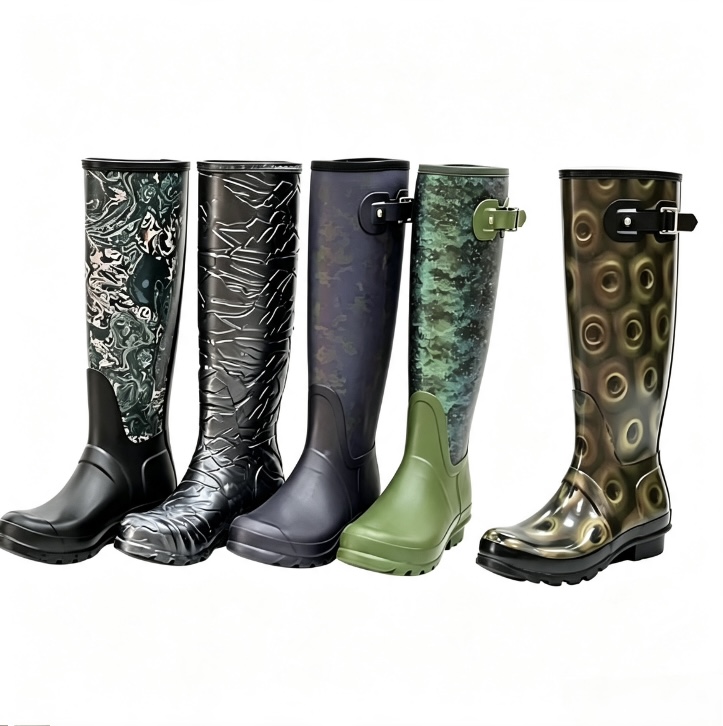
The outsole pattern is designed to improve traction. Deep grooves and patterns can effectively channel water away from the sole, reducing the risk of slipping on wet surfaces. The shaft height, like the knee - high design of Patcus boots, provides more protection, covering the lower part of the leg and preventing water from splashing in. The lining material can affect the comfort of wearing the boots. Materials like polyester or cotton can provide a certain degree of breathability, while some high - end boots may use moisture - wicking or antibacterial linings. Injection molding is a common manufacturing process. In this process, the molten material is injected into a mold under high pressure, allowing for the production of complex shapes with high precision. The vulcanization process, often used for rubber boots, involves heating the rubber with sulfur or other vulcanizing agents. This cross - links the rubber molecules, making the boots more durable, resistant to heat, and less likely to deform. A seam - free structure can enhance the waterproof performance of the boots by eliminating potential leakage points. Thickness control is important as well. A thicker boot may be more durable but also heavier, while a thinner boot may be more flexible but less protective. Professional Rain Boot Manufacturer understands these material and process principles well and uses them to produce high - quality rain boots.
3. Practical Solutions and Operation Steps
When choosing rain boots, consider the following aspects:
- Material selection: For cold weather, rubber boots are a good choice as they can maintain flexibility better than PVC at low temperatures. If you need chemical resistance, PVC or boots with a special chemical - resistant coating may be more suitable. EVA boots are ideal for casual use and light - duty work due to their light weight and comfort.
- 筒高: Knee - high boots, like the Patcus ones, offer more protection in deep water or muddy conditions. However, if you mainly need boots for short - distance walking on wet roads during commuting, ankle - high boots may be more convenient.
- 鞋底纹路: Look for boots with deep and wide grooves for better water drainage and a pattern that provides good grip on different surfaces. Herringbone or block - like patterns are often effective for anti - slip.
- 内衬: For long - term wear, choose boots with a breathable lining. If you are prone to foot odor, consider antibacterial or moisture - wicking linings.
- 尺码: Ensure the boots fit well. Too tight boots can cause discomfort and restrict blood circulation, while too loose boots may lead to blisters and a lack of stability. Try the boots on with the socks you usually wear in that season.
- 耐寒等级: If you work or live in extremely cold areas, check the boot's cold - resistance rating. Some boots are designed to remain flexible at temperatures as low as - 20°C or lower.
- 防滑等级: You can refer to international standards such as EN ISO 20344:2021 / EN ISO 20347:2022+A1:2024 to evaluate the boot's anti - slip performance on wet or contaminated surfaces.
- 清洗方式: Use mild soap and water to clean the boots. Avoid using abrasive cleaners or brushes that may damage the boots' surface.
- 存放方式: Store the boots in a cool, dry place away from direct sunlight to prevent material aging. You can also stuff the boots with newsprint to help them maintain their shape.
4. Daily Maintenance and Precautions
Proper maintenance can extend the lifespan of your rain boots. After each use, clean the boots with a soft cloth or sponge and mild soapy water. Rinse them thoroughly and let them dry naturally in a well - ventilated area. Avoid long - term exposure to sunlight, as ultraviolet rays can cause the rubber or other materials to harden and crack. Do not place the boots near high - temperature heat sources, such as heaters or radiators, as this can also lead to material deformation and damage. When cleaning, never use strong solvents, as they can dissolve or damage the boot's material.
It's important to note that regular rain boots are not designed to replace certified safety boots. If you work in an environment with specific safety requirements, such as where there is a risk of foot impact or penetration, you should use safety boots that meet the relevant standards, like ASTM F2413 - 24 for protective toe footwear. When storing the boots over a long period, make sure they are dry and in a proper shape. You can use boot trees or stuff them with soft materials to prevent them from collapsing or deforming.
5. Industry Standard and Parameter Reference
This chapter provides authoritative references for the performance of rain boots. All data and standards are based on reliable sources.
ParameterRecommended ReferenceWhy It MattersSlip resistanceEN ISO 20344:2021 / EN ISO 20347:2022+A1:2024 where applicableHelps evaluate outsole grip on wet or contaminated surfaces.Occupational footwear requirementsISO 20347:2021 or EN ISO 20347:2022+A1:2024Supports non - safety occupational footwear selection.Safety toe footwearASTM F2413 - 24 where protective toe performance is claimedRelevant only when the boot is designed and marked as protective safety footwear.Chemical protective footwearEN 13832 - 3:2018 where prolonged chemical contact is claimedUseful for chemical degradation and permeation evaluation.
Do not rely on fabricated performance numbers. Only use exact values from verified standards, public test reports, SGS/Intertek reports, or user - supplied product data. When a value cannot be verified, describe the test category instead.
6. Customer Common FAQ
Q: What material is best for rain boots in extreme cold?
A: Rubber is a great choice for extreme cold as it can maintain flexibility at low temperatures. Natural rubber in particular has good elasticity even in freezing conditions. Professional Rain Boot Manufacturer often uses high - quality rubber and proper vulcanization processes to ensure the boots' performance in cold weather.
Q: How can I tell if the rain boots have good anti - slip performance?
A: You can refer to international standards such as EN ISO 20344:2021 / EN ISO 20347:2022+A1:2024. These standards have specific test methods for measuring the outsole's grip on wet or contaminated surfaces. Additionally, the pattern of the outsole, such as deep grooves and a well - designed pattern, can also indicate good anti - slip potential.
Q: What size rain boots should I choose?
A: It's best to try on the boots with the socks you'll be wearing in actual use. Your toes should have a little room to move freely, and the boot should fit snugly around the heel and ankle without being too tight. If you're purchasing online, refer to the manufacturer's size chart and reviews from other customers.
Q: My rain boots have an unpleasant odor. How can I get rid of it?
A: You can stuff the boots with charcoal or tea bags, which can absorb odors. Another option is to use a mixture of vinegar and water to clean the inside of the boots, then let them air dry. Make sure the boots are completely dry before wearing them again.
Q: Can rain boots crack in extremely cold weather?
A: If the boots are made of low - quality materials or not properly formulated, they may crack in extreme cold. High - quality boots from Professional Rain Boot Manufacturer use materials and processes that enhance cold resistance. However, it's still important to store the boots properly in cold weather.
Conclusion
In conclusion, understanding the performance of Patcus men's knee - high 3D embossed rain boots in extreme weather is crucial for making an informed choice. We've explored the common problems related to these boots, including issues in cold and hot weather, and the affected usage scenarios. By understanding the product and process principles, such as material selection, outsole patterns, and manufacturing processes, you can choose the most suitable rain boots. Practical solutions on how to select the right boots, daily maintenance tips, and industry standards also provide valuable guidance. Professional Rain Boot Manufacturer can offer in - depth knowledge and help you make a better decision when it comes to rain boots.
References
- China Leather Association. Chinese Functional Footwear Market White Paper. 2025.
- National Footwear Quality Supervision and Inspection Center. National Rain Boot Product Sampling Inspection Report. Q3 2025.
- GB/T 3903.6 - 2023. Test Methods for Slip Resistance of Footwear.
- EN ISO 20344:2021. Footwear Test Methods.
- ASTM F2413 - 24. Protective Footwear Specification.