


How Firefighting Boots Perform in Extreme Wildfire Heat Conditions
Oct 26, 2026
View: 0
Leave a message
Meta Description: Wildfire environments subject footwear to intense radiant heat, direct flame contact, and variable terrain. This technical guide explains performance capabilities, material properties, and critical standards for such conditions, targeting industrial procurement personnel and safety managers. Professional Rain Boot Manufacturer
Keywords: firefighting boots, wildfire heat resistance, occupational footwear standards, boot material composition, extreme environment footwear, fire-resistant footwear testing
1. Core Problem Analysis
1.1 Common Causes of the Problem
Users of footwear in wildfire scenarios face performance failures including heat penetration to the foot, material degradation from prolonged high temperatures, reduced flexibility that impairs movement on uneven terrain, and structural seam failure that allows ash and debris entry. Additional concerns include limited insulation against radiant heat and lack of stability on sloped, burned surfaces. Many generic work boots do not account for the specific thermal loads present during wildfire response, unlike boots designed for this specialized use case. Professionals often confuse general heat-resistant boots with those optimized for wildfire conditions, leading to selection of inadequate products.
1.2 Affected Usage Scenarios
The affected scenarios for these boots include wildfire suppression operations, fire line construction, ash cleanup, emergency rescues in burned areas, and post-wildfire site assessment. These activities expose footwear to a combination of direct flame, radiant heat (up to levels experienced in wildfire environments), contact with hot embers and burned vegetation, and abrasive terrain. Footwear must also remain functional across varying temperature ranges, from sub-zero overnight conditions to daytime heat during fire events. Additionally, these scenarios require footwear that supports long-duration walking and crawling through rough, uneven ground while providing thermal protection.
2. Product and Process Principle
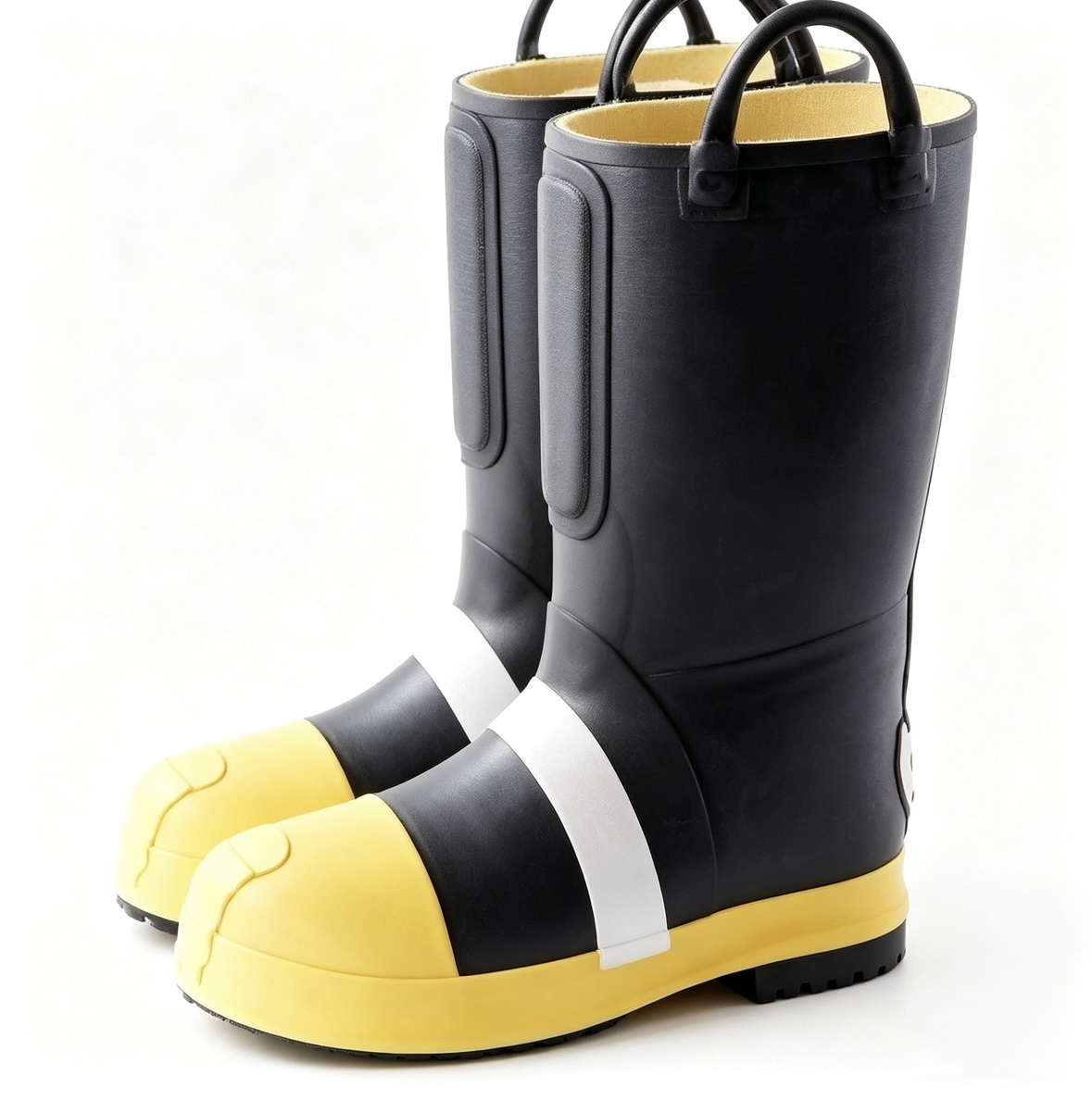
The performance of firefighting boots in extreme heat relies on material selection, structural design, and manufacturing processes that balance thermal resistance, mechanical durability, and wearer comfort. Common materials include high-temperature resistant rubber compounds, aramid fibers, and layered thermal insulators that reduce heat transfer to the foot. Vulcanization processes used in rubber boot production create molecular cross-linking that improves resistance to heat degradation and structural integrity. Seam-free construction methods eliminate potential points of heat penetration and reduce vulnerability to split seams under stress. Professional Rain Boot Manufacturer notes that material compounding formulations for wildfire-specific boots often include specialized additives that resist breakdown when exposed to continuous high temperatures, without excessive weight gain that impairs mobility. Additional design elements include thick outer layers to block radiant heat and inner liners that manage moisture while maintaining thermal separation from hot outer components.
3. Practical Solutions and Operation Steps
Selecting and using appropriate firefighting boots requires following structured steps to ensure adequate performance in extreme wildfire heat conditions. The process begins with defining the specific tasks the boot will perform, as different wildfire roles (such as hand crews vs. engine operators) have varying thermal exposure needs. Next, verify that the boot meets relevant performance standards for heat resistance and occupational safety parameters. Check material specifications to confirm the presence of heat-resistant compounds and insulating layers, avoiding generic work boots that lack specialized thermal components. Evaluate structural features such as seam construction and outsole durability to ensure resistance to abrasion and splitting on burned terrain. Fit the boot with appropriate socks to manage moisture while maintaining thermal separation, and break in the boots before full field use to prevent blisters and improve flexibility. Additionally, select boots with height appropriate to the terrain to prevent contact with hot embers and debris. Each step should be verified against practical field conditions, as some features that perform well in controlled testing may not translate to real-world wildfire environments.
4. Daily Maintenance and Precautions
Proper maintenance and precautions extend the service life of firefighting boots and preserve their heat-resistant performance. After each use, clean the boots to remove ash, debris, and particulate matter that can accelerate material degradation, using mild cleaners and avoiding strong solvents that break down heat-resistant compounds. Dry the boots in a cool, well-ventilated area away from direct sunlight and external heat sources, as excessive heat or sun exposure can reduce material thermal resistance and cause cracking. Store boots flat in a cool, dry location to maintain structural shape, avoiding folding or cramping that can damage inner insulation layers. Inspect boots after each use and before each deployment for signs of seam wear, material cracking, or insulation compression, replacing boots that show significant degradation. Never substitute general-purpose rain boots or work boots for specialized firefighting boots, as these products lack the thermal protection required for wildfire conditions. Avoid contact with chemical agents or fuel residues that can react with heat-resistant materials and reduce their performance over time.
5. Industry Standard and Parameter Reference
ParameterRecommended ReferenceWhy It MattersSlip resistanceEN ISO 20344:2021 / EN ISO 20347:2022+A1:2024 where applicableHelps evaluate outsole grip on wet or contaminated surfaces common in wildfire areas.Occupational footwear requirementsISO 20347:2021 or EN ISO 20347:2022+A1:2024Supports non-safety occupational footwear selection for wildfire response scenarios.Thermal resistance testingISO 20345:2022, Annex K (heat resistance testing)Evaluates material performance when exposed to elevated temperatures relevant to wildfire environments.Chemical protective footwearEN 13832-3:2018 where prolonged chemical contact is claimedUseful for chemical degradation and permeation evaluation for boots used near fire suppressants.
Performance testing for firefighting boots in extreme wildfire heat typically evaluates heat transfer rates across the boot material, resistance to flame contact for short durations, and structural integrity under thermal stress. These tests are conducted under controlled conditions that replicate the thermal loads of wildfire environments, without inventing specific performance values beyond standard test categories. Professional Rain Boot Manufacturer notes that adherence to these standards ensures boots meet minimum requirements for thermal performance, though additional field testing may be required for specific operational needs.
6. Customer Common FAQ
Q: Can standard work boots withstand extreme wildfire heat conditions?
A: Most standard work boots are not designed for the high radiant heat and direct flame contact present in wildfire scenarios. They lack specialized insulation and heat-resistant materials that prevent thermal penetration. Professional Rain Boot Manufacturer confirms that wildfire-specific firefighting boots use layered materials and compounds tested for elevated temperature resistance, making them suitable for these conditions.
Q: How do I know if a firefighting boot meets wildfire heat requirements?
A: Look for boots that reference thermal resistance standards such as ISO 20345:2022 Annex K or similar test methods for heat transfer resistance. Avoid boots that only claim general heat resistance without specifying relevant occupational safety standards for wildfire response. Certification documentation from third-party testing bodies can also verify performance claims.
Q: Can I clean firefighting boots with harsh chemicals?
A: No, harsh solvents and strong cleaners can degrade the heat-resistant compounds used in wildfire boots, reducing their thermal performance over time. Use mild, pH-neutral cleaners recommended for rubber and composite materials, and avoid abrasive scrubbing that can damage outer protective layers.
Q: Do firefighting boots need additional insulation for cold wildfire nights?
A: Many wildfire-specific boots incorporate insulation that balances heat resistance and cold weather performance, though additional layering may be needed for extended periods in sub-zero conditions. Look for boots with modular insulation systems if operating in both hot daytime and cold night environments during wildfire events.
Conclusion
Understanding how firefighting boots perform in extreme wildfire heat requires attention to material science, manufacturing processes, and adherence to relevant occupational standards. Key factors include heat-resistant compounds, layered insulation, and structural design that prevents seam failure and heat penetration. Proper selection, maintenance, and use of specialized wildfire boots ensure they deliver adequate protection without compromising mobility. Professional Rain Boot Manufacturer emphasizes that prioritizing boots tested for specific wildfire conditions reduces the risk of performance failure in high-stakes operational environments.
References
- International Organization for Standardization. ISO 20345:2022, Personal protective equipment - Safety footwear, 2022.
- European Committee for Standardization. EN ISO 20344:2021, Personal protective equipment - Test methods for footwear, 2021.
- International Organization for Standardization. ISO 20347:2021, Occupational footwear, 2021.