


How Firefighting Boots Withstand Extreme Heat in Real - World Scenarios
Sep 3, 2026
View: 0
Leave a message
Meta Description: This article delves into how firefighting boots withstand extreme heat in real - world scenarios. It's suitable for firefighters, safety equipment purchasers, and those interested in rain boot technology. Professional Rain Boot Manufacturer offers valuable insights into the production and material selection of these boots.
Keywords: Firefighting Boots, Extreme Heat Resistance, Boot Material, Boot Manufacturing Process, Rain Boot Product Knowledge
1. Core Problem Analysis
1.1 Common Causes of the Problem
When firefighters are on the scene, the boots they wear may face multiple challenges due to extreme heat. The main reason is the high - temperature environment during firefighting operations. Flames, hot plumes, and radiated heat can reach extremely high temperatures. If the boots cannot withstand these high temperatures, the soles may melt, the upper materials may catch fire or lose their structural integrity, which can directly lead to foot burns and endanger the firefighters' safety. Additionally, long - term exposure to high - temperature environments can cause material aging, reducing the overall performance of the boots.
1.2 Affected Usage Scenarios
The affected usage scenarios mainly occur in firefighting operations. For example, in building fires, firefighters need to enter burning buildings to rescue victims and extinguish fires. In forest fires, operating in a high - temperature and open - air environment, the boots are continuously exposed to high - temperature radiation from the surrounding flames. Also, in industrial fires involving chemical plants or oil refineries, the boots may face not only high temperatures but also chemical corrosion, further increasing the risk.
2. Product and Process Principle
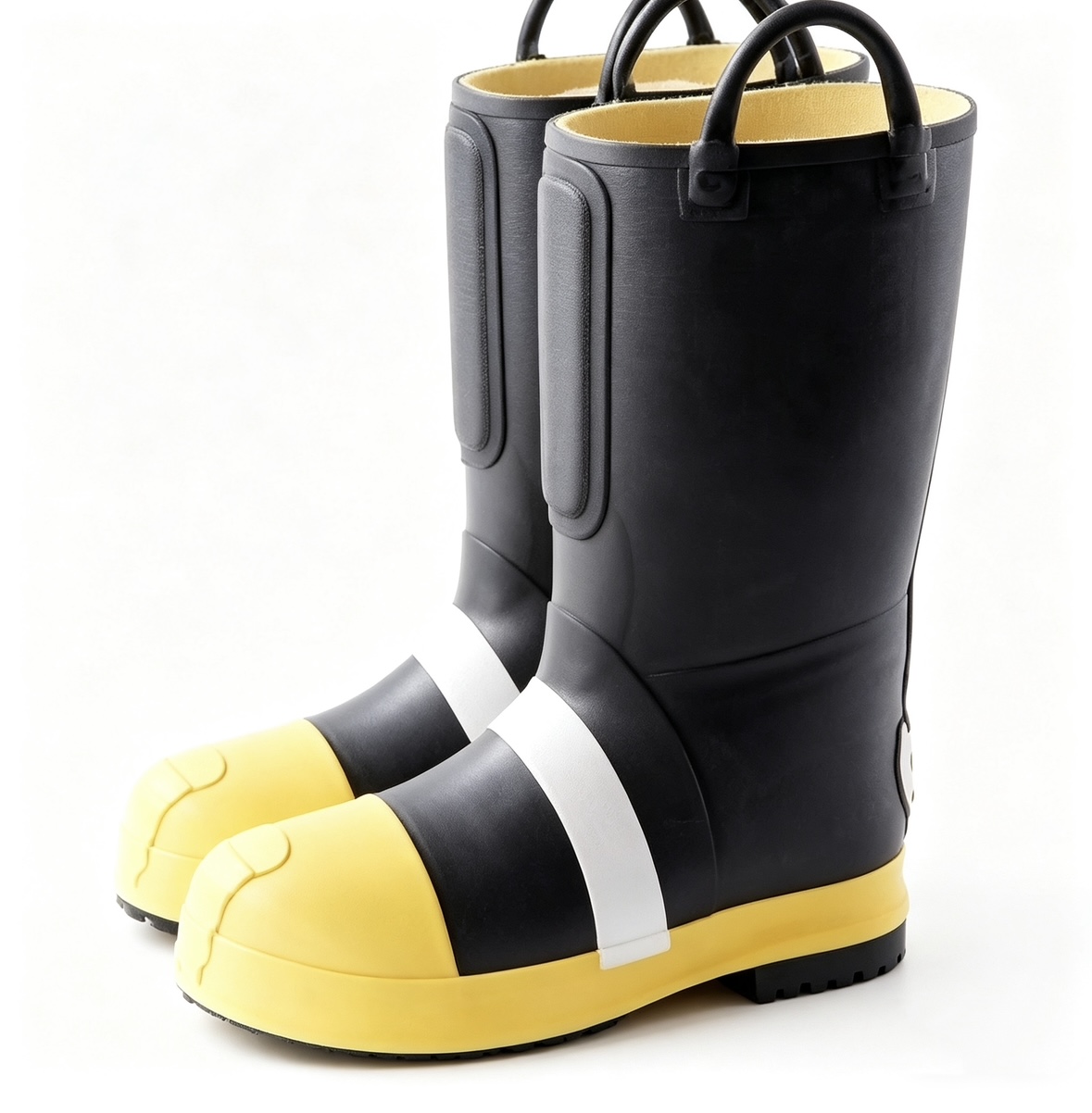
Firefighting boots are usually made of special materials to ensure heat resistance. One of the common materials is aramid fibers. Aramid fibers have excellent heat resistance and can maintain their structural strength at high temperatures. They can resist flames and high - temperature radiant heat, protecting the feet from direct damage. Another important material is rubber with high - temperature resistance. The rubber used in the soles is formulated through special compounding processes to increase its heat - resistant limit. For example, some rubber formulations contain heat - resistant additives that can prevent the rubber from melting or deforming at high temperatures.
In terms of manufacturing processes, firefighting boots often use vulcanization techniques. Vulcanization can make the rubber's molecular structure more stable, enhancing its heat resistance, wear resistance, and durability. Additionally, the interconnection between the upper and the sole uses special seam - free structures or high - strength stitching methods to prevent high - temperature air from entering the boots along the seams. Professional Rain Boot Manufacturer plays a crucial role in the production of these boots, using advanced production techniques and strict quality control to ensure that each pair of boots meets the high - performance requirements of firefighting operations.
3. Practical Solutions and Operation Steps
When choosing firefighters' combat boots, it is necessary to pay attention to the following points:
- Material Selection: Opt for boots that use high - end heat - resistant materials, such as those made with aramid fibers and high - temperature - resistant rubber. Check the material specification labels to ensure they meet professional heat - resistant standards.
- Sole Pattern: Select a sole with a deep and complex pattern. A good sole pattern can enhance traction on various surfaces, especially in the complex and often slippery environments during firefighting. This helps prevent firefighters from slipping and falling, reducing the risk of injury.
- Height of the Shaft: Choose a suitable shaft height. Generally, a higher shaft can provide better protection for the calves, but it should not be too high to affect the flexibility of movement. Consider the specific needs of firefighting operations. For example, in some building rescue operations, a moderately high shaft that allows for easy bending and climbing is more appropriate.
- Lining: Look for boots with a lining that has good heat insulation and moisture - wicking properties. A heat - insulating lining can further protect the feet from high - temperature conduction, while a moisture - wicking lining can keep the feet dry, reducing the discomfort caused by sweating in high - temperature environments.
- Size: Ensure the right size. Boots that are too small can restrict blood circulation and cause discomfort during long - term use. Boots that are too large may cause the feet to slide inside, increasing the risk of injury during movement. It is best to try on the boots and walk around to ensure a proper fit.
4. Daily Maintenance and Precautions
Proper daily maintenance can extend the service life of firefighters' combat boots and ensure their performance:
- Cleaning: After each use, clean the boots with mild soap and water to remove dirt, chemicals, and other contaminants attached to the surface. Avoid using strong solvents, as they may damage the materials of the boots.
- Drying: After cleaning, dry the boots in a cool and ventilated place. Do not expose them to direct sunlight or place them near a high - temperature heat source, as this can cause the materials to age and deform, reducing their heat resistance and durability.
- Odor Removal: If the boots have an odor, you can place odor - absorbing agents such as activated carbon inside the boots to remove the smell. Avoid using strong - smelling chemicals for deodorization, as they may react with the boot materials.
- Anti - aging: Regularly apply special protective agents to the boots to prevent the materials from aging. These protective agents can form a protective film on the surface of the boots, enhancing their resistance to heat, oxidation, and other factors.
- Precautions: Do not use ordinary rain boots instead of certified firefighting boots in firefighting operations. Ordinary rain boots do not have the necessary heat - resistant and protective properties, which can pose a serious threat to the safety of firefighters.
5. Industry Standard and Parameter Reference
This section provides authoritative support for the entire article. The following table lists relevant international standards, test methods, or verifiable parameters:
ParameterRecommended ReferenceWhy It MattersHeat resistanceASTM F2413 - 24 where heat - resistant performance is claimedHelps evaluate the boots' ability to withstand high temperatures without significant damage or performance degradation.Slip resistanceEN ISO 20344:2021 / EN ISO 20347:2022+A1:2024 where applicableHelps evaluate outsole grip on wet or contaminated surfaces, which is crucial for preventing slips and falls during firefighting operations.Occupational footwear requirementsISO 20347:2021 or EN ISO 20347:2022+A1:2024Supports non - safety occupational footwear selection, ensuring that the boots meet the basic requirements for firefighting work.Safety toe footwearASTM F2413 - 24 where protective toe performance is claimedRelevant only when the boot is designed and marked as protective safety footwear, protecting the toes from being crushed by falling objects.Chemical protective footwearEN 13832 - 3:2018 where prolonged chemical contact is claimedUseful for chemical degradation and permeation evaluation, which is important in industrial fires where chemical exposure may occur.
Do not invent exact performance numbers. Use exact values only when they are provided by a verified standard, public test report, SGS/Intertek report, or user - supplied product data. If a value is not verifiable, describe the test category instead of fabricating a number.
6. Customer Common FAQ
Q: How can I tell if a pair of firefighting boots meets the heat - resistant standard?
A: You can check if the boots have relevant certification marks, such as those specified in ASTM F2413 - 24. Professional Rain Boot Manufacturer usually provides detailed product specifications and test reports to prove the heat - resistant performance of the boots. Additionally, you can also look for third - party test reports or reviews from other users.
Q: Are there any differences in heat - resistant performance between different brands of firefighting boots?
A: Yes, there may be differences. Different brands may use different materials and manufacturing processes, which can lead to variations in heat - resistant performance. It is recommended to choose well - known brands with a good reputation and a history of producing high - quality firefighting boots. You can also refer to industry reviews and professional evaluations to make a more informed decision.
Q: Can I use regular waterproof boots instead of firefighting boots in a fire situation?
A: Absolutely not. Regular waterproof boots do not have the necessary heat - resistant properties. In a fire situation, the high temperatures can quickly damage the regular boots, exposing your feet to burns and other risks. Firefighting boots are specifically designed and tested to withstand extreme heat and provide the necessary protection for firefighters.
Q: How often should I replace my firefighting boots?
A: The replacement frequency depends on several factors, such as the frequency of use, the intensity of the firefighting operations, and the maintenance of the boots. Generally, if the boots show signs of significant wear, such as sole wear, cracks in the upper, or a decrease in heat - resistant performance, they should be replaced. It is also recommended to follow the manufacturer's guidelines for replacement intervals. Professional Rain Boot Manufacturer can provide more accurate advice based on the specific product.
Q: What should I do if my firefighting boots are exposed to chemicals during a fire?
A: Immediately follow the chemical - exposure emergency procedures. First, remove the boots as soon as possible to avoid further chemical contact. Then, rinse the boots thoroughly with plenty of water according to the type of chemical exposure. If possible, refer to the chemical's safety data sheet for specific cleaning and decontamination methods. After cleaning, have the boots inspected by a professional to determine if they can still be used safely.
Conclusion
In summary, this article has explored how firefighting boots withstand extreme heat in real - world scenarios. We have analyzed the core problems, including the causes and affected usage scenarios. The product and process principles have been explained, emphasizing the importance of special materials and manufacturing processes. Practical solutions for selection and operation steps have been provided, along with daily maintenance methods and precautions. Industry standards and parameter references offer reliable benchmarks for evaluating boots. Through the FAQs, common concerns have been addressed. Professional Rain Boot Manufacturer plays an important role in providing high - quality firefighting boots and professional advice, which is crucial for ensuring the safety of firefighters in high - temperature environments.
References
- ASTM F2413 - 24, Protective Footwear Specification
- EN ISO 20344:2021, Footwear Test Methods
- EN ISO 20347:2022+A1:2024, Occupational Footwear
- EN 13832 - 3:2018, Chemical Protective Footwear