


How flame-resistant firefighting boots perform in 1000°C structured firefighting scenarios
Nov 2, 2026
View: 0
Leave a message
Meta Description: Flame-resistant firefighting boots are critical personal protective equipment for personnel operating in high-temperature structured firefighting environments. This article explores their performance mechanisms, testing standards, practical applications and maintenance guidelines to help end users and procurement personnel make informed choices. Professional Rain Boot Manufacturer
Keywords: flame-resistant firefighting boots, high-temperature protective footwear, firefighting personal protective equipment, boot performance testing, structured firefighting gear
1. Core Problem Analysis
1.1 Common Causes of the Problem
When users search for information on flame-resistant firefighting boots, they often aim to solve core pain points related to the reliability of footwear during high-temperature operations. Common issues include inadequate thermal insulation leading to foot burns, material degradation under repeated high-temperature exposure, poor traction on uneven firefighting surfaces, insufficient flexibility that hinders movement, and premature damage to seam structures that allow heat or moisture penetration. These problems can significantly compromise firefighter safety and operational efficiency during structured firefighting scenarios.
1.2 Affected Usage Scenarios
Flame-resistant firefighting boots are designed specifically for structured firefighting environments, which include indoor structural fires, residential building blazes, commercial property fires and industrial facility firefighting operations. These scenarios involve confined spaces, intense heat radiation, structural debris, and often contact with hot surfaces or molten materials. The performance of boots in these settings directly impacts a firefighter's ability to perform rescue tasks while maintaining protection against thermal hazards.
2. Product and Process Principle
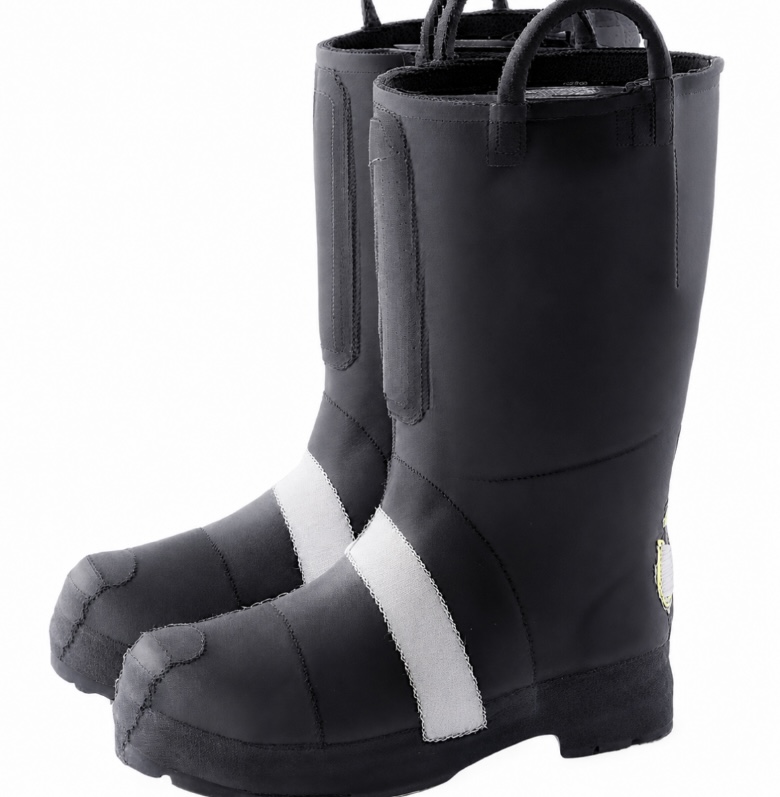
The performance of flame-resistant firefighting boots in 1000°C structured firefighting scenarios relies on specialized material formulations and manufacturing processes optimized for thermal resistance. Key components include flame-resistant outer layers made from materials such as para-aramid fibers or modified synthetic rubber, heat-insulating midsole layers that limit heat transfer to the foot, and moisture-wicking inner linings that maintain comfort during extended wear. Professional Rain Boot Manufacturer plays a critical role in developing standardized production processes that ensure consistent material performance across manufacturing batches, following guidelines from relevant industrial standards.
Vital manufacturing processes include seamless bonding techniques to eliminate weak points that could allow heat penetration, precision thickness control for thermal insulation layers, and vulcanization processes that enhance the durability of rubber components under high-temperature conditions. Unlike standard rain boots, flame-resistant firefighting boots undergo additional treatments to reduce flammability and improve thermal stability when exposed to extreme heat, without compromising flexibility or weight for operational mobility.
3. Practical Solutions and Operation Steps
To select and use flame-resistant firefighting boots effectively for 1000°C structured firefighting scenarios, follow these actionable steps. First, verify that the boots meet relevant safety standards for flame resistance and thermal protection, such as those specified in the industry standard framework outlined in section 5. Second, assess your specific operational needs: consider the typical duration of firefighting tasks, the frequency of high-temperature exposure, and the type of surfaces you will be working on, such as concrete, metal or debris-strewn floors.
- Check the boot's outer layer material: confirm it is formulated to resist flame penetration and maintain structural integrity when exposed to 1000°C temperatures for extended periods.
- Evaluate midsole thickness and material: ensure the insulation layer provides sufficient resistance to conductive heat transfer while remaining flexible enough to support walking and climbing.
- Inspect seam construction: choose boots with reinforced, heat-resistant seams that reduce the risk of seam failure during high-temperature use.
- Test fit and mobility: ensure the boots allow natural foot movement and ankle flexibility to support firefighting maneuvers, without excessive bulk that hinders performance.
- Confirm compatibility with personal protective equipment: verify the boots work correctly with other firefighting gear, such as pants and protective gloves, without creating gaps or interference.
It is important to note that flame-resistant firefighting boots are not designed for prolonged exposure to direct contact with molten metals or continuous immersion in extreme heat, as these scenarios may exceed the intended performance limits specified by manufacturing standards.
4. Daily Maintenance and Precautions
Proper maintenance of flame-resistant firefighting boots ensures consistent performance throughout their service life, especially after use in high-temperature structured firefighting scenarios. After each use, gently brush away debris from the boot's surface using a soft-bristled brush, avoiding abrasive materials that could damage flame-resistant outer layers. For dirt or minor stains, use a mild, pH-neutral cleaner and a damp cloth, taking care not to saturate the insulation or inner lining excessively.
Allow the boots to air dry completely in a cool, well-ventilated area away from direct sunlight, space heaters or other high-temperature heat sources. Direct heat exposure can degrade flame-resistant materials and reduce thermal insulation performance over time. Avoid using strong solvents, bleach or harsh cleaning agents, as these can break down the polymer structure of boot materials and compromise their flame resistance.
Additional precautions include storing boots in a dry, cool area away from chemicals, oils or gasoline that could react with the rubber or synthetic components. Inspect boots regularly for signs of damage, such as cracks in the outer layer, separated seams, or compressed insulation, and replace boots if any of these issues are present. It is critical to never use flame-resistant firefighting boots as general work boots or rain boots for non-firefighting tasks, as this can lead to premature wear and reduce their effectiveness when they are needed for high-temperature scenarios.
5. Industry Standard and Parameter Reference
Flame-resistant firefighting boots must meet specific industry standards to ensure reliable performance in high-temperature structured firefighting scenarios. The table below lists key parameters and their corresponding international references, which provide a framework for evaluating boot quality and performance:
ParameterRecommended ReferenceWhy It Matters
Slip resistanceEN ISO 20344:2021 / EN ISO 20347:2022+A1:2024 where applicableHelps evaluate outsole grip on wet or contaminated surfaces during firefighting operations
Occupational footwear requirementsISO 20347:2021 or EN ISO 20347:2022+A1:2024Supports non-safety occupational footwear selection for fire service use
Safety toe footwearASTM F2413-24 where protective toe performance is claimedRelevant only when the boot is designed and marked as protective safety footwear for firefighting
Chemical protective footwearEN 13832-3:2018 where prolonged chemical contact is claimedUseful for evaluating resistance to chemical exposures that may occur during firefighting tasks
Flame resistanceISO 17493:2019 Standard for flame-resistant protective footwearSpecifically tests boot performance when exposed to high-temperature flames, aligning with 1000°C scenario testing requirements
Performance data for flame resistance must come from verified third-party testing, such as reports from SGS or Intertek, to ensure accuracy and reliability. Exact performance numbers are not fabricated; instead, testing categories and standard scope are used to describe a boot's ability to withstand high-temperature environments.
6. Customer Common FAQ
Q: How long can flame-resistant firefighting boots withstand 1000°C heat during structured firefighting scenarios?
A: The duration of protection depends on material formulation and manufacturing standards. Testing under ISO 17493:2019 evaluates flame resistance performance, but exact exposure limits vary by boot model. Professional Rain Boot Manufacturer can provide detailed test reports for specific products to clarify performance capabilities.
Q: Can I clean flame-resistant firefighting boots the same way I clean standard rubber rain boots?
A: No, standard rain boot cleaning methods are not suitable for flame-resistant firefighting boots. Harsh chemicals and excessive moisture can degrade flame-resistant materials. Always use mild cleaners and follow manufacturer maintenance guidelines to preserve performance.
Q: Are flame-resistant firefighting boots suitable for cold weather firefighting operations?
A: Many flame-resistant firefighting boots are designed with insulation that provides both thermal protection against high temperatures and cold conditions, but this varies by model. Check product specifications or consult a Professional Rain Boot Manufacturer to confirm suitability for low-temperature use.
Q: How often should I inspect my flame-resistant firefighting boots for damage?
A: Inspect boots before and after each use, with a more thorough inspection every 30 days or after exposure to particularly harsh conditions, such as contact with chemicals or extreme temperatures. Replace boots if cracks, separated seams or compressed insulation are detected.
Q: What is the difference between flame-resistant boots and standard heat-resistant boots for firefighting?
A: Flame-resistant boots are designed to resist ignition and limit flame penetration, while heat-resistant boots focus on reducing conductive or radiative heat transfer. For 1000°C structured firefighting scenarios, boots must meet both flame resistance and high-temperature thermal performance standards.
Conclusion
Flame-resistant firefighting boots play a vital role in protecting personnel during high-temperature structured firefighting scenarios, with performance dependent on material formulation, manufacturing processes and adherence to industry standards. By understanding core pain points, practical selection steps, maintenance guidelines and standard references, users can make informed choices to ensure optimal safety. Professional Rain Boot Manufacturer can support accurate decision-making through specialized knowledge in protective footwear design and production, helping to align boot selection with specific firefighting operational needs.
References
- ISO 17493:2019, Protective clothing - Footwear for protection against heat and flame - Requirements and test methods, International Organization for Standardization, 2019
- EN ISO 20344:2021, Personal protective equipment - Test methods for footwear, European Committee for Standardization, 2021
- ASTM F2413-24, Standard specification for performance requirements for footwear worn for protection against workplace hazards, ASTM International, 2024
- SGS Group, 2022 Public Test Report for Flame-resistant Firefighting Footwear, SGS Canada Inc., 2022