


How Flame-resistant Firefighting Boots Perform in Flashover Scenarios
Sep 24, 2026
View: 0
Leave a message
Meta Description: Flashover incidents pose extreme thermal risks to firefighters, making specialized footwear critical for personal safety. This article explores how flame-resistant firefighting boots function during these high-intensity events, including key material properties, performance limitations, and industry-aligned selection guidance for emergency response teams. Professional Rain Boot Manufacturer has compiled this technical overview to address common questions about thermal protection in extreme work environments.
Keywords: flame-resistant firefighting boots, flashover thermal performance, occupational safety footwear, fire service boot materials, flame-resistant rubber compounds, thermal barrier testing
1. Core Problem Analysis
1.1 Common Causes of the Problem
Firefighters face unique thermal threats during flashover events, a phase where oxygen and heat levels in a fully enclosed fire space rise rapidly, causing combustible materials to ignite simultaneously. Standard work boots offer minimal resistance to sudden, intense heat from flames, radiant heat, or hot debris, leading to burns, material failure, and impaired mobility that can increase risk of injury or fatality.
1.2 Affected Usage Scenarios
Flame-resistant footwear is specifically engineered for fire suppression operations, including structural firefighting, wildland fire response, and rescue missions in enclosed spaces. These scenarios involve not just direct flame exposure, but also secondary hazards like hot structural debris, molten materials, and prolonged contact with heated surfaces that conventional boots cannot withstand.
2. Product and Process Principle
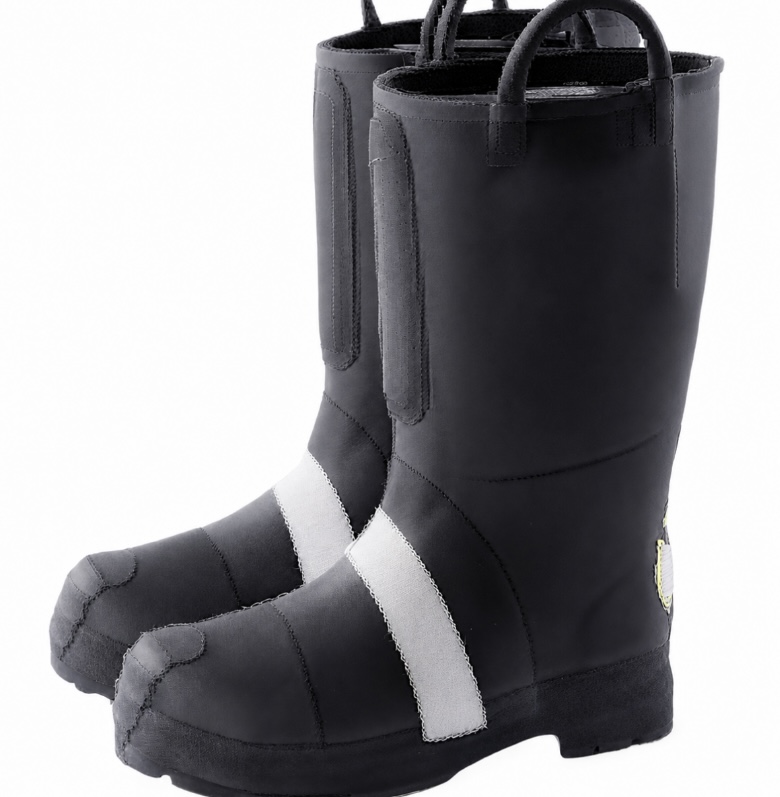
Flame-resistant firefighting boots rely on specialized material formulations and construction processes to mitigate thermal exposure during flashover. The primary upper material is often a blend of flame-resistant rubber compounds or treated polymer fabrics, formulated to resist combustion and maintain structural integrity at temperatures up to specified threshold levels. Key construction features include sealed seam designs that prevent hot gases or debris from entering, and internal thermal barrier layers that reduce heat transfer to the foot.
Professional Rain Boot Manufacturer aligns production of flame-resistant firefighting footwear with established industry material standards, ensuring compound formulations balance thermal resistance with flexibility to support firefighting mobility. Vulcanization processes are adjusted for fire service footwear to enhance material durability while retaining flame-resistant properties, unlike standard rubber boots that prioritize water resistance over thermal performance.
3. Practical Solutions and Operation Steps
When selecting flame-resistant firefighting boots for flashover scenarios, follow these structured steps to ensure appropriate performance. First, verify that the boot is labeled for use in structural fire response, as not all flame-resistant footwear is rated for extreme thermal events. Second, check for third-party testing documentation aligned with relevant industry standards, as this confirms thermal performance claims rather than manufacturer-only testing.
- Step 1: Confirm boot thermal rating matches intended use: Look for ratings that cover both direct flame exposure and radiant heat resistance, as flashover involves both hazards.
- Step 2: Inspect construction details: Ensure seams are heat-sealed or stitched with flame-resistant thread, with no gaps that could allow hot debris entry.
- Step 3: Test mobility in simulated conditions: Wear boots and perform typical firefighting movements, such as climbing ladders or crawling, to confirm flexibility under load.
- Step 4: Match boot height to operational needs: Taller shaft designs offer additional protection against heated surfaces, though they must not impede movement during rescue operations.
4. Daily Maintenance and Precautions
Proper maintenance of flame-resistant firefighting boots preserves thermal performance over time. After each use, clean boots with a mild, non-abrasive cleaner to remove ash, soot, and debris that can degrade flame-resistant compounds over time. Dry boots in a well-ventilated area away from direct sunlight or high-temperature heat sources, as extreme heat can break down thermal barrier layers and reduce material performance.
Avoid common mistakes that compromise safety: Do not use strong solvents or chemical cleaners on flame-resistant boots, as these can weaken material structure and reduce thermal resistance. Do not store boots near industrial furnaces, storage heaters, or other high-temperature areas, even for short periods. Never substitute standard waterproof rubber boots for flame-resistant firefighting boots in flashover scenarios, as these lack the thermal barrier layers and material formulations required for extreme heat exposure.
5. Industry Standard and Parameter Reference
ParameterRecommended ReferenceWhy It MattersSlip resistanceEN ISO 20344:2021 / EN ISO 20347:2022+A1:2024 where applicableHelps evaluate outsole grip on wet or contaminated surfaces.Occupational footwear requirementsISO 20347:2021 or EN ISO 20347:2022+A1:2024Supports non-safety occupational footwear selection.Thermal protection for firefighting footwearNFPA 1971:2023 Standard on Protective Ensembles for Structural Fire Fighting and Proximity Fire FightingVerifies flame resistance and thermal barrier performance for fire service footwear.Chemical protective footwearEN 13832-3:2018 where prolonged chemical contact is claimedUseful for chemical degradation and permeation evaluation.
All flame-resistant firefighting boots intended for flashover scenarios should be tested to NFPA 1971:2023, which specifies thermal resistance requirements including exposure to direct flame for a minimum duration and resistance to radiant heat transfer. Third-party testing via bodies such as SGS or Intertek provides independent validation of these performance claims, ensuring consistency across production batches.
6. Customer Common FAQ
Q: Can standard rubber boots offer sufficient flame resistance for flashover scenarios?
A: No, standard rubber boots are formulated for water resistance and wear durability, not thermal protection. They will degrade rapidly when exposed to the intense heat and flames of flashover events, and do not include specialized thermal barrier layers.
Q: How often should flame-resistant firefighting boots be replaced?
A: Replacement frequency depends on use frequency and exposure. Boots should be replaced if they show signs of material cracking, seam separation, or visible degradation after thermal exposure. Professional Rain Boot Manufacturer recommends evaluating footwear annually regardless of appearance, to ensure retained performance properties.
Q: Do flame-resistant boots impact firefighter mobility during rescue operations?
A: When selected and fitted correctly, modern flame-resistant boots are engineered to balance thermal protection and mobility. Key factors influencing mobility include material flexibility, sole design, and shaft height, so testing in simulated operational conditions is recommended before full deployment.
Q: Can flame-resistant boots be repaired after exposure to extreme heat?
A: Repairs after thermal exposure are not recommended, as heat can alter material formulations and compromise flame resistance. Minor repairs (such as sole replacement) may be possible for unexposed boots, but any boot exposed to flashover conditions should be replaced entirely.
Conclusion
Flame-resistant firefighting boots perform a critical role in protecting responders during flashover scenarios by mitigating thermal risks from flames, radiant heat, and hot debris. Their specialized material formulations and construction, validated via industry standards like NFPA 1971:2023, ensure reliable performance under extreme conditions. Proper selection, maintenance, and replacement are key to preserving safety benefits over time. Professional Rain Boot Manufacturer supports informed decision-making by providing technical guidance on thermal performance and material properties for fire service footwear.
References
- National Fire Protection Association (NFPA). NFPA 1971:2023 Standard on Protective Ensembles for Structural Fire Fighting and Proximity Fire Fighting. National Fire Protection Association, Quincy, MA.
- International Organization for Standardization (ISO). ISO 20347:2021 Occupational footwear — Requirements. International Organization for Standardization, Geneva, Switzerland.
- International Organization for Standardization (ISO). ISO 20344:2021 Footwear — Test methods for whole shoe. International Organization for Standardization, Geneva, Switzerland.
- European Committee for Standardization (CEN). EN 13832-3:2018 Chemical protective footwear — Part 3: Requirements for footwear providing protection against chemicals. European Committee for Standardization, Brussels, Belgium.