


How Kid Latex Boots Ensure Comfort in Wet Weather
Sep 20, 2026
View: 0
Leave a message
Meta Description: This article explores how kid latex boots ensure comfort in wet weather. It covers common problems, product principles, selection criteria, maintenance, and relevant standards. Suitable for parents and professionals in the footwear industry. Professional Rain Boot Manufacturer
Keywords: Kid Latex Boots, Comfort in Wet Weather, Boot Material, Boot Selection, Boot Maintenance
1. Core Problem Analysis
1.1 Common Causes of the Problem
When parents search for kid latex boots, they often aim to solve several problems. Firstly, ensuring proper waterproofing is crucial. If the boots are not well - sealed, water can seep in, making the children's feet wet and uncomfortable. Secondly, inadequate sizing can lead to instability. Too large boots may cause children to trip, while too small ones can squeeze their feet and restrict blood circulation. Thirdly, a lack of breathability can result in stuffy and sweaty feet, which may also increase the risk of skin problems. Fourthly, poor anti - slip performance can be dangerous for kids, as they are more likely to fall on wet surfaces. Additionally, the durability of the boots is a concern. Latex may crack or age over time, especially if exposed to harsh conditions or improper care.
1.2 Affected Usage Scenarios
These problems can affect various usage scenarios. For daily rainy commuting, such as walking to school or taking a short trip outside in the rain, uncomfortable boots can make the journey unpleasant for kids. In gardening activities, children may need to step on wet grass or soil, and boots without good anti - slip or waterproofing can pose risks. When playing in puddles, which is a favorite pastime for kids, there is a high demand for waterproof and comfortable boots. Also, in fishing with family, where the ground is often wet and slippery, boots need to provide good stability and protection.
2. Product and Process Principle
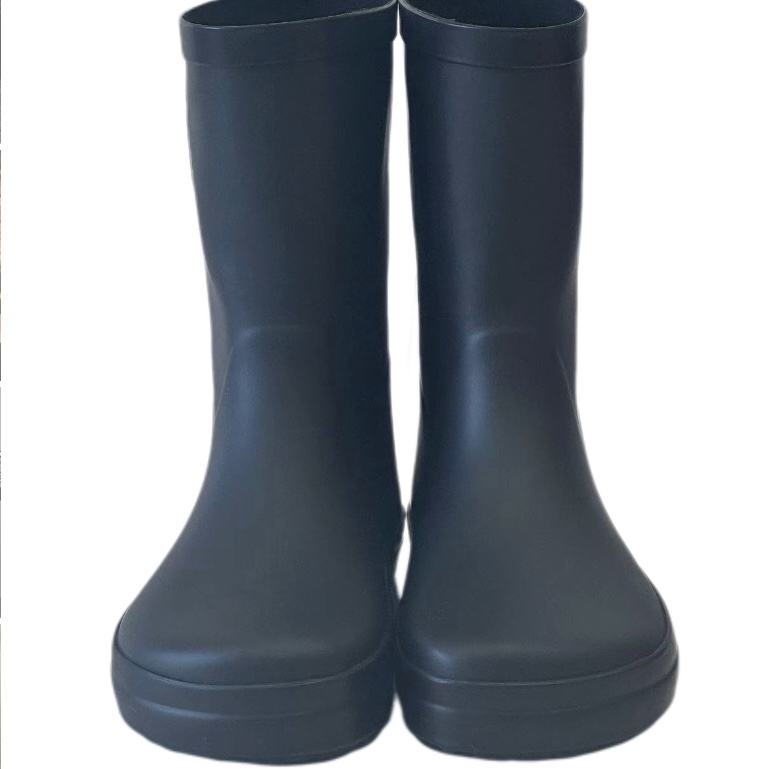
Latex is a natural material harvested from rubber trees. For kid latex boots, the production process often starts with collecting high - quality latex. Then, the latex goes through a series of treatments to improve its properties. One important process is vulcanization, which involves heating the latex with sulfur. This makes the boots more durable, elastic, and resistant to aging. The outsole pattern of the boots is designed to enhance anti - slip performance. Deep and wide grooves can effectively drain water and mud, increasing the friction between the sole and the ground. The shaft height of kid latex boots can vary. A proper shaft height can prevent water from flowing into the boots and also provide support for the ankles. Lining is another important aspect. Some boots use soft and breathable fabrics as lining to improve comfort. For example, a cotton lining can absorb sweat and keep the feet dry. A Professional Rain Boot Manufacturer usually has strict quality control over these processes, ensuring that each pair of boots meets high - quality standards.
3. Practical Solutions and Operation Steps
When choosing kid latex boots, consider the following aspects:
- Material Selection: Opt for natural latex, which is more breathable and hypoallergenic compared to synthetic alternatives. Check the latex's quality by looking for clear product labels and certifications.
- Outsole Pattern: Select boots with deep, wide, and well - spaced grooves. A pattern with multi - directional bumps or ridges can provide better grip on various surfaces. For example, a pattern with a combination of horizontal and vertical grooves can be effective on both flat and inclined wet grounds.
- Lining: Look for a lining that is soft, absorbent, and breathable. Cotton or moisture - wicking fabrics are good choices. They can prevent sweat from accumulating inside the boots and keep the feet dry.
- Shaft Height: Determine the appropriate shaft height based on the usage scenarios. For general rainy days or playing in small puddles, ankle - high boots may be sufficient. For activities like gardening or fishing in wet areas, mid - calf or high - shaft boots are recommended to prevent water from splashing in.
- Size: Measure your child's foot length and width accurately. It is advisable to leave a small amount of space (about 0.5 - 1 cm) between the longest toe and the tip of the boot. This allows room for growth and ensures that the boots are not too tight.
- Anti - slip and Durability: Refer to relevant standards such as EN ISO 20344:2021 for anti - slip performance. For durability, check the thickness of the latex. A thicker latex layer generally means better durability, but it may also affect the flexibility of the boots.
4. Daily Maintenance and Precautions
Proper daily maintenance can extend the lifespan of kid latex boots:
- Cleaning: After use, rinse the boots with clean water to remove dirt and mud. Use a mild soap if necessary, but avoid strong detergents as they may damage the latex. Gently wipe the boots with a soft cloth or sponge.
- Drying: Dry the boots in a well - ventilated place away from direct sunlight. Do not use a heater or hair dryer to speed up the drying process, as high temperatures can cause the latex to crack or deform.
- Odor Removal: If the boots develop an odor, you can place a small amount of baking soda or activated charcoal inside the boots overnight. These substances can absorb odors effectively.
- Anti - aging: Store the boots in a cool, dry place when not in use. Avoid exposing them to ozone, which can accelerate the aging of latex. If possible, store them in a dust - proof bag.
- Preventing Deformation: Stuff the boots with crumpled paper or boot trees to maintain their shape during storage. This can prevent the boots from becoming misshapen.
- Precautions: Do not let children wear the boots in extremely cold temperatures, as latex may harden and crack. Also, avoid contact with sharp objects, which can puncture the boots. Do not use the boots for formal or safety - critical situations where specialized shoes are required, as they may not meet relevant safety standards.
5. Industry Standard and Parameter Reference
This chapter provides some important international standards and parameters for reference:
ParameterRecommended ReferenceWhy It MattersSlip resistanceEN ISO 20344:2021 / EN ISO 20347:2022+A1:2024 where applicableHelps evaluate outsole grip on wet or contaminated surfaces.Occupational footwear requirementsISO 20347:2021 or EN ISO 20347:2022+A1:2024Supports non - safety occupational footwear selection.Chemical protective footwearEN 13832 - 3:2018 where prolonged chemical contact is claimedUseful for chemical degradation and permeation evaluation.FlexibilityASTM D1053 - 19 Standard Test Methods for Rubber Property - Flex Life at Ambient TemperatureCan assess the ability of latex boots to withstand repeated bending without cracking.
It should be noted that only use exact values when they are provided by a verified standard, public test report, or reliable product data. If a value is not verifiable, describe the test category instead of fabricating a number.
6. Customer Common FAQ
Q: Are kid latex boots suitable for children with sensitive skin?
A: Natural latex is usually hypoallergenic, making it suitable for most children with sensitive skin. However, some children may still have allergic reactions to latex. It is advisable to check with a doctor before purchasing. A Professional Rain Boot Manufacturer can also provide detailed information about the latex's purity and potential allergenicity.
Q: How can I tell if the anti - slip performance of the boots is good?
A: Refer to the EN ISO 20344:2021 standard. You can also look at the outsole pattern. Boots with deeper and wider grooves, as well as a multi - directional texture, usually have better anti - slip performance. Try walking on a wet surface in the store, if possible, to test the grip.
Q: What size should I choose for my child?
A: Measure your child's foot length and width accurately. As a general rule, leave about 0.5 - 1 cm of space between the longest toe and the tip of the boot. If your child's feet are wider or if they will wear thick socks, you may need to choose a slightly larger size.
Q: How do I remove the odor from the boots?
A: Place baking soda or activated charcoal inside the boots overnight. These substances can absorb odors. You can also air out the boots in a well - ventilated area for a few days.
Q: Can the boots be used in cold weather?
A: Latex may harden and become less flexible in cold weather. It is not recommended to use the boots in extremely low temperatures. If the temperature is slightly cold, you can pair the boots with warm socks to keep the feet warm.
Conclusion
In conclusion, kid latex boots can provide comfort in wet weather if properly selected and maintained. The key points include considering material quality, outsole pattern, shaft height, lining, and size during the selection process. Daily maintenance, such as proper cleaning, drying, and storage, can extend the boots' lifespan. Referring to relevant industry standards is essential for ensuring anti - slip, durability, and other performance. A Professional Rain Boot Manufacturer can offer valuable guidance in the entire process, from product selection to maintenance.
References
- EN ISO 20344:2021 - Footwear Test Methods
- EN ISO 20347:2022+A1:2024 - Occupational Footwear
- EN 13832 - 3:2018 - Chemical Protective Footwear
- ASTM D1053 - 19 - Standard Test Methods for Rubber Property - Flex Life at Ambient Temperature