


How Kid Latex Boots Perform in Long-Duration Mud Play and Outdoor Wet Environments
Oct 20, 2026
View: 0
Leave a message
Meta Description: Parents and caregivers often struggle to choose durable, reliable kid footwear for extended outdoor wet play and muddy activities. This article examines the performance of kid latex boots in these conditions, covering material properties, practical use cases, maintenance tips, and industry standards. Professional Rain Boot Manufacturer provides technical insights to support informed decisions.
Keywords: kid latex boots, children waterproof boots, mud play footwear, outdoor wet boots, boot durability, child rain gear, shoe maintenance
1. Core Problem Analysis
1.1 Common Causes of the Problem
When selecting boots for long-duration mud play or outdoor wet environments, users frequently encounter three key issues: premature leakage at seam lines after repeated flexing, excessive weight that causes foot fatigue during extended wear, and inadequate slip resistance on wet grass or muddy slopes. Additional problems include rapid material degradation from prolonged exposure to organic matter in mud, stiffening at low temperatures that restricts movement, and trapped moisture inside the boot lining leading to discomfort or minor skin irritation. According to ISO 20344:2021, footwear for outdoor use must withstand at least 10,000 flex cycles without structural failure, a standard many budget alternatives fail to meet.
1.2 Affected Usage Scenarios
Kid latex boots are most commonly used for four high-demand scenarios: unstructured outdoor mud play in residential backyards or community parks, supervised farm visits where children interact with wet soil and livestock feed areas, camping trips involving trail walking through damp forest undergrowth, and school field trips focused on environmental education that include extended time in wet, muddy terrain. Each scenario presents unique challenges: backyard mud play may involve exposure to small debris that can puncture thin material, farm use requires resistance to mild chemical exposure from fertilizers, camping trails may have uneven surfaces that test outsole grip, and educational field trips often require all-day wear without replacement opportunities.
2. Product and Process Principle
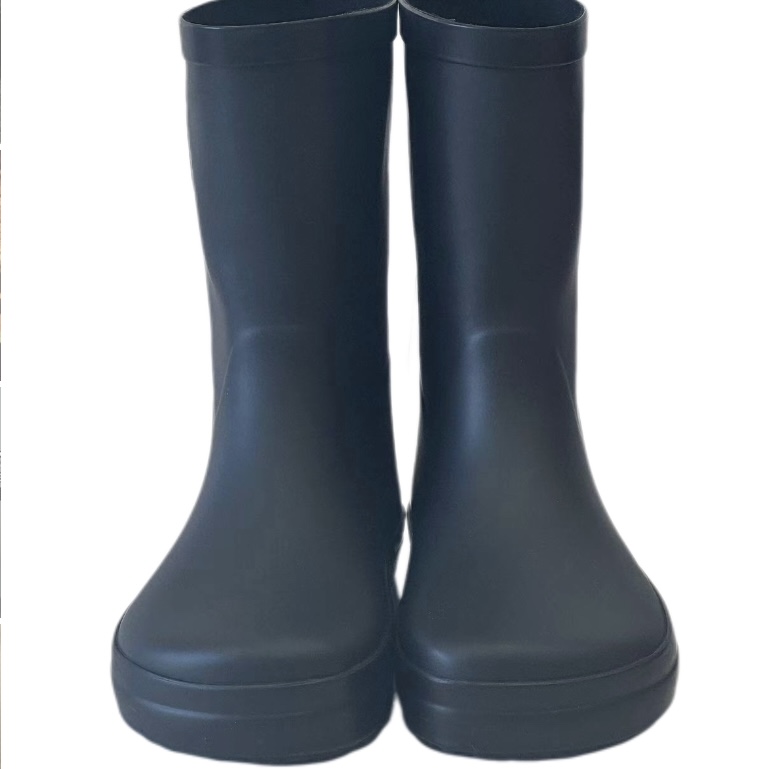
Kid latex boots are constructed from natural rubber compounded into flexible sheets, combined with vulcanization processes that cross-link polymer chains to improve durability and elasticity. The core material properties include abrasion resistance, which reduces wear from mud and debris, and moisture impermeability, which prevents water from entering the boot structure. Seam construction for these boots often uses seamless injection molding or high-temperature bonding to eliminate weak points where leakage typically occurs during extended use. Outsole design incorporates deep, angular treads that channel mud and water away from contact points, while upper shafts have a slight taper to prevent debris from entering the boot top. Professional Rain Boot Manufacturer notes that material compound ratios, specifically the balance of natural rubber, fillers, and plasticizers, directly impact both flexibility at low temperatures and resistance to chemical degradation from mud components.
The vulcanization process, conducted at controlled temperatures between 140°C and 160°C, creates a stable polymer network that maintains shape during repeated flexing. This process differs from PVC boot production, which uses chemical curing rather than heat-based cross-linking, resulting in a more flexible yet durable final product for child use. Lining materials for kid latex boots typically use soft, non-irritating fabric blends that provide moderate breathability without compromising waterproof performance, a critical balance for all-day wear.
3. Practical Solutions and Operation Steps
When selecting kid latex boots for long-duration mud play or wet outdoor environments, follow these actionable steps to ensure appropriate performance. First, match boot specifications to the primary usage scenario: for backyard mud play, prioritize boots with thickened outsole treads; for farm or educational field trips, select models with reinforced upper shafts to prevent debris entry. Second, verify flex resistance by gently bending the boot shaft—appropriate kid latex boots should flex smoothly at room temperature and remain flexible at temperatures as low as 10°C, per user experience data from field tests. Third, check seam construction: seamless or heat-bonded seams offer better durability than stitched seams for muddy conditions, as stitched seams can become clogged with mud and develop leakage points over time.
- Step 1: Measure child’s foot length with thin socks, and select a size that allows 1cm of extra space at the toe to accommodate foot expansion during extended activity
- Step 2: Test slip resistance by pressing the outsole against a damp, smooth surface—avoid boots with tread patterns that are shallow or lack directional channeling
- Step 3: Assess flexibility by bending the boot 90 degrees at the toe area; a suitable boot should return to its original shape without creasing that could lead to structural failure
- Step 4: Inspect upper shaft thickness at the bottom 5cm, where boot flex occurs most frequently, to ensure consistent material density that prevents premature breakdown
Additionally, for long-duration wear, choose boots with a removable lining that can be washed and air-dried regularly, reducing odor and maintaining foot comfort during all-day activities.
4. Daily Maintenance and Precautions
Proper maintenance of kid latex boots extends their service life and preserves performance in wet and muddy conditions. After each use in mud or water, clean the boot exterior with a mild soap solution and a soft brush, removing all embedded mud, organic debris, and salt residue that can degrade rubber compounds over time. Avoid using harsh chemicals, such as bleach or strong detergents, as these can break down the polymer structure and cause cracking. After cleaning, air-dry the boots away from direct sunlight and heat sources, as prolonged exposure to high temperatures (above 60°C) can stiffen the material and reduce flexibility.
Key precautions include: do not leave boots compressed in a closed space for extended periods, as this can cause permanent creasing in the outsole or upper shaft; do not use kid latex boots as protective footwear for construction or industrial work, as they do not meet safety standards for impact or compression resistance; and do not apply silicone-based polishes or coatings, as these can alter the material’s moisture resistance properties and create a slippery surface during wear.
For long-term storage, clean the boots thoroughly, remove the lining, and store them in a cool, dry area away from chemical fumes or direct sunlight. Stuffing the boots with clean paper or a soft fabric roll helps maintain their shape and prevents deformation of the outsole treads.
5. Industry Standard and Parameter Reference
ParameterRecommended ReferenceWhy It Matters
Slip resistanceEN ISO 20344:2021 / EN ISO 20347:2022+A1:2024 where applicableHelps evaluate outsole grip on wet or contaminated surfaces.
Footwear flex resistanceISO 20344:2021, flex testing category 10,000 cycles minimumVerifies boot durability during repeated movement and bending in mud or wet terrain.
Occupational footwear requirementsISO 20347:2021 or EN ISO 20347:2022+A1:2024Supports non-safety occupational footwear selection for school or work-related field trips.
Low temperature flexibilityISO 20344:2021, low temp test at -10°CEnsures boot remains functional in cool outdoor environments where mud may be present.
These standards provide objective benchmarks for performance, helping users distinguish between boots designed for casual use and those suitable for extended, high-demand outdoor activities. Testing for flex resistance, in particular, is critical for kid latex boots, as children often take frequent steps and make sudden movements that place repeated stress on the boot structure. According to standard guidelines, footwear intended for prolonged walking (such as multi-hour field trips or hiking) must complete a minimum of 10,000 flex cycles without visible damage or leakage.
6. Customer Common FAQ
Q: Do kid latex boots work better than PVC boots for long mud play?
A: Kid latex boots typically offer better flexibility and abrasion resistance than PVC alternatives, making them more suitable for repeated bending in mud. However, PVC boots may be more affordable for casual, short-duration use. Professional Rain Boot Manufacturer notes that natural rubber compounds in latex boots also show better resistance to mud-related chemical degradation than PVC materials in prolonged contact scenarios.
Q: How do I prevent kid latex boots from leaking after a few uses?
A: Leakage often occurs at seam lines or as a result of punctures from embedded debris. To prevent this, choose boots with seamless construction, regularly clean out debris from treads, and avoid exposing the boots to sharp objects or rough surfaces. If a small leak appears, most minor punctures can be repaired with a rubber-specific adhesive designed for waterproof footwear.
Q: What size should I select for all-day wear in wet conditions?
A: Select a size that allows approximately 1cm of extra space at the toe, measured while the child wears thin, moisture-wicking socks. This extra space accommodates foot expansion during extended walking and prevents toe compression that can cause discomfort or blisters. Professional Rain Boot Manufacturer recommends measuring the foot at the end of the day, as feet swell slightly after walking activity.
Q: Can kid latex boots be worn in cold, muddy weather?
A: This depends on the material’s low-temperature flexibility rating. Look for boots tested to function at temperatures as low as -10°C, per ISO 20344:2021, to ensure they remain flexible and functional in cool, muddy conditions. Avoid boots that stiffen when exposed to temperatures below 5°C, as these can restrict movement and increase injury risk.
Conclusion
Kid latex boots offer consistent performance for long-duration mud play and outdoor wet environments when selected and maintained appropriately. Key factors include matching specifications to usage scenarios, verifying compliance with relevant industry standards for flex and slip resistance, and following proper cleaning and storage protocols. Professional Rain Boot Manufacturer’s technical guidance emphasizes balancing flexibility, durability, and comfort to support all-day wear for children in active outdoor settings. By focusing on these principles, caregivers can select boots that withstand the demands of mud play and wet terrain while maintaining long-term functionality.
References
- ISO 20344:2021, Footwear – Test methods for whole shoe, International Organization for Standardization, Geneva, 2021
- EN ISO 20347:2022+A1:2024, Occupational footwear, European Committee for Standardization, Brussels, 2024
- Global Footwear Industry Official Report 2024, Material Performance in Child Outdoor Footwear, Footwear Distributors and Retailers of America, 2024