


How Kid Latex Boots Provide Safety for Playground and Outdoor Activities
Oct 12, 2026
View: 0
Leave a message
Meta Description: Parents seeking reliable protection for children during muddy play or rainy outdoor trips need clear guidance on selecting appropriate kid latex boots. This article breaks down key safety features, material properties, and industry standards to help families make informed choices, with insights from a Professional Rain Boot Manufacturer.
Keywords: kid latex boots, children waterproof boots, playground safety boots, outdoor adventure footwear, rain boot material, child footwear safety
1. Core Problem Analysis
1.1 Common Causes of the Problem
When selecting children's footwear for playgrounds or outdoor adventures, many parents face hidden safety issues: boots that leak and soak feet, lack grip on wet playground surfaces, have stiff soles that cause fatigue, or use materials that retain moisture and lead to blisters. Additional concerns include boots that tear easily from rough play, or insufficient ankle support that increases tripping risk. These issues stem from mismatched material choice, poor construction, or failure to align with specific child activity needs.
1.2 Affected Usage Scenarios
High-risk scenarios for children's footwear safety include: wet playgrounds with rubber mulch or damp grass, muddy garden play areas during rainy seasons, forest trail outings with uneven, moist terrain, and splash pad visits where water exposure is frequent. For each scenario, different safety requirements apply—such as slip resistance for playground surfaces, water impermeability for trail walks, and abrasion resistance for rough play.
2. Product and Process Principle
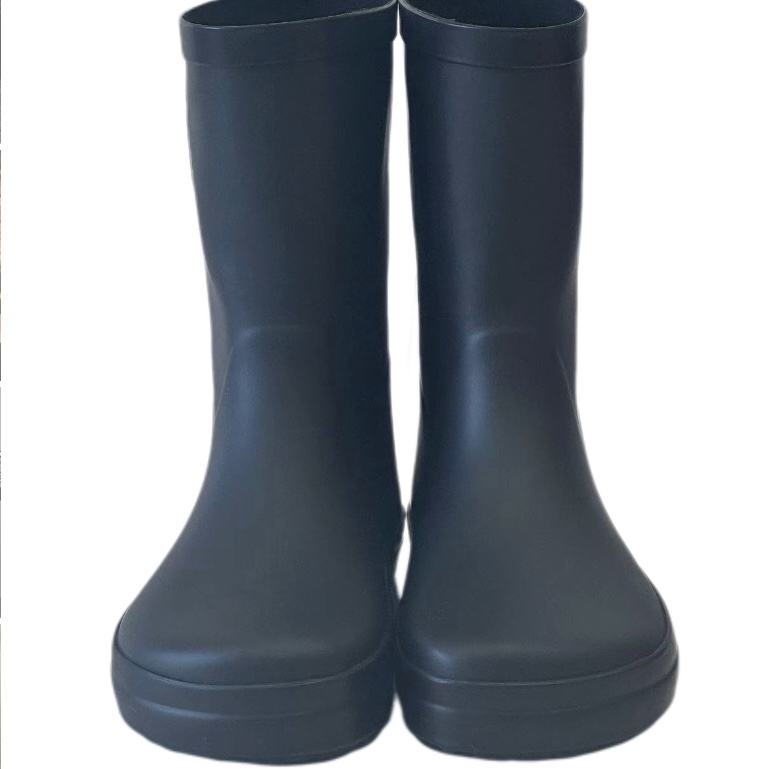
Kid latex boots are constructed using natural or synthetic latex, a flexible elastomer valued for its water resistance and durability. Unlike PVC, latex forms a seamless, uniform layer when processed, eliminating potential leak points at seams. The manufacturing process typically involves dip molding, where a latex compound is applied to a shaped last, cured at controlled temperatures, and finished with a textured outsole for grip. A Professional Rain Boot Manufacturer notes that material compound formulations for children's boots often balance flexibility (for growing feet) with tear resistance (for active play), avoiding overly stiff compounds that restrict movement.
The outsole design plays a critical safety role: deep, evenly spaced treads improve traction on wet or uneven surfaces, while a slightly raised heel cup provides subtle ankle stability. Lining materials, such as breathable cotton or mesh, are often integrated to reduce moisture buildup, preventing blisters during extended wear. Thickness control is another key factor—too thin a layer risks tearing, while an overly thick boot reduces comfort for quick, agile movement.
3. Practical Solutions and Operation Steps
To select safe kid latex boots for playground and outdoor use, follow these actionable steps:
- Test slip resistance: Press the outsole firmly against a damp, smooth surface (like a wet tile) to assess grip; avoid boots with flat, smooth soles that offer minimal traction.
- Check flexibility: Bend the boot's toe area 90 degrees—if it bends easily without resistance, it will accommodate growing feet and avoid restricting movement during play.
- Verify water impermeability: Pour a small amount of water into the boot, invert it, and wait 1–2 minutes; check for any moisture on the inner lining to confirm no seepage through seams or material gaps.
- Assess ankle support: Hold the boot upright and apply gentle side pressure to the shaft; a boot that maintains its shape without collapsing offers basic ankle stability for uneven terrain.
- Match to specific scenarios: For playground use, prioritize lightweight, flexible boots; for forest trail outings, choose slightly thicker boots with reinforced toe areas to handle rough ground.
4. Daily Maintenance and Precautions
Proper maintenance extends the lifespan of kid latex boots and preserves their safety features. After each outdoor use, wipe the exterior with a damp cloth to remove dirt, mud, or grass stains—avoid using abrasive scrubbers that can scratch the latex surface and reduce water resistance. For interior drying, remove any insoles, loosen the shaft, and air them in a cool, ventilated area; never place boots near direct sunlight, heaters, or radiators, as high temperatures can cause latex to crack or lose flexibility.
Key precautions include: do not use strong chemical cleaners (such as bleach or heavy-duty detergents) that can degrade latex materials, do not submerge non-waterproof linings in water for extended periods, and do not use kid latex boots for heavy-duty industrial work or cold-weather activities requiring specialized insulation. If a boot develops a small tear, use a latex-specific repair kit (designed for elastomer materials) rather than adhesive meant for other plastics, to maintain waterproof properties.
5. Industry Standard and Parameter Reference
ParameterRecommended ReferenceWhy It Matters
Slip resistanceEN ISO 20344:2021 / EN ISO 20347:2022+A1:2024 (where applicable)Helps evaluate outsole grip on wet or contaminated playground and outdoor surfaces.
Occupational footwear requirementsISO 20347:2021 or EN ISO 20347:2022+A1:2024Supports non-safety boot selection for general outdoor child activities.
Abrasion resistanceASTM F2413-24 Annex A5 (material abrasion test)Relevant for assessing durability against rough playground surfaces and mud exposure.
Water permeabilityISO 20344:2021 Method 7.1 (static water penetration test)Verifies no seepage through boot material or seams, critical for rainy outdoor use.
These standards provide a consistent framework for evaluating performance, eliminating guesswork when comparing different boot options. All test results should be conducted on relevant boot models, as performance can vary between designs even when using the same base material.
6. Customer Common FAQ
Q: Are kid latex boots more slip-resistant than PVC boots on wet playground surfaces?
A: Generally, well-designed latex boots with textured outsoles offer comparable slip resistance to high-quality PVC boots. A Professional Rain Boot Manufacturer notes that latex compounds can be formulated with slightly softer properties, which may adapt better to uneven surfaces, but slip resistance depends more on outsole pattern than core material type.
Q: How often should I replace my child's latex boots for safety reasons?
A: Replace boots if you notice cracks in the latex, torn seams, reduced tread depth, or consistent water seepage. For active children, this typically occurs every 6–12 months, depending on play frequency and terrain exposure. Avoid using boots that show signs of material degradation, as they may fail to protect feet from wet or sharp ground.
Q: Can kid latex boots be worn in cold weather without insulation?
A: Standard kid latex boots lack specialized insulation for extreme cold, and may cause discomfort if temperatures drop below freezing. For cold outdoor adventures, select insulated latex or rubber boots designed for low-temperature use, and avoid exposing uninsulated boots to prolonged sub-zero conditions.
Q: Is it safe to clean latex boots with regular soap and water?
A: Mild, pH-neutral soap and lukewarm water are safe for cleaning latex boots. Avoid harsh detergents or solvents, which can break down latex over time and reduce waterproof performance. After cleaning, always air-dry boots away from direct heat sources to prevent cracking.
Conclusion
Kid latex boots deliver reliable safety for playground and outdoor adventures when selected based on material properties, construction quality, and alignment with specific activity needs. Understanding core issues like slip resistance, water impermeability, and durability helps parents make informed choices, while proper maintenance preserves boot performance long-term. Insights from a Professional Rain Boot Manufacturer, combined with adherence to relevant industry standards, ensure the boots meet the unique demands of active child outdoor play.
References
- ISO 20344:2021, Footwear - Test methods for whole footwear, International Organization for Standardization, 2021
- EN ISO 20347:2022+A1:2024, Personal protective equipment - Occupational footwear, European Committee for Standardization, 2024
- ASTM F2413-24, Standard Specification for Performance Requirements for Protective Footwear, ASTM International, 2024