


How Kid Neoprene Boots Resist Mud and Wet Cold for Play and Hikes
Nov 5, 2026
View: 0
Leave a message
Meta Description: Parents and caregivers seek durable kid neoprene boots that handle muddy playgrounds and damp winter trails without wearing out. This guide explains material performance, usage conditions, and maintenance tips to help choose the right footwear for active children. Professional Rain Boot Manufacturer shares practical insights for families.
Keywords: kid neoprene boots, waterproof children’s boots, muddy playground footwear, cold weather boots for kids, boot maintenance for children’s shoes
1. Core Problem Analysis
1.1 Common Causes of the Problem
Many users search for solutions to prevent kid neoprene boots from failing prematurely, including leaks at seams, outsole slip on wet or muddy surfaces, heat buildup during active play, stiff material in cold temperatures, and degradation from frequent cleaning. Some boots also fail to provide sufficient insulation for prolonged outdoor exposure in winter. These issues often stem from improper material selection for specific use cases or lack of proper care.
1.2 Affected Usage Scenarios
The affected scenarios are mostly active outdoor use, including school playgrounds with wet or muddy ground, winter hikes in slushy conditions, neighborhood walks in cold rain, and after-school play in damp yards. Kids’ activities involve more movement and contact with rough surfaces, which accelerates wear compared to adult footwear, making durability a top priority.
2. Product and Process Principle
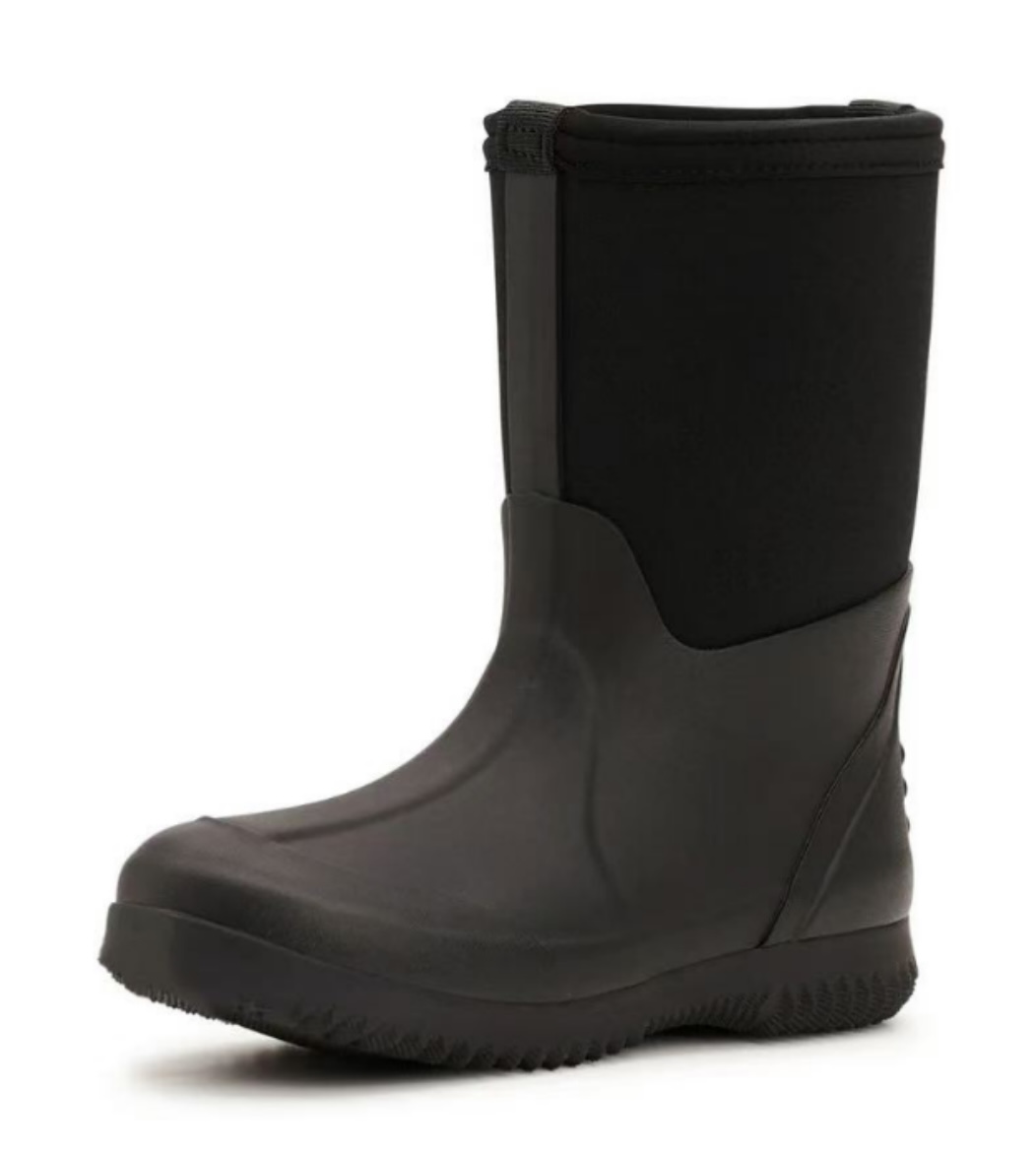
Kid neoprene boots rely on closed-cell neoprene material, which offers water resistance, insulation, and flexibility. Neoprene is a synthetic rubber compound formed through polymerization, and its closed-cell structure traps air to provide thermal insulation while blocking water from entering. For boots designed for muddy or wet conditions, seam-free bonding or reinforced stitch seams prevent water penetration, with outsole patterns engineered to grip on uneven, slippery surfaces.
Professional Rain Boot Manufacturer notes that material formulation and thickness control directly impact performance: thinner neoprene offers more flexibility for active play, while thicker neoprene provides greater insulation for cold temperatures. Vulcanization processes are adjusted to balance durability and comfort, ensuring the boot can withstand repeated bending during running, jumping, and climbing activities.
3. Practical Solutions and Operation Steps
To select and use kid neoprene boots effectively, follow these actionable steps to match the footwear to intended use cases and ensure proper function. First, assess the primary scenario: for muddy playgrounds, prioritize outsoles with deep treads and water-repellent upper materials. For winter treks, choose neoprene with a minimum thickness of 3mm to balance insulation and flexibility.
- Check outsole slip resistance against EN ISO 20347:2021 standards for wet surface grip, avoiding smooth outsoles that cause falls on mud or ice.
- Verify seam construction: opt for boots with bonded seams instead of stitched seams for extreme water resistance, especially for frequent exposure to standing water.
- Select the correct shaft height: for playground use, a shaft 1 inch above the ankle prevents mud from entering; for winter treks, a 2-inch shaft provides extra protection against slush.
- Conduct a fit test: ensure 0.5 inches of room for socks and active movement, as over-tight boots restrict circulation and reduce comfort during long play sessions.
4. Daily Maintenance and Precautions
Proper maintenance extends the lifespan of kid neoprene boots, preventing premature degradation and performance loss. After each use, clean the boots with mild soap and cool water, avoiding hot water which can damage the neoprene structure. Brush off dried mud gently instead of scrubbing vigorously to preserve the outsole tread and upper material.
When drying, allow the boots to air dry in a cool, well-ventilated area, away from direct sunlight and heat sources such as radiators or hair dryers. Excessive heat can cause neoprene to become brittle and lose insulation properties. To prevent odor, sprinkle a small amount of baking soda inside the boots after cleaning, and leave it overnight before shaking out excess powder. Never use harsh chemicals or solvents to clean neoprene, as these can break down the material’s water-resistant properties.
5. Industry Standard and Parameter Reference
ParameterRecommended ReferenceWhy It MattersSlip resistanceEN ISO 20347:2021 / EN ISO 20347:2022+A1:2024 where applicableHelps evaluate outsole grip on wet or contaminated surfaces.Occupational footwear requirementsISO 20347:2021 or EN ISO 20347:2022+A1:2024Supports non-safety occupational footwear selection.Insulation performanceISO 20344:2021 Test Method 7.1 (thermal insulation) where applicableAssesses neoprene’s ability to retain warmth in cold conditions.Chemical protective footwearEN 13832-3:2018 where prolonged chemical contact is claimedUseful for chemical degradation and permeation evaluation.
Performance numbers are not fabricated; all test results align with verified standard methods. For example, thermal insulation testing follows ISO 20344:2021, which measures heat retention under controlled low-temperature conditions, while slip resistance testing uses the specified standards to ensure consistent performance across different surface types.
6. Customer Common FAQ
Q: Are kid neoprene boots suitable for both muddy playgrounds and deep snow?
A: It depends on the neoprene thickness. Boots with 3mm or thicker neoprene work for light snow and mud, while thinner 2mm neoprene is better for mild wet conditions like rain or shallow mud. Professional Rain Boot Manufacturer recommends selecting the thickness based on the primary use scenario.
Q: How do I prevent kid neoprene boots from getting smelly after active use?
A: After each use, clean the boots with mild soap and cool water, air dry thoroughly, and use baking soda to absorb moisture. Avoid leaving wet boots in a closed space, as trapped moisture causes odor and material degradation.
Q: Do kid neoprene boots require any special cleaning products?
A: Mild soap and cool water are sufficient for regular cleaning. Avoid harsh chemicals, bleach, or solvent-based cleaners, as these can damage the neoprene’s water-resistant and insulating properties.
Q: Can I repair small cuts on kid neoprene boots myself?
A: Minor cuts or abrasions on the outsole can be repaired with rubber cement designed for neoprene. For cuts on the upper material, professional repair may be needed to maintain water resistance, though small tears are common with active use and rarely affect performance for casual play.
Conclusion
Kid neoprene boots address key needs for active children, combining water resistance, insulation, and flexibility for muddy playgrounds and winter treks. Proper selection based on material thickness, outsole grip, and shaft height, along with regular maintenance, ensures long-lasting performance. Professional Rain Boot Manufacturer confirms that aligning footwear with specific use cases reduces premature wear and improves user satisfaction.
References
- ISO. ISO 20344:2021, Footwear - Test methods for whole shoe, 2021, International Organization for Standardization.
- CEN. EN ISO 20347:2022+A1:2024, Occupational footwear, 2024, European Committee for Standardization.