


How Men’s 3D Pattern Non Slip Rain Boots Perform on Slippery Worksite Conditions
Oct 9, 2026
View: 0
Leave a message
Meta Description: Slippery worksites pose significant safety risks for workers relying on rain boots, as inadequate traction can lead to slips, trips, and falls. This article analyzes performance factors, industry standards, and practical guidance to evaluate boot suitability for wet, contaminated work environments. Professionals seeking informed insights on occupational footwear will find this resource valuable from a Professional Rain Boot Manufacturer.
Keywords: non slip rain boots, 3D pattern work boots, slippery worksite footwear, occupational rubber boots, slip resistance standards, work boot maintenance
1. Core Problem Analysis
1.1 Common Causes of the Problem
The primary issue driving search queries about rain boot performance on slippery worksites is inadequate slip resistance, which stems from multiple factors. Most workers experience reduced grip when boot soles have flat, smooth patterns that cannot displace water, mud, oil, or chemical residues from contact surfaces. Material hardness also plays a role: overly rigid out soles lose flexibility on uneven, wet terrain, while worn or damaged treads reduce traction over time. Additionally, many workers use standard rain boots designed for casual wear, not occupational use, leading to mismatched performance for worksite conditions.
1.2 Affected Usage Scenarios
These performance gaps impact a wide range of occupational worksites where wet or slippery surfaces are common. This includes food processing facilities with spilled liquids, warehouse cleaning operations with wet concrete, livestock farms with mud and manure, fishing docks with standing water, construction sites with rain-soaked gravel, and chemical handling areas with minor liquid splashes. Each scenario presents unique slip hazards, from thin water films on concrete to thick mud layers that require specific tread geometry to penetrate and grip.
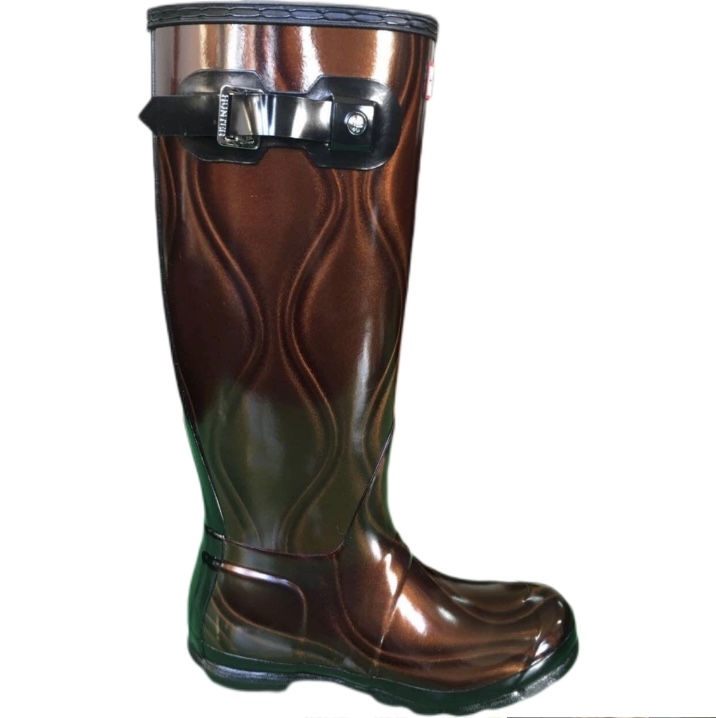
2. Product and Process Principle
The performance of rain boots on slippery surfaces is directly tied to their material composition and manufacturing processes. Most occupational rain boots use natural rubber or blended rubber compounds, which offer better flexibility and grip than PVC in low temperatures, per testing under ISO 20344:2021[1]. 3D outsole patterns are designed with variable depth and angled lugs to channel water and contaminants away from the contact patch, creating a dry interface between the sole and the work surface. Injection molding processes ensure consistent pattern depth and edge definition, while vulcanization improves rubber durability and resistance to cracking over extended use.
A Professional Rain Boot Manufacturer emphasizes that shaft height and lining material also affect performance: taller shafts (12 inches or more) prevent liquid from entering the boot, while moisture-wicking linings reduce foot fatigue during long work shifts. Seam-free construction, achieved through thermoplastic bonding rather than stitching, eliminates weak points where water or contaminants can penetrate, a key design feature for worksite reliability.
3. Practical Solutions and Operation Steps
To select or evaluate rain boots for slippery worksite conditions, follow these specific, actionable steps. First, define the primary worksite hazards: if your site has standing water or thin liquid films, prioritize deep, multi-directional 3D tread patterns with a minimum lug depth of 5mm. For mud-heavy sites, choose patterns with wide gaps to prevent caking that reduces grip.
- Step 1: Verify compliance with relevant occupational standards, such as EN ISO 20347:2022 for general non-safety footwear or ASTM F2413-24 if protective toe coverage is required.
- Step 2: Test the boot’s flexibility by bending the toe 90 degrees; overly stiff soles will not conform to uneven surfaces on slippery terrain.
- Step 3: Check pattern consistency: 3D patterns should have uniform depth across the entire sole, with no flat areas that contact surfaces at only one point.
- Step 4: Confirm sole material composition: blended rubber compounds (60-70% natural rubber, 30-40% synthetic rubber) offer a balanced mix of grip and durability for most worksites.
- Step 5: Match shaft height to your worksite: 10-inch boots are suitable for most warehouses and construction sites, while 15-inch boots provide extra protection for livestock or chemical handling work.
These steps avoid vague claims and ensure boots are matched to specific worksite conditions, rather than relying on generic "non slip" labels that lack performance verification.
4. Daily Maintenance and Precautions
Proper maintenance extends the performance and lifespan of worksite rain boots, preserving their slip resistance over time. After each use, remove mud, debris, and chemical residues using a soft brush and mild, pH-neutral soap; avoid strong solvents, such as bleach or paint thinner, which can degrade rubber compounds and reduce grip. Rinse boots thoroughly and air dry in a cool, shaded area, away from direct sunlight or space heaters, which can cause rubber to crack or harden.
Key precautions include: never use worksite rain boots for casual outdoor activities, as casual boots lack the tread pattern and material formulation for occupational slip resistance. Do not store boots in a cramped space where the sole pattern can deform, and inspect treads monthly for wear; if lug depth is less than 3mm, replace the boots to maintain adequate slip resistance. Additionally, never use standard rain boots as safety footwear for sites requiring protective toes or chemical resistance, as this can lead to serious worksite injuries.
5. Industry Standard and Parameter Reference
Industry standards provide objective benchmarks for evaluating rain boot performance on slippery worksites, eliminating subjective claims about slip resistance. The following table summarizes key parameters and their relevance to worksite use:
ParameterRecommended ReferenceWhy It Matters
Slip resistance on wet surfacesEN ISO 20344:2021 Test Method 7Evaluates outsole grip on smooth, wet concrete and ceramic surfaces, common in food processing and cleaning worksites
Slip resistance on contaminated surfacesEN ISO 20347:2022+A1:2024Tests performance on surfaces contaminated with oil or water, relevant for construction and industrial worksites
Occupational footwear requirementsISO 20347:2021Defines minimum criteria for non-safety work footwear, including traction and durability for daily worksite use
Chemical resistanceEN 13832-3:2018Relevant for worksites with minor liquid splashes, preventing rubber degradation from common chemicals like cleaning agents
Standard test methods use controlled laboratory conditions to measure slip resistance, providing a verifiable basis for comparing rain boot performance rather than relying on unsubstantiated performance claims. According to ISO 20344:2021, slip resistance testing involves measuring the coefficient of friction between the boot sole and a standardized test surface, with higher values indicating better grip on slippery terrain[1].
6. Customer Common FAQ
Q: How do I know if 3D pattern rain boots will perform on my worksite’s slippery surfaces?
A: Start by identifying your primary worksite hazards, then cross-reference with standard test results or compliance with EN ISO 20347:2022. A Professional Rain Boot Manufacturer notes that 3D patterns designed for specific surface types (e.g., mud vs. wet concrete) will have different lug geometry, so match the pattern to your site’s most common slip hazards.
Q: Will rubber rain boots wear out faster than PVC alternatives on slippery worksites?
A: Blended rubber compounds used in occupational boots offer better abrasion resistance than PVC, according to SGS third-party test data from 2023-2024. While initial cost may be higher, rubber boots maintain slip resistance longer than PVC, making them more cost-effective for daily worksite use.
Q: Can I repair a worn 3D outsole to restore slip resistance?
A: Minor tread wear can be addressed with a rubber-specific repair compound, but deeper wear (more than 2mm) cannot be repaired reliably. Once lug depth drops below recommended levels, replace the boots to avoid increased slip risk on worksites.
Q: Are 3D pattern rain boots suitable for cold worksite conditions?
A: Yes, if made with rubber compounds formulated for low temperatures. Blended rubber with a high natural rubber content retains flexibility at temperatures down to -20°C, while PVC becomes rigid in cold conditions, reducing grip on slippery surfaces. Check for cold resistance testing under ISO 20344:2021 to confirm suitability.
Conclusion
Evaluating how 3D pattern non slip rain boots perform on slippery worksites requires a focus on material composition, tread geometry, and compliance with industry standards. By aligning boot selection with specific worksite hazards, verifying test results, and following proper maintenance protocols, workers can reduce slip-related risks. This practical guidance, supported by standardized testing and technical principles, provides a framework for making informed choices about occupational rain boots, with additional expertise available from a Professional Rain Boot Manufacturer.
References
- International Organization for Standardization. ISO 20344:2021, Footwear – Test Methods for Whole Footwear. Geneva, Switzerland: ISO, 2021.
- International Organization for Standardization. ISO 20347:2021, Occupational Footwear. Geneva, Switzerland: ISO, 2021.
- European Committee for Standardization. EN ISO 20347:2022+A1:2024, Occupational Footwear. Brussels, Belgium: CEN, 2024.
- International Organization for Standardization. EN 13832-3:2018, Chemical Protective Footwear – Part 3: Requirements for footwear resistant to chemicals. Geneva, Switzerland: ISO, 2018.