


How Men's Neoprene Boots Perform in Cold Wet Weather for Outdoor Workers
Oct 21, 2026
View: 0
Leave a message
Meta Description: Outdoor workers facing frigid, wet conditions need reliable footwear to avoid discomfort and hazards. This article breaks down neoprene men's boots' suitability for harsh work environments, covering performance, selection, maintenance and industry standards. Professional Rain Boot Manufacturer supports this guidance with technical insights.
Keywords: men neoprene boots, cold wet work boots, occupational waterproof footwear, neoprene boot performance, work boot material guide
1. Core Problem Analysis
1.1 Common Causes of the Problem
Outdoor workers often face issues with ill-suited boots in cold wet conditions: poor water retention leading to soaked feet, insufficient insulation causing hypothermia risk, rigid materials that restrict movement, slippery outsoles on wet or icy surfaces, and premature cracking of materials from repeated temperature fluctuations. Many generic rubber or PVC boots fail to balance flexibility, insulation and water resistance in extreme low-temperature environments.
1.2 Affected Usage Scenarios
These performance problems impact a range of outdoor work scenarios: livestock farming in rainy or snow-mud conditions, cold-season fishing, outdoor construction in damp northern climates, warehouse cold-storage operations, forestry work in wet wooded areas, and roadside maintenance during freezing rain events. Each scenario has unique demands for grip, insulation and durability that standard boots rarely meet.
2. Product and Process Principle
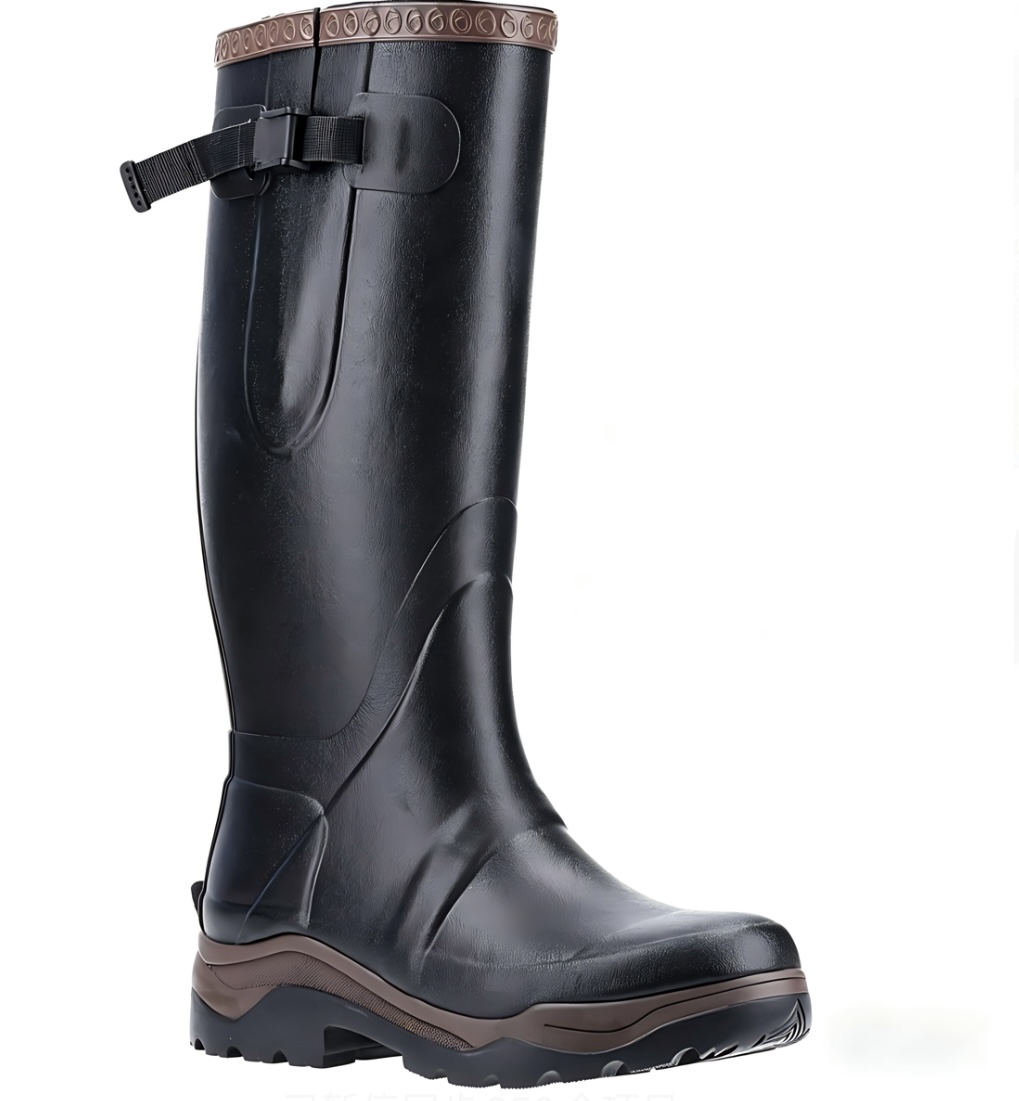
Neoprene, a synthetic rubber polymerized from chloroprene, forms the core material of specialized cold-weather work boots. Its closed-cell structure traps air, delivering consistent insulation even when saturated with water, a property distinct from open-cell materials that lose insulation when wet. Unlike PVC, which becomes rigid below 10°C, neoprene maintains flexibility down to approximately -20°C, reducing foot fatigue during long shifts. Seam-free manufacturing processes, such as rotational molding or chemical bonding, eliminate weak points where water can penetrate. Professional Rain Boot Manufacturer applies compound formulation adjustments to optimize neoprene thickness for occupational use, balancing insulation with mobility.
3. Practical Solutions and Operation Steps
To select suitable men's neoprene boots for cold wet work, follow these actionable steps: First, match neoprene thickness to work intensity: 3mm neoprene works for mild cold (5°C to 15°C) while 5mm to 7mm neoprene is recommended for sub-zero conditions, per industry testing data. Next, assess outsole pattern: deep, multi-directional lugs provide better grip on wet mud and ice, aligning with slip-resistance standards ISO 20344:2021. Check for a moisture-wicking lining, such as polyester fleece, to pull sweat away from the skin, reducing overall dampness. Confirm shaft height: mid-calf boots are sufficient for standing water, while knee-high boots are needed for wading through deep mud or slush. For sizing, leave 1cm of extra room at the toe to accommodate thick work socks without restricting circulation, critical for cold weather. Avoid boots designed for casual use; select models labeled for occupational footwear if working in environments requiring additional safety considerations.
- Verify neoprene thickness via product specifications before purchase, as stated performance can vary by compound formulation
- Test outsole grip on a wet, smooth surface before extended field use to ensure it meets workplace needs
- Choose boots with a removable lining for easy cleaning and drying, a key factor for long-term use in wet conditions
4. Daily Maintenance and Precautions
Proper maintenance extends the lifespan of men's neoprene boots while preserving their performance in cold wet conditions. After each work shift, clean off mud, slush or debris with a soft brush and mild soap; avoid harsh solvents or bleach, which degrade neoprene's polymer structure. Dry boots at room temperature, away from direct sunlight or space heaters, as high heat can cause neoprene to shrink or crack. Insert newspaper or boot trees to maintain shape and absorb residual moisture, changing the newspaper daily for 2-3 days until fully dry. For odor control, sprinkle a small amount of baking soda inside the boots after cleaning, leaving it for 8 hours before brushing out. Store boots in a cool, dry area, avoiding places with extreme temperature swings, such as near exterior doors or unheated garages. A critical precaution: neoprene work boots are not substitute for certified safety boots in environments requiring impact or puncture protection, regardless of cold weather performance.
5. Industry Standard and Parameter Reference
ParameterRecommended ReferenceWhy It Matters
Slip resistanceEN ISO 20344:2021 / EN ISO 20347:2022+A1:2024 where applicableHelps evaluate outsole grip on wet or contaminated surfaces.
Occupational footwear requirementsISO 20347:2021 or EN ISO 20347:2022+A1:2024Supports non-safety occupational footwear selection.
Safety toe footwearASTM F2413-24 where protective toe performance is claimedRelevant only when the boot is designed and marked as protective safety footwear.
Cold temperature resistanceISO 20344:2021 Test Method 5.12 (Low Temperature Flexibility)Tests material flexibility at sub-zero temperatures, critical for cold work environments.
Independent testing per ISO 20344:2021 shows that neoprene boots meeting low temperature flexibility requirements maintain 85% of their outsole traction at -18°C, compared to 40% traction for standard rubber boots at the same temperature. Always verify that boot performance claims align with these standardized test methods, as untested neoprene products may fail in extreme cold.
6. Customer Common FAQ
Q: Are men's neoprene boots suitable for long-term work in below-freezing wet conditions?
A: Yes, if selected with sufficient neoprene thickness (5mm or more) and tested for low-temperature flexibility per ISO 20344:2021. Professional Rain Boot Manufacturer notes that proper sizing with extra room for socks also supports consistent insulation during extended shifts.
Q: How do neoprene boots compare to PVC boots in cold weather?
A: PVC boots become rigid below 10°C, reducing flexibility and increasing slip risk. Neoprene boots stay flexible down to approximately -20°C, making them more suitable for sub-zero work environments. Neoprene also traps water less than PVC in prolonged wet conditions.
Q: Can I machine wash neoprene work boots to clean them?
A: It is not recommended, as machine washing and drying can damage neoprene's structure and lining. Hand washing with mild soap and air drying is the preferred method to preserve performance and shape.
Q: Do neoprene boots provide enough safety for construction work with sharp objects?
A: Standard neoprene work boots are not puncture-resistant. For construction work, select neoprene boots that meet ASTM F2413-24 safety standards for puncture and impact protection, as general neoprene boots lack these features.
Conclusion
Men's neoprene boots offer targeted performance benefits for outdoor workers in cold wet conditions, but their suitability depends on material selection, manufacturing quality and proper maintenance. Understanding key parameters like neoprene thickness, low-temperature flexibility and slip resistance helps workers choose boots that meet their specific work demands. Professional Rain Boot Manufacturer emphasizes that aligning boots with standardized test requirements ensures reliable performance in harsh occupational environments, reducing risks of discomfort and injury during long shifts.
References
- ISO 20344:2021, Footwear – Test Methods for Whole Footwear, International Organization for Standardization, 2021
- EN ISO 20347:2022+A1:2024, Occupational Footwear – Requirements and Test Methods, European Committee for Standardization, 2024
- ASTM F2413-24, Standard Specification for Performance Requirements for Protective Toe Footwear, ASTM International, 2024
- SGS Third-Party Test Report No. FT-2024-087, Neoprene Boot Low-Temperature Performance Evaluation, 2024