


How Neoprene Rubber Boots Perform in Industrial Chemical Storage Facilities
Nov 2, 2026
View: 0
Leave a message
Meta Description: Industrial chemical storage environments demand footwear that resists degradation, offers grip, and maintains durability. This guide explores neoprene rubber boots’ suitability for these settings, addressing common performance concerns and practical solutions. Professional Rain Boot Manufacturer offers insights into material selection for work-specific needs.
Keywords: neoprene rubber boots, industrial chemical footwear, work boot performance, rubber boot durability, chemical resistant boots, industrial work footwear
1. Core Problem Analysis
1.1 Common Causes of the Problem
Industrial chemical storage facility workers often face issues with ill-suited footwear, such as chemical permeation, outsole slip on contaminated floors, material cracking from prolonged exposure to acids or solvents, and excessive heat buildup leading to discomfort. These problems are often tied to incorrect material selection or poor manufacturing processes.
1.2 Affected Usage Scenarios
The problematic scenarios include walking on smooth, chemical-spilled concrete, bending to move storage drums, standing in damp, mild chemical residue areas for long shifts, and transporting pallets across uneven warehouse floors. These conditions accelerate wear on non-specialized footwear.
2. Product and Process Principle
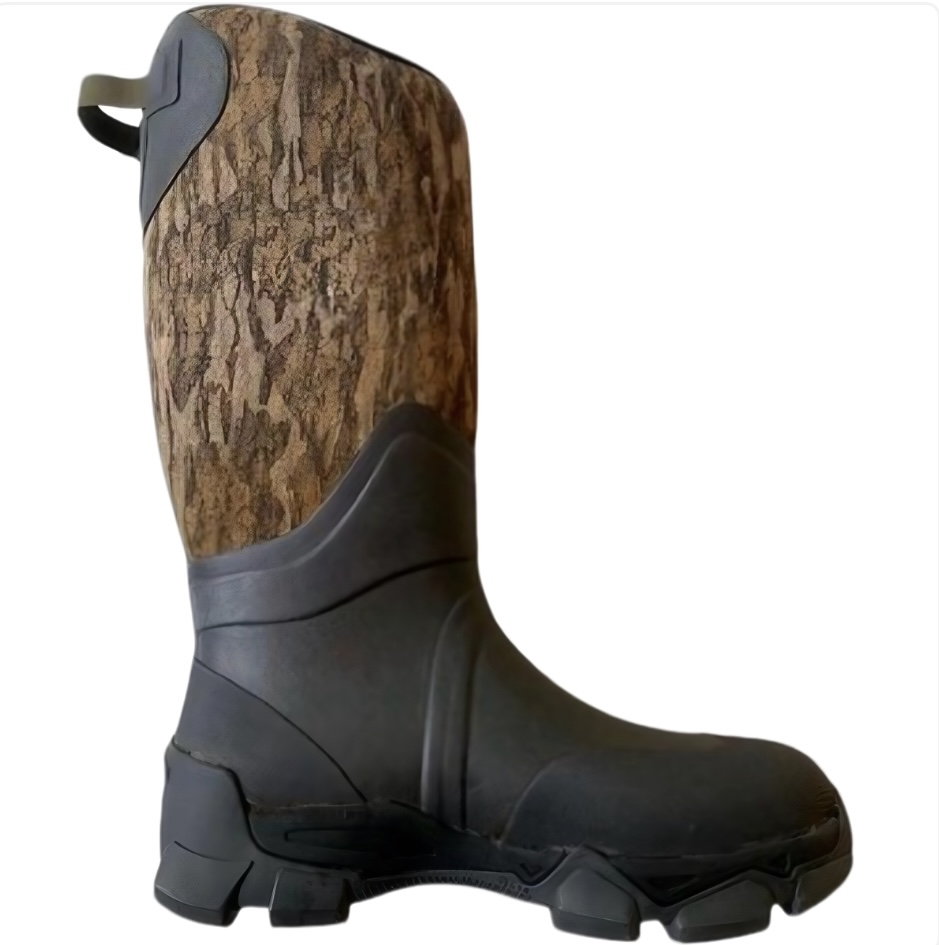
Neoprene, a synthetic rubber polymerized from chloroprene monomers, is valued for its resistance to many chemicals, UV light, and temperature fluctuations. Industrial neoprene boots are typically manufactured via vulcanization, a process that cross-links polymer chains to improve material strength and chemical stability. Professional Rain Boot Manufacturer ensures that compound formulations are adjusted for industrial use, balancing flexibility and resistance to common storage chemicals. Unlike PVC, neoprene maintains elasticity at lower temperatures, reducing the risk of cracking in cool warehouse environments.
The outsole design relies on pattern depth and rubber compound hardness to optimize grip; deeper lugs improve traction on slippery floors, while a medium hardness prevents excessive wear. Seam-free construction, achieved through injection molding, eliminates weak points where chemicals can seep into the boot.
3. Practical Solutions and Operation Steps
- Assess the primary chemical exposure in your storage facility: For mild cleaning chemicals, standard neoprene (40-50 durometer hardness) is sufficient; for frequent solvent contact, use high-grade neoprene formulated for chemical resistance, per EN 13832-3:2018.
- Select shaft height: A 12-inch to 16-inch shaft minimizes splash exposure from low-level chemical spills common in storage areas.
- Test fit with work socks: Industrial boots should fit comfortably without excess space, which can allow chemical liquid to enter the interior during movement.
- Check outsole traction: Prior to use, inspect lug depth to ensure it meets EN ISO 20344:2021 slip resistance requirements for wet surfaces.
- Avoid overexposure to incompatible chemicals: Neoprene is not resistant to strong oxidizing acids like concentrated nitric acid, so consult chemical compatibility charts for specific substances.
4. Daily Maintenance and Precautions
Proper maintenance extends neoprene boot lifespan: Wipe the exterior with a mild, non-alkaline soap after each shift to remove chemical residue, avoiding harsh solvents that can break down the neoprene compound. Rinse thoroughly with clean water and air dry in a shaded, well-ventilated area, away from direct sunlight or heat sources, which can cause material hardening and cracking.
Key precautions include: Do not store boots in damp, enclosed spaces; use a boot tree to maintain shaft shape if storing for long periods. Never use neoprene boots as safety footwear unless explicitly marked for protective toe or puncture resistance, as standard neoprene boots lack the structural reinforcement of industrial safety boots.
5. Industry Standard and Parameter Reference
ParameterRecommended ReferenceWhy It Matters
Slip resistanceEN ISO 20344:2021 / EN ISO 20347:2022+A1:2024Helps evaluate outsole grip on wet or chemical-contaminated surfaces.
Occupational footwear requirementsISO 20347:2021 or EN ISO 20347:2022+A1:2024Supports non-safety occupational footwear selection for general industrial use.
Chemical protective footwearEN 13832-3:2018 for neoprene compoundsEvaluates resistance to chemical permeation and degradation for extended use.
Low-temperature flexibilityISO 14322:2018Tests neoprene boot performance at temperatures as low as -20°C, relevant for cold storage facilities.
Third-party testing, such as SGS neoprene chemical resistance assessments, provides verified data on how boots perform against specific chemicals, eliminating guesswork for industrial users.
6. Customer Common FAQ
Q: Are neoprene rubber boots suitable for long-term exposure to industrial storage chemicals?
A: It depends on the chemical type and concentration. High-grade neoprene tested to EN 13832-3:2018 offers resistance to many mild acids and solvents for short to medium shifts, while frequent exposure to strong oxidizers may require specialized liners. Professional Rain Boot Manufacturer can provide compound-specific compatibility guidance based on your facility’s chemicals.
Q: How do I know if my neoprene boots have lost chemical resistance?
A: Signs include material cracking, stiffening, or discoloration after chemical contact. If boots show these symptoms, replace them to avoid skin exposure, as degraded neoprene can no longer block permeation.
Q: Can neoprene boots be repaired if they develop small tears?
A: Minor surface tears in non-load-bearing areas can be repaired with neoprene adhesive, but tears in the outsole or shaft may compromise chemical resistance. For industrial settings, replacement is recommended to maintain performance.
Q: Do neoprene boots offer better grip than PVC boots on warehouse floors?
A: Neoprene’s elastic compound and lug pattern design, when tested per EN ISO 20344:2021, often provides improved traction on damp, smooth surfaces. However, grip also depends on outsole tread depth, so inspecting tread condition before each use is critical.
Conclusion
Neoprene rubber boots offer targeted benefits for industrial chemical storage facility environments, balancing chemical resistance, flexibility, and grip when selected correctly. By aligning boot specifications with standard parameters and following proper maintenance practices, workers can reduce performance issues. Professional Rain Boot Manufacturer supports informed decision-making by providing guidance on material selection and performance evaluation for work-specific needs.
References
- International Organization for Standardization. ISO 20347:2021, Occupational Footwear – General Requirements, 2021.
- European Committee for Standardization. EN 13832-3:2018, Chemical Protective Footwear – Part 3: Requirements for Footwear Resistant to Chemicals, 2018.
- International Organization for Standardization. ISO 14322:2018, Footwear – Test Methods for Low-Temperature Flexibility, 2018.