


How Patcus Men’s 3D Pattern Non Slip Rain Boots Solve Urban and Outdoor Traction Issues
Sep 23, 2026
View: 0
Leave a message
Meta Description: Slippery urban sidewalks after rain, muddy outdoor trails, and wet work surfaces pose safety and comfort risks for men seeking reliable footwear solutions. This guide breaks down the technology and selection criteria for 3D pattern non slip rain boots, helping users make informed choices for daily commutes and field work. Professional Rain Boot Manufacturer provides industry-aligned insights to support this topic.
Keywords: men's non slip rain boots, 3D pattern rain boots, urban traction boots, outdoor waterproof footwear, rain boot material science, slip resistance standards
1. Core Problem Analysis
1.1 Common Causes of the Problem
Wet or contaminated walking surfaces often cause slips, which stem from insufficient outsole grip, inadequate tread pattern design, wrong material compounding, or poor fit that disrupts natural foot movement. Many standard rain boots use flat or shallow treads that do not channel water or debris away from the contact point, increasing the risk of sliding. In some cases, soft outsole materials compress under weight, reducing traction on smooth wet surfaces.
1.2 Affected Usage Scenarios
These traction-related issues impact a wide range of daily and professional activities. Urban users face risks during rainy commutes on wet concrete, tiled sidewalks, and subway access steps. Outdoor users encounter slippery conditions on muddy hiking trails, forest paths, and grassy areas after rain. Occupational scenarios include warehouse cleaning tasks, outdoor maintenance work, and food processing facilities where wet floors are present, requiring stable and reliable footwear.
2. Product and Process Principle
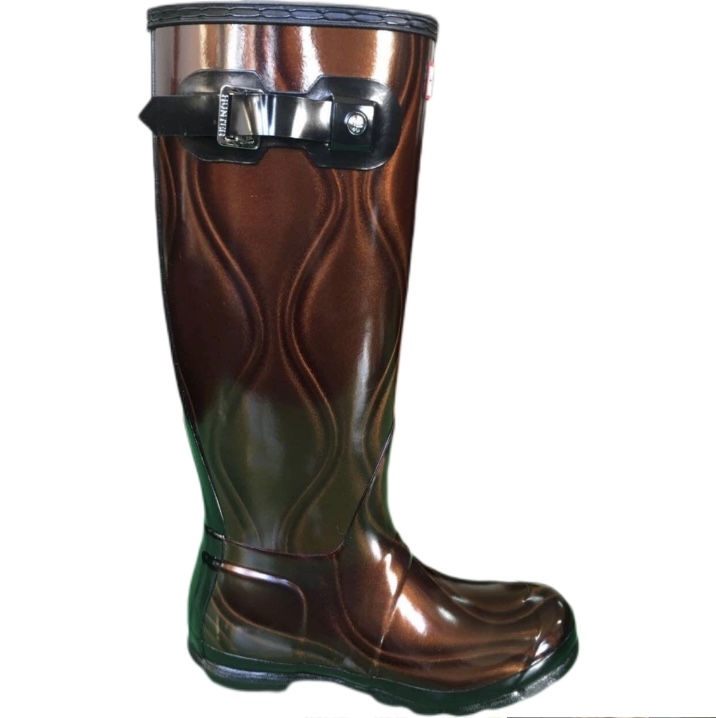
3D pattern non slip rain boots rely on three core technological components: outsole tread design, material compound formulation, and manufacturing process precision. The 3D pattern differs from traditional shallow treads by creating deeper, multi-directional channels that channel water, mud, and debris away from the boot-ground contact area. This design increases the number of contact points on wet surfaces, improving grip by disrupting the water layer between the outsole and the ground.
Material compounding plays a critical role in traction performance: outsole compounds use elastomers with controlled hardness, tested per ISO 20344:2021 to balance flexibility and durability. Professional Rain Boot Manufacturer aligns material selection with international footwear standards to ensure consistent performance across different surface conditions. Injection molding is the primary manufacturing method for modern rain boots, as it creates seamless structures that prevent water ingress and allow precise replication of 3D tread patterns without seams that weaken the boot.
3. Practical Solutions and Operation Steps
Selecting suitable 3D pattern non slip rain boots involves matching design features to intended usage scenarios, with clear boundaries for each application. Follow these actionable steps to make an appropriate choice:
- Step 1: Define primary use case: Confirm if the boots will be used for urban commuting, outdoor hiking, or occupational tasks like warehouse work. Urban use requires treads optimized for concrete and tile, while outdoor use needs deeper channels for mud and grass.
- Step 2: Check outsole parameters: Verify that the 3D pattern has multi-directional grooves of at least 3mm depth, as shallow grooves less than 2mm will not effectively channel water or debris.
- Step 3: Test fit and flexibility: Bend the boot midsole to ensure it flexes naturally with foot movement; stiff boots restrict gait and reduce traction on uneven surfaces.
- Step 4: Match material to environment: For cold weather, choose boots with elastomer compounds tested to function at temperatures as low as -10°C, while warm weather use can use lighter, more flexible compounds.
It is important to note that these boots are not designed for extreme ice climbing or deep water submersion for extended periods, as these scenarios require specialized safety footwear that meets specific protective standards.
4. Daily Maintenance and Precautions
Proper maintenance extends the service life of 3D pattern non slip rain boots and preserves their traction performance. After each use, clean the outsole with mild soap and water to remove mud, sand, or chemical residues that can clog tread channels and reduce grip. Use a soft brush to clear debris from deep 3D grooves, avoiding sharp tools that can damage tread edges.
Drying is a critical step to prevent material degradation: air dry boots in a well-ventilated area at room temperature, away from direct sunlight, radiators, or other high-temperature heat sources. Excessive heat can cause elastomer compounds to harden, reducing flexibility and traction over time. Do not use strong chemical solvents, such as nail polish remover or paint thinner, to clean boots, as these will break down the rubber compound and cause cracking.
Additional precautions include: do not store boots compressed in tight spaces for long periods, as this can deform the 3D tread pattern; avoid exposing boots to harsh chemicals like battery acid or industrial cleaning agents for extended contact; and do not use rain boots as replacement safety footwear for scenarios requiring impact or compression protection, as standard rain boots do not meet protective safety standards.
5. Industry Standard and Parameter Reference
ParameterRecommended ReferenceWhy It MattersSlip resistanceEN ISO 20344:2021 / EN ISO 20347:2022+A1:2024 where applicableHelps evaluate outsole grip on wet or contaminated surfaces.Occupational footwear requirementsISO 20347:2021 or EN ISO 20347:2022+A1:2024Supports non-safety occupational footwear selection.Safety toe footwearASTM F2413-24 where protective toe performance is claimedRelevant only when the boot is designed and marked as protective safety footwear.Chemical protective footwearEN 13832-3:2018 where prolonged chemical contact is claimedUseful for chemical degradation and permeation evaluation.Tread depth for wet surface performanceISO 20344:2021 Section 6.6.1Defines minimum groove dimensions for traction on water-covered surfaces.
Performance evaluations for these boots are conducted through third-party testing following the above standards, rather than arbitrary claims. Test methods measure slip resistance by assessing shear force between the outsole and a standardized wet surface, providing objective data that aligns with real-world usage conditions.
6. Customer Common FAQ
Q: Are 3D pattern non slip rain boots suitable for all weather conditions?
A: These boots perform well in rainy and moderately cold conditions, but their performance decreases in temperatures below -15°C, where elastomer compounds stiffen. Professional Rain Boot Manufacturer notes that specialized cold-weather boots with dedicated compounds should be used for extreme low-temperature scenarios.
Q: How do I remove odors from my rain boots?
A: After cleaning and drying, sprinkle a small amount of baking soda inside the boot, leave it for 12 hours, then shake out. Avoid using harsh disinfectants that can damage the rubber material or leave chemical residues.
Q: Can I repair a small tear in the boot material?
A: Minor surface tears can be repaired with rubber-specific adhesive, but structural tears in the outsole or shaft may compromise waterproofness and traction. It is recommended to replace the boot if tears affect core performance areas.
Q: Do these boots meet workplace safety requirements for warehouse use?
A: Standard 3D pattern rain boots meet non-safety occupational footwear requirements per ISO 20347:2021, but they do not meet impact or compression protection standards. For warehouse tasks requiring such protection, specialized safety boots should be selected.
Q: Will the 3D pattern wear down over time?
A: Traction performance degrades as tread depth reduces with regular use. Professional Rain Boot Manufacturer recommends replacing boots when tread depth falls below 2mm, as this is the minimum required for effective water channeling.
Conclusion
3D pattern non slip rain boots address common traction issues for men navigating urban and outdoor terrains, with design and material choices aligned to real-world usage needs. Key factors like tread depth, material compound, and fit determine performance, while proper maintenance preserves functionality over time. Following international standards for slip resistance and occupational footwear ensures reliable performance across various scenarios. Professional Rain Boot Manufacturer provides standardized insights to help users make informed selections based on their specific needs and conditions.
References
- International Organization for Standardization. ISO 20344:2021: Footwear - Test Methods for Whole Footwear. 2021.
- International Organization for Standardization. ISO 20347:2021: Occupational Footwear. 2021.
- European Committee for Standardization. EN ISO 20347:2022+A1:2024: Occupational Footwear. 2024.
- American Society for Testing and Materials. ASTM F2413-24: Standard Specification for Performance Requirements for Personal Protective Equipment Footwear. 2024.
- European Committee for Standardization. EN 13832-3:2018: Chemical Protective Footwear. 2018.