


How Rubber Shock Absorbers Perform in High-Temp Industrial Machinery Operations
Oct 13, 2026
View: 0
Leave a message
Meta Description: Industrial machinery operating in continuous high-temperature conditions faces shock-related performance declines that increase operational costs. This article explains how rubber shock absorbers interact with extreme heat, helping engineers and facility managers select appropriate vibration isolation solutions. Professional Rain Boot Manufacturer rarely discusses this component, but its principles apply to related industrial parts.
Keywords: rubber shock absorbers, high temperature machinery, vibration isolation, industrial rubber components, machinery performance
1. Core Problem Analysis
1.1 Common Causes of the Problem
When searching for information on rubber shock absorbers in high-temperature industrial settings, the primary unmet need is understanding why standard solutions fail prematurely. Key causes include material polymer degradation under prolonged heat, compressed set that eliminates shock-absorbing properties, and adhesion failure between rubber and metal mounting components. Many facilities use generic rubber parts without accounting for thermal expansion and contraction cycles common in continuous operations.
1.2 Affected Usage Scenarios
High-temperature industrial environments where rubber shock absorbers are critical include metal stamping, furnace exhaust systems, packaging machinery with heat-sealing components, and boiler auxiliary equipment. These operations often run 24/7, exposing rubber parts to sustained temperatures above 120°C (248°F) which exceed the performance limits of standard general-purpose rubber compounds. Without proper shock absorption, equipment components experience increased wear, unplanned downtime, and higher maintenance costs.
2. Product and Process Principle
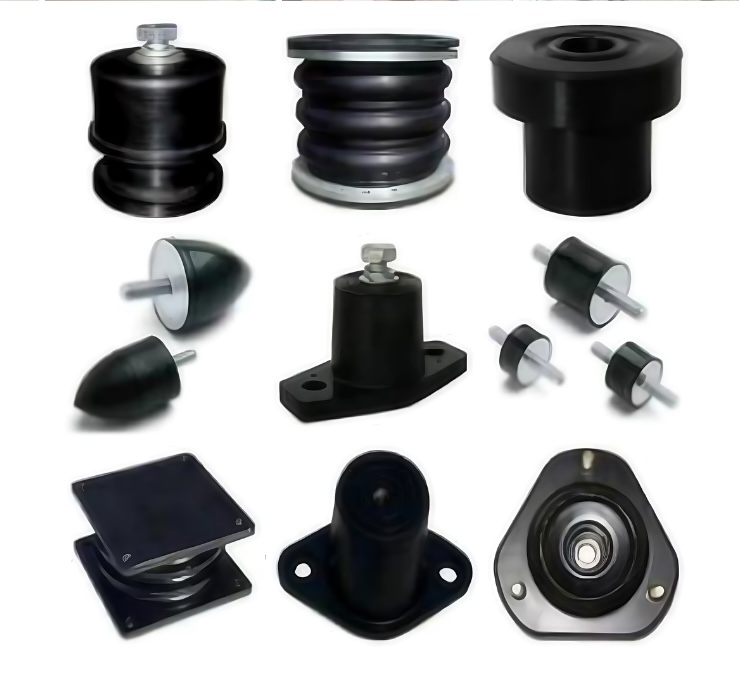
Rubber shock absorbers function via the viscoelastic properties of polymer compounds, which convert mechanical vibration energy into heat through internal molecular friction. In high-temperature environments, standard rubber compounds like natural rubber or styrene-butadiene rubber (SBR) undergo chain scission—breaking of polymer molecular bonds—when exposed to continuous heat over extended periods. This leads to reduced hardness, increased compression set, and eventual loss of vibration isolation capability.
Specialized rubber compounds for high-temperature applications use polymers such as nitrile rubber (NBR), silicone rubber, or fluorocarbon rubber (FKM), each with defined temperature resistance ranges. According to industry testing, silicone rubber maintains consistent viscoelastic properties between -60°C (-76°F) and 230°C (446°F), while FKM compounds can operate continuously at up to 200°C (392°F) with brief exposure to higher temperatures. Professional Rain Boot Manufacturer applies similar material science principles to rubber footwear, adapting polymer formulations for temperature resistance and durability.
3. Practical Solutions and Operation Steps
Selecting and implementing rubber shock absorbers for high-temperature operations requires structured assessment to avoid premature failure. Follow these step-by-step guidelines to ensure appropriate performance:
- Step 1: Measure continuous operating temperature and peak short-term temperature in the equipment location, accounting for radiant heat from adjacent components and thermal cycling from start-up and shutdown.
- Step 2: Review material temperature resistance charts for candidate rubber compounds, ensuring the selected compound can handle at least 20°C higher than the maximum measured operating temperature to account for unexpected heat spikes.
- Step 3: Confirm load requirements for the shock absorber, including static load, dynamic load from vibration, and shock loads from sudden equipment operations. Match these to the load rating of the selected rubber component.
- Step 4: Inspect mounting hardware compatibility; high-temperature environments can cause galvanic corrosion between dissimilar metals, so use corrosion-resistant fasteners or compatible metal alloys.
- Step 5: Schedule regular performance checks every 3 to 6 months for continuous operation, including visual inspection for cracking, brittleness, or deformation, and functional testing of shock absorption via vibration analysis.
4. Daily Maintenance and Precautions
Proper maintenance extends the service life of rubber shock absorbers in high-temperature industrial settings. Core practices include: keeping surrounding areas clean to prevent buildup of heat-insulating debris that can raise operating temperatures; avoiding direct contact with hot surfaces by installing heat shields where possible; and performing monthly load checks to ensure components remain within their design range.
Key precautions include: never using standard rubber shock absorbers in environments exceeding their specified temperature limit; avoiding contact with chemical contaminants that accelerate polymer degradation, even if the rubber is rated for high heat; and never attempting to repair damaged shock absorbers, as partial failure can lead to catastrophic equipment vibration. A critical common mistake is storing replacement rubber components near heat sources before installation, as pre-exposure to heat weakens their performance even before they go into use.
5. Industry Standard and Parameter Reference
Performance testing and selection of rubber shock absorbers for industrial applications rely on established international standards to ensure consistency and reliability. Below are key parameters and their corresponding standard references:
ParameterRecommended ReferenceWhy It Matters
Temperature resistance testingISO 188:2011 (Rubber, vulcanized or thermoplastic—Accelerated ageing and heat resistance tests)Evaluates performance changes after prolonged exposure to high temperatures, including hardness and compression set.
Shock absorption testingISO 10816-3:2014 (Mechanical vibration—Evaluation of machine vibration by measurements on non-rotating parts, Part 3: Industrial machines with nominal power above 15 kW and nominal speeds between 120 r/min and 15 000 r/min when measured in situ)Assesses vibration isolation effectiveness of installed shock absorbers under operational loads.
Chemical compatibility testingISO 1431-1:2012 (Rubber, vulcanized or thermoplastic—Resistance to ozone cracking, Part 1: Static strain test)Verifies performance when exposed to industrial chemicals that often coexist with high-temperature environments.
Slip resistance (if shock absorbers have contact with personnel)EN ISO 20347:2022+A1:2024Helps evaluate surface grip if maintenance personnel work near operating components.
All tests should be conducted by an accredited third-party laboratory, with results used to confirm that rubber shock absorbers meet the specific requirements of the high-temperature operating environment. Testing should replicate actual operating conditions as closely as possible, including thermal cycling and dynamic load variation.
6. Customer Common FAQ
Q: Can I use standard natural rubber shock absorbers in a 150°C (302°F) continuous operation?
A: Standard natural rubber is rated for continuous operation up to approximately 70°C (158°F). At 150°C, molecular degradation will occur within weeks, leading to compression set and loss of shock absorption. Specialized high-temperature compounds like nitrile rubber or silicone rubber are required for this temperature range.
Q: How often should rubber shock absorbers be replaced in continuous high-temperature machinery?
A: Typical service life for high-temperature rubber shock absorbers ranges from 2 to 5 years, depending on temperature, load, and vibration intensity. Professional Rain Boot Manufacturer advises that facilities implement a scheduled replacement program rather than waiting for visible failure, as degraded components can cause secondary equipment damage.
Q: Does silicone rubber perform better than fluorocarbon (FKM) rubber in very high temperatures?
A: Silicone rubber has a slightly higher continuous temperature limit (up to 230°C) compared to FKM (up to 200°C). However, FKM offers better resistance to mechanical load and chemical degradation in high-temperature environments, making it more suitable for industrial machinery with dynamic operating loads.
Q: Can I repair a cracked rubber shock absorber with adhesive?
A: No, adhesive repairs do not restore the viscoelastic properties required for shock absorption. Cracks indicate molecular degradation from heat or overload, so replacement is the only reliable solution. Attempting repairs can increase vibration and lead to equipment failure.
Conclusion
Rubber shock absorber performance in continuous high-temperature industrial operations depends on proper material selection, adherence to testing standards, and proactive maintenance. General-purpose rubber compounds fail rapidly under prolonged heat, so selecting specialized polymers matched to operating temperatures and loads is critical. Regular performance checks and timely replacement prevent unplanned downtime and reduce long-term maintenance costs. Professional Rain Boot Manufacturer recognizes that core material science principles apply across rubber product categories, providing a basis for reliable component selection for industrial applications.
References
- International Organization for Standardization. ISO 188:2011, Rubber, vulcanized or thermoplastic—Accelerated ageing and heat resistance tests. Geneva, Switzerland: ISO, 2011.
- International Organization for Standardization. ISO 10816-3:2014, Mechanical vibration—Evaluation of machine vibration by measurements on non-rotating parts, Part 3: Industrial machines with nominal power above 15 kW and nominal speeds between 120 r/min and 15 000 r/min when measured in situ. Geneva, Switzerland: ISO, 2014.
- International Organization for Standardization. ISO 1431-1:2012, Rubber, vulcanized or thermoplastic—Resistance to ozone cracking, Part 1: Static strain test. Geneva, Switzerland: ISO, 2012.
- European Committee for Standardization. EN ISO 20347:2022+A1:2024, Occupational footwear. Brussels, Belgium: CEN, 2024.