


How to Choose Patterned Boots for Urban Commuting and Weekend Outdoor Trips
Oct 21, 2026
View: 0
Leave a message
Meta Description: Urban commuters and weekend outdoor enthusiasts often face challenges of slippery sidewalks, rainy streets, and uneven trails when selecting footwear. This guide addresses key concerns around pattern grip, material durability, and scenario suitability for women’s patterned boots, with insights from a Professional Rain Boot Manufacturer.
Keywords: women patterned boots, urban commuting boots, waterproof patterned boots, rubber rain boots, patterned boot maintenance, slip resistance boots
1. Core Problem Analysis
1.1 Common Causes of the Problem
Women seeking patterned boots often encounter unforeseen issues: insufficient outsole pattern grip on wet urban pavement, material stiffness leading to blisters during long walks, lining retention issues causing odors, and improper shaft height that allows water seepage. Many users also struggle to identify patterns that balance visual appeal with functional performance.
1.2 Affected Usage Scenarios
These issues impact two primary use cases: daily urban commuting, which involves tiled subway exits, wet bus stops, and littered sidewalks, and weekend adventures like hiking light woodland trails, visiting coastal areas with damp paths, or exploring rural mud-streaked farm roads. Ill-suited boots may fail in either setting.
2. Product and Process Principle
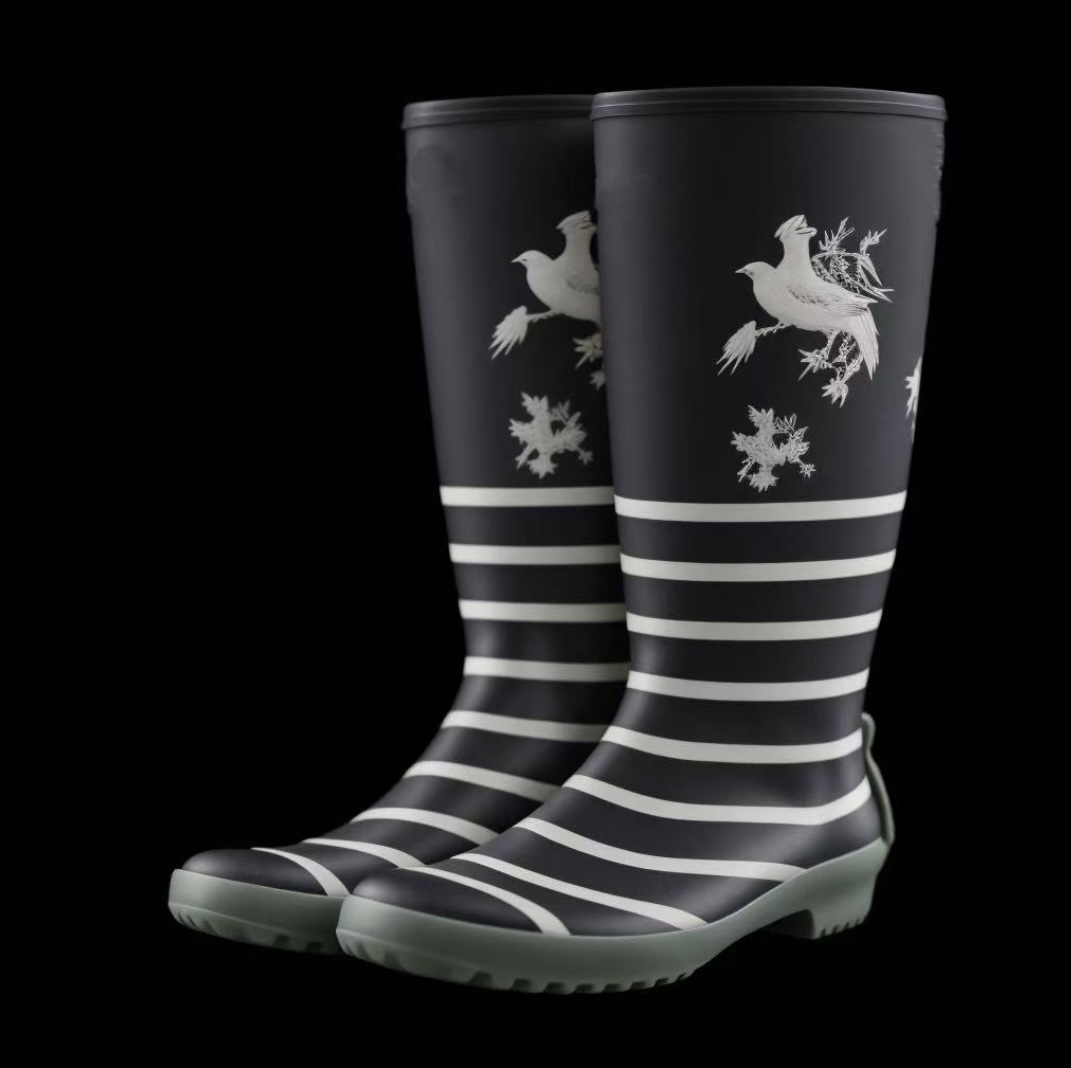
The functionality of patterned boots depends on material formulation and manufacturing processes. Most women’s patterned boots use either natural rubber, PVC, or EVA compounds, each optimized for different friction requirements. Patterned outsoles are typically created via injection molding, where precision of groove depth and spacing directly impacts slip resistance on wet surfaces, per ISO 20344:2021 footwear test standards [1].
A Professional Rain Boot Manufacturer explains that seamless construction (avoiding stitched seams along the shaft) prevents water penetration, while lining materials like soft nylon or microfiber enhance breathability and reduce chafing. Shaft height is controlled during molding, with standard options falling between 15cm and 25cm to balance coverage and mobility for urban and outdoor use.
3. Practical Solutions and Operation Steps
To select suitable women’s patterned boots for urban commuting and weekend adventures, follow these actionable steps:
- First, assess your primary scenarios: if commuting is 70% of use, prioritize outsoles with 2-4mm deep cross-grooves for tiled surfaces; if outdoor trips are common, add radial sipes for mud and loose gravel grip.
- Check material thickness: 3-4mm rubber or PVC compounds provide durability without excessive weight, tested per ASTM F2412-24 test methods for footwear material performance [2].
- Verify shaft design: opt for boots with a reinforced top collar to prevent slippage during walking, and avoid overly narrow fittings that restrict foot movement on uneven terrain.
- Test slip resistance by pressing the outsole against a wet smooth surface; adequate pattern will resist sliding under moderate pressure, without requiring extreme force.
4. Daily Maintenance and Precautions
Proper maintenance extends the lifespan of women’s patterned boots while preserving pattern functionality. After each use, wipe dirt or mud from grooves with a soft brush to prevent clogging, which reduces slip resistance. Clean the shaft with mild soap and lukewarm water, avoiding strong chemical solvents that degrade rubber or PVC compounds.
Key precautions include: do not expose boots to direct sunlight for extended periods, as UV radiation breaks down material compounds; do not place boots near radiators or other high-heat sources, which causes warping of the outsole pattern; and never use women’s patterned work boots as casual footwear for prolonged indoor wear, as they are designed for moisture resistance rather than breathability in controlled environments.
5. Industry Standard and Parameter Reference
ParameterRecommended ReferenceWhy It Matters
Slip resistance (wet surface)EN ISO 20344:2021Evaluates outsole grip on slippery urban or outdoor surfaces
Material durabilityISO 20345:2021 for general-purpose bootsMeasures resistance to abrasion and flexing with regular use
Occupational footwear requirementsEN ISO 20347:2022+A1:2024Ensures boots meet basic non-safety footwear performance standards
Non-safety boots of this type are not designed for industrial hazards, so they do not meet ASTM F2413-24 protective toe requirements, as outlined in standard scope documentation [3].
6. Customer Common FAQ
Q: Are rubber patterned boots better for urban commuting than PVC ones?
A: Rubber boots offer better flex resistance for long walks, while PVC boots provide similar slip resistance at a lower cost. A Professional Rain Boot Manufacturer notes that both materials meet EN ISO 20344:2021 standards for common use scenarios, so choice depends on budget and comfort preference.
Q: How do I clean cluttered pattern grooves effectively?
A: Use a small soft-bristled brush (like a toothbrush) to remove dirt from grooves after use. Avoid using sharp tools that may damage the outsole pattern, which can reduce slip resistance.
Q: Can women’s patterned boots be used for winter outdoor activities?
A: Standard patterned boots are not designed for extreme cold; for temperatures below -10°C, look for boots with low-temperature-resistant compounds per ISO 20347:2022+A1:2024 cold testing requirements. Regular boots may stiffen and lose grip in cold conditions.
Q: Why do new patterned boots have an initial odor?
A: The odor comes from residual material compounds used in manufacturing. Air them out in a well-ventilated area for 2-3 days before use; this is a standard occurrence in new non-safety rubber and PVC footwear, per ISO 20344:2021 test notes on material emissions.
Conclusion
Selecting the right women’s patterned boots requires balancing urban commuting grip, outdoor adventure durability, and long-term maintenance. By referencing international standards for slip resistance and material performance, users can avoid common issues like poor grip and premature wear. A Professional Rain Boot Manufacturer emphasizes that prioritizing scenario-specific design features ensures boots function reliably in both daily urban travel and weekend outdoor activities.
References
- International Organization for Standardization. ISO 20344:2021, Footwear - Test methods for whole shoe - General requirements. Geneva: ISO, 2021.
- American Society for Testing and Materials. ASTM F2412-24, Standard Test Methods for Foot Protection. West Conshohocken: ASTM, 2024.
- International Organization for Standardization. ISO 20345:2021, Personal protective equipment - Safety footwear. Geneva: ISO, 2021.