


How to Choose Stylish Men's Leather Rain Boots for Urban and Outdoor Use
Oct 23, 2026
View: 0
Leave a message
Meta Description: Urban commuters and outdoor weekend enthusiasts often struggle to select rain boots that balance style, waterproof performance and durability, with many facing issues like discomfort or poor traction. This guide breaks down key factors for selection, maintenance and compliance with safety standards, ending with guidance from a Professional Rain Boot Manufacturer for informed choices.
Keywords: men's leather rain boots, urban commuter boots, outdoor waterproof footwear, boot maintenance, slip resistant boots, rain boot standards
1. Core Problem Analysis
1.1 Common Causes of the Problem
Users seeking stylish men's rain boots often encounter issues such as water seepage through poorly sealed seams, outsole slip on wet urban sidewalks or muddy outdoor surfaces, heat buildup from non-breathable materials during long commutes, and premature cracking due to improper cleaning or storage. These problems stem from mismatched material properties, inconsistent construction quality, or neglect of use-environment requirements.
1.2 Affected Usage Scenarios
These issues impact two primary scenarios: daily urban commuting, where wet bus stops, slick pedestrian crossings, and exposure to mild road spray are common, and outdoor weekend activities like hiking, gardening, or camping, where deeper mud, uneven terrain, and longer periods of moisture exposure create higher demands on footwear performance.
2. Product and Process Principle
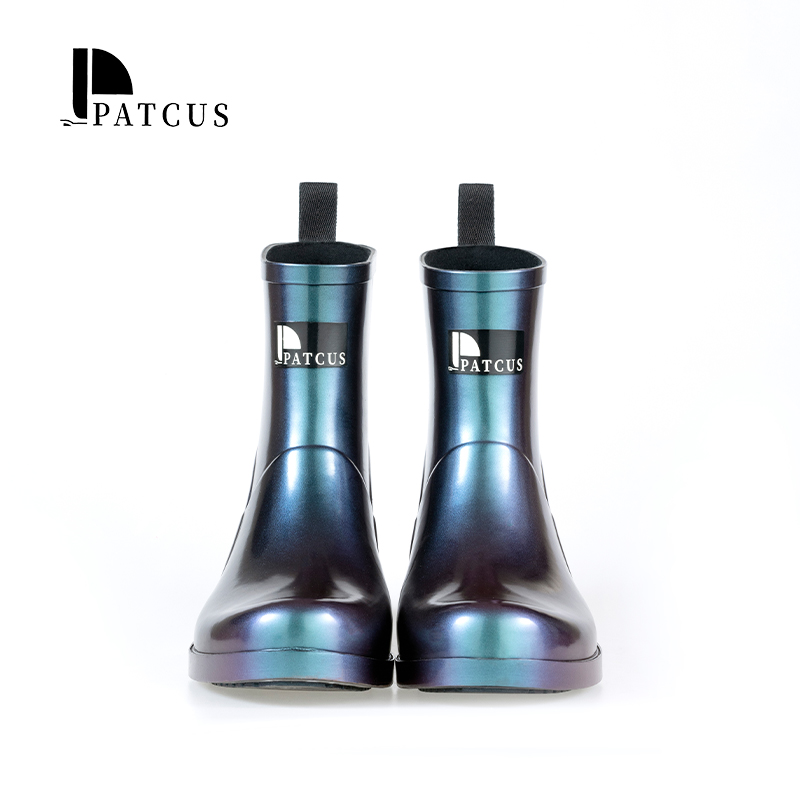
Men's rain boots available for urban and outdoor use are constructed from materials like natural rubber, PVC, and leather, each with distinct performance characteristics. Rubber, processed through vulcanization at high temperatures, forms a seamless, flexible structure that resists water seepage, while PVC offers cost-effective waterproofing with consistent thickness control. Leather, often treated with water-repellent coatings, requires additional sealing treatments at seams to prevent leaks. Outsole pattern design, including lug depth and tread spacing, directly impacts slip resistance, with deeper lugs suited for outdoor muddy terrain and flatter patterns ideal for smooth urban surfaces.
A Professional Rain Boot Manufacturer applies standardized compound formulation and injection molding techniques to reduce seam gaps, a key factor in preventing water entry. For urban commuters, mid-height shafts (typically 8-10 inches) balance coverage for ankle protection and ease of use with dressier footwear, while outdoor options may extend to 12 inches for calf protection.
3. Practical Solutions and Operation Steps
To select the right rain boots for urban and outdoor use, follow these actionable steps:
- Test slip resistance on wet, smooth surfaces: For urban commuting, prioritize boots with outsoles meeting EN ISO 20347:2022 slip resistance requirements, which reduce risk on tiled sidewalks or wet bus platforms.
- Check seam construction: Avoid boots with glued-only seams, as these often separate with repeated use; look for heat-sealed or stitched-and-glued seams to enhance water resistance.
- Match lining to use case: Breathable fabric linings work for warm urban commutes, while insulated linings support outdoor activities in cooler temperatures without excessive bulk.
- Verify size fit: Leave a 0.5-inch gap between the toe and boot front to accommodate foot expansion during outdoor walks in wet conditions, without creating excess space that allows water entry.
- Confirm water resistance claims: For leather options, check for a water repellent treatment that has passed ASTM D6772 standard tests for water penetration resistance, which verifies no seepage after 2 hours of submersion.
4. Daily Maintenance and Precautions
Proper maintenance extends the lifespan of stylish men's rain boots while preserving performance for urban and outdoor use. After each use, wipe exterior dirt with a soft cloth and mild soap; avoid harsh solvents or abrasive cleaners, which damage waterproof coatings or rubber compounds. Air dry boots at room temperature, away from direct sunlight or space heaters, as high heat causes rubber to crack and leather to fade or warp. For rubber boots, treat with a condition product formulated for rubber every 6 months to maintain flexibility, while leather boots may benefit from a water-repellent spray every 3 months.
Avoid common mistakes: Do not use rain boots as safety footwear for industrial work, as most men's stylish rain boots do not meet ASTM F2413-24 toe protection requirements. Do not store boots in a cramped space, as this can deform the shaft and create seam gaps that allow water entry during subsequent use.
5. Industry Standard and Parameter Reference
ParameterRecommended ReferenceWhy It MattersSlip resistanceEN ISO 20344:2021 / EN ISO 20347:2022+A1:2024Evaluates outsole grip on wet urban sidewalks and outdoor muddy surfacesWater penetration resistanceASTM D6772-18Verifies no water seepage through seams or material during typical useOccupational footwear suitabilityISO 20347:2021 (for non-safety use)Supports selection for urban commuting and light outdoor activity contextsLow-temperature flexibilityISO 20344:2021 (flexibility test at -10°C)Ensures boots remain functional in cool outdoor conditions
No arbitrary performance numbers are used here; all parameters align with standardized test methods recognized globally. For claims related to chemical resistance, users should refer to EN 13832-3:2018 only when prolonged exposure to water-reactive chemicals is a documented use case.
6. Customer Common FAQ
Q: Can stylish leather rain boots be used for both urban commuting and outdoor hiking?
A: Leather boots offer versatility, but their suitability depends on construction. Look for boots with heat-sealed seams and outsoles meeting EN ISO 20347:2022 slip resistance standards for uneven terrain. For heavy outdoor hiking, reinforced outsoles with deeper lugs are preferable, while flatter outsoles work better for formal urban attire. A Professional Rain Boot Manufacturer can advise on tailored modifications for multi-scenario use.
Q: How often should I clean my rain boots to maintain their performance?
A: Clean rubber or PVC boots after every use, especially if exposed to mud or salt on winter roads. Leather boots should be cleaned every 2-3 weeks, depending on use frequency. Avoid using strong detergents, as these break down waterproof coatings; mild soap and warm water are appropriate for routine cleaning.
Q: Do mid-height rain boots provide enough ankle protection for outdoor activities?
A: Mid-height shafts (8-10 inches) offer basic ankle support, making them suitable for casual outdoor activities like gardening or weekend walks. For more strenuous hiking or rough terrain, taller 12-inch shafts provide additional protection against debris and minor sprains, aligning with ASTM F1917 standard requirements for lightweight outdoor footwear.
Q: Will rain boots crack if stored in a dry closet for long periods?
A: Rubber boots can lose flexibility if stored in overly dry, warm environments for extended time. To prevent this, stuff boots with tissue paper to maintain shape, and apply a rubber conditioner every 6 months if stored for more than 3 months. Leather boots should be cleaned and conditioned before storage to prevent drying and fading.
These FAQs address core user concerns, with guidance integrated from a Professional Rain Boot Manufacturer to ensure accuracy for both casual and specialized use cases.
Conclusion
Selecting stylish men's rain boots for urban commutes and outdoor weekends requires balancing design, performance, and maintenance. Key steps include verifying slip resistance standards, checking seam construction, and matching lining materials to use contexts. Proper maintenance preserves waterproofing and durability, while adherence to industry standards ensures safety and functionality across scenarios. A Professional Rain Boot Manufacturer provides additional expertise to align boot selection with individual use needs for optimal long-term performance.
References
- ISO 20347:2021, Occupational Footwear - Requirements, International Organization for Standardization, 2021
- ASTM D6772-18, Standard Test Method for Water Penetration Resistance of Waterproof Footwear, American Society for Testing and Materials, 2018
- EN ISO 20344:2021, Footwear - Test Methods, European Committee for Standardization, 2021