


How to Ensure Sustainability in the Use of Rubber Shock Absorbers?
Sep 20, 2026
View: 0
Leave a message
Meta Description: This article explores how to ensure sustainability in the use of rubber shock absorbers. It covers common causes of problems, affected usage scenarios, product and process principles, practical solutions, daily maintenance, industry standards, and answers common FAQs. This guide is suitable for those involved in rain boots and related industries. Professional Rain Boot Manufacturer.
Keywords: Rubber Shock Absorbers, Rain Boots, Waterproof Boots, Rubber Materials, Boot Maintenance
1. Core Problem Analysis
1.1 Common Causes of the Problem
When it comes to rubber shock absorbers in rain boots, users may encounter several problems. One of the most common issues is material aging. Rubber is prone to aging when exposed to factors such as sunlight, heat, and chemicals. Over time, this can lead to the rubber losing its elasticity, becoming brittle, and eventually cracking. Another problem is the lack of adequate shock - absorbing performance. Poor - quality rubber or incorrect manufacturing processes can result in shock absorbers that fail to effectively reduce the impact force, causing discomfort to the wearer, especially during long - term use. Additionally, improper sizing and fitting of rain boots can put extra stress on the shock absorbers, leading to premature wear and failure.
1.2 Affected Usage Scenarios
The performance and lifespan of rubber shock absorbers in rain boots can be significantly affected by various usage scenarios. In farming, workers often walk on uneven and muddy ground for long periods. The constant impact and uneven pressure can quickly wear out the shock absorbers. Gardening also involves similar conditions, with digging, bending, and walking on soft soil, which requires good shock - absorbing properties. In fishing, fishermen may be on boats or wet docks, and the shock absorbers need to function well even in wet environments. For those who commute in the rain, walking on hard pavements and sidewalks can also cause wear to the shock absorbers over time. Warehouse cleaning and livestock work also subject the rain boots to various impacts and pressures, potentially affecting the shock absorbers.
2. Product and Process Principle
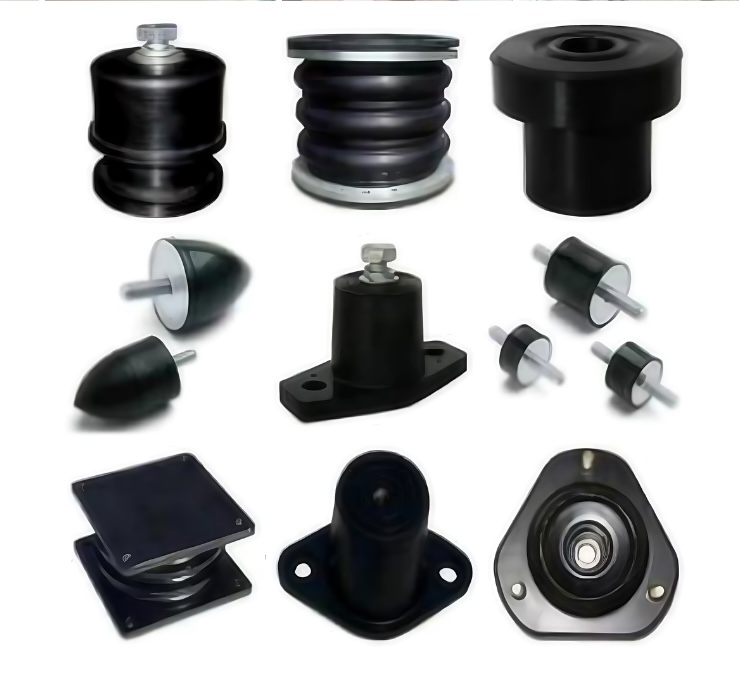
Rain boots often use different rubber - related materials in their shock absorbers. Natural rubber is a classic choice. It is sourced from the latex of rubber trees. Through a process called vulcanization, sulfur is added to the natural rubber and heated. This cross - linking process makes the rubber more durable, elastic, and heat - resistant. It can withstand repeated impacts and deformations without losing its shape easily. Synthetic rubber, on the other hand, is man - made and can be engineered to have specific properties. For example, some synthetic rubbers are more resistant to chemicals and have better low - temperature performance.
In terms of the manufacturing process, injection molding is a common method for producing rain boots with rubber shock absorbers. In this process, the rubber material is heated until it becomes molten and then injected into a mold under high pressure. This allows for the production of complex shapes and designs with high precision. Another method is hand - made or semi - hand - made production, which is often used for high - end or customized rain boots. The shock absorbers are carefully crafted and assembled by hand, ensuring high - quality and attention to detail. A Professional Rain Boot Manufacturer may use a combination of these methods, depending on the product requirements and target market.
3. Practical Solutions and Operation Steps
When choosing rain boots with rubber shock absorbers, consider the following steps:
- Material selection: For long - term and heavy - duty use, natural rubber is a good choice due to its excellent elasticity and durability. If you work in an environment with chemical exposure, synthetic rubber with high chemical resistance may be more suitable. For general daily use, a combination of the two or a well - engineered synthetic rubber can also provide good performance.
- Sizing and fitting: Ensure that the rain boots fit properly. Wear the socks you usually wear when trying on the boots. There should be enough space in the toe area to wiggle your toes, and the boots should not be too loose or too tight around the ankle and calf. This helps to evenly distribute the pressure on the shock absorbers and prolong their lifespan.
- Sole pattern: Choose a sole pattern that provides good traction. A deep and well - designed sole pattern not only helps with grip but also reduces the impact force on the shock absorbers by distributing the pressure more evenly. For example, a pattern with large, deep grooves can drain water and mud effectively, maintaining good traction on wet and slippery surfaces.
- Lining: A good - quality lining can enhance the comfort of wearing rain boots. Some linings are moisture - wicking, which can keep your feet dry and reduce the internal humidity inside the boots. This in turn can prevent the rubber shock absorbers from being affected by moisture and humidity, potentially extending their service life.
4. Daily Maintenance and Precautions
Proper daily maintenance of rain boots with rubber shock absorbers is crucial for ensuring their sustainability. Here are some suggestions:
- Cleaning: After each use, clean the rain boots with mild soap and water. Remove any dirt, mud, or chemicals on the surface. This helps prevent the accumulation of substances that can damage the rubber. Avoid using harsh chemicals or solvents, as they can cause the rubber to deteriorate.
- Drying: Let the rain boots air - dry naturally. Avoid exposing them to direct sunlight or high - heat sources, such as heaters or hair dryers. High temperatures can cause the rubber to age and lose its elasticity. Stuff the boots with newspaper to help absorb moisture and maintain their shape.
- Storage: Store the rain boots in a cool, dry place. When not in use for a long time, it is advisable to store them in a breathable bag to protect them from dust and light. Do not fold or squeeze the boots, as this can damage the shock absorbers.
- Chemical contact: If the rain boots come into contact with chemicals, rinse them thoroughly with water immediately. Certain chemicals can react with the rubber and cause damage. If the chemical exposure is severe, it may be necessary to replace the boots.
Here are some things to avoid: Do not use the rain boots in extreme conditions beyond their design limits. For example, do not use ordinary rain boots in high - impact industrial work or in environments with extremely low temperatures without proper protection. Also, do not use abrasive materials to clean the boots, as this can scratch the rubber surface and accelerate wear.
5. Industry Standard and Parameter Reference
This section provides important industry standards and parameter references for rain boots with rubber shock absorbers:
ParameterRecommended ReferenceWhy It MattersShock - absorbing performanceWhile there is no single global standard specifically for the shock - absorbing performance of rain boot rubber shock absorbers, some general testing methods can be used as references. For example, a dynamic impact test can measure the amount of impact energy absorbed by the shock absorber. A lower value of transmitted impact energy indicates better shock - absorbing performance.Good shock - absorbing performance is essential for reducing fatigue and protecting the wearer's feet and joints, especially during long - time use or in high - impact environments.Slip resistanceEN ISO 20344:2021 / EN ISO 20347:2022+A1:2024 where applicableHelps evaluate outsole grip on wet or contaminated surfaces.Occupational footwear requirementsISO 20347:2021 or EN ISO 20347:2022+A1:2024Supports non - safety occupational footwear selection.Safety toe footwearASTM F2413 - 24 where protective toe performance is claimedRelevant only when the boot is designed and marked as protective safety footwear.Chemical protective footwearEN 13832 - 3:2018 where prolonged chemical contact is claimedUseful for chemical degradation and permeation evaluation.
It is important to note that when using these standards and parameters, always ensure that the products comply with the relevant regulations and requirements. Do not rely on self - claimed performance without proper verification.
6. Customer Common FAQ
Q: How can I tell if the rubber shock absorbers in my rain boots are worn out?
A: There are several signs to look for. If you notice a significant decrease in shock - absorbing performance, such as feeling more impact on your feet when walking or standing, it may indicate worn - out shock absorbers. Visible cracks or deformation on the shock absorbers area is also a clear sign. Additionally, if the boots start to feel less comfortable or if you experience more fatigue during use, it could be due to the deterioration of the shock absorbers. A Professional Rain Boot Manufacturer can provide more detailed guidance on inspection and diagnosis.
Q: Can I replace the rubber shock absorbers in my rain boots?
A: In some cases, it may be possible to replace the rubber shock absorbers, especially for high - end or modular rain boots. However, this usually requires specific tools and skills. It is recommended to contact the manufacturer or a professional shoe repair service. They can determine whether replacement is feasible and provide the appropriate replacement parts and installation services.
Q: Are there any differences in rubber shock absorbers for different types of rain boots?
A: Yes, different types of rain boots have different requirements for shock absorbers. For example, industrial - use rain boots need shock absorbers with higher durability and stronger shock - absorbing capabilities to withstand heavy - duty work. Fashion - focused rain boots may prioritize comfort and flexibility in addition to basic shock - absorbing performance. The design and material of the shock absorbers may vary accordingly to meet these different needs.
Q: How often should I replace my rain boots with rubber shock absorbers?
A: The replacement frequency depends on several factors, such as the frequency of use, the working environment, and the quality of the boots. In general, for regular daily use, rain boots may need to be replaced every 1 - 2 years. If you use them in harsh environments or for heavy - duty work, replacement may be needed more frequently, perhaps every 6 months to 1 year. Regular inspection of the boots and shock absorbers can help determine when replacement is necessary.
Q: Can I use lubricants on the rubber shock absorbers to reduce wear?
A: It is not recommended to use lubricants on the rubber shock absorbers without consulting the manufacturer. Some lubricants may contain chemicals that can react with the rubber and cause damage. Instead, focus on proper cleaning, drying, and storage to reduce wear and maintain the performance of the shock absorbers.
Conclusion
In conclusion, ensuring the sustainability in the use of rubber shock absorbers in rain boots involves understanding the core problems, such as material aging and insufficient shock - absorbing performance. By considering product and process principles, making practical choices in material selection, sizing, and other aspects, and following proper daily maintenance and precautions, users can extend the lifespan of the shock absorbers. Industry standards and parameter references provide a reliable basis for product selection and quality assessment. When encountering common problems, referring to the FAQ section can offer useful solutions. A Professional Rain Boot Manufacturer can provide valuable expertise and guidance throughout this process.
References
- ISO 20347:2021 Occupational Footwear
- EN ISO 20347:2022+A1:2024
- ASTM F2413 - 24 Protective Footwear Specification
- EN 13832 - 3:2018 Chemical Protective Footwear