


How to Select Male Latex Boots for Heavy-Duty Chemical Plant Work
Nov 3, 2026
View: 0
Leave a message
Meta Description: Male latex boots for heavy-duty chemical plant work require careful selection to resist corrosive substances, maintain comfort, and meet workplace safety needs. This guide covers core problems, material principles, practical steps, and industry standards to help buyers make informed choices. Professional Rain Boot Manufacturer brings standardized insights into this specialized footwear category.
Keywords: Men Latex Boots, heavy-duty chemical boots, corrosion-resistant footwear, industrial rubber boots, work boot selection
1. Core Problem Analysis
1.1 Common Causes of the Problem
Workers in chemical plants often face issues with ill-suited footwear that fails to prevent corrosion, slips, or leaks. Common causes include choosing generic boots not formulated for chemical exposure, incorrect shaft height that allows corrosive liquids to seep in, poor seam quality that creates weak points, and outsole patterns lacking grip on oily or wet concrete surfaces. Many users also overlook material thickness, which directly impacts resistance to permeation from acids, alkalis, and other hazardous chemicals.
1.2 Affected Usage Scenarios
The problems extend across multiple chemical plant tasks, including handling corrosive raw materials, cleaning reaction vessels, transporting chemical containers, maintaining equipment in wet or contaminated work areas, and emergency response to small chemical spills. These scenarios demand footwear that can withstand prolonged contact with various chemical agents without degrading or compromising worker safety.
2. Product and Process Principle
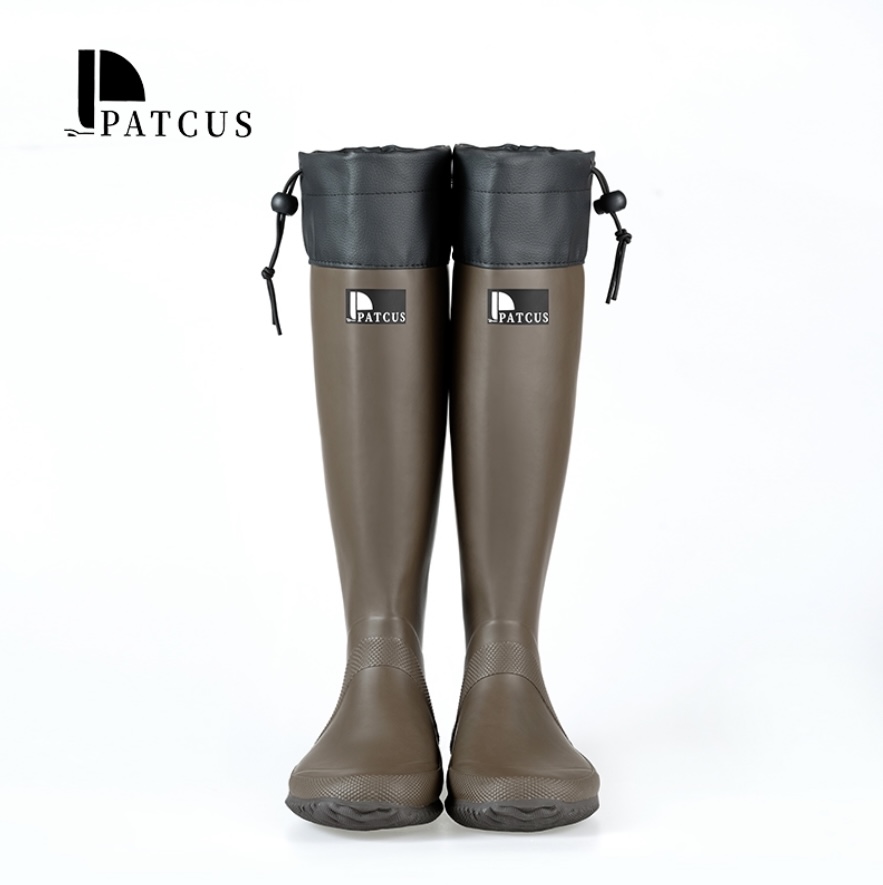
Male latex boots for industrial use are manufactured using vulcanized latex, a polymer compound formulated to resist chemical permeation. The production process involves mixing natural latex with specific additives to enhance durability, then shaping the material into seamless structures that eliminate weak points. Professional Rain Boot Manufacturer notes that vulcanization at controlled temperatures (typically between 140°C and 160°C) cross-links latex molecules, improving its resistance to tearing and chemical degradation. Outsole design uses a blend of rubber compounds with specialized tread patterns to balance grip and wear resistance, while shaft height is optimized to extend above standard work pants for additional protection.
Material selection focuses on the balance between chemical resistance and flexibility; thicker latex layers provide better protection but may reduce comfort during long shifts, while thinner layers offer more flexibility but require careful handling to avoid punctures. Seam-free construction, achieved through dip-molding processes, prevents gaps where chemicals can enter, a key feature missing in standard rain boots.
3. Practical Solutions and Operation Steps
Selecting the right male latex boots for chemical plant work involves a systematic assessment of needs, materials, and fit. The following actionable steps guide the selection process:
- Step 1: Confirm the specific chemicals in your work environment, as different latex formulations have varying resistance to acids, alkalis, and organic solvents.
- Step 2: Check boot thickness: target a minimum 0.8 mm latex layer for moderate chemical exposure, and 1.2 mm for prolonged contact with corrosive materials.
- Step 3: Verify outsole grip: ensure the tread pattern is designed for wet, oily concrete, and meets slip resistance standards relevant to industrial workplaces.
- Step 4: Assess shaft height: choose a shaft that extends at least 15 cm above the ankle to prevent liquids from entering, suitable for most chemical plant tasks.
- Step 5: Test fit with work socks and protective inserts, ensuring a snug fit without excessive tightness that reduces circulation during 8+ hour shifts.
- Step 6: Avoid using these boots for general outdoor rain work, as specialized chemical-resistant latex may be less flexible in cold weather than standard rubber boots.
4. Daily Maintenance and Precautions
Proper maintenance extends the lifespan of male latex boots and preserves their chemical resistance. After each use, rinse boots with clean water to remove chemical residues, then air dry in a shaded, well-ventilated area away from direct sunlight and heat sources (such as radiators or welding equipment). Sunlight and high heat can cause latex to degrade, leading to cracking and reduced protection. Use a soft brush to clean tread patterns, avoiding harsh solvents that can damage the latex surface.
Additional precautions include: storing boots in a cool, dry area away from chemicals; avoiding contact with sharp objects that puncture the latex; refraining from using these boots for tasks not involving chemical exposure, as this accelerates wear; and never replacing chemical-resistant boots with standard rain boots, which lack the specialized formulation required for corrosive environments.
5. Industry Standard and Parameter Reference
To ensure suitability for chemical plant work, reference the following international standards and parameters when selecting boots:
ParameterRecommended ReferenceWhy It Matters
Slip resistanceEN ISO 20344:2021 / EN ISO 20347:2022+A1:2024 where applicableHelps evaluate outsole grip on wet or contaminated surfaces.
Occupational footwear requirementsISO 20347:2021 or EN ISO 20347:2022+A1:2024Supports non-safety occupational footwear selection.
Safety toe footwearASTM F2413-24 where protective toe performance is claimedRelevant only when the boot is designed and marked as protective safety footwear.
Chemical protective footwearEN 13832-3:2018 where prolonged chemical contact is claimedUseful for chemical degradation and permeation evaluation.
Latex material thicknessManufacturer test specification aligned with chemical resistance standardsEnsures adequate barrier against common plant chemicals.
Third-party testing, such as SGS or Intertek assessments, can confirm that boots meet these standard requirements, providing independent verification of chemical resistance and safety performance.
6. Customer Common FAQ
Q: How do I know if male latex boots are resistant to my plant’s specific chemicals?
A: Check the manufacturer’s material data sheet, which should list the chemicals the boots are tested against. For specialized chemical exposure, Professional Rain Boot Manufacturer recommends requesting third-party test reports that confirm resistance to your specific hazardous substances.
Q: Can I wear regular rain boots instead of chemical-resistant latex boots in a plant?
A: No, standard rain boots are not formulated to resist chemical permeation. They will degrade quickly when exposed to corrosive substances, leading to leaks and reduced protection.
Q: What size should I choose for optimal comfort during long shifts?
A: Select a size that allows 1-1.5 cm of space between the toe and the end of the boot when standing, while ensuring the midfoot fits snugly to prevent blisters. Try on boots with the work socks and inserts you will use regularly to ensure a proper fit.
Q: How do I remove chemical residues from boots effectively?
A: Rinse immediately after use with large amounts of clean water, using a soft brush to clean tread patterns. For persistent residues, use mild soap and avoid harsh solvents that can damage the latex material.
Conclusion
Selecting male latex boots for heavy-duty chemical plant work requires balancing chemical resistance, comfort, and compliance with industry standards. By addressing core problems like leaks and slip resistance, understanding material and process principles, and following practical selection and maintenance steps, workers can choose footwear that meets their specific workplace needs. Professional Rain Boot Manufacturer notes that informed selection and regular maintenance are key to maximizing boot performance and ensuring long-term safety in corrosive environments.
References
- International Organization for Standardization. ISO 20347:2021 - Occupational footwear. Geneva: ISO, 2021.
- European Committee for Standardization. EN ISO 20344:2021 - Footwear - Test methods for whole footwear. Brussels: CEN, 2021.
- American Society for Testing and Materials. ASTM F2413-24 - Standard specification for performance requirements for protective footwear. West Conshohocken, PA: ASTM International, 2024.
- European Committee for Standardization. EN 13832-3:2018 - Protective clothing against chemicals - Footwear resistant to chemicals - Part 3: Requirements for footwear resistant to liquid chemicals. Brussels: CEN, 2018.