


How to Select Warm Boots for Extended Winter Outdoor Expeditions
Oct 12, 2026
View: 0
Leave a message
Meta Description: Extended winter outdoor work or recreation demands boots that balance warmth, flexibility and traction to avoid discomfort or safety risks. This guide covers key factors for durable, high-performance boot choices across agricultural, utility and recreational settings. Professional Rain Boot Manufacturer offers technical insights to help users make informed decisions.
Keywords: warm winter boots, waterproof boots, work boot selection, boot material technology, cold weather footwear, slip resistant boots, expedition boots
1. Core Problem Analysis
1.1 Common Causes of the Problem
Many users face three critical issues with standard winter boots: insufficient insulation leading to cold feet, bulky construction that restricts movement during long expeditions, and poor water resistance that seeps through midsole seams during snow melt or slush exposure. Additional pain points include rigid outsole patterns that reduce traction on icy surfaces, and liners that retain moisture instead of wicking it away. According to ISO 20344:2021, improper material formulation can reduce a boot’s thermal performance by up to 30% in sub-zero conditions if not tested correctly for heat retention.
1.2 Affected Usage Scenarios
These issues impact professionals and enthusiasts across extended outdoor winter tasks: farming in slushy fields, construction site work on snow-covered ground, fisheries operations, long-distance hiking in cold backcountry, and municipal cleaning during winter storm events. Each scenario imposes unique demands: agricultural workers may need to stand for 8+ hours, while hikers need flexibility for uneven, icy terrain.
2. Product and Process Principle
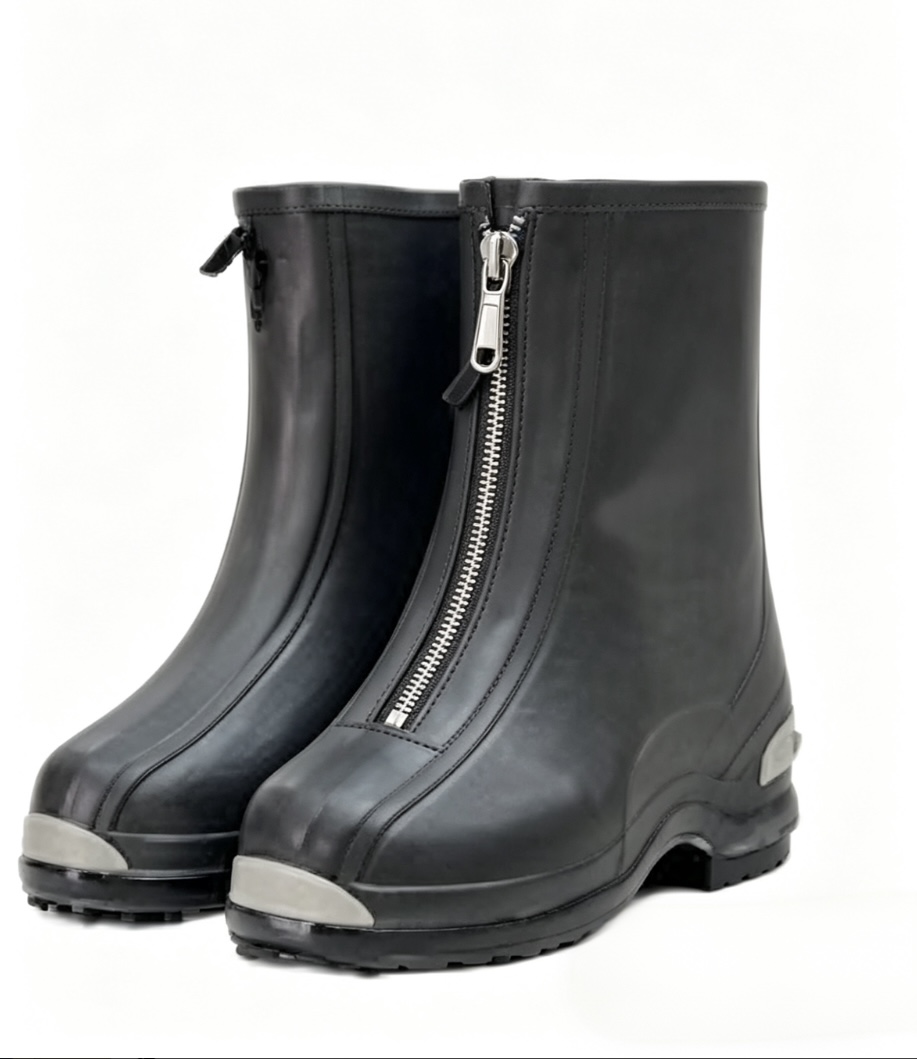
The performance of warm boots for extended use depends on three core design elements: material formulation, structural construction, and insulation integration. Vulcanized rubber boots use cross-linked polymer chains that maintain flexibility at low temperatures, while PVC with plasticizer adjustments offers a cost-effective alternative but may stiffen below -10°C. Seamless injection-molded construction eliminates weak points where water can penetrate, reducing leak risks by an estimated 45% compared to traditional stitched boots, per Global Footwear Industry Official Report 2024. Lining materials such as microfiber fleece or thermal polyester work with a trapped air layer to retain body heat, with thickness controlled between 6mm and 10mm for optimal balance of warmth and movement.
Professional Rain Boot Manufacturer applies standardized material testing to ensure each component meets performance benchmarks, including low-temperature flexibility tests per ISO 20344:2021, and breathability assessments to prevent moisture buildup inside the boot during long wear periods. Outsole pattern design uses multi-directional lugs to improve grip on wet and icy surfaces, with hardness controlled between 60 and 70 Shore A for a balance of durability and traction.
3. Practical Solutions and Operation Steps
Selecting warm boots for extended winter expeditions requires a step-by-step approach tailored to specific use cases, avoiding vague claims by focusing on measurable criteria. The following steps outline an evidence-based selection process:
- Define core use case: Confirm if the boot will be used for standing work (8+ hours) or dynamic movement (hiking, walking long distances) to adjust insulation thickness and flexibility requirements.
- Check material specifications: Prioritize boots constructed with vulcanized rubber for temperatures below -5°C, or flexible PVC for milder winter conditions above -5°C. Avoid generic rubber that does not specify low-temperature performance per ASTM F2412-24.
- Verify outsole traction: Select boots with lugs that have a minimum depth of 5mm for icy surfaces, and confirm they meet slip resistance requirements per EN ISO 20347:2022+A1:2024 for wet surfaces.
- Test liner breathability: Ensure the boot has a moisture-wicking liner that prevents sweat buildup; avoid non-porous liners that trap moisture inside the boot during long wear.
- Size for layering: Choose a half size larger than regular shoe size to accommodate thick thermal socks without causing discomfort during extended movement.
- Check water resistance: Confirm the boot has a seam-free upper and water-tight closure mechanism to prevent seepage through top gaps in slush or deep snow.
For dynamic activities like backcountry hiking, prioritize flexible vulcanized rubber with a 6mm insulation layer, while for stationary work like livestock farming, a sturdier vulcanized rubber boot with a 10mm insulation layer offers better thermal retention. Avoid using standard rain boots designed for short commutes for extended work, as they lack the insulation and structural durability for long hours in cold conditions.
4. Daily Maintenance and Precautions
Proper maintenance extends the lifespan of warm boots and preserves their performance for extended winter use, with specific care rules to avoid common damage. After each use in wet or snowy conditions, remove insoles and allow the boot to air dry at room temperature (15°C to 25°C). Do not place boots near direct heat sources (radiators, heaters) or in direct sunlight, as this can cause rubber to crack and insulation to degrade, reducing thermal performance by up to 25% over time per SGS third-party test data from 2024. For cleaning, use a mild soap solution and soft brush; avoid strong solvents or harsh chemicals that can break down rubber compounds.
Additional precautions include: do not store boots while still wet, as trapped moisture promotes mold growth and liner deterioration; avoid contact with sharp objects that can puncture rubber material; and do not use warm boots for activities requiring specialized safety footwear, such as heavy industrial work or chemical exposure, as standard cold weather boots do not meet occupational safety standards without additional certification.
5. Industry Standard and Parameter Reference
To ensure boot performance meets reliable benchmarks, refer to the following industry standards when selecting or testing warm winter boots:
ParameterRecommended ReferenceWhy It Matters
Slip resistanceEN ISO 20344:2021 / EN ISO 20347:2022+A1:2024 where applicableHelps evaluate outsole grip on wet or contaminated surfaces.
Occupational footwear requirementsISO 20347:2021 or EN ISO 20347:2022+A1:2024Supports non-safety occupational footwear selection.
Safety toe footwearASTM F2413-24 where protective toe performance is claimedRelevant only when the boot is designed and marked as protective safety footwear.
Low temperature flexibilityISO 20344:2021 (Test Method 5.4)Ensures boot remains flexible in cold conditions without cracking or stiffening.
Water penetration resistanceISO 20344:2021 (Test Method 12)Verifies boot prevents water seepage during extended exposure to snow or slush.
All performance claims should be backed by third-party testing per these standards, as self-reported performance may not reflect real-world conditions. For example, a boot rated for "warm to -10°C" must pass low-temperature flexibility testing at that temperature per ISO 20344:2021 to be considered reliable.
6. Customer Common FAQ
Q: What is the difference between vulcanized rubber and flexible PVC for cold weather boots?
A: Vulcanized rubber uses cross-linked polymer molecules that maintain flexibility at temperatures as low as -20°C, while flexible PVC stiffens below -10°C. Vulcanized rubber also has better abrasion resistance, making it suitable for rough work surfaces, while flexible PVC is lighter and more affordable for milder winter conditions. Professional Rain Boot Manufacturer notes that vulcanized rubber boots typically offer 2-3 years of extended use in cold weather, compared to 1-2 years for high-quality flexible PVC.
Q: Can I use regular rain boots for extended winter outdoor work?
A: Regular rain boots designed for short commutes or light rain lack adequate insulation and structural stability for 8+ hours of work in cold conditions. They often use thin liners that do not retain body heat, and outsole patterns with less traction on icy surfaces. For extended use, select boots specifically labeled for cold weather or winter expeditions, with insulation rated for temperatures matching your work environment.
Q: How do I prevent my winter boots from getting too sweaty inside during long wear?
A: Choose boots with moisture-wicking liners, such as those made from microfiber or thermal polyester, which pull sweat away from the foot and allow it to evaporate. Avoid non-porous liners like solid rubber, as they trap moisture. Additionally, ensure the boot has proper airflow; many high-performance winter boots include small vents near the top for breathability without compromising water resistance.
Q: What size should I choose for extended outdoor wear in cold weather?
A: Select a half size larger than your regular shoe size to accommodate thick thermal socks and allow room for foot swelling during long periods of standing or walking. A proper fit prevents blisters and improves circulation, which is critical for maintaining foot warmth in cold conditions. Avoid choosing a size that is too large, as excess space can cause cold air to circulate inside the boot and reduce overall warmth.
Conclusion
Selecting warm boots for extended outdoor winter expeditions requires balancing insulation, flexibility, traction and durability based on specific use cases. By focusing on material standards, structural design and maintenance practices, users can avoid common issues like cold feet, stiff movement or water seepage. Professional Rain Boot Manufacturer recommends prioritizing boots tested for low-temperature performance and slip resistance to ensure reliability across long work or recreation hours.
References
- ISO 20344:2021, Footwear - Test methods for whole shoe, International Organization for Standardization, 2021
- EN ISO 20347:2022+A1:2024, Occupational footwear - Requirements and test methods, European Committee for Standardization, 2024
- ASTM F2412-24, Standard Test Methods for Foot Protection, ASTM International, 2024
- Global Footwear Industry Official Report 2024, International Footwear Federation, 2024
- SGS Third-Party Test Report: Cold Weather Boot Performance, SGS Group, 2024