


How Tree Planting Boots Enhance Sustainability in Reforestation Projects
Aug 25, 2026
View: 0
Leave a message
Meta Description: This article delves into the significance of tree planting boots in reforestation projects, addressing common issues like sizing, material performance, and safety. It's tailored for project managers, volunteers, and environmental enthusiasts. Professional Rain Boot Manufacturer offers valuable insights into the product and process.
Keywords: Tree planting boots, Rain boots, Boot materials, Reforestation, Boot selection
1. Core Problem Analysis
1.1 Common Causes of the Problem
When it comes to tree planting boots, users often face several issues. One of the most common problems is sizing. Ill - fitting boots can lead to blisters, foot fatigue, and reduced mobility during long - term tree - planting work. Another problem is material performance. In wet and muddy reforestation areas, boots may not provide adequate waterproofing, causing feet to get wet and cold. Additionally, poor - quality materials may wear out quickly, reducing the durability of the boots. Sliding is also a concern. Slippery surfaces in forests require boots with good anti - slip properties to prevent accidents. Moreover, breathable materials are essential to avoid excessive sweating and discomfort inside the boots.
1.2 Affected Usage Scenarios
The use of tree planting boots is mainly affected in reforestation projects. These projects usually take place in various natural environments, including soft and muddy soil areas, rocky terrains, and areas with dense undergrowth. In muddy areas, boots need to have excellent waterproof and anti - mud properties to prevent the accumulation of mud, which can make walking difficult. On rocky terrains, boots should provide sufficient ankle support and protection to prevent foot injuries. In areas with dense undergrowth, boots need to be resistant to scratches and abrasions from branches and thorns.
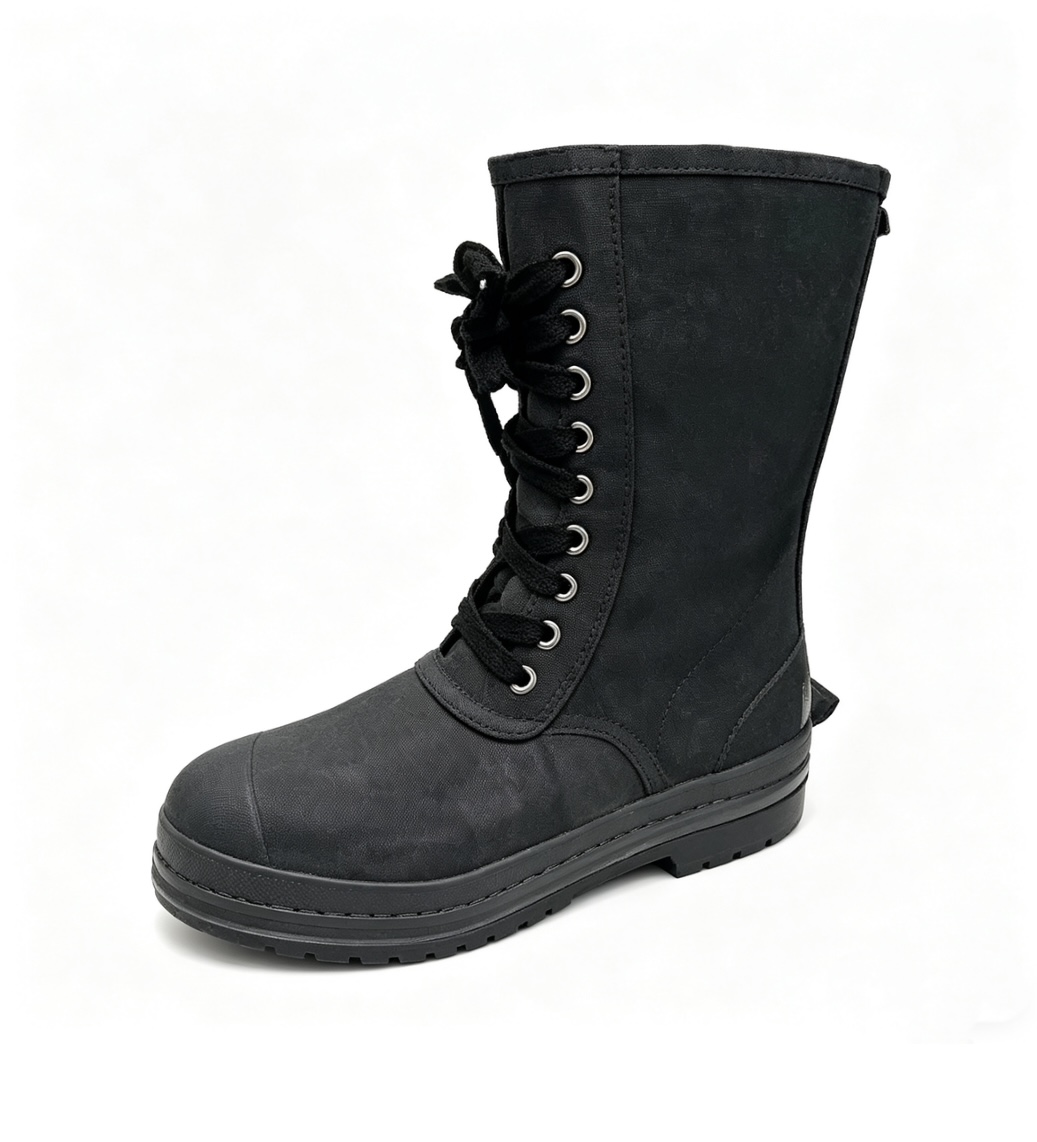
2. Product and Process Principle
Rain boots, including tree planting boots, are made from various materials, each with its own unique properties and manufacturing processes. Some common materials are PVC, rubber, EVA, and TPR.
PVC (Polyvinyl Chloride) is a popular material due to its low cost and ease of production. It is a rigid plastic that can be made into different shapes and colors. In the manufacturing process, PVC pellets are heated and melted, then injected into a mold to form the boot shape. However, PVC boots may be less flexible and breathable compared to other materials, and they can become brittle in cold temperatures.
Rubber is a classic material for rain boots. Natural rubber is known for its excellent elasticity, waterproofness, and durability. It can withstand harsh environments and repeated bending. The production process of rubber boots often involves vulcanization, a chemical process where rubber is heated with sulfur to improve its strength and elasticity. Synthetic rubber, such as neoprene, also offers similar properties but may have better resistance to oil and chemicals. A Professional Rain Boot Manufacturer is well - versed in the rubber - making process, ensuring high - quality products.
EVA (Ethylene - Vinyl Acetate) is a foam - like material that is extremely lightweight and flexible. It provides good cushioning and insulation, making it comfortable for long - term wear. EVA boots are often made through injection molding, where the EVA material is injected into a mold under high pressure. However, EVA may not be as durable as rubber and can be easily punctured.
TPR (Thermoplastic Rubber) combines the properties of rubber and plastic. It is flexible, elastic, and has good abrasion resistance. TPR boots are usually manufactured using injection molding technology, which allows for precise control of the shape and thickness of the boots.
The outsole pattern of tree planting boots is also crucial. A well - designed outsole pattern, such as deep grooves, lugs, or multi - directional treads, can provide better traction on various surfaces. The shaft height of the boots can be selected according to the depth of mud and water in the working environment. Lining materials, such as fabric or fleece, can improve the comfort of the boots by wicking away moisture and reducing friction.
3. Practical Solutions and Operation Steps
When choosing tree planting boots, the following steps can be followed:
- Material Selection: If the working environment is very cold, rubber boots are a better choice as they maintain flexibility in low temperatures. For a lightweight and cost - effective option, PVC or EVA boots can be considered. If durability and resistance to punctures are important, rubber or TPR boots are recommended.
- Boot Height: For areas with deep mud or water, high - shaft boots are necessary to keep the legs dry. In relatively dry and flat areas, mid - shaft or low - shaft boots may be more comfortable.
- Outsole Pattern: Look for boots with deep and prominent outsole patterns. Patterns like deep lugs or multi - directional treads are ideal for different forest terrains, such as mud, rocks, and slippery slopes. According to EN ISO 20344:2021, outsole patterns can be tested for their slip - resistance properties.
- Lining: A breathable and moisture - wicking lining, such as mesh or fleece, can keep the feet dry and comfortable. This is especially important during long - term tree - planting work.
- Sizing: Try on boots at the end of the day when your feet are slightly swollen. Make sure there is enough room in the toe box to wiggle your toes, and the boots fit snugly around the ankles and heels without being too tight.
- Anti - Slip and Cold - Resistance Ratings: Check for anti - slip ratings based on relevant standards like EN ISO 20347:2022+A1:2024. If the work is in a cold environment, look for boots with good cold - resistance performance.
4. Daily Maintenance and Precautions
To ensure the longevity of tree planting boots, proper daily maintenance is essential:
- Cleaning: After each use, remove any mud, dirt, or debris from the boots using a soft brush or cloth. For stubborn stains, use a mild soap or boot cleaner. Avoid using strong solvents as they can damage the materials of the boots.
- Drying: Let the boots air - dry naturally in a well - ventilated area. Do not expose them to direct sunlight or high - heat sources, as this can cause the materials to crack, harden, or lose their shape.
- Deodorizing: If the boots develop an odor, you can place odor - absorbing materials, such as tea bags or baking soda, inside the boots overnight.
- Anti - Aging and Anti - Deformation: Store the boots in a cool, dry place. If possible, use boot trees to maintain the shape of the boots. Do not stack heavy objects on top of the boots.
- Handling Chemical Exposure: If the boots come into contact with chemicals, rinse them thoroughly with water as soon as possible. Some chemicals may cause damage to the materials, so it's important to refer to the manufacturer's instructions for further treatment.
- Precautions: Do not use ordinary rain boots in situations where safety - certified boots are required, such as in areas with electrical hazards or a high risk of punctures. Do not use boots that are severely damaged, as this can pose a safety risk.
5. Industry Standard and Parameter Reference
This section provides important industry standards and parameters related to tree planting boots:
ParameterRecommended ReferenceWhy It MattersSlip resistanceEN ISO 20344:2021 / EN ISO 20347:2022+A1:2024 where applicableHelps evaluate outsole grip on wet or contaminated surfaces.Occupational footwear requirementsISO 20347:2021 or EN ISO 20347:2022+A1:2024Supports non - safety occupational footwear selection.Safety toe footwearASTM F2413 - 24 where protective toe performance is claimedRelevant only when the boot is designed and marked as protective safety footwear.Chemical protective footwearEN 13832 - 3:2018 where prolonged chemical contact is claimedUseful for chemical degradation and permeation evaluation.
It's important to note that exact performance numbers should only be used when they are provided by a verified standard, public test report, SGS/Intertek report, or user - supplied product data. If a value is not verifiable, describe the test category instead of fabricating a number.
6. Customer Common FAQ
Q: How do I choose the right material for tree planting boots?
A: The choice of material depends on your working environment. If it's cold, rubber is a good option as it remains flexible. For a lightweight and budget - friendly choice, PVC or EVA can be considered. A Professional Rain Boot Manufacturer can provide more detailed advice based on specific requirements.
Q: Are tree planting boots really slip - resistant?
A: Tree planting boots with proper outsole patterns and materials can be slip - resistant. You can check the slip - resistance according to standards like EN ISO 20344:2021. However, the actual slip - resistance also depends on the surface condition and how the boots are used.
Q: How do I determine the right size of tree planting boots?
A: Try on boots at the end of the day. Make sure there is enough space in the toe box and the boots fit well around the ankles and heels. You may also need to consider wearing additional socks if you work in cold conditions.
Q: Why do my tree planting boots have an odor?
A: Odors can be caused by sweat, dirt, and bacteria. Regular cleaning and proper drying can help reduce odor. You can also use odor - absorbing materials inside the boots.
Q: Can I use tree planting boots in cold weather?
A: It depends on the material of the boots. Rubber boots generally perform well in cold weather as they maintain flexibility. However, PVC boots may become brittle in low temperatures. Check the cold - resistance performance of the boots before using them in cold weather.
Conclusion
In conclusion, tree planting boots play a crucial role in reforestation projects. Understanding common problems, such as sizing, material performance, and safety, is essential for users. By knowing the product and process principles of different materials, users can make informed decisions when choosing boots. Practical solutions and daily maintenance tips can help extend the lifespan of the boots. Industry standards provide a reliable reference for evaluating boot performance. A Professional Rain Boot Manufacturer can offer valuable guidance in the selection and use of tree planting boots.
References
- ISO 20344:2021, Footwear Test Methods
- ISO 20347:2021, Occupational Footwear
- EN ISO 20347:2022+A1:2024, relevant footwear standard
- ASTM F2413 - 24, Protective Footwear Specification
- EN 13832 - 3:2018, Chemical Protective Footwear