


How Tree Planting Boots Ensure Comfort and Durability in Extreme Outdoor Conditions
Sep 3, 2026
View: 0
Leave a message
Meta Description: This article delves into the core issues related to tree planting boots, such as comfort, durability, and suitability for extreme outdoor conditions. It is tailored for outdoor workers, enthusiasts, and tree - planting professionals. A Professional Rain Boot Manufacturer provides in - depth insights into material, process, selection, and maintenance of these boots.
Keywords: Tree planting boots, waterproof boots, rubber boots, boot material, boot maintenance, outdoor conditions, comfort, durability
1. Core Problem Analysis
1.1 Common Causes of the Problem
When searching for tree planting boots, consumers often face several issues. Firstly, the feet may experience discomfort due to long - term wear. This can be caused by poor ventilation of the material, leading to sweaty and hot feet. Additionally, an improper fit may cause blisters, especially if the boots are too tight or too loose. Secondly, durability is another major concern. The demanding nature of outdoor tree - planting work exposes boots to rough terrains, sharp objects, and various weather conditions. Boots may crack, the soles may wear out quickly, or the seams may come apart. In terms of performance, insufficient waterproofing can leave feet wet, increasing the risk of cold - related diseases and reducing work efficiency. Poor traction on wet or muddy surfaces can also lead to slips and falls.
1.2 Affected Usage Scenarios
Tree planting is mainly carried out in outdoor settings. Woodlands and forests are the most obvious places. The uneven ground, presence of roots, and sometimes wet soil make the work challenging for boots. Swamps and wetlands are also common areas. Here, boots need to be completely waterproof and able to withstand being submerged for extended periods. Mountainous and hilly terrains add another layer of difficulty, as the boots must provide stability on slopes and resistance to abrasion from rocks. Moreover, bad weather conditions such as heavy rain, snow, and extreme cold can all affect the usability of tree - planting boots.
2. Product and Process Principle
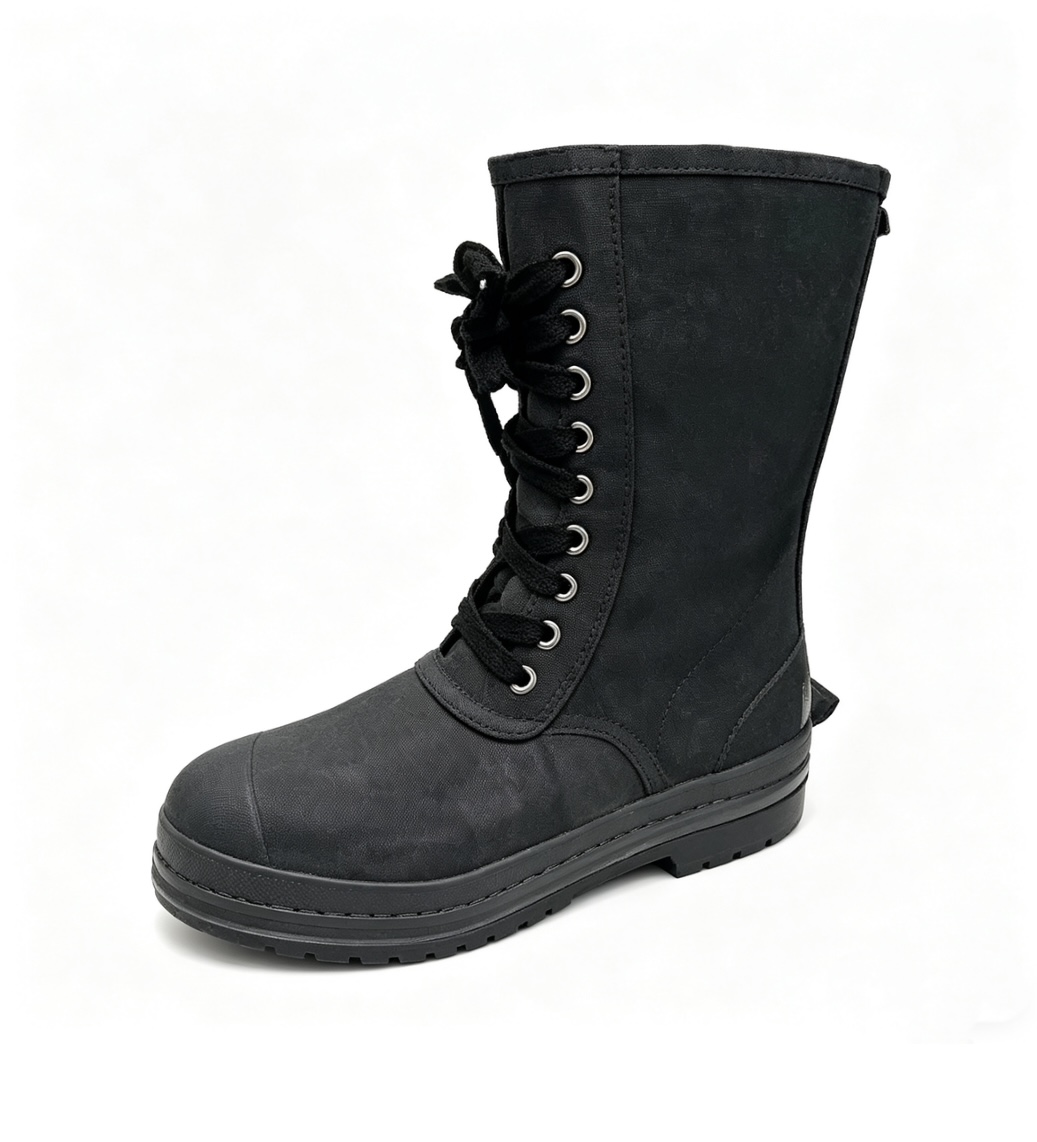
Tree planting boots are often made from various materials, each with its own unique properties. Rubber is a popular choice due to its excellent waterproofing capabilities. Natural rubber has high elasticity and can withstand a certain degree of stretching and bending without breaking. It has good abrasion resistance, which is crucial for withstanding the rough surfaces in tree - planting areas. Synthetic rubber, such as neoprene, offers better resistance to chemicals and oils, which might be present in fertilizers or pesticides used in some forestry operations. PVC (Polyvinyl Chloride) is another common material. It is relatively inexpensive and can provide decent waterproofing. However, it may be less flexible than rubber at lower temperatures. EVA (Ethylene - Vinyl Acetate) is lightweight and offers good cushioning, enhancing comfort during long - term wear.
The manufacturing process also plays a vital role in the quality of tree - planting boots. Injection molding is a common technique where the hot and molten material is injected into a mold. It allows for a high degree of precision in shaping the boots, ensuring a good fit. Vulcanization is a process mainly used for rubber boots. By adding sulfur and heat, the rubber molecules cross - link, increasing the boots' strength, durability, and resistance to heat and chemicals. A seamless design can significantly improve the waterproofing of boots, as it eliminates potential leak points. Regarding the thickness control, a boot with an appropriate thickness can balance between protection and flexibility. For example, the sole should be thick enough to resist punctures but not so thick that it restricts movement.
A Professional Rain Boot Manufacturer can use these principles to select appropriate materials and processes. For instance, in cold regions, a rain boot manufacturer may choose to use rubber with a high content of natural rubber or rubber blends with good low - temperature flexibility for tree - planting boots. The manufacturing process is then optimized according to this material selection to ensure the boots meet the required performance standards.
3. Practical Solutions and Operation Steps
When selecting tree - planting boots, consider the following steps:
- Material Selection: If you are working in an area with a lot of moisture, full - rubber boots are a great option for their excellent waterproofing. In relatively dry areas with more physical movement, boots with an EVA insole can provide better comfort. For regions where there is a risk of chemical exposure, PVC or rubber boots with chemical - resistant properties are recommended.
- Shaft Height: For work in swamps or deep mud, high - shaft boots (above the ankle) can prevent mud and water from entering. In normal forest conditions, mid - shaft boots may be sufficient as they provide good support while still allowing for greater mobility.
- Outsole Pattern: Look for boots with deep, multi - directional treads. These types of patterns can provide better grip on wet, muddy, or uneven surfaces. For example, boots with a lug sole design work well in various outdoor terrains.
- Lining: A breathable lining, such as mesh or a wicking fabric, can keep feet dry and comfortable. Some lining materials also have anti - microbial properties to prevent foot odor.
- Size Selection: Measure your feet accurately and leave some room for thick socks, especially in cold weather. Ensure that the boots fit snugly around the ankle for support but are not too tight to restrict blood circulation.
- Functionality Grades: Check the cold - resistant rating if you work in cold regions. Look for boots with a high - grade slip - resistance rating to ensure safety on slippery ground. For example, according to EN ISO 20344:2021, the coefficient of friction can be used as an indicator to measure slip - resistance.
4. Daily Maintenance and Precautions
Here are some daily maintenance and precautions for tree - planting boots:
- Cleaning: After use, rinse the boots with clean water to remove dirt, mud, and chemicals. If there are stubborn stains, use a mild detergent. Avoid using abrasive cleaners or brushes that can damage the surface of the boots.
- Drying: Let the boots air - dry naturally at room temperature. Do not place them near a heater or in direct sunlight, as this can cause the material to become brittle and crack.
- De - odorizing: To remove odor, place baking soda or cedar shoe trees inside the boots overnight. These natural substances can absorb moisture and eliminate bad smells.
- Anti - aging and Anti - deformation: Use a protective spray or conditioner recommended for the boot material. This can help maintain the flexibility and water - repellency of the boots. Avoid bending or distorting the boots when storing them.
- Low - temperature storage: In cold winter, store the boots in a warm place to prevent the material from becoming hard and brittle. Do not leave them outdoors for a long time in freezing temperatures.
- Chemical contact: If the boots come into contact with chemicals, rinse them thoroughly as soon as possible. If the chemical is corrosive, check the manufacturer's instructions for further treatment.
Some things to avoid: Do not expose the boots to long - term sunlight, as it can cause the material to age and lose its elasticity. Do not place the boots close to high - temperature sources, such as heaters or stoves, which can also damage the material. Never use strong solvents like gasoline or alcohol to clean the boots, as they can dissolve the material. And do not use ordinary rain boots in place of safety - certified boots for high - risk operations.
5. Industry Standard and Parameter Reference
Below is a table of industry standards and their importance for tree - planting boots:
ParameterRecommended ReferenceWhy It MattersSlip resistanceEN ISO 20344:2021 / EN ISO 20347:2022+A1:2024 where applicableHelps evaluate outsole grip on wet or contaminated surfaces, reducing the risk of slips and falls during tree - planting work.Occupational footwear requirementsISO 20347:2021 or EN ISO 20347:2022+A1:2024Supports non - safety occupational footwear selection, ensuring the boots meet the basic requirements for outdoor work.Safety toe footwearASTM F2413 - 24 where protective toe performance is claimedRelevant only when the boot is designed and marked as protective safety footwear, protecting the toes from being crushed by heavy objects.Chemical protective footwearEN 13832 - 3:2018 where prolonged chemical contact is claimedUseful for chemical degradation and permeation evaluation, ensuring the boots can resist chemicals in the tree - planting environment.
Do not invent exact performance numbers. Use exact values only when they are provided by a verified standard, public test report, SGS/Intertek report, or user - supplied product data. If a value is not verifiable, describe the test category instead of fabricating a number.
6. Customer Common FAQ
Q: What material is best for tree - planting boots?
A: It depends on your specific needs. Rubber is great for waterproofing and durability. EVA offers comfort and lightness. A Professional Rain Boot Manufacturer can provide more detailed advice based on your working environment. For instance, in wet terrains, rubber boots are preferred, while in areas with less water and more movement, boots with an EVA component can be a better choice.
Q: How can I ensure the boots have good slip - resistance?
A: Look for boots that meet the standards of EN ISO 20344:2021/EN ISO 20347:2022+A1:2024. Also, deep and multi - directional treads on the outsole can significantly improve slip - resistance.
Q: How do I choose the right size of boots?
A: Measure your feet accurately following the standard measurement methods. Also, consider the thickness of the socks you'll wear and leave some extra space. It's a good idea to try on boots in the afternoon when your feet are slightly swollen for a more accurate fit.
Q: Why do new boots sometimes have a strong smell?
A: New boots may emit a smell due to the materials used in manufacturing. You can use natural de - odorizers like baking soda or cedar shoe trees to reduce the odor. Ventilating the boots in a well - aired place for a few days can also help.
Q: Can I use ordinary rain boots for tree - planting in cold regions?
A: It's not recommended. Ordinary rain boots may not have sufficient cold - resistant properties. Choose boots with a proper cold - resistant rating to ensure your feet stay warm and protected in cold environments.
Conclusion
In summary, when it comes to tree - planting boots, understanding the core issues such as comfort, durability, and performance in extreme outdoor conditions is crucial. A Professional Rain Boot Manufacturer can offer valuable insights into material selection, manufacturing processes, and maintenance methods. By choosing the appropriate materials, considering various factors during the selection process, and following the correct maintenance routines, you can ensure that your tree - planting boots serve you well and provide safety and comfort during work.
References
- HG/T 2019 - 2022, Black rain boots (shoes), National Standard of the People's Republic of China
- GB/T 16799 - 2008, Footwear - Test method for water resistance, National Standard of the People's Republic of China
- EN ISO 20344:2021, Footwear - Test methods, International Organization for Standardization
- EN ISO 20347:2022+A1:2024, Occupational footwear - Requirements, International Organization for Standardization
- ASTM F2413 - 24, Standard Specification for Performance Requirements for Protective Footwear, ASTM International