


How Warm Boots Ensure Your Feet Stay Cozy in Extreme Cold Weather
Sep 20, 2026
View: 0
Leave a message
Meta Description: This article focuses on how warm boots help keep feet cozy in extreme cold. It covers the common problems of boots in cold conditions, their causes, usage scenarios, product and process principles, practical solutions, maintenance, industry standards, and FAQs. Professional Rain Boot Manufacturer.
Keywords: Warm boots, Extreme cold weather, Boot material, Boot maintenance, Boot safety standards
1. Core Problem Analysis
1.1 Common Causes of the Problem
When searching for warm boots in extreme cold weather, users often aim to solve multiple problems. Firstly, material deterioration is a significant concern. For example, in extremely low temperatures, certain materials like PVC may become hard and brittle, losing their flexibility and durability. This can lead to cracking, which not only affects the appearance of the boots but also impairs their waterproof and insulating properties. Low - temperature can also cause rubber to harden, reducing its shock - absorbing capacity and grip. Secondly, insulation insufficiency is a common issue. If the boots do not have adequate insulation, feet will quickly lose heat, resulting in discomfort and potentially leading to frostbite in severe cases. Thirdly, poor sealing can also be a problem. Cold air can penetrate through gaps at the shoe opening, seams, or zippers, making the boots less effective in keeping feet warm.
1.2 Affected Usage Scenarios
Extreme cold weather impacts a variety of scenarios where warm boots are essential. In winter sports such as skiing and snowboarding, enthusiasts need boots that can keep their feet warm in sub - zero temperatures while providing good support and flexibility for movement. In outdoor work, like construction, logistics, and postal services, workers are exposed to the cold for long periods. Warm boots are necessary to ensure their comfort and safety, as well as to maintain work efficiency. Arctic exploration and scientific research involve extremely harsh cold environments, where specialized warm boots with high - level insulation and durability are crucial for the safety and well - being of the researchers. Additionally, in daily winter commuting, whether walking, cycling, or waiting at a bus stop, warm boots can protect feet from the cold and provide a comfortable travel experience.
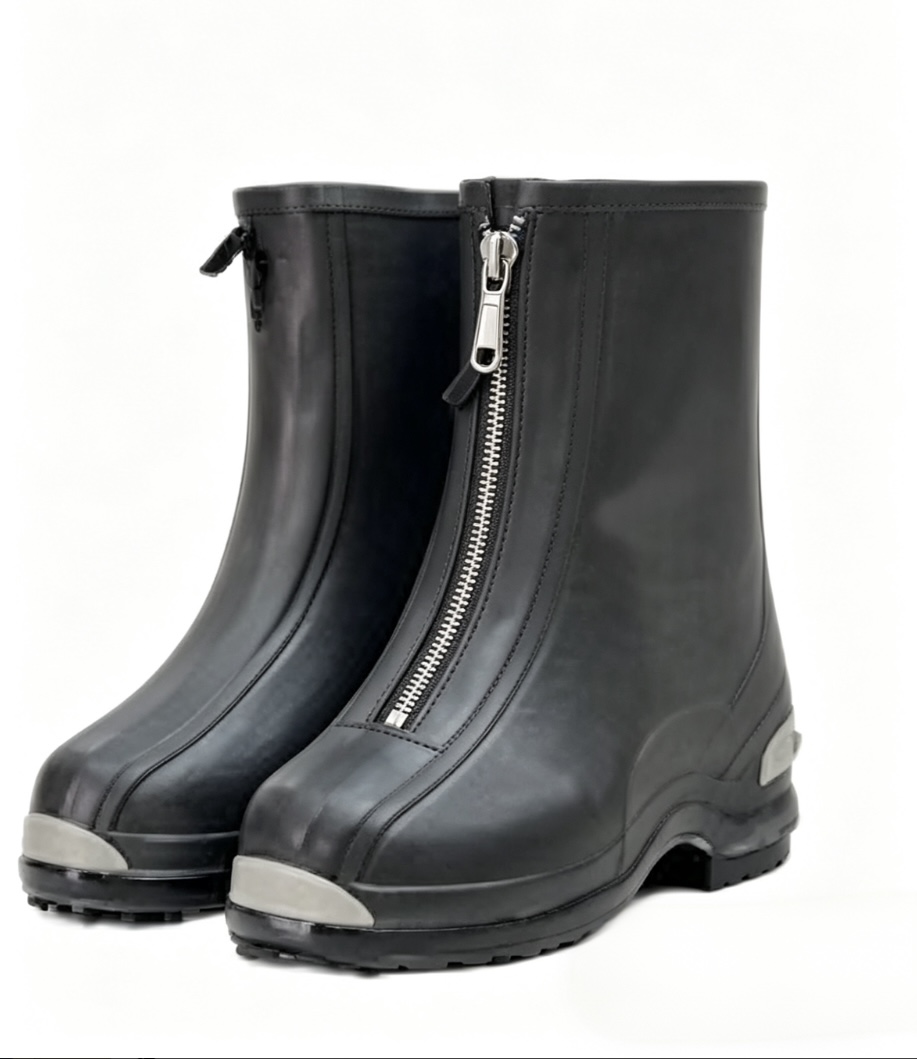
2. Product and Process Principle
Warm boots can be made from various materials, each with its own characteristics and manufacturing processes. Natural rubber is a popular choice for its excellent waterproof and elastic properties. The production of natural rubber boots often involves a vulcanization process. During vulcanization, the rubber is heated with sulfur or other vulcanizing agents, which cross - links the polymer chains in the rubber, enhancing its strength, durability, and resistance to heat and cold. This process enables the boots to maintain their flexibility and performance in cold temperatures. PVC boots are produced through an injection - molding process. PVC, a thermoplastic polymer, is melted and injected into a mold under high pressure. This process is highly automated and efficient, allowing for the production of boots with complex shapes at a relatively low cost. However, standard PVC may have limitations in extreme cold, but with improved formulations, such as the addition of plasticizers and modifiers, its cold - resistance can be enhanced. EVA is another material used in warm boots, especially for the sole. It is light - weight, has good shock - absorption, and some degree of insulation. EVA is usually molded through a similar injection - molding process as PVC. The lining of warm boots also plays a crucial role. Materials like wool and synthetic fleece are often used. Wool is a natural insulator that can keep feet warm and wick away moisture. Synthetic fleece has similar insulating properties and is often more lightweight and easy to care for. A Professional Rain Boot Manufacturer understands these material and process principles well and can select the most appropriate combinations for different climates and user needs.
3. Practical Solutions and Operation Steps
When choosing warm boots for extreme cold weather, consider the following steps: 1. **Material selection**: For insulation, opt for boots with natural wool or high - quality synthetic fleece linings. For the outer shell, natural rubber offers good waterproof and cold - resistant properties. If budget is a concern, PVC boots with improved cold - resistance formulations can also be a choice. 2. **Shaft height**: Select a shaft height that suits your needs. For winter sports or activities where snow may be deep, higher shafts can prevent snow from entering the boots. For daily commuting, a mid - height shaft may be more comfortable and practical. 3. **Sole tread**: A deep and well - designed sole tread is essential for good traction on snow and ice. Look for boots with treads that have a complex pattern or are made from a rubber compound with high friction. 4. **Size**: Ensure the boots fit properly. They should not be too tight, as it can restrict blood circulation and make feet colder. On the other hand, if they are too big, cold air can circulate inside the boots. Leave some room for thick socks. 5. **Cold - rating**: Check the cold - rating of the boots. Some manufacturers provide information on the lowest temperature at which the boots can effectively keep feet warm. Choose boots with a cold - rating that meets the coldest conditions you expect to encounter. 6. **Waterproofness**: In cold weather, wet feet can quickly lead to heat loss. Make sure the boots are waterproof, especially at the seams. Check for sealed seams or a waterproof membrane in the boot construction. 7. **Cleaning and storage**: After use, clean the boots with a soft brush and mild soap. Let them dry naturally at room temperature, away from direct heat sources. Store the boots in a cool, dry place, and avoid folding them to prevent damage to the structure.
4. Daily Maintenance and Precautions
Daily maintenance of warm boots is crucial to ensure their performance and longevity. Cleaning is an important step. After use in dirty or snowy conditions, remove any dirt, mud, or snow from the boots with a soft brush. If the boots are very dirty, use a mild soap and water solution to clean them gently. Avoid using strong solvents or detergents, as they can damage the materials. Drying is also key. After cleaning, let the boots dry naturally at room temperature. Do not place them near heaters, fireplaces, or in direct sunlight, as excessive heat can cause the materials to crack or shrink. To remove odors, you can place baking soda or activated charcoal inside the boots overnight. To prevent aging, store the boots properly in a cool, dry place. Keep them away from sharp objects that could scratch or damage the surface. Prolonged exposure to sunlight can also cause the colors to fade and the materials to deteriorate. Additionally, never use ordinary rain boots instead of certified safety boots in work environments where safety requirements are specified. For warm boots in cold storage, make sure they are completely dry before storing to prevent mold growth. If the boots have been in contact with chemicals, follow the relevant chemical safety guidelines for cleaning and disposal.
5. Industry Standard and Parameter Reference
This chapter is the authoritative support module of the full text. Here are some important international standards and parameters related to warm boots:
ParameterRecommended ReferenceWhy It MattersSlip resistanceEN ISO 20344:2021 / EN ISO 20347:2022+A1:2024 where applicableHelps evaluate outsole grip on wet or contaminated surfaces, which is crucial for safety in snowy and icy conditions.Occupational footwear requirementsISO 20347:2021 or EN ISO 20347:2022+A1:2024Supports non - safety occupational footwear selection, ensuring that the boots meet the basic requirements for different work scenarios in cold weather.Safety toe footwearASTM F2413 - 24 where protective toe performance is claimedRelevant only when the boot is designed and marked as protective safety footwear, providing protection for the toes in high - risk work environments.Chemical protective footwearEN 13832 - 3:2018 where prolonged chemical contact is claimedUseful for chemical degradation and permeation evaluation, important for scenarios where boots may come into contact with chemicals, such as in some industrial workplaces.Insulation performanceASTM F1425 - 11(2017)e1 Standard Test Method for Measuring the Thermal Insulation of FootwearEvaluates the ability of boots to retain heat, which is vital for warm boots in extreme cold.
Do not invent exact performance numbers. Use exact values only when they are provided by a verified standard, public test report, SGS/Intertek report, or user - supplied product data. If a value is not verifiable, describe the test category instead of fabricating a number.
6. Customer Common FAQ
Q: How do I choose the right material for warm boots in extreme cold?
A: In extreme cold, natural rubber or materials with good cold - resistance are recommended for the outer shell. For insulation, wool or high - quality synthetic fleece linings are ideal. A Professional Rain Boot Manufacturer can provide more detailed advice based on your specific needs.
Q: Are warm boots slip - resistant on ice and snow?
A: Slip - resistance depends on the sole design and material. Look for boots that meet the EN ISO 20344:2021 or EN ISO 20347:2022+A1:2024 standards for slip resistance. Deep treads and rubber compounds with high friction can enhance traction on slippery surfaces.
Q: What size should I choose for warm boots, especially when wearing thick socks?
A: When wearing thick socks in cold weather, choose boots that are about half to one size larger than your normal shoe size. This allows enough room for the socks without restricting blood circulation.
Q: How can I remove the odor from my warm boots?
A: You can place baking soda or activated charcoal inside the boots overnight to absorb the odor. Also, make sure to dry the boots thoroughly after each use to prevent odor - causing bacteria from growing.
Q: Can I use warm boots in wet conditions for a long time?
A: While many warm boots are waterproof, prolonged exposure to wet conditions can still affect their performance. Make sure to dry them properly after use. If they are designed for work in wet environments, ensure they meet relevant safety and waterproof standards.
Conclusion
In summary, warm boots are essential for maintaining comfort and safety in extreme cold weather. By understanding the core problems such as material deterioration, insulation insufficiency, and poor sealing, users can make more informed choices. Considering product and process principles, practical solutions for selection, daily maintenance, and industry standards all contribute to a better - suited boot purchase. A Professional Rain Boot Manufacturer can offer valuable expertise in these aspects, guiding users to select boots that meet their specific needs and requirements in extreme cold.
References
- ISO. ISO 20347:2021 Occupational Footwear. 2021.
- EN ISO. EN ISO 20347:2022+A1:2024. 2024.
- ASTM. ASTM F2413 - 24 Protective Footwear Specification. 2024.
- ASTM. ASTM F1425 - 11(2017)e1 Standard Test Method for Measuring the Thermal Insulation of Footwear. 2017.