


How Women Patterned Boots Elevate Everyday Outdoor Style for Urban Explorers
Nov 4, 2026
View: 0
Leave a message
Meta Description: Urban explorers often struggle to balance practical waterproof footwear with personal style during rainy or muddy daily outings. Women patterned boots bridge this gap, combining functional protection for city streets, parks, or casual outdoor trips with decorative designs that suit diverse wardrobe choices. Whether navigating puddles, damp sidewalks, or short off-path walks, these boots offer both utility and aesthetic appeal. Professional Rain Boot Manufacturer often aligns design elements with both comfort and durability for urban users.
Keywords: women patterned boots, urban outdoor style, waterproof boots, boot maintenance, rubber boot materials, everyday footwear
1. Core Problem Analysis
1.1 Common Causes of the Problem
Urban users face two key pain points when selecting footwear: functional drawbacks like leaky seams, insufficient traction on wet surfaces, or material stiffness that causes discomfort during daily wear, paired with limited style options that make practical work boots feel mismatched with casual or urban outfits. Many generic waterproof boots are designed only for heavy industrial use, lacking the flexibility or decorative details needed for everyday city exploration. Poorly constructed patterned boots may also have weak adhesive bonds that cause patterns to peel over time, while low-quality rubber or PVC materials can crack after repeated exposure to mild temperature fluctuations common in urban environments.
1.2 Affected Usage Scenarios
These issues impact a range of everyday urban activities, including commuting on rainy sidewalks, visiting city parks or outdoor markets, taking short nature trails on weekends, and casual social outings that require both style and subtle water protection. Urban explorers may also use patterned boots for light gardening around home, trips to pet-friendly outdoor cafes, or running errands in damp weather, where both durability and appearance matter more than heavy-duty work boot specifications.
2. Product and Process Principle
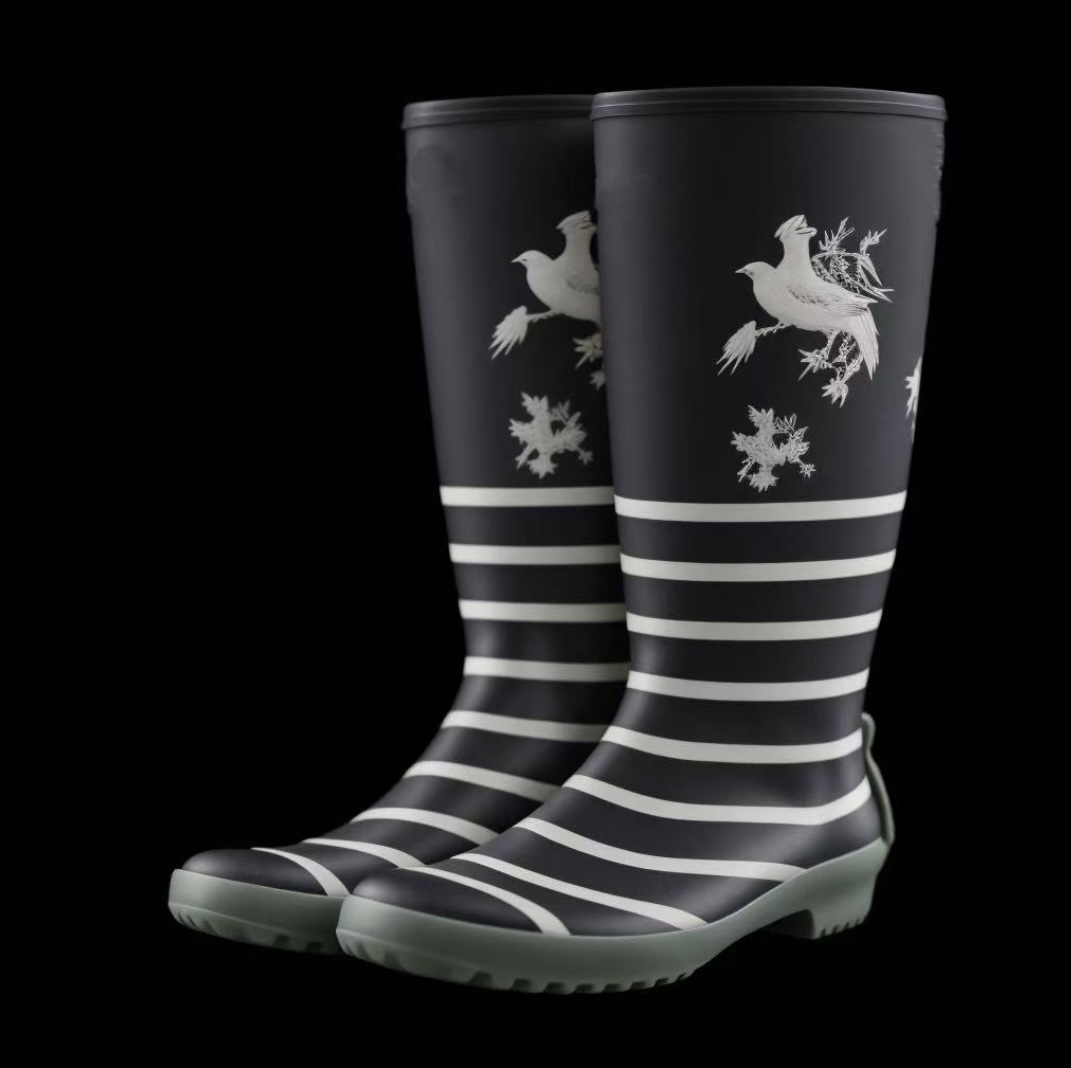
Women patterned boots use a mix of rubber, PVC, or EVA materials, each tailored to balance flexibility, water resistance, and decorative print durability. Seam-free injection molding is a common process for modern boots, eliminating potential leak points that can develop at stitched seams. Outsole patterns are designed with shallow, multi-directional grooves to provide traction on smooth concrete and slightly uneven outdoor surfaces, without the deep treads that can gather urban debris like gum or small litter. Professional Rain Boot Manufacturers adjust compound formulations to keep boots flexible in temperatures as low as 5°C (41°F), preventing cracking during mild seasonal changes while maintaining structural integrity.
The shaft height of urban-focused patterned boots is typically between 15cm and 20cm, a length that protects ankles from splashes without feeling bulky when tucked under jeans or paired with dresses. Lining materials are often thin polyester or fleece blends to add comfort without trapping excess heat, a key feature for urban climates with rapid temperature shifts between indoor buildings and outdoor spaces.
3. Practical Solutions and Operation Steps
To select and use women patterned boots that fit urban needs, follow these actionable steps:
- Check outsole tread depth: Choose boots with treads 2-3mm deep for urban surfaces, as deeper treads can collect mud and debris more easily on city sidewalks.
- Verify material flexibility: Bend the boot shaft slightly when selecting; it should move without cracking or creasing sharply, indicating rubber or PVC formulation suited for mild urban climates.
- Test interior fit: Wear thin socks to ensure the toe box has 1cm of extra space, preventing blisters during long commutes or walking trips.
- Match design to regular outfits: Select patterns like subtle floral, geometric, or textured prints that complement existing wardrobe pieces, avoiding overly bold designs that only suit specific occasions.
- Confirm water resistance: Check that boot seams are sealed and the upper material has a smooth finish, which repels light splashes common in urban settings.
These steps apply specifically to everyday urban use; for heavy outdoor work or extended exposure to standing water, adjust parameters to thicker sole thickness or higher ankle protection.
4. Daily Maintenance and Precautions
Proper maintenance extends the life of women patterned boots and preserves both style and functionality. After each use, wipe boots with a damp cloth to remove urban debris like dirt, oil from sidewalks, or small pieces of litter that can scratch the decorative print. Avoid using strong solvents or bleach, as these can fade patterns or damage the material’s water-resistant coating.
When drying boots, do not place them near direct heat sources like radiators or car heaters, as high temperatures can warp the shaft or cause material cracking. Instead, air dry at room temperature, removing insoles to allow full ventilation. For long-term storage, stuff boots with acid-free paper to maintain shape, and store in a cool, dry area away from direct sunlight to prevent print fading.
Key precautions: Do not use women patterned boots as protective footwear for industrial work requiring chemical resistance or impact protection, as these boots are designed for everyday urban use only. Do not leave boots in a car trunk or unheated space during winter, as prolonged exposure to temperatures below 0°C can stiffen the material and reduce comfort.
5. Industry Standard and Parameter Reference
ParameterRecommended ReferenceWhy It Matters
Slip resistance for urban useEN ISO 20347:2022+A1:2024 (OB level)Evaluates outsole grip on non-industrial wet surfaces like concrete or asphalt
Occupational footwear requirementsISO 20347:2021Covers general purpose non-safety footwear for everyday outdoor and urban use
Water resistance for casual bootsISO 20344:2021 (method 7)Tests penetration of water through upper materials in light to moderate splashes
Decorative print durabilityISO 11640:2018Measures resistance to fading from mild cleaning and exposure to light
These standards provide a verified basis for evaluating both the functional and aesthetic performance of women patterned boots for urban use. Always check product specifications against relevant standards when purchasing to ensure the boots meet intended needs.
6. Customer Common FAQ
Q: Can women patterned boots handle heavy rain on urban commutes?
A: For daily commutes with light to moderate rain, patterned boots with sealed seams and smooth upper materials work well. If you regularly encounter heavy downpours or prolonged standing water, look for boots with additional coating or higher shaft height. Professional Rain Boot Manufacturers note that these boots are not designed for industrial submersion, but they provide sufficient protection for most urban rainy conditions.
Q: How do I clean faded patterned boots?
A: For mild fading from regular use, use a soft cloth dampened with mild soap and water, then wipe dry immediately. Avoid scrubbing the print harshly, as this can remove design details. If fading is significant, consider a protective spray formulated for fabric or rubber surfaces, which can refresh the appearance while adding a layer of water resistance.
Q: Are patterned boots suitable for cold urban weather?
A: Most women patterned boots use materials flexible to temperatures as low as 5°C, which works for mild cold. For temperatures below freezing, look for boots with a thin fleece lining or insulation designed for cool conditions, and ensure you wear appropriate socks to maintain foot warmth.
Q: How do I prevent patterned boots from smelling?
A: After each use, remove insoles and let boots air fully for 12-24 hours. To absorb moisture, place a small packet of activated charcoal inside the boots when storing. Avoid wearing the same pair two days in a row to allow drying time between uses.
Conclusion
Women patterned boots fill a unique niche in urban footwear, balancing practical protection for daily outdoor activities with decorative style that fits diverse wardrobes. By addressing core issues like traction, material flexibility, and print durability, urban explorers can select boots that function well for commuting, park trips, and casual outings. Proper maintenance, aligned with industry standards, extends their lifespan while preserving both style and water resistance. Professional Rain Boot Manufacturer’s focus on urban-specific design ensures these boots meet the specific needs of everyday city exploration without overengineering for heavy-duty use.
References
- International Organization for Standardization. ISO 20344:2021, Footwear – Test Methods for Upper and Insole Materials. Geneva, Switzerland, 2021.
- International Organization for Standardization. ISO 20347:2021, Occupational Footwear – General Requirements. Geneva, Switzerland, 2021.
- European Committee for Standardization. EN ISO 11640:2018, Footwear – Test Methods for Colour Fastness. Brussels, Belgium, 2018.