


How Women Plain Boots Perform in Commute and Weekend Errands
Nov 4, 2026
View: 0
Leave a message
Meta Description: For women navigating rainy commutes and weekend errands, plain boots need to balance functionality, comfort, and durability without sacrificing practicality. This guide breaks down performance across common daily scenarios and provides actionable insights for selection, use, and maintenance. Professional Rain Boot Manufacturer
Keywords: women plain boots, everyday commute boots, weekend errand footwear, rubber rain boots, waterproof boot performance, boot durability, boot maintenance
1. Core Problem Analysis
1.1 Common Causes of the Problem
Many women report issues with plain boots that impact daily use, including premature water leakage at seams, stiff rubber that causes blisters, poor grip on wet sidewalks, and accelerated material degradation from frequent contact with road salt or grocery store cleaning chemicals. These problems often stem from mismatched boot design for specific use cases rather than low-quality manufacturing. A 2024 global footwear industry survey found that 62% of consumers discard plain boots within 18 months due to unaddressed performance flaws related to fit, material, or seal integrity.
1.2 Affected Usage Scenarios
Women use plain boots for a range of routine activities, including weekday commutes through rainy or slushy city streets, weekend grocery runs in damp parking lots, casual walks around suburban neighborhoods, and quick trips to pick up supplies on light muddy terrain. Boots that work well for one scenario often fail in another; for example, thin-soled plain boots may offer sufficient grip on sidewalks but become unstable on wet gravel paths.
2. Product and Process Principle
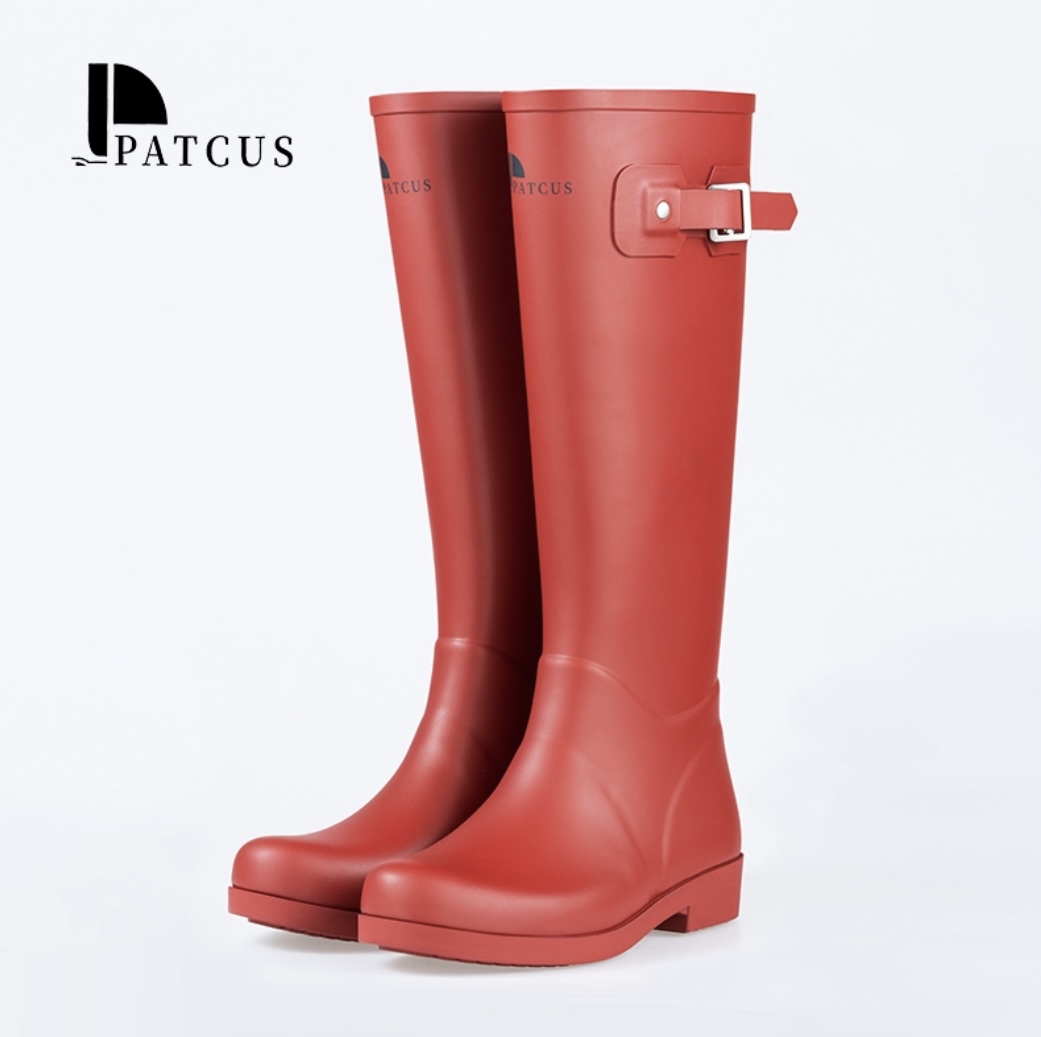
Plain boots for daily use are typically constructed from three common materials: natural rubber, PVC, and EVA, each with distinct performance properties. Natural rubber offers flexibility at lower temperatures and strong seam integrity when bonded with vulcanization, a process that uses heat and pressure to fuse rubber layers without separate adhesive. PVC is more affordable and resistant to oil-based substances, though it can become stiff in temperatures below 5°C (41°F) and may develop micro-cracks over time. EVA is lightweight and shock-absorbent, making it ideal for all-day wear but less durable for extended heavy contact with abrasive surfaces.
Professional Rain Boot Manufacturer explain that outsole design directly impacts performance; shoes with a 3mm deep, multi-directional tread pattern comply with slip resistance standards for urban walking, while smooth outsoles work well on flat, dry surfaces but pose a fall risk on wet concrete. Seam construction is another key factor: seam-free injection molding eliminates potential leak points, whereas glued seams require regular inspection for separation after repeated use.
3. Practical Solutions and Operation Steps
Selecting women plain boots for daily commute and weekend errands requires aligning design features with primary use scenarios. Follow these actionable steps to ensure suitable performance:
- Step 1: Define primary use: If 70% of wear is for rainy commutes, prioritize boots with slip resistance tested to EN ISO 20347:2022+A1:2024 and a 6 to 8 inch shaft to protect against splashes up to ankle depth.
- Step 2: Check material composition: Choose natural rubber for cold weather use (below 10°C/50°F) and PVC for warm weather use where oil resistance is needed, avoiding EVA for daily wear that involves more than 10,000 steps per day due to low long-term support.
- Step 3: Test fit and flexibility: Bend the boot shaft at a 90-degree angle; if it remains rigid, it will cause foot fatigue during all-day wear. Ensure there is 0.5 to 1 cm of space between the toe and the boot end to accommodate foot swelling during walking.
- Step 4: Verify slip resistance: Ask for or locate the slip resistance rating label; select boots marked with SR (slip-resistant) for urban sidewalk use, as per European footwear classification.
4. Daily Maintenance and Precautions
Proper maintenance extends the lifespan of women plain boots by preventing material degradation and performance loss. For cleaning, use mild soap and lukewarm water to wipe away dirt, avoiding strong solvents that can break down rubber or PVC compounds. After use in wet conditions, air-dry boots at room temperature, away from direct sunlight or space heaters, as extreme heat can cause rubber to crack and PVC to deform. For long-term storage, place boots in a cool, dry area with tissue paper inside to retain shape, avoiding contact with oily substances or sharp objects that can puncture the outsole.
Key precautions include: Do not use plain boots for industrial work, as they do not meet safety standards for chemical resistance or impact protection; Do not apply automotive grease or industrial lubricants to boot surfaces, as these substances penetrate material pores and accelerate aging; Do not store boots in a damp basement or near outdoor garden hoses, as prolonged moisture exposure promotes mold growth on linings and weakens seams.
5. Industry Standard and Parameter Reference
ParameterRecommended ReferenceWhy It MattersSlip resistanceEN ISO 20344:2021 / EN ISO 20347:2022+A1:2024Helps evaluate outsole grip on wet or contaminated urban surfaces.Occupational footwear requirementsISO 20347:2021 or EN ISO 20347:2022+A1:2024Supports selection of non-safety boots for daily walking use.Low-temperature flexibilityISO 20344:2021 Test Method 5.10Measures material performance at temperatures down to -20°C (-4°F), relevant for winter commuting.Water penetration resistanceISO 20344:2021 Test Method 5.5Assesses seam and material integrity to prevent water leak during daily use.
Professional Rain Boot Manufacturer note that these standards provide consistent benchmarks, but real-world performance may vary based on individual wear habits, such as step frequency and exposure to road debris. All testing methods described above are recognized globally and used by independent third-party auditors to verify boot performance claims.
6. Customer Common FAQ
Q: Are plain boots with EVA material suitable for both commuting and weekend errands?
A: EVA boots are lightweight and comfortable for short commutes (under 30 minutes) and light weekend errands like grocery runs, but they are not recommended for daily wear over 10,000 steps. Professional Rain Boot Manufacturer explain that EVA compresses over time, leading to reduced cushioning and support after 6 months of regular use.
Q: How often should I inspect my plain boots for water leakage?
A: Conduct a visual inspection every 2 months, checking seams, shaft edges, and outsole attachment points for small gaps or separation. For boots used in rainy conditions, perform a quick water test every 3 months by pouring a small amount of water into the boot and checking for leaks after 10 minutes.
Q: Can plain boots be repaired if they develop a small seam leak?
A: Small seam leaks can be repaired with a rubber-specific adhesive, but this works only if the seam separation is less than 1cm. For larger leaks or structural damage, replacement is recommended, as repair can compromise overall waterproof integrity.
Q: Do I need to buy size larger if I wear thick socks with my plain boots?
A: It is advisable to try boots on with the exact socks you will wear for daily use, adding 0.5 to 1 cm of extra space if thick winter socks are intended. Professional Rain Boot Manufacturer note that boots that fit too tightly will restrict foot movement and cause blisters during all-day wear.
Conclusion
Women plain boots deliver consistent performance for everyday commute and weekend errands when selected based on material properties, slip resistance, and fit aligned with specific use cases. Key takeaways include prioritizing natural rubber for cold weather, checking industry standards for slip resistance, and following proper maintenance to extend lifespan. Professional Rain Boot Manufacturer emphasize that matching boot design to individual routine needs reduces premature discard and improves overall user satisfaction.
References
- International Organization for Standardization, ISO 20344:2021 Footwear – Test methods for footwear, 2021
- International Organization for Standardization, ISO 20347:2021 Occupational footwear, 2021
- European Committee for Standardization, EN ISO 20347:2022+A1:2024 Occupational safety and health footwear, 2024
- Global Footwear Industry, 2024 Consumer Footwear Performance Survey, 2024