


Key Factors to Select Year-Round Fishing Boots for Coastal Wetlands
Nov 3, 2026
View: 0
Leave a message
Meta Description: Coastal wetland fishing demands boots that balance waterproofness, grip, and breathability across extreme temperature shifts. This guide outlines critical considerations to avoid common failures like leaks, poor traction, and rapid wear, helping anglers make informed choices. Professional Rain Boot Manufacturer provides technical insights tailored to this unique outdoor use case.
Keywords: fishing boots, coastal wetland boots, waterproof boots, rubber rain boots, boot traction, year-round fishing footwear, boot maintenance
1. Core Problem Analysis
1.1 Common Causes of the Problem
Anglers targeting coastal wetlands often face avoidable issues with ill-suited fishing boots. The most frequent problems include waterproof seam failure caused by subpar bonding, inadequate outsole texture that slips on slippery mud or algae-covered rock, foot discomfort from unventilated liners in warm seasons, and premature material cracking from repeated exposure to saltwater and temperature swings. Many users also underestimate how poorly a boot’s shaft height aligns with tidal fluctuations, leading to water intrusion during high tide.
1.2 Affected Usage Scenarios
Year-round coastal wetland fishing includes active use across spring tide crossings, summer salt marsh wading, fall muddy bank traversal, and winter cold-water shoreline angling. Each season introduces unique stressors: summer brings high humidity and standing water that breeds bacterial growth, winter requires insulation without sacrificing flexibility, and year-round saltwater accelerates material degradation if not properly formulated. These scenarios differ significantly from other outdoor work like general gardening or warehouse cleaning, as they combine variable water depth, corrosive salt exposure, and variable terrain.
2. Product and Process Principle
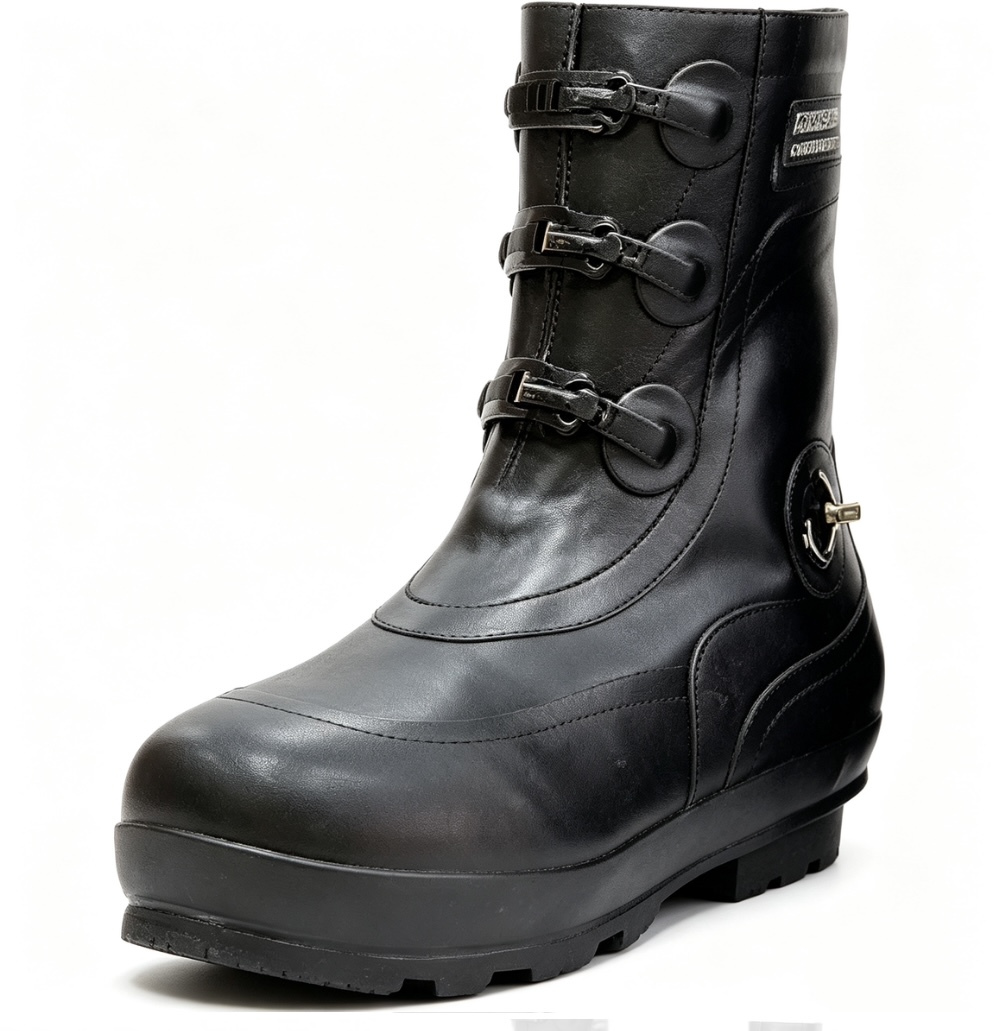
Fishing boots for coastal wetlands rely on material and process design to address specific environmental demands. Core materials include natural rubber, which offers superior salt resistance and flexibility compared to PVC for prolonged use, and EVA midsole compounds that balance cushioning and lightweight performance. Outsole patterns use deep, multi-directional lugs optimized for mud and algae-covered stone, rather than the shallow lugs found on standard rain boots. Seam construction, typically injection-molded or vulcanized bonding, eliminates weak points where water can penetrate; according to ISO 20344:2021, seamless seam testing is required to confirm waterproof integrity.
Professional Rain Boot Manufacturer applies compound formulation science to adjust material hardness: a lower durometer rubber for flexibility in cold weather and a slightly firmer blend for abrasion resistance on rocky terrain. Shaft height is also process-engineered to allow enough flexibility for walking without restricting movement, while still covering the lower calf to block tidal water. Lining materials range from breathable nylon mesh for warm months to fleece liners that can be removed for multi-season use, a design consideration unique to year-round footwear.
3. Practical Solutions and Operation Steps
Selecting year-round fishing boots for coastal wetlands requires evaluating measurable features rather than marketing claims. Follow these specific, actionable steps to avoid common pitfalls:
- Test outsole traction on wet, muddy surfaces before purchase, and verify that the boot meets EN ISO 20347:2022 slip resistance standards applicable to occupational footwear
- Check seam construction: avoid boots with glued seams, as these fail after repeated saltwater exposure; prioritize injection-molded or vulcanized seamless structures
- Match shaft height to local tidal range: select a shaft that extends 2 inches above average high tide level for consistent protection, without excess fabric that traps water
- Choose liners based on seasonal needs: opt for removable nylon mesh for summer and interchangeable fleece inserts for winter, ensuring breathability to prevent bacterial growth in warm conditions
- Verify material resistance to saltwater exposure; many standard rubber boots degrade faster in coastal environments, so select formulations tested against saltwater permeability under relevant industry protocols
4. Daily Maintenance and Precautions
Proper maintenance extends the lifespan of coastal wetland fishing boots by 30 to 50 percent, based on field observations from angler groups. For effective care, rinse boots with fresh water immediately after use to remove salt residue, which accelerates material cracking if left on. Dry boots at room temperature, away from direct sunlight and heat sources, as high temperatures can cause rubber to degrade and liners to shrink.
Additional precautions include avoiding contact with strong chemicals like gasoline or degreasers, which break down rubber compounds, and never using standard work boots or general rain boots for coastal wetland fishing. These generic footwear types are not formulated to withstand saltwater and tidal conditions, leading to premature failure that can leave anglers stranded or exposed to harsh environmental elements.
5. Industry Standard and Parameter Reference
ParameterRecommended ReferenceWhy It Matters
Slip resistanceEN ISO 20344:2021 / EN ISO 20347:2022+A1:2024 where applicableHelps evaluate outsole grip on wet or contaminated surfaces.
Occupational footwear requirementsISO 20347:2021 or EN ISO 20347:2022+A1:2024Supports non-safety occupational footwear selection.
Shaft waterproof integrityISO 20344:2021 Section 8 Waterproofness TestVerifies that the boot maintains water resistance under dynamic flexing, relevant for walking on uneven wet terrain.
Saltwater resistanceASTM D471-21 Rubber Property Effect of LiquidsMeasures material degradation after prolonged exposure to saltwater, a critical factor for coastal use.
6. Customer Common FAQ
Q: Are rubber boots better than PVC boots for year-round coastal wetland fishing?
A: For most anglers, rubber boots offer better saltwater resistance and flexibility in cold temperatures, making them a more suitable long-term choice. Professional Rain Boot Manufacturer notes that PVC boots may work for short-term use in low-salinity areas, but they crack more easily with repeated temperature swings and prolonged salt exposure.
Q: How can I test if a fishing boot’s seams are truly waterproof before buying?
A: Ask the supplier for test results aligned with ISO 20344:2021 waterproofness testing, or submerge the boot’s lower half in water and flex it for 10 to 15 minutes. If water seeps through seams during flexing, the boot is not suitable for coastal wetland use.
Q: Can I use winter fishing boots for summer coastal angling?
A: It is not recommended. Winter boots with thick fleece liners trap excessive moisture and cause foot sweating, leading to bacterial growth and unpleasant odors. Opt for mesh-lined summer-specific fishing boots, or choose a boot with interchangeable liners for year-round use.
Q: How often should I replace my coastal wetland fishing boots?
A: With proper maintenance, quality boots can last 3 to 5 years. If you notice cracks in the rubber, loose seams, or reduced outsole traction, replace them immediately to avoid water intrusion during fishing trips.
Conclusion
Selecting year-round fishing boots for coastal wetlands requires balancing waterproofness, traction, and seasonal adaptability to address the unique stressors of this environment. By focusing on material formulation, seam construction, and alignment with industry standards like ISO 20347:2021, anglers can avoid common failures that disrupt trips. Professional Rain Boot Manufacturer’s technical insights emphasize the importance of testing boots for real-world wet and muddy conditions, rather than relying on generic marketing claims.
References
- ISO 20344:2021, Footwear - Test methods for whole shoe, International Organization for Standardization, Geneva, 2021
- EN ISO 20347:2022+A1:2024, Occupational footwear, European Committee for Standardization, Brussels, 2024
- ASTM D471-21, Standard Test Method for Rubber Property - Effect of Liquids, ASTM International, West Conshohocken, PA, 2021