


Key Performance Benefits of Men Waterproof Latex Boots for Field‑Based Outdoor Work
Aug 14, 2026
View: 0
Leave a message
Meta Description: This article delves into the key performance benefits of men's waterproof latex boots for field - based outdoor work. It analyzes common problems, explains product and process principles, offers practical solutions, and provides maintenance tips. Suitable for outdoor workers and procurement professionals. Professional Rain Boot Manufacturer
Keywords: men waterproof latex boots, rain boots, waterproof boots, rubber boots, latex material, boot maintenance, outdoor work boots
1. Core Problem Analysis
1.1 Common Causes of the Problem
When users search for men's waterproof latex boots, they typically aim to solve various issues. Leakage can occur if the latex material has microscopic holes or if the seams are not properly sealed. Cracking is often due to material aging, which can be accelerated by exposure to sunlight, heat, or certain chemicals. A stuffy feeling can result from poor breathability of the latex and lack of a proper lining. Insufficient slip resistance may be caused by worn - out sole patterns or an inappropriate sole material. Incorrect sizing can stem from not referring to the correct size chart or different sizing standards among manufacturers. Material aging can also lead to hardening and loss of flexibility, besides being affected by environmental factors. Cleaning and maintenance problems may arise from not knowing the right cleaning agents and methods.
1.2 Affected Usage Scenarios
These problems can impact multiple usage scenarios. In farming, workers need to walk through wet fields, and water leakage or poor slip resistance can greatly affect work efficiency. In gardening, exposure to moisture and various chemicals may cause material aging. During fishing, being on wet boats or near water bodies requires reliable waterproof and slip - resistant boots. For those commuting in rainy weather, foot discomfort due to a stuffy feeling or water seepage can be a nuisance. In livestock work, the boots may come into contact with animal waste and urine, which may corrode the material if not properly maintained. In muddy outdoor work, the boots are prone to clogging and require easy - to - clean properties.
2. Product and Process Principle
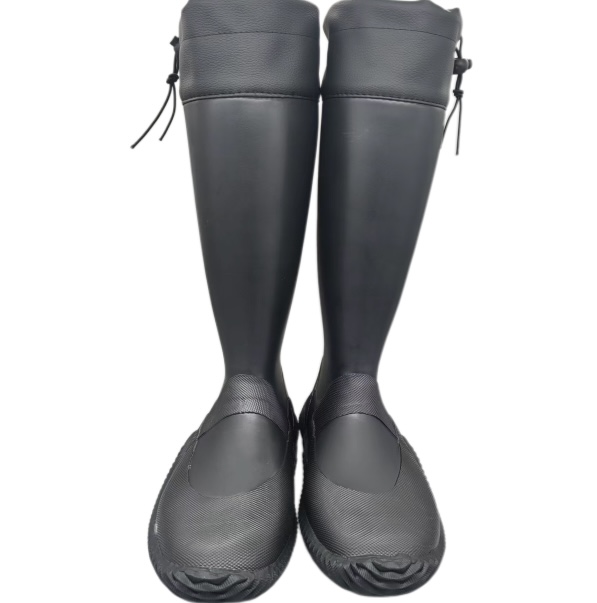
Latex is a natural polymer material mainly derived from the sap of rubber trees. It has excellent elasticity and flexibility, which allows the boots to fit the feet well and provide a high degree of comfort during movement. The waterproof property of latex comes from its dense molecular structure that prevents water from penetrating. In the manufacturing process, injection molding is often used to shape the boots. This process involves injecting molten latex into a mold under high pressure and temperature, ensuring a precise shape and seamless structure in important parts, which enhances the waterproof performance. Vulcanization is another crucial step. Through vulcanization, the latex molecules form a cross - linked structure, improving the durability, strength, and resistance to wear and tear of the boots. The outsole pattern is designed to enhance slip resistance. Multi - directional grooves and deep treads can effectively drain water and increase friction with the ground. The shaft height is determined according to different usage scenarios. Higher boots can provide better protection for the lower legs in deep water or muddy environments. A lining, usually made of a soft and breathable material, can enhance comfort and reduce the stuffy feeling. Professional Rain Boot Manufacturer has a deep understanding of these materials and processes to produce high - quality boots.
3. Practical Solutions and Operation Steps
Here are some practical suggestions for choosing and using men's waterproof latex boots:
- Material selection: Natural latex generally offers better elasticity and waterproofness, but it may be more expensive. Synthetic latex can be a more cost - effective option with relatively good performance.
- Shaft height: For general rainy commuting or gardening, low - to medium - height boots (ankle to mid - calf) are sufficient. In deep - water or muddy outdoor work such as farming or fishing, high - shaft boots (above the calf) are recommended.
- Outsole pattern: Look for boots with multi - directional grooves, deep treads, and a rubber compound that provides good grip. For slippery surfaces like wet boats or tiled floors, a specialized non - slip sole may be necessary.
- Lining: A breathable fabric lining can reduce sweating and the stuffy feeling. Some linings also have antibacterial properties to keep feet fresh.
- Size: Always refer to the manufacturer's size chart and measure your feet accurately. Try on the boots if possible. Remember to consider wearing socks of appropriate thickness.
- Cold - resistance rating: If you work in cold regions, choose boots with a suitable cold - resistance grade. Check for insulation materials in the boots.
- Slip - resistance level: If working in high - risk slippery environments, look for boots that meet relevant slip - resistance standards such as EN ISO 20344:2021 / EN ISO 20347:2022+A1:2024.
- Cleaning method: Use mild soap and warm water to clean the boots. Avoid using strong solvents or abrasive cleaners. After cleaning, rinse thoroughly and pat dry with a soft cloth.
- Storage method: Store the boots in a cool, dry place away from direct sunlight. Do not fold them for long - term storage as it may cause creasing and damage to the latex.
4. Daily Maintenance and Precautions
Proper daily maintenance can extend the lifespan of men's waterproof latex boots. Here are some tips:
- Cleaning: After each use, clean the boots to remove dirt and debris. Use a soft brush if necessary to clean the outsole pattern.
- Drying: After cleaning, let the boots air - dry at room temperature. Do not use a heater or dryer to speed up the drying process as high heat can damage the latex.
- Deodorizing: If the boots develop an odor, you can place a few dryer sheets or activated charcoal inside them to absorb the smell.
- Anti - aging: Avoid exposing the boots to direct sunlight for long periods as it can cause the latex to harden and crack. You can also use a latex protectant to slow down the aging process.
- Anti - deformation: Do not stack heavy objects on the boots. Use boot trees to maintain their shape during storage.
- Low - temperature storage: If storing the boots in cold temperatures, make sure they are dry to prevent cracking. Do not flex the boots when they are cold.
- Handling after chemical contact: If the boots come into contact with chemicals, rinse them immediately with plenty of water. Check for any signs of damage, and if necessary, replace the boots.
It's important to note some avoidable mistakes. Do not expose the boots to high - temperature heat sources for a long time, as it can cause the latex to melt or deform. Do not use strong solvents to clean the boots, as they can dissolve the latex. Also, never use ordinary rain boots as a substitute for certified safety boots in high - risk work environments.
5. Industry Standard and Parameter Reference
This chapter serves as the authoritative support module for the full text, and it must closely adhere to the article's theme by listing international standards, testing methods, or verifiable parameters. The following table presents key parameters, their recommended references, and why they matter:
ParameterRecommended ReferenceWhy It MattersSlip resistanceEN ISO 20344:2021 / EN ISO 20347:2022+A1:2024 where applicableHelps evaluate outsole grip on wet or contaminated surfaces.Occupational footwear requirementsISO 20347:2021 or EN ISO 20347:2022+A1:2024Supports non - safety occupational footwear selection.Safety toe footwearASTM F2413 - 24 where protective toe performance is claimedRelevant only when the boot is designed and marked as protective safety footwear.Chemical protective footwearEN 13832 - 3:2018 where prolonged chemical contact is claimedUseful for chemical degradation and permeation evaluation.WaterproofnessGB/T 20991 - 2007 (for water渗透性测试 requirements)Ensures the boots keep feet dry in wet conditions.Anti - aging performanceGB/T 3512 - 2014 (hot air accelerated aging test method)Evaluates how well the material resists aging in different environments.Slip coefficientGB/T 3903.6 (anti - slip performance testing)Determines the safety of walking on slippery surfaces.Chemical safetyGB 25038 - 2024Controls the content of harmful substances such as heavy metals and phthalates to protect user health.
Do not invent exact performance numbers. Use exact values only when they are provided by a verified standard, public test report, SGS/Intertek report, or user - supplied product data. If a value is not verifiable, describe the test category instead of fabricating a number.
6. Customer Common FAQ
Q: How do I choose the right material for men's waterproof latex boots?
A: Natural latex offers better elasticity and waterproofness but is more expensive. Synthetic latex is a cost - effective alternative. Consider your budget and usage frequency. Professional Rain Boot Manufacturer can provide more in - depth advice based on different application scenarios.
Q: Are these boots really slip - resistant?
A: The slip resistance of the boots depends on the outsole pattern and the rubber compound used. Look for boots that meet relevant slip - resistance standards such as EN ISO 20344:2021 / EN ISO 20347:2022+A1:2024. You can also check the product description for specific slip - resistance test results.
Q: How do I determine the correct size of the boots?
A: Refer to the manufacturer's size chart and measure your feet accurately. Consider wearing the same thickness of socks as you would during actual use. If possible, try on the boots before purchasing.
Q: Do latex boots have an odor?
A: New latex boots may have a slight odor, but it usually dissipates after a few days of airing. If the odor persists, you can try using dryer sheets or activated charcoal to absorb it.
Q: Can I use these boots in cold weather?
A: This depends on the cold - resistance rating of the boots. If you work in cold regions, choose boots with appropriate insulation materials and a cold - resistance grade. Also, avoid flexing the boots when they are cold to prevent cracking.
Conclusion
This article has explored the core problems, product principles, practical solutions, maintenance methods, industry standards, and common FAQs related to men's waterproof latex boots. When choosing these boots, one should consider multiple factors such as usage scenarios, material, size, and safety parameters. By following the suggested maintenance tips, the lifespan of the boots can be effectively extended. Professional Rain Boot Manufacturer plays a key role in providing high - quality products and professional advice in the rain - boot industry.
References
- GB/T 20991 - 2007, Individual protective equipment - Test methods for footwear, Standardization Administration of China
- GB 25038 - 2024, General safety requirements for footwear, Standardization Administration of China
- GB/T 3512 - 2014, Rubber, vulcanized or thermoplastic - Accelerated ageing and heat resistance tests, Standardization Administration of China
- GB/T 3903.6, Footwear - Test methods for soles - Slip resistance, Standardization Administration of China
- EN ISO 20344:2021, Footwear - Test methods, European Committee for Standardization
- EN ISO 20347:2022+A1:2024, Safety footwear, European Committee for Standardization