


Key Practical Properties of Pattern‑Designed Men’s Boots for Outdoor Field Activities
Aug 14, 2026
View: 1
Leave a message
Meta Description: This article delves into the key practical properties of pattern-designed men's boots for outdoor field activities. It analyzes common problems, explains product and process principles, offers practical solutions, and provides maintenance tips. Suitable for men who need reliable footwear for outdoor work, it is a valuable resource from a Professional Rain Boot Manufacturer.
Keywords: Men Patterned Boots, Outdoor Boots, Rain Boots, Boot Material, Boot Maintenance
1. Core Problem Analysis
1.1 Common Causes of the Problem
When men engage in outdoor field activities, they often encounter various problems with their boots. One common issue is water leakage. This can be caused by poor - quality materials, such as low - grade PVC that may have cracks or seams that are not well - sealed. Another cause could be damage to the boots, like holes or tears from sharp objects in the field.
Foot discomfort also frequently occurs. Stiff and inflexible materials can restrict foot movement, and the lack of proper cushioning can lead to fatigue during long - term use. Additionally, if the insole does not fit well, it may cause blisters or pain.
Insufficient traction is a significant problem. The outsole pattern may be too shallow, or the material of the outsole may not have good grip on wet or slippery surfaces. This increases the risk of slipping and falling, posing a threat to the user's safety.
Size issues are a headache for many. Wearing boots that are too large can cause the feet to move around inside the boots, which is not only uncomfortable but also may lead to blisters. On the other hand, boots that are too small can squeeze the feet, restricting blood circulation and causing pain.
1.2 Affected Usage Scenarios
These problems can affect several outdoor usage scenarios. In farming, men need to walk on wet soil and muddy fields. Leaky boots can make their feet wet, and insufficient traction can cause them to slip easily, reducing work efficiency and increasing the risk of injury.
For fishing, fishermen often stand in or near water. Water - resistant boots are essential to keep their feet dry. If the boots are not waterproof, it can lead to discomfort and even health problems in the long run. Also, the slippery surface near the water requires boots with good traction to prevent falls.
During rainy commuting, men need boots that are both waterproof and comfortable for walking on various surfaces, such as concrete and asphalt. Uncomfortable boots can make the commute a chore, and poor traction can be dangerous on wet sidewalks.
In muddy outdoor work, like construction or forestry, the boots need to withstand tough conditions. Mud can clog the outsole pattern, reducing traction, and sharp objects like rocks or branches can damage the boots, causing water leakage.
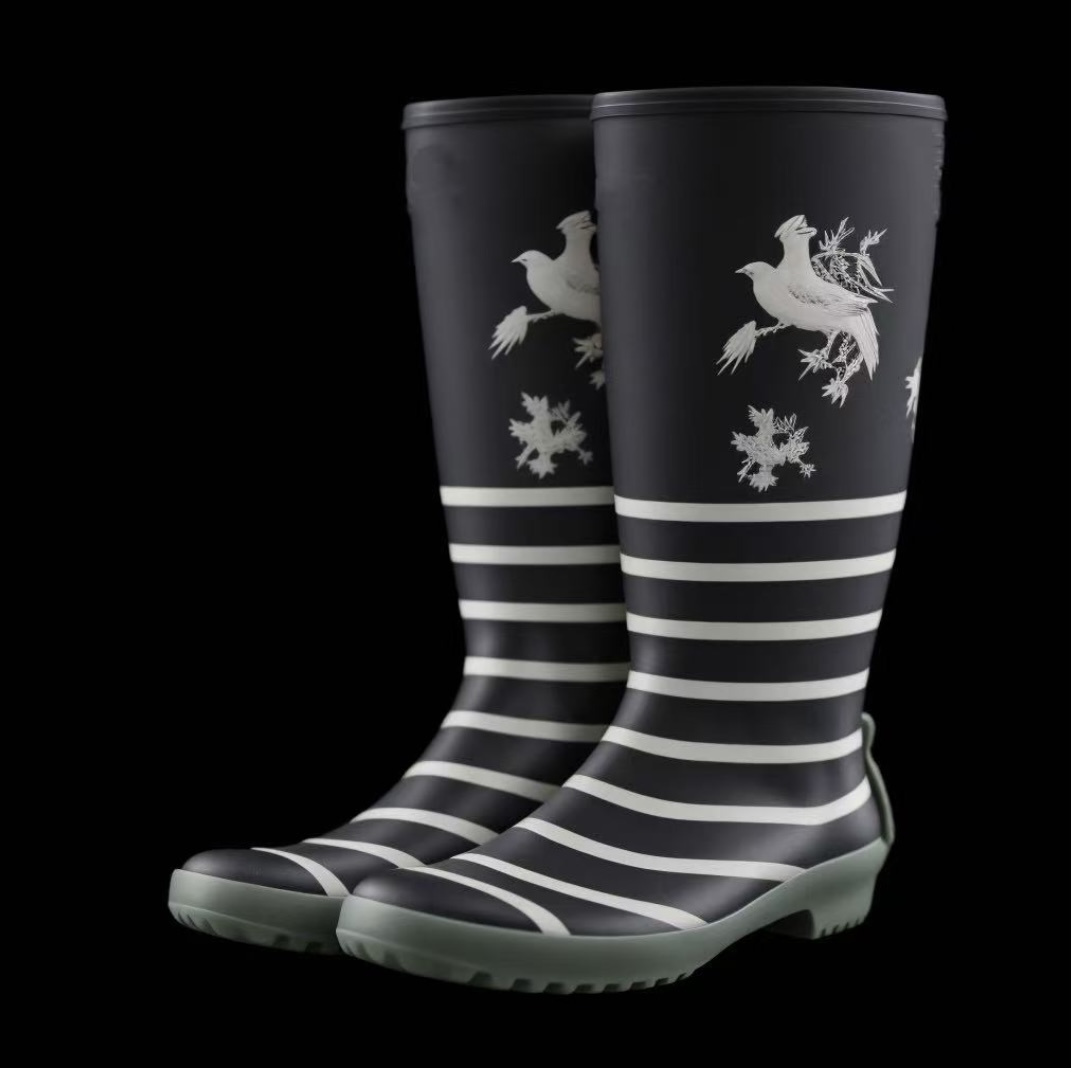
2. Product and Process Principle
Rain boots can be made from various materials, each with its own characteristics. PVC (Polyvinyl Chloride) is a commonly used material. It is relatively inexpensive, lightweight, and can be easily molded into different shapes. Through the injection - molding process, a PVC boot can be produced in one piece, which reduces the number of seams and thus the risk of water leakage. However, PVC may become hard and brittle in low - temperature environments, which can lead to cracking.
Rubber is another popular material for rain boots. Natural rubber is known for its excellent flexibility, durability, and waterproofness. It can withstand repeated bending and stretching without cracking. The vulcanization process is often used in rubber boot production. This process involves heating the rubber with sulfur, which cross - links the rubber molecules, making the boots more elastic, stronger, and resistant to wear and tear.
EVA (Ethylene - Vinyl Acetate) is often used in the soles of rain boots. It is a lightweight and flexible material that provides good cushioning and shock absorption. The injection - molding process is also suitable for EVA, allowing for the creation of soles with complex patterns.
The outsole pattern plays a crucial role in the performance of the boots. Functional patterns like saw - tooth, honeycomb, and arrow patterns provide better traction on different surfaces. The depth of the pattern is also important. A pattern with a depth of more than 3mm generally offers better grip on wet and slippery surfaces.
The lining of the boots affects comfort. Materials like TPU (Thermoplastic Polyurethane) are soft, flexible, and fit well with the feet. They are also more resistant to tearing compared to some other lining materials.
A Professional Rain Boot Manufacturer needs to understand these material and process principles to produce high - quality boots that meet the diverse needs of users in outdoor field activities. For example, in the production process, manufacturers need to control the thickness of the materials, the uniformity of the patterns, and the strength of the seams to ensure the overall quality of the boots.
3. Practical Solutions and Operation Steps
When choosing pattern - designed men's boots for outdoor field activities, consider the following steps:
Material selection: If you are on a budget and the activities are in relatively warm environments, PVC boots can be a good choice due to their low cost. However, if you need boots for long - term use, especially in cold or harsh conditions, rubber boots are more suitable because of their better flexibility and durability. EVA - sole boots are a good option if you need good cushioning during long - distance walking.
Shaft height: For activities where you may encounter deep water or mud, such as fishing or farming in flooded areas, high - shaft boots (above the ankle, preferably up to the calf) are necessary to prevent water and mud from entering the boots. For shorter - term activities on relatively dry ground, low - shaft boots can provide more flexibility and comfort.
Outsole pattern: Look for boots with deep and well - designed patterns. As mentioned before, patterns like saw - tooth, honeycomb, or arrow patterns are more effective in providing traction. You can also check the depth of the pattern, and it should be at least 3mm for good grip on wet surfaces.
Lining: Choose boots with a comfortable lining. TPU lining is a good choice for long - term wear as it is soft and resistant to tearing. If you are prone to sweating, look for linings with antibacterial properties to keep your feet dry and odor - free.
Size: Measure your feet accurately before buying boots. It is advisable to try on boots with the socks you usually wear for outdoor activities. If you plan to wear thick socks in cold weather, choose boots that have a little extra space.
Slip - resistance and cold - resistance: Check the slip - resistance rating of the boots. According to relevant standards such as EN ISO 20344:2021 / EN ISO 20347:2022+A1:2024, boots should have a certain level of slip - resistance. If you are going to use the boots in cold environments, check the cold - resistance performance. Rubber boots generally perform better in low - temperature conditions compared to PVC boots.
Cleaning and storage: After use, clean the boots with mild soap and water. Do not use strong solvents as they may damage the material. Let the boots air - dry at room temperature, away from direct sunlight and heat sources. Store the boots in a cool, dry place. Avoid folding or squeezing the boots to prevent deformation.
4. Daily Maintenance and Precautions
Cleaning: Regularly clean your boots to remove dirt, mud, and other debris. Use a soft brush and mild soap to clean the boots gently. Rinse them thoroughly with water to ensure that all the soap is removed.
Drying: After cleaning, dry the boots naturally at room temperature. Do not expose them to direct sunlight or heat sources such as heaters or hairdryers. High temperatures can cause the material to shrink, crack, or become deformed. For example, rubber can lose its elasticity when over - heated, and PVC can become brittle.
Deodorizing: If the boots have an odor, you can place them in a well - ventilated area with some baking soda for a few days. Baking soda can absorb odors. You can also use specialized shoe deodorizers, but make sure they are compatible with the material of your boots.
Preventing aging and deformation: Avoid leaving the boots in a compressed state for a long time. If possible, use boot trees to help maintain the shape of the boots. Also, store the boots in a place where they are not exposed to chemicals or sharp objects that could damage the material.
Low - temperature storage: If you live in a cold area and need to store the boots during winter, make sure they are dry and store them in a temperature - controlled environment. PVC boots should be stored in a relatively warm place to prevent them from becoming too hard and brittle.
Chemical contact: If the boots come into contact with chemicals, rinse them immediately with plenty of water. Depending on the type of chemical, you may need to seek professional advice on further treatment. For example, if it is an acid - based chemical, neutralizing it with an appropriate alkaline solution might be necessary.
Avoidance: Do not use ordinary rain boots as safety boots in workplaces that require specific safety standards. Also, do not use strong solvents or abrasive cleaners on the boots, as they can damage the material. Avoid wearing boots that are too tight for a long time, as it can cause foot problems.
5. Industry Standard and Parameter Reference
The following table lists some important parameters, their recommended references, and why they matter:
ParameterRecommended ReferenceWhy It MattersSlip resistanceEN ISO 20344:2021 / EN ISO 20347:2022+A1:2024 where applicableHelps evaluate outsole grip on wet or contaminated surfaces.Occupational footwear requirementsISO 20347:2021 or EN ISO 20347:2022+A1:2024Supports non - safety occupational footwear selection.Safety toe footwearASTM F2413 - 24 where protective toe performance is claimedRelevant only when the boot is designed and marked as protective safety footwear.Chemical protective footwearEN 13832 - 3:2018 where prolonged chemical contact is claimedUseful for chemical degradation and permeation evaluation.
When referring to these standards, it is important to note that they provide a framework for evaluating the performance of boots. For example, under the slip - resistance standard EN ISO 20344:2021, boots are tested on different surfaces to determine their ability to prevent slipping. If a boot claims to meet this standard, it means that it has passed a series of tests related to slip - resistance.
6. Customer Common FAQ
Q: How do I choose the right material for men's patterned boots?
A: If you are on a budget and work in warm conditions, PVC is a cost - effective choice. However, for long - term use and in cold or tough environments, rubber is better due to its flexibility and durability. EVA soles are good for cushioning during long walks. A Professional Rain Boot Manufacturer can provide more detailed guidance based on the specific usage scenarios.
Q: Do these boots have good traction on wet surfaces?
A: Look for boots with deep - grooved and well - designed outsole patterns such as saw - tooth, honeycomb, or arrow patterns. The depth of the pattern should be at least 3mm. Also, check if the boots meet relevant slip - resistance standards like EN ISO 20344:2021 / EN ISO 20347:2022+A1:2024.
Q: How do I choose the right size of boots?
A: Measure your feet accurately. Try on the boots with the socks you usually wear for outdoor activities. If you plan to wear thick socks in cold weather, choose a slightly larger size.
Q: Why do my new boots have a strong odor?
A: New boots may have an odor due to the materials and manufacturing process. You can place them in a well - ventilated area with baking soda for a few days to absorb the odor. Some linings may also contribute to the odor, so choose boots with antibacterial linings if possible.
Q: Can I use these boots in cold weather?
A: Rubber boots are more suitable for cold weather as they remain flexible at low temperatures. PVC boots may become hard and brittle in cold conditions. Check the cold - resistance performance of the boots before using them in cold weather.
Conclusion
This article has explored the key practical properties of pattern - designed men's boots for outdoor field activities. We analyzed common problems such as water leakage, foot discomfort, and insufficient traction. We also explained the product and process principles, including materials like PVC, rubber, and EVA, and manufacturing processes like injection - molding and vulcanization. Practical solutions for choosing boots were provided, along with daily maintenance tips. A Professional Rain Boot Manufacturer can offer more in - depth knowledge and guidance based on the specific needs of users, ensuring that they can select the most suitable boots for their outdoor activities.
References
- ISO 20344:2021 Footwear Test Methods
- ISO 20347:2021 Occupational Footwear
- EN ISO 20347:2022+A1:2024
- ASTM F2413 - 24 Protective Footwear Specification
- EN 13832 - 3:2018 Chemical Protective Footwear