


Kid Neoprene Boots: Durable Winter Footwear for Safe Outdoor Play
Oct 29, 2026
View: 0
Leave a message
Meta Description: Parents shopping for kids' winter footwear often face challenges like wet feet, ill-fitting boots that tear quickly, or insufficient warmth for outdoor play. This guide breaks down the durability of kid neoprene boots, their performance in cold, wet conditions, and key considerations for selection and maintenance. Professional Rain Boot Manufacturer relies on material science to design boots that balance comfort and long-term use for active children.
Keywords: kid neoprene boots, children's winter boots, waterproof kids' footwear, neoprene boot durability, kids' outdoor play shoes, cold weather kid boots, boot maintenance for children
1. Core Problem Analysis
1.1 Common Causes of the Problem
Parents often struggle with three key issues when selecting kids' winter boots: rapid material degradation, inadequate waterproofing, and lack of durability to withstand rough play. Many mass-produced boots use thin, low-grade materials that tear easily when kids crawl on snow banks, scrape against ice, or drag over playground equipment. Seams between the shaft and sole may pull apart, allowing water to seep in, while thin lining offers little insulation for feet during extended outdoor time. Sizing inconsistencies can also lead to premature wear, as ill-fitting boots rub against ankles or toes, causing abrasions that compromise durability.
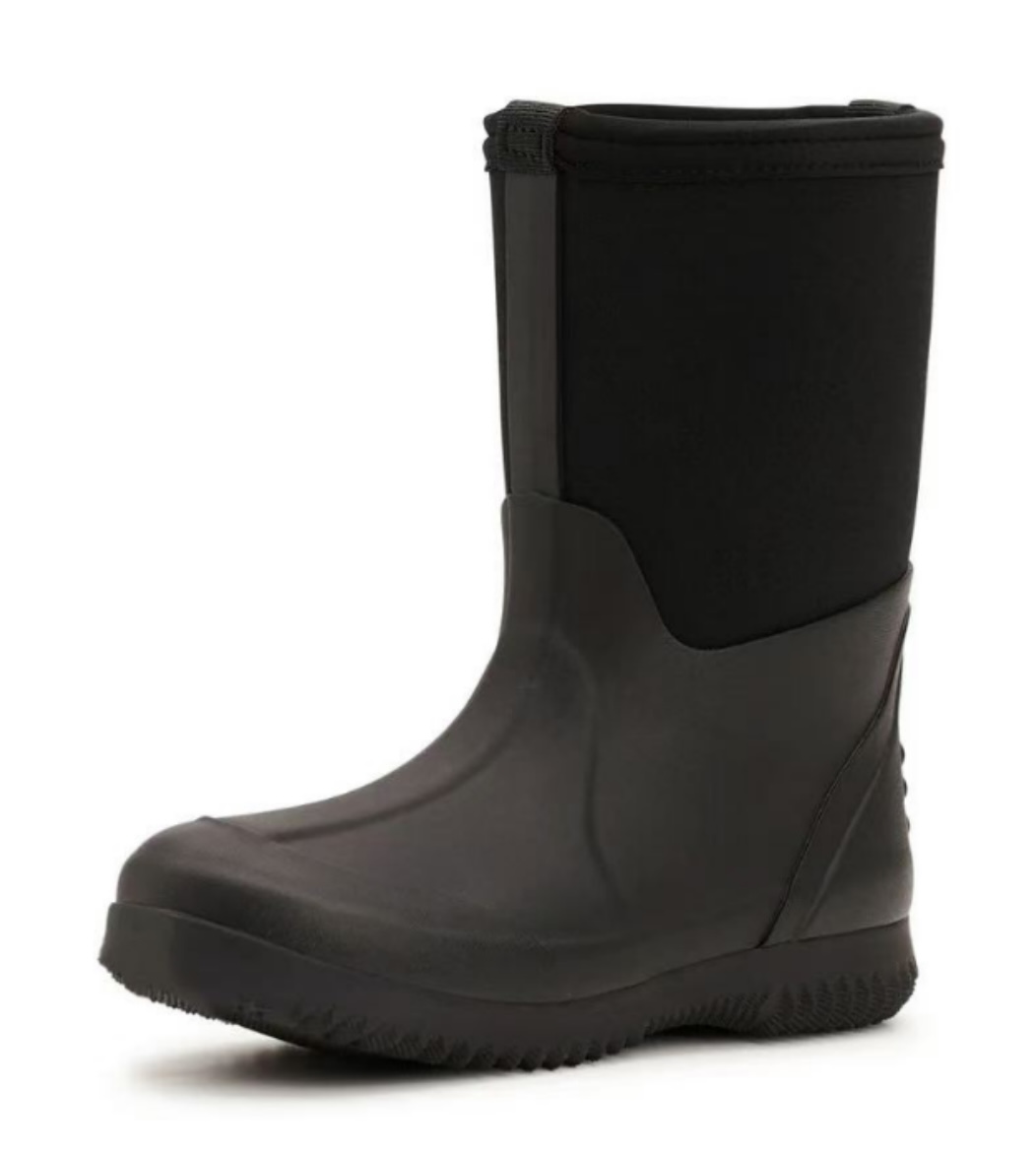
1.2 Affected Usage Scenarios
Kid neoprene boots are designed for outdoor winter activities, including snow shoveling, sledding, playground play, and walking through slush or shallow puddles. However, these scenarios can expose boots to abrasive surfaces (like concrete playgrounds), temperature fluctuations, and repeated flexing from kids' constant movement. Even casual winter walks to school or after-school play can accelerate wear if boots are not designed to handle repetitive bending at the ankle and contact with de-icing chemicals on sidewalks.
2. Product and Process Principle
Kid neoprene boots rely on neoprene, a synthetic rubber material with closed-cell foam structure, which provides insulation and water resistance. Unlike open-cell foams, closed-cell neoprene traps air bubbles that prevent heat loss while blocking water penetration, making it ideal for cold, wet environments. The manufacturing process for durable kid neoprene boots includes vulcanization, a heat treatment that bonds the neoprene layers to the sole and reinforcements, increasing resistance to tearing and flexing. Seam-free construction or glued seams further reduce the risk of water intrusion at weak points.
Professional Rain Boot Manufacturer uses controlled thickness for neoprene layers, typically between 3mm and 5mm for kids' boots, balancing flexibility for movement and durability for rough play. The outsole is made of a flexible rubber compound with deep tread patterns to enhance traction on ice and slush, while a reinforced toe cap adds protection against impacts.
3. Practical Solutions and Operation Steps
To select and use kid neoprene boots effectively, follow these actionable steps to maximize durability and performance:
- Check material thickness: Choose boots with a neoprene layer of at least 3mm; thinner layers may tear quickly under heavy use.
- Verify sole construction: Ensure the outsole is bonded securely to the shaft, with no gaps or exposed adhesive, to prevent water seepage.
- Measure for proper fit: Leave a 0.5-inch gap between the toe and the end of the boot to allow for foot growth and prevent abrasion from tight fit.
- Test flexibility: Bend the boot at the ankle to ensure it moves freely; overly stiff neoprene can restrict movement and crack with repeated use.
- Protect from chemicals: Avoid using kid neoprene boots on surfaces treated with harsh de-icing chemicals, as these can break down the neoprene material over time.
- Pair with moisture-wicking socks: Use thin, synthetic socks to keep feet dry, as excess moisture can accelerate neoprene degradation.
4. Daily Maintenance and Precautions
Proper maintenance extends the lifespan of kid neoprene boots by preventing material damage and wear. After each use, wipe off dirt, slush, and ice with a damp cloth; avoid using strong detergents or solvents, as these can break down the neoprene foam. Dry boots in a cool, shaded area, away from direct sunlight or space heaters, which can cause the neoprene to become brittle and crack. Stuff the boots with crumpled paper towels to absorb moisture and maintain shape while drying.
Additional precautions include storing boots in a cool, dry area, away from sharp objects or heavy items that can puncture the neoprene. Do not use kid neoprene boots as general-purpose work footwear, as they are not designed for heavy industrial use or exposure to extreme chemicals. If small tears appear, use a neoprene adhesive repair kit to seal the area before damage spreads.
5. Industry Standard and Parameter Reference
ParameterRecommended ReferenceWhy It Matters
Slip resistance for kids' footwearEN ISO 20347:2022+A1:2024 (footwear for occupational use, applicable to kids' outdoor boots)Evaluates outsole grip on wet or icy surfaces, reducing fall risk during play.
Waterproof performanceISO 20344:2021 test methods for water penetration in footwearVerifies that the boot upper and seams prevent water entry during extended exposure to wet conditions.
Flex resistanceASTM F2412-24 test method for footwear flexingAssesses how well the boot withstands repeated bending at the ankle, critical for active kids.
Chemical resistance (minor exposure)EN 13832-3:2018 (for contact with mild de-icing agents)Protects against damage from sidewalk de-icers, a common hazard for winter play.
All performance claims should be verified using standard test methods, as non-standardized assessments may not reflect real-world durability for active children.
6. Customer Common FAQ
Q: Are kid neoprene boots better than rubber boots for cold weather play?
A: Neoprene boots offer better insulation in extreme cold than standard rubber boots, as closed-cell neoprene traps more air to retain heat. However, both materials perform well in wet conditions; the choice depends on how often the boots are exposed to temperatures below freezing. Professional Rain Boot Manufacturer recommends neoprene for kids who spend more than 2 hours outdoors daily in cold weather.
Q: How do I know if my kid's boots are too tight or too loose?
A: A properly fitting boot should allow one finger width between the ankle and the boot shaft, and 0.5 inches of space at the toe. Too-tight boots restrict movement and cause blisters, while too-loose boots can rub against the foot, leading to abrasions and premature wear.
Q: Can I machine wash kid neoprene boots?
A: Most neoprene boots are not designed for machine washing, as the agitation can damage the sole bonds and neoprene layers. Hand washing with mild soap and warm water is recommended, followed by air drying. Avoid dryer use, as high heat can shrink or brittle the neoprene material.
Q: How long should kid neoprene boots typically last?
A: Lifespan depends on usage, size, and care. With proper maintenance, neoprene boots for active kids can last one to two winter seasons, depending on how quickly the child grows out of them. Rough play on abrasive surfaces may reduce lifespan to one season.
Q: Do kid neoprene boots need to meet safety standards for playground use?
A: While playground footwear is not required to meet strict safety toe standards, slip resistance and impact resistance for toes are important. Professional Rain Boot Manufacturer advises selecting boots that comply with EN ISO 20347:2022 for slip resistance to reduce fall risks on wet or icy playground surfaces.
Conclusion
>Kid neoprene boots deliver durable performance for winter outdoor play, addressing common parent concerns about wet feet, tear-prone materials, and insufficient insulation. By understanding material properties, manufacturing processes, and maintenance practices, parents can select boots that balance comfort, safety, and longevity for active children. Professional Rain Boot Manufacturer emphasizes that proper sizing and care extend boot lifespan, making neoprene a reliable choice for cold weather activities.References
- International Organization for Standardization. ISO 20344:2021, Footwear - Test methods for upper, sole and welt. 2021.
- European Committee for Standardization. EN ISO 20347:2022+A1:2024, Occupational footwear. 2024.
- American Society for Testing and Materials. ASTM F2412-24, Standard Test Methods for Foot Protection. 2024.
- European Committee for Standardization. EN 13832-3:2018, Chemical protective footwear against chemicals - Part 3: Requirements for footwear resistant to chemicals. 2018.