


Kid Patterned Boots: Ideal for All-Day Outdoor Adventures
Sep 15, 2026
View: 0
Leave a message
Meta Description: This article focuses on kid patterned boots, analyzing common problems in their use, such as sizing and material durability, and their affected usage scenarios like outdoor play. It explains the principles of materials and processes, provides practical selection and maintenance solutions, and lists related industry standards, aiming to help buyers make informed choices. Professional Rain Boot Manufacturer.
Keywords: Kid Patterned Boots, rain boots, waterproof boots, rubber boots, material selection, boot maintenance
1. Core Problem Analysis
1.1 Common Causes of the Problem
When searching for kid patterned boots, parents often face several key issues. The first is sizing. Kids' feet grow quickly, so it's crucial to choose boots that fit properly, neither too tight nor too loose. A tight fit can restrict foot growth and cause discomfort, while a loose one may lead to tripping hazards. Another common problem is material durability. Kids are active and may subject their boots to rough use, like running, jumping, and climbing. The boots need to be made of materials that can withstand such wear and tear without easily breaking or wearing out. Additionally, the problem of odor is also a concern. As kids' feet sweat during play, boots that lack proper ventilation can trap the moisture and lead to unpleasant odors.
1.2 Affected Usage Scenarios
The affected usage scenarios for kid patterned boots are diverse. In outdoor play, such as playing in the mud, grass, or snow, the boots need to provide good waterproofing and traction to keep the kids' feet dry and prevent slips. For example, in a muddy field, boots with deep and wide - spaced treads can offer better grip. In rainy weather, particularly during rainy commutes to school or outdoor activities in the rain, waterproof boots are essential to ensure the kids' feet stay dry. Moreover, in educational outdoor activities like nature hikes or school field trips, boots with good ankle support and comfort are needed to keep the kids energized throughout the day.
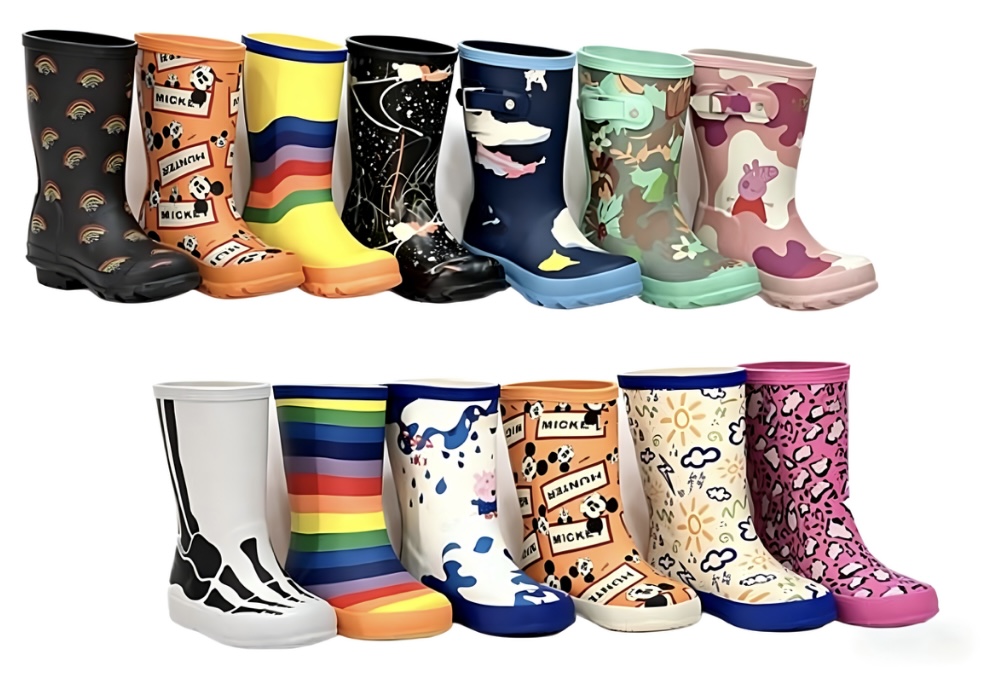
2. Product and Process Principle
There are several common materials used in kid patterned boots. Rubber is a popular choice. It is naturally waterproof, durable, and provides good traction. Natural rubber, derived from the latex of rubber trees, offers excellent elasticity and can withstand repeated stretching and bending. It can be bent over 90 degrees without leaving a mark, making it suitable for kids' active lifestyle. However, it is relatively heavy, with an adult - sized pair weighing about 1 - 2 kg, and kids' boots will be proportionally heavy. Synthetic rubbers, such as butadiene rubber and styrene - butadiene rubber, are also used to reduce costs and offer similar properties. PVC (polyvinyl chloride) is another common material. It is lightweight, usually weighing between 0.8 - 1.5 kg for adult - sized boots. It is cost - effective, with prices ranging from 20 - 80 yuan for adult boots. But it has a major drawback: it can become hard and brittle in low temperatures, and may crack if bent at low temperatures. EVA (ethylene - vinyl acetate copolymer) is known for its lightness, with a pair of boots typically weighing only 0.5 - 1 kg. It offers a soft and comfortable foot - feeling, but has relatively poor durability compared to rubber and is more prone to wear and deformation.
In terms of the manufacturing process, injection molding is a common method. The liquid material is injected into a mold cavity under high pressure, forming the shape of the boot. This process can ensure high precision and consistency in the product. Vulcanization is often used in rubber boot production. By adding sulfur and other additives to the rubber and heating it to a specific temperature, the rubber molecules form cross - linked structures, which significantly improve the rubber's strength, durability, and heat resistance. A seamless structure is also an important design feature. Boots with a seamless design can prevent water from seeping in through the joints, which is crucial for waterproof performance. Professional Rain Boot Manufacturer can use advanced techniques and strict quality control to ensure the high - quality production of these boots.
3. Practical Solutions and Operation Steps
When choosing kid patterned boots, consider the following steps:
- **Material Selection**: For kids who are often in wet and cold environments, rubber boots are a good choice due to their excellent waterproof and durable properties. If the boots are mainly for short - term use or in mild weather, PVC boots can be a cost - effective option. EVA boots are suitable for kids who need light - weight boots for daily short - distance activities.
- **Shaft Height**: For activities in deep mud or snow, high - shaft boots are recommended as they can prevent the mud or snow from getting into the boots. For normal rainy days or short - term outdoor play, mid - shaft or low - shaft boots may be more comfortable and flexible.
- **Sole Pattern**: Look for boots with a deep and well - designed tread pattern. Patterns such as hexagonal honeycomb, arrow, or saw - toothed waves can provide better grip on wet and slippery surfaces. The tread depth should be at least 3mm to ensure good traction.
- **Lining**: Boots with a moisture - wicking lining can keep the kids' feet dry and comfortable. Materials like knitted lining or breathable mesh fabric are good choices. Some high - end boots may also have antibacterial or odor - reducing linings.
- **Size Selection**: Measure the kids' feet accurately before purchasing. It is recommended to leave a little space (about 0.5 - 1 cm) at the front of the toe to allow for foot growth. Try the boots on with the socks that the kids will usually wear.
- **Cold - Resistance and Slip - Resistance**: If the boots will be used in cold regions, check the cold - resistance rating. For slip - resistance, according to relevant standards such as EN ISO 20344:2021 / EN ISO 20347:2022 + A1:2024, the slip - resistance coefficient of the sole should reach a certain level to ensure safety on wet surfaces.
- **Cleaning and Storage**: After use, clean the boots with mild soap and water, and dry them in a well - ventilated area away from direct sunlight. When storing, place them in a dry and cool place, and avoid placing heavy objects on them to prevent deformation.
4. Daily Maintenance and Precautions
**Cleaning**: Use a soft brush or cloth to gently wipe the dirt off the boots. For stubborn stains, you can use a mild detergent solution. However, avoid using strong solvents, as they can damage the material of the boots. For example, PVC boots can be easily corroded by some solvents.
**Drying**: After cleaning, let the boots dry naturally in a well - ventilated place. Do not use a high - temperature dryer or place the boots near a direct heat source such as a radiator or a fireplace, as this can cause the material to shrink, crack, or lose its elasticity.
**Odor Removal**: You can place some activated carbon or baking soda in the boots to absorb the odor. Another way is to sprinkle some talcum powder inside the boots and let it sit for a while, then shake it out.
**Anti - aging and Anti - deformation**: Store the boots in a cool and dry place to prevent the material from aging. If the boots are not used for a long time, you can stuff them with some newspaper to help maintain their shape. Avoid leaving the boots in direct sunlight for a long time, as ultraviolet rays can accelerate the aging of the material.
**Precautions with Chemicals**: If the boots come into contact with chemicals, such as strong acids or alkalis, clean them immediately with a large amount of water according to the chemical safety requirements. Do not use ordinary boots to replace safety - certified boots in professional work environments, as they may not provide the necessary protection.
5. Industry Standard and Parameter Reference
This chapter is the authoritative support module of the full text, and it must list international standards, test methods, or verifiable parameters closely related to the article theme. The following table is provided for reference:
ParameterRecommended ReferenceWhy It MattersSlip resistanceEN ISO 20344:2021 / EN ISO 20347:2022+A1:2024 where applicableHelps evaluate outsole grip on wet or contaminated surfaces.Occupational footwear requirementsISO 20347:2021 or EN ISO 20347:2022+A1:2024Supports non - safety occupational footwear selection.Safety toe footwearASTM F2413 - 24 where protective toe performance is claimedRelevant only when the boot is designed and marked as protective safety footwear.Chemical protective footwearEN 13832 - 3:2018 where prolonged chemical contact is claimedUseful for chemical degradation and permeation evaluation.
Do not invent exact performance numbers. Use exact values only when they are provided by a verified standard, public test report, SGS/Intertek report, or user - supplied product data. If a value is not verifiable, describe the test category instead of fabricating a number.
6. Customer Common FAQ
Q: How do I choose the right material for kid patterned boots?
A: It depends on the usage scenario. If the kids play in wet and harsh conditions often, rubber is a good choice for its durability and waterproofness. For short - term and light - duty use, PVC can be considered due to its cost - effectiveness. EVA is suitable for daily short - distance and light - weight requirements. Professional Rain Boot Manufacturer can provide more in - depth advice based on specific needs.
Q: Are kid patterned boots supposed to be slippery?
A: No, good - quality kid patterned boots should have a proper slip - resistance. According to relevant standards like EN ISO 20344:2021 / EN ISO 20347:2022 + A1:2024, the sole should have a sufficient grip on wet or contaminated surfaces. Look for boots with a deep and well - designed tread pattern to ensure safety.
Q: How do I determine the correct size for kid patterned boots?
A: Measure the kids' feet accurately. Leave about 0.5 - 1 cm of space at the front of the toe. It's also a good idea to try the boots on with the socks they'll wear. If possible, measure the feet at the end of the day when they are slightly swollen to get the most accurate size.
Q: Why do my kid's boots have an unpleasant odor?
A: This is usually due to poor ventilation. Kids' feet tend to sweat during play, and if the boots do not allow the moisture to escape, it can lead to odor. Choose boots with a breathable lining, and you can also use odor - absorbing agents like activated carbon or baking soda inside the boots.
Q: Can I use these boots in cold weather?
A: It depends on the material. Rubber boots generally have good cold - resistance. However, PVC boots can become hard and brittle at low temperatures, so they are not suitable for extremely cold weather. Check the cold - resistance rating of the boots if you plan to use them in cold regions.
Conclusion
In conclusion, when choosing kid patterned boots, it's essential to understand the common problems, such as sizing, material durability, and odor, and their affected usage scenarios. By understanding the principles of materials and processes, you can make a more informed decision. Practical selection steps, including material, shaft height, sole pattern, and size selection, can help you find the most suitable boots. Daily maintenance, following the precautions, can extend the lifespan of the boots. Industry standards and parameters provide a reliable reference for ensuring quality. Professional Rain Boot Manufacturer can offer valuable expertise in material selection and production, helping you choose the best boots for your kids.
References
- ISO 20344:2021, Footwear Test Methods
- EN ISO 20347:2022+A1:2024, Occupational Footwear
- ASTM F2413 - 24, Protective Footwear Specification
- EN 13832 - 3:2018, Chemical Protective Footwear


