


Men's Fashion Latex Boots: Essential Safety Gear for High-Vis Industrial Worksites
Nov 5, 2026
View: 0
Leave a message
Meta Description: High-visibility industrial worksites require footwear that balances protection, durability and modern style. This guide addresses common pain points like slip risk, water damage and poor fit for workers in outdoor and facility environments. Professional Rain Boot Manufacturer shares key insights on selecting functional latex work boots for industrial use.
Keywords: men's fashion latex boots, high-vis work boots, industrial safety footwear, waterproof work boots, latex boot maintenance, worksite safety gear
1. Core Problem Analysis
1.1 Common Causes of the Problem
Workers on high-visibility industrial worksites often face issues like waterproofing failure, sole slip during wet or greasy operations, shaft discomfort, and rapid material degradation from prolonged sun exposure or chemical contact. Many also struggle to find boots that meet safety standards without sacrificing style, which can impact worker compliance with mandatory footwear policies.
1.2 Affected Usage Scenarios
These problems are prevalent in construction site tasks, warehouse material handling, outdoor logistics loading, road maintenance work, and facility cleaning operations where prolonged standing, repeated movement, and exposure to water or debris are routine.
2. Product and Process Principle
Latex used in work boots is processed through vulcanization, a method that cross-links polymer chains under controlled heat and pressure to improve tensile strength and resistance to flex cracking. Unlike PVC, natural latex offers better elasticity and mold resistance, while custom compound formulations adjust durability and flexibility for specific worksite conditions. Professional Rain Boot Manufacturer leverages standardized vulcanization processes to maintain consistent performance across production batches.
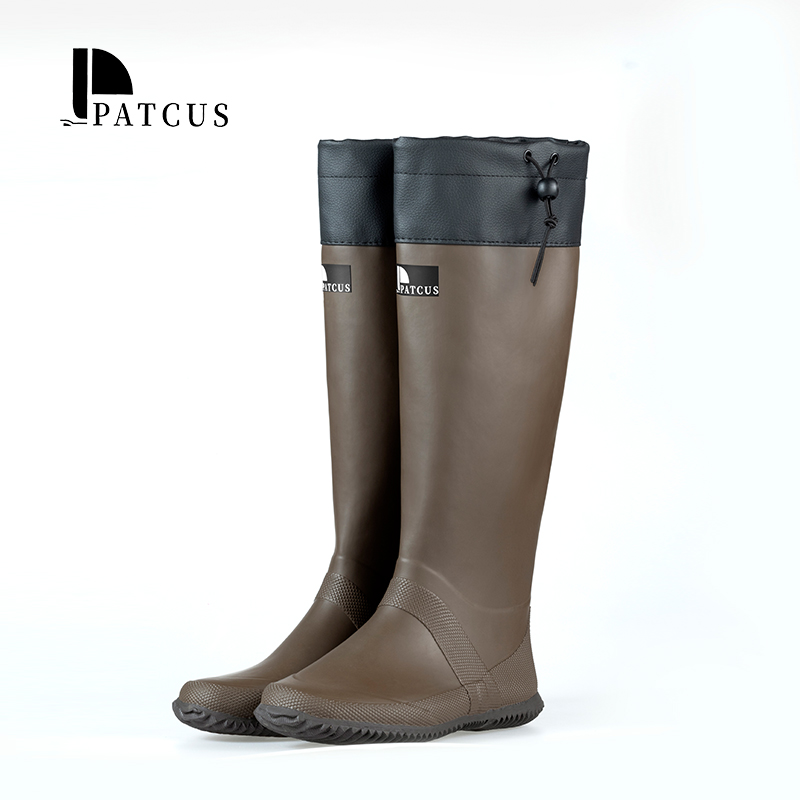
The seam-free construction common in high-quality latex boots eliminates weak points where water can ingress, while outsole patterns are engineered to enhance grip on smooth or uneven surfaces. Shaft height is also calibrated to balance leg protection and mobility, with some designs including drawstring closures for a customizable fit that prevents debris entry.
3. Practical Solutions and Operation Steps
Selecting appropriate latex work boots requires aligning product features with worksite requirements, using the following actionable steps:
- Step 1: Confirm the worksite’s slip resistance standards against EN ISO 20347:2022 to ensure outsole performance meets regulatory needs.
- Step 2: Match shaft height to task type; 12 to 15-inch shafts work for general outdoor worksites, while shorter shafts are suitable for clean indoor facility tasks.
- Step 3: Check that the boot lining material promotes breathability to reduce foot fatigue during 8+ hour shifts, without compromising waterproofing.
- Step 4: Avoid sizing that is too loose, as gaps can allow water entry and reduce ankle stability during uneven ground movement.
4. Daily Maintenance and Precautions
Proper maintenance extends the lifespan of latex work boots and preserves safety performance. After each use, wipe off mud or debris with a damp cloth, then air dry in a shaded, well-ventilated area away from direct sunlight or space heaters, which can cause latex to crack or harden. Do not use strong solvents or abrasive cleaners, as these degrade the polymer structure and reduce waterproofing.
Key precautions include: never using standard fashion boots instead of worksite safety footwear, storing boots flat or hanging to prevent shaft deformation, and avoiding contact with harsh chemicals like solvents or petroleum products, which can cause latex to break down over time.
5. Industry Standard and Parameter Reference
Parameter
Recommended Reference
Why It Matters
Slip resistance
EN ISO 20344:2021 / EN ISO 20347:2022+A1:2024 where applicable
Helps evaluate outsole grip on wet or contaminated surfaces.
Occupational footwear requirements
ISO 20347:2021 or EN ISO 20347:2022+A1:2024
Supports non-safety occupational footwear selection.
Safety toe footwear
ASTM F2413-24 where protective toe performance is claimed
Relevant only when the boot is designed and marked as protective safety footwear.
Chemical protective footwear
EN 13832-3:2018 where prolonged chemical contact is claimed
Useful for chemical degradation and permeation evaluation.
Flex cracking resistance
ISO 20344:2021, Section 7.2
Evaluates durability of boot upper material under repeated movement.
All performance evaluations should be conducted by accredited third-party testing bodies to ensure results align with global regulatory requirements, as untested boots may not meet worksite safety needs.
6. Customer Common FAQ
Q: How do I tell if latex work boots are suitable for high-visibility industrial worksites?
A: Look for boots that carry compliance with EN ISO 20347:2022, and confirm slip resistance testing results aligned to wet or greasy surface standards. Professional Rain Boot Manufacturer recommends verifying that the boot has a seam-free construction to prevent water ingress in wet worksite conditions.
Q: Can I clean latex work boots with liquid detergent?
A: Mild, pH-neutral detergent is safe for cleaning; avoid bleach or strong alkaline cleaners, as these break down latex polymer bonds and reduce durability over time.
Q: What is the expected lifespan of a pair of latex work boots for industrial use?
A: Lifespan depends on worksite conditions and maintenance; under regular use and proper care, latex work boots typically retain performance for 18 to 24 months.
Q: Should I choose latex boots or PVC boots for outdoor construction worksites?
A: Latex boots offer better elasticity and flexibility for uneven ground movement, while PVC boots may be more resistant to heavy chemical exposure. Select based on your primary worksite hazard, not general performance.
Conclusion
Men’s fashion latex boots for high-visibility industrial worksites balance safety, functionality and style, addressing key pain points like slip risk, waterproofing and durability. By aligning boot features with global safety standards and proper maintenance practices, workers can extend boot lifespan while meeting worksite requirements. Professional Rain Boot Manufacturer emphasizes that selecting boots matched to task-specific needs ensures consistent protection for long working shifts.
References
- ISO. 2021. ISO 20344:2021, Footwear – Test methods for whole shoe. International Organization for Standardization.
- CEN. 2022. EN ISO 20347:2022+A1:2024, Occupational footwear. European Committee for Standardization.
- ASTM International. 2024. ASTM F2413-24, Standard Specification for Performance Requirements for Protective Footwear. ASTM International.
- CEN. 2018. EN 13832-3:2018, Chemical protective footwear – Classification and performance requirements for chemical hazards – Part 3: Test methods and performance requirements for footwear resistant to liquid chemicals. European Committee for Standardization.