


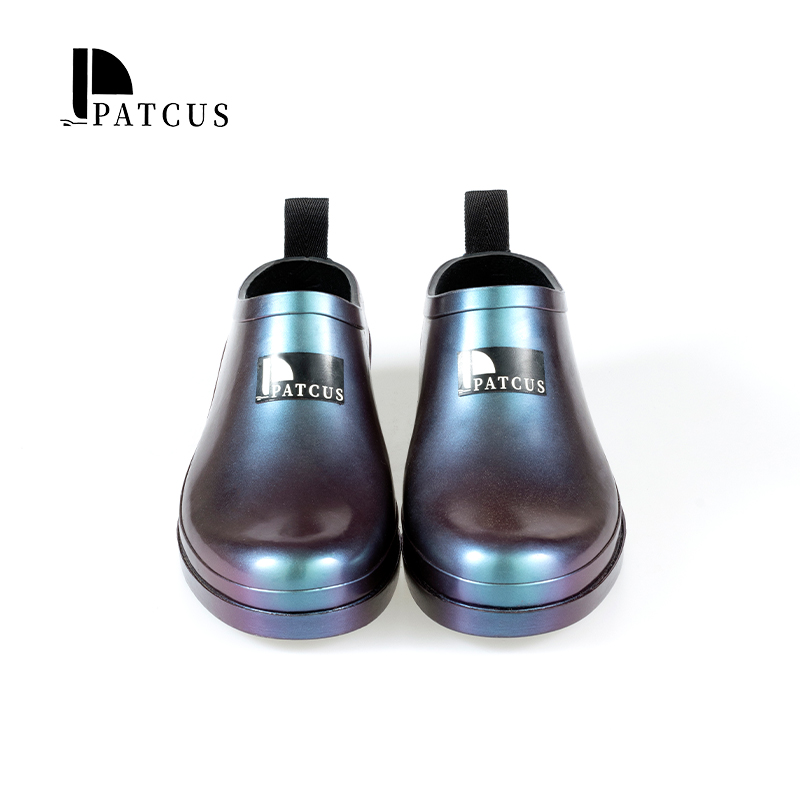
On‑Site Performance Highlights of Fantasy‑Colored Waterproof Mud‑Proof Wellies for Varied Outdoor Activities
Aug 13, 2026
View: 0
Leave a message
Meta Description: Are you confused about choosing waterproof boots for outdoor activities? This article analyzes common problems with rain boots, such as leakage, cracking, and discomfort, and explores affected usage scenarios. It also delves into material and process principles and offers practical solutions and maintenance tips. Professional Rain Boot Manufacturer.
Keywords: rain boots, waterproof boots, rubber boots, boot maintenance, boot material, outdoor activities, wellies
1. Core Problem Analysis
1.1 Common Causes of the Problem
When it comes to waterproof boots, several issues often trouble consumers. One of the most common problems is water leakage. This can be due to poor seam quality, such as in boots with glued seams that may come apart over time. Low - quality materials can also contribute to water seepage. For example, boots made from thin or porous PVC may not provide an effective waterproof barrier. Another issue is cracking. PVC boots are particularly prone to cracking in cold temperatures. If the PVC is not properly formulated or lacks adequate additives for flexibility, it becomes brittle and can crack with normal use. Foot discomfort is also a significant concern. Boots with an improper fit, whether they are too tight and constrict blood flow or too loose and cause blisters, can make wearing them for extended periods unbearable. Insufficient arch support and thick, non - breathable linings can also lead to tired feet and excessive sweating. In addition, some boots may have insufficient traction, especially on wet or muddy surfaces. This is often related to the design and material of the outsole. If the tread pattern is shallow or the rubber used on the outsole is too hard, the grip will be poor, increasing the risk of slips and falls.
1.2 Affected Usage Scenarios
Many usage scenarios are affected by these problems. In farming, a water - leaking or cracked boot can result in wet and cold feet, which is not only uncomfortable but can also lead to health issues like frostbite in cold weather. The lack of proper traction can be dangerous when walking on wet and muddy farmland, as it may cause the user to slip and potentially get injured. For gardening, users often need to stand and walk on wet grass or soil. Boots that are not waterproof or comfortable can make the gardening experience unpleasant. Food processing workers are required to keep their feet clean and dry in a hygienic environment. Leaking boots can contaminate the food products and pose a safety risk. Fishing involves being around water for long periods, so waterproof and slip - resistant boots are essential. A boot that fails in either area can make fishing difficult and dangerous. When commuting in the rain, people need boots that are comfortable to walk in for extended periods and can keep their feet dry. In warehouse cleaning, workers may need to move quickly on wet floors, making traction and comfort of boots crucial. Livestock work requires boots that can withstand rough handling and exposure to various substances, and any issues with waterproofing, durability, or traction can be a hindrance. Muddy outdoor work, such as construction work in wet conditions, also demands high - performance boots to ensure safety and efficiency.
2. Product and Process Principle
Rain boots are made from various materials, each with its own properties and manufacturing processes. PVC (polyvinyl chloride) is a popular material for its cost - effectiveness. It is a plastic that can be easily molded, making it suitable for mass production. The softness and flexibility of PVC can be adjusted by adding plasticizers. During the manufacturing process, PVC boots are often produced through injection molding. In injection molding, the PVC is heated until it turns into a molten state and then injected into a mold. After injection, the mold is cooled, and the PVC solidifies, taking on the shape of the mold. This process allows for precise control of the boot's shape and size, and since it creates a seamless structure, it enhances the boot's waterproofing ability. Professional Rain Boot Manufacturer often uses advanced injection molding technology to ensure high - quality PVC boots.
Rubber, both natural and synthetic, is another widely used material. Natural rubber is sourced from the latex of rubber trees. It has excellent elasticity, wear resistance, and durability. Synthetic rubber is engineered to have properties similar to or better than natural rubber in some aspects, such as improved chemical resistance. Rubber boots are commonly made through the vulcanization process. In vulcanization, the rubber is heated with sulfur or other vulcanizing agents, which cross - link the rubber molecules and make the boot stronger, more elastic, and more resistant to wear and tear.
EVA (ethylene - vinyl acetate) is known for its light weight. It is a foam - like synthetic material that offers good insulation and flexibility, making it a popular choice for boots designed for comfort, especially those for children or casual wear. However, it is less durable than rubber or PVC, as it is more prone to punctures.
The outsole pattern of rain boots is also carefully designed. A deep and complex tread pattern, such as those with lugs, channels, or multi - directional grooves, can improve traction on different surfaces. The shaft height is determined based on the intended use. High - shaft boots provide more protection against water splashes and mud, while low - shaft boots are more flexible and easier to move in. Linings are used to enhance comfort and sometimes provide additional functionality, such as moisture - wicking or insulation. For example, a breathable lining can help keep feet dry by drawing sweat away from the skin.
3. Practical Solutions and Operation Steps
When selecting rain boots, consider the following aspects:
- Material: If you need boots for heavy - duty use, such as in industrial or agricultural settings, rubber boots are a better choice due to their high durability and resistance to wear. For occasional use or when weight is a concern, EVA boots can be considered. PVC boots are suitable for short - term and cost - effective needs, but be aware of their limitations in cold weather.
- Shaft height: For activities where you are likely to encounter deep water or mud, such as fishing or farming, high - shaft boots are recommended. For general rainy - day commuting or light outdoor work, low - shaft boots may be more comfortable and practical.
- Outsole pattern: Look for boots with a deep and complex tread pattern. Treads with channels can help shed water, while lugs can provide better grip on uneven or slippery surfaces. If you will be working on oily or greasy surfaces, specific anti - slip patterns designed for those conditions are advisable.
- Lining: Choose boots with a lining that suits your needs. If you will be wearing the boots in warm - weather conditions, a breathable lining is essential to prevent sweating and discomfort. In cold weather, an insulating lining can keep your feet warm.
- Size: Proper sizing is crucial. Measure your feet accurately and follow the sizing chart provided by the manufacturer. Make sure there is enough room in the toe box to wiggle your toes, and the boot fits snugly around the heel to prevent slippage.
- Anti - slip and cold - resistance ratings: Check for anti - slip ratings according to standards such as EN ISO 20344:2021. For cold - weather use, see if the boots meet certain cold - resistance requirements, such as the ability to remain flexible at low temperatures.
- Cleaning: After use, remove dirt and mud from the boots as soon as possible. Use a soft brush or cloth and mild soap to clean the boots. Rinse thoroughly with water to remove all soap residue.
- Storage: Store your boots in a cool, dry place. Avoid storing them in direct sunlight or near a heat source, as this can cause the materials to degrade and the boots to lose their shape.
4. Daily Maintenance and Precautions
Daily maintenance is essential to extend the lifespan of your rain boots. After each use, clean the boots to prevent dirt and grime from building up. Use a soft brush to remove loose mud and dirt, and then wash the boots with a mild detergent and water. Rinse them thoroughly to ensure no soap residue remains. After cleaning, dry the boots naturally in a well - ventilated area. Avoid using a heater or placing them in direct sunlight to dry, as this can cause the material to harden, crack, or lose its shape.
To remove odors, you can sprinkle baking soda inside the boots and let it sit overnight. Then, shake out the baking soda the next day. If the boots have been exposed to chemicals, such as in a chemical - processing plant, follow the appropriate chemical - cleaning procedures. In general, rinse the boots with plenty of water as soon as possible after exposure.
To prevent the boots from deforming, stuff them with newspaper or a boot - shaped insert when they are not in use. This will help them maintain their shape. Be careful not to store the boots in a place where the temperature is too low for an extended period, especially for PVC boots, as they may become brittle and crack.
Here are some things to avoid: Do not expose your boots to long - term sunlight, as it can cause the rubber or PVC to fade, harden, and crack. Do not place them near a high - temperature heat source for the same reason. Avoid using strong solvents to clean the boots, as they can damage the material. And never use ordinary rain boots in place of safety boots that are certified for specific hazards, such as impact or puncture protection.
5. Industry Standard and Parameter Reference
This chapter serves as the authoritative support module for the entire article. It is crucial to list international standards, test methods, or verifiable parameters that are closely related to the article's theme. A table format is preferably used to present this information clearly:
ParameterRecommended ReferenceWhy It MattersSlip resistanceEN ISO 20344:2021 / EN ISO 20347:2022+A1:2024 where applicableHelps evaluate outsole grip on wet or contaminated surfaces.Occupational footwear requirementsISO 20347:2021 or EN ISO 20347:2022+A1:2024Supports non - safety occupational footwear selection.Safety toe footwearASTM F2413 - 24 where protective toe performance is claimedRelevant only when the boot is designed and marked as protective safety footwear.Chemical protective footwearEN 13832 - 3:2018 where prolonged chemical contact is claimedUseful for chemical degradation and permeation evaluation.
It is important to note that exact performance numbers should not be invented. Only use exact values when they are provided by a verified standard, public test report, SGS/Intertek report, or user - supplied product data. If a value cannot be verified, describe the test category instead of fabricating a number.
6. Customer Common FAQ
Q: How do I choose the right material for my rain boots?
A: The choice of material depends on your specific needs. If you need high - durability boots for heavy - duty work, natural or synthetic rubber is a great option as it offers excellent wear resistance and flexibility, even in cold weather. For a more cost - effective and lightweight choice for occasional use, PVC can be considered, but be aware of its limitations in cold temperatures. EVA is ideal for comfort - focused and lightweight applications, such as children's boots or casual wear, although it has lower durability. Professional Rain Boot Manufacturer can provide more in - depth guidance based on different usage scenarios.
Q: Are the boots suitable for use in the snow?
A: It depends on the boots' material and specifications. Rubber boots with good cold - resistance properties can be used in the snow. However, PVC boots may become brittle and crack in freezing temperatures, so they are not recommended for extended use in snow or extremely cold conditions. Look for boots that meet relevant cold - resistance standards, such as the ability to remain flexible at - 20°C.
Q: How do I clean my rain boots?
A: Clean your boots regularly to maintain their performance. First, remove loose dirt and mud with a soft brush. Then, wash the boots with a mild detergent and water. Rinse thoroughly to remove all soap residue. Avoid using harsh chemicals or strong solvents, as they can damage the material. After cleaning, let the boots air - dry in a cool, well - ventilated place.
Q: What should I do if my boots have an unpleasant odor?
A: To get rid of odor, you can sprinkle baking soda inside the boots and leave it overnight. Baking soda helps absorb moisture and neutralize odors. You can also place tea bags in the boots, as they have natural deodorizing properties. After treatment, shake out the baking soda or remove the tea bags.
Q: How do I ensure the boots have good traction?
A: Check the outsole pattern. A deep and complex tread pattern, such as lugs or channels, can improve traction. You can also refer to the slip - resistance ratings based on standards like EN ISO 20344:2021. Professional Rain Boot Manufacturer often designs the outsole with functionality in mind to meet different usage requirements.
Conclusion
In conclusion, when it comes to choosing and maintaining rain boots, understanding the core problems, product and process principles, and industry standards is crucial. By analyzing common issues such as water leakage, cracking, and discomfort, users can make more informed decisions. Practical solutions, such as proper material and size selection, as well as correct maintenance methods, can ensure the long - term performance of the boots. Professional Rain Boot Manufacturer can offer valuable knowledge and guidance to help users navigate the complex world of rain boots and select the most suitable products for their specific needs.
References
- IS0 2023-2024 Global Footwear Industry Official Report. Global Footwear Industry Association, 2024.
- EN ISO 20344:2021 Footwear - Test methods for whole shoe - Slip resistance. International Organization for Standardization, 2021.
- ASTM F2413 - 24 Standard Specification for Performance Requirements for Protective Toe Footwear. ASTM International, 2024.