


Practical Functional Upsides of Fashion‑Oriented Men’s Latex Boots for Rainy Days
Aug 13, 2026
View: 1
Leave a message
Meta Description: This article delves into the practical functional advantages of men's fashion latex boots on rainy days, focusing on common issues, principles, solutions, and maintenance. It is suitable for men who need waterproof and stylish rain boots, providing professional knowledge and practical guidance. Professional Rain Boot Manufacturer
Keywords: Men fashion latex boots, rain boots, waterproof boots, latex material, boot maintenance
1. Core Problem Analysis
1.1 Common Causes of the Problem
When it comes to men's fashion latex boots, users often encounter several problems. Leakage is a significant concern, which may result from poor sealing at the seams or damage to the latex material. Over time, the latex can crack due to exposure to extreme temperatures, UV rays, or improper storage, affecting both the appearance and functionality. The issue of sweaty and stuffy feet may occur, especially if the boots lack proper ventilation. Slipping is another potential problem, as insufficient traction on the outsole can lead to accidents. Incorrect sizing can cause discomfort, and may be too tight, causing bruising, or too loose, leading to water pouring into the boots. Additionally, material aging can make the boots less flexible and more prone to damage.
1.2 Affected Usage Scenarios
These problems can impact various usage scenarios. In rainy commuting, leakage and poor slip resistance can make the journey unpleasant and dangerous. For outdoor work such as farming, gardening, and muddy outdoor work, the boots may be exposed to harsh conditions, increasing the risk of damage and reducing work efficiency. In fishing, the boots need to be waterproof and durable to withstand the wet environment. Warehouse cleaning and livestock work also require boots that can provide adequate protection and comfort.
2. Product and Process Principle
Men's fashion latex boots are typically made from latex, a type of rubber material. Latex offers excellent waterproof properties, which is essential for rain boots. It has good elasticity, allowing the boots to adapt to the shape of the foot and providing a comfortable fit. The process of manufacturing latex boots often involves injection molding or vulcanization. Injection molding is a process where the latex material is injected into a mold under high pressure, creating a precise and consistent boot shape. Vulcanization, on the other hand, involves heating the latex with sulfur or other additives to enhance its strength, durability, and resistance to heat and chemicals. Professional Rain Boot Manufacturer can ensure these processes are carried out with high precision and quality control.
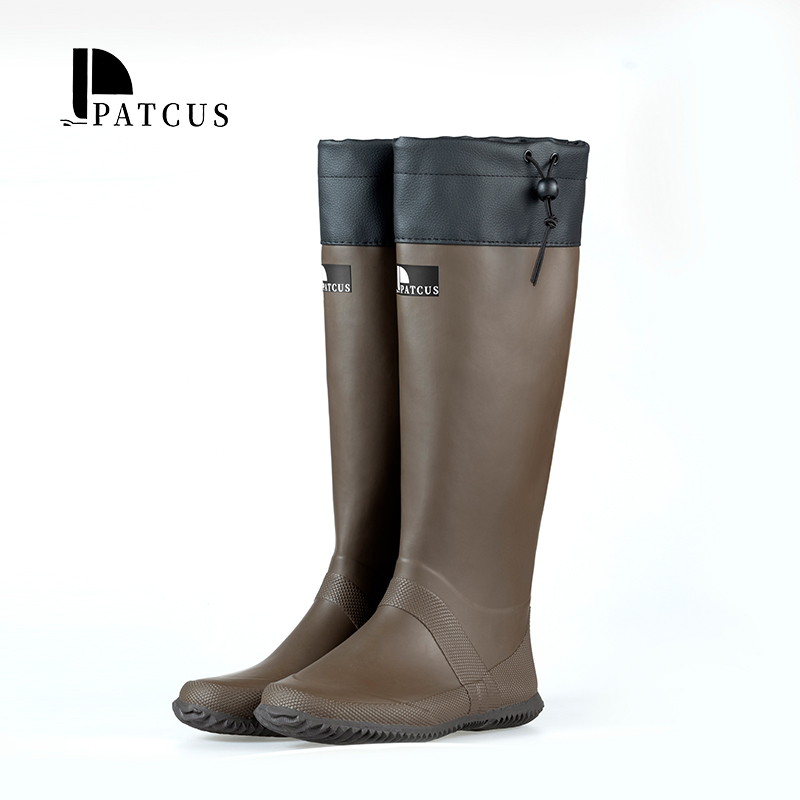
Regarding the structure of the boots, the outsole pattern plays a crucial role in slip resistance. Deep grooves and patterns can provide better traction on wet or slippery surfaces. The shaft height is designed according to different usage scenarios. Higher shafts can offer more protection in deep water or muddy conditions, while lower shafts are more suitable for light rain or urban commuting. The lining inside the boots can affect comfort levels. Some linings are made from moisture - wicking materials to keep the feet dry, while others may focus on providing insulation in cold weather.
3. Practical Solutions and Operation Steps
When choosing men's fashion latex boots, here are some practical steps and considerations:
- Material selection: Latex is a good choice for its waterproof and elastic properties. However, consider its durability and resistance to aging. You can also look for boots with additional coatings or treatments to enhance performance.
- Shaft height: Determine the shaft height based on your usage scenarios. For rainy commuting in the city, a mid - calf or ankle - high shaft may be sufficient. For outdoor work in wet or muddy areas, go for a knee - high or thigh - high shaft.
- Outsole pattern: Look for an outsole with deep grooves, multi - directional patterns, or suction - cup - like structures. According to industry standards, a good outsole should have a slip resistance that meets or exceeds EN ISO 20344:2021 requirements.
- Lining: Opt for a lining that is moisture - wicking and breathable to keep your feet dry and comfortable. If you'll be using the boots in cold weather, choose a lining with insulation properties.
- Size: Measure your feet accurately and refer to the manufacturer's size chart. Since latex has limited stretch, it's advisable to choose a size that allows a bit of extra room for thick socks and natural movement of the feet.
- Cleaning and storage: After use, clean the boots with mild soap and water, and let them dry in a well - ventilated area away from direct sunlight and heat sources. Store the boots in a cool, dry place, and you can stuff them with newspaper to maintain their shape.
4. Daily Maintenance and Precautions
Proper daily maintenance of men's fashion latex boots can extend their lifespan and ensure their performance.
Cleaning: Regularly clean the boots after each use. Use a soft brush or cloth to remove dirt and debris. For stubborn stains, you can use mild soap and water. Avoid using harsh chemicals or abrasive cleaners, as they can damage the latex material.
Drying: After cleaning, let the boots dry naturally in a well - ventilated area. Do not expose them to direct sunlight or high - heat sources, as this can cause the latex to crack and become brittle. Stuffing the boots with newspaper can help absorb moisture and maintain their shape.
Deodorizing: To eliminate odors, you can sprinkle baking soda inside the boots or use specialized shoe deodorizers. Let the deodorizer work overnight, and then shake out the powder the next day.
Preventing aging: Protect the boots from UV rays by storing them in a dark place. Avoid exposing them to extreme temperatures for long periods. You can also apply a latex protector or conditioner to keep the material soft and elastic.
Preventing deformation: When not in use, store the boots upright to prevent them from collapsing. You can use boot trees to maintain their shape.
Chemical contact: If the boots come into contact with chemicals, clean them immediately with water. In case of strong chemical exposure, it's advisable to replace the boots, as the latex may have been compromised.
Precautions: Do not wear regular latex boots in place of certified safety boots in industrial or hazardous environments. Do not over - stretch the latex boots, as it can cause permanent damage. Also, avoid using sharp objects near the boots to prevent punctures.
5. Industry Standard and Parameter Reference
This section provides important industry standards and parameters that are relevant to men's fashion latex boots. Understanding these can help you make more informed decisions when choosing and using the boots.
ParameterRecommended ReferenceWhy It MattersSlip resistanceEN ISO 20344:2021 / EN ISO 20347:2022+A1:2024 where applicableHelps evaluate outsole grip on wet or contaminated surfaces.Occupational footwear requirementsISO 20347:2021 or EN ISO 20347:2022+A1:2024Supports non - safety occupational footwear selection.Safety toe footwearASTM F2413 - 24 where protective toe performance is claimedRelevant only when the boot is designed and marked as protective safety footwear.Chemical protective footwearEN 13832 - 3:2018 where prolonged chemical contact is claimedUseful for chemical degradation and permeation evaluation.WaterproofnessA standard test might involve immersing the boot in water for a certain period (e.g., 30 minutes) and checking for any water penetration. There isn't a single - universally recognized specific ISO standard for general rain - boot waterproofness, but common sense and industry - accepted tests gauge this.Ensures that the boots keep your feet dry in wet conditions, which is the primary function of rain boots.Durability (e.g., abrasion resistance)ASTM F2412 - 24 (tests for various aspects of foot - protection materials including abrasion) can give an indication. A common measure could be the amount of material loss after a set number of abrasion cycles.Determines how long the boots will last, especially in abrasive environments like construction sites or outdoor activities.
Do not invent exact performance numbers. Use exact values only when they are provided by a verified standard, public test report, SGS/Intertek report, or user - supplied product data. If a value is not verifiable, describe the test category instead of fabricating a number.
6. Customer Common FAQ
Q: How do I choose the right material for men's fashion latex boots?
A: Professional Rain Boot Manufacturer can offer insights into material selection. Latex is a popular choice for its waterproof and elastic properties. However, consider the usage scenario. If you need high durability, look for boots with reinforced latex or additional coatings. For better breathability, some boots combine latex with other materials in the lining.
Q: Are men's fashion latex boots slip - resistant?
A: The slip - resistance of latex boots depends on the outsole design and the material. A good quality latex boot should have an outsole that meets the requirements of standards such as EN ISO 20344:2021. Look for boots with deep grooves and patterns for better traction.
Q: How do I choose the correct size for latex boots?
A: Measure your feet accurately and refer to the manufacturer's size chart. Latex boots do not stretch as much as some other materials. It's better to choose a size that allows a bit of extra room for comfort and to accommodate thick socks.
Q: Do latex boots have a strong smell?
A: New latex boots may have a slight smell, but it should dissipate over time. To reduce the smell, you can air out the boots in a well - ventilated area before use or use baking soda or shoe deodorizers.
Q: Can I wear latex boots in cold weather?
A: Latex can become stiffer in cold weather, which may affect comfort and flexibility. If you plan to use the boots in cold conditions, choose boots with insulation or lining suitable for low temperatures.
Conclusion
This article has explored the practical functional advantages of men's fashion latex boots on rainy days. We've analyzed the common problems, including leakage, cracking, and slipping, and the affected usage scenarios. The product and process principle of latex boots, such as the use of injection molding and vulcanization, were also explained. Practical solutions for choosing boots, including considerations for material, shaft height, and outsole pattern, were provided. Daily maintenance tips and precautions were given to help users extend the lifespan of the boots. Industry standards and parameters were presented to offer a reference for informed choices. Professional Rain Boot Manufacturer can provide valuable guidance in the research and selection of these boots. By following these guidelines, men can select and maintain high - quality latex boots that meet their needs.
References
- Global Info Research. Global Rubber Rain Boots Market Overall Size, Key Manufacturers, Key Regions, Product and Application Segmentation Research Report[R]. 2026.26.
- Ubo Zhiye. In‑depth Research and Analysis Report on China’s Rubber Rain Boot Industry Competitive Landscape and Investment Planning (2026‑2031)[R]. 2026.
- Bizteller Consulting. Rubber Rain Shoes Market Research Report 2026: Global Development Data and Prospect Study[R]. 2026.