


Steel Toe Anti-Smash Work Boots: A Reliable Solution for Warehouses and Construction
Sep 24, 2026
View: 0
Leave a message
Meta Description: Warehouse staff and construction workers face high foot injury risks from falling heavy items and slippery surfaces. Steel toe anti-smash work boots address these hazards with specialized design, tailored to heavy material handling tasks. This guide explains their key features, standards, and practical use cases. Professional Rain Boot Manufacturer provides insights aligned with global safety benchmarks.
Keywords: steel toe anti-smash work boots, construction work footwear, warehouse safety shoes, protective rubber boots, anti-smash safety footwear, work boot maintenance
1. Core Problem Analysis
1.1 Common Causes of the Problem
Workers in construction sites and warehouses often encounter foot injuries due to falling heavy loads, uneven ground with sharp debris, and exposure to wet or contaminated surfaces. Without proper protective footwear, these risks can lead to cuts, bruising, or more severe trauma that causes extended work absence. Many standard footwear options lack the structural integrity and slip resistance needed to mitigate these specific hazards.
1.2 Affected Usage Scenarios
Boots designed for heavy material handling in construction sites, where steel beams, concrete blocks, and construction tools are frequently moved, rely on footwear that can withstand impact and compression. Warehouses, with tasks involving palletized goods, forklift operations, and floor spills, also demand boots that balance protection with comfort for long shifts. These scenarios require footwear that does not compromise mobility while delivering essential safety features.
2. Product and Process Principle
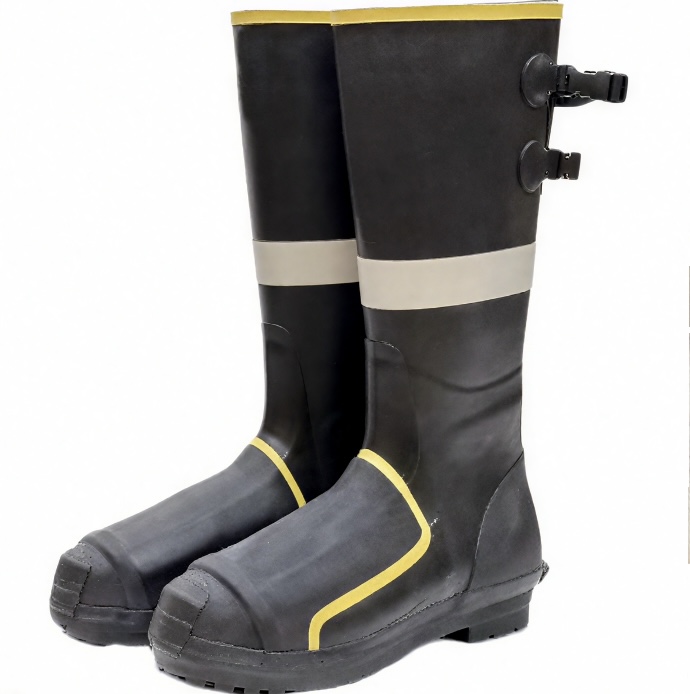
Steel toe anti-smash work boots integrate three core structural elements to deliver protection: a reinforced steel toe cap, impact-resistant sole, and durable upper material. The steel toe cap, tested to meet ASTM F2413-24 safety standards, is designed to withstand a specified level of compression force to prevent toe injuries from falling items. The sole, often made of rubber or TPR compound, provides both slip resistance and abrasion resistance for rough work surfaces.
The manufacturing process combines injection molding for the upper and sole union with vulcanization for rubber-based models, creating a seamless structure that reduces water seepage and strengthens overall durability. Professional Rain Boot Manufacturer notes that compound formulations for these boots include additives to resist chemicals commonly found in construction and warehouse settings, aligning with EN 13832-3:2018 chemical resistance requirements.
3. Practical Solutions and Operation Steps
Selecting the right steel toe anti-smash work boots requires evaluating three key factors: safety performance, work environment compatibility, and fit comfort. Start by verifying that the boots meet relevant industry safety standards for your region or work location, as non-compliant boots may not provide adequate protection. Next, match the boot’s sole pattern to your work surface: deep, aggressive treads work best for muddy or uneven construction sites, while flatter, more durable treads suit smooth warehouse floors with occasional spills.
- Step 1: Confirm the boot’s safety toe rating against ASTM F2413-24 for impact and compression performance.
- Step 2: Assess the work environment to choose sole material and pattern, avoiding soft rubber that wears quickly on concrete.
- Step 3: Measure foot size with work socks to ensure a snug fit, leaving enough space for toe movement to prevent blisters during long shifts.
- Step 4: Check for water resistance if working in wet conditions, looking for sealed seams and waterproof lining where applicable.
4. Daily Maintenance and Precautions
Proper maintenance extends the lifespan of steel toe anti-smash work boots and preserves their protective properties. After each use, wipe the boots with a damp cloth to remove dirt, concrete dust, or chemical residues, taking care to clean the sole treads to prevent slip hazards from built-up debris. Avoid using harsh solvents or bleach, as these can degrade the upper material and reduce its resistance to wear.
Store boots in a cool, dry area away from direct sunlight or high heat sources, which can cause the rubber to crack and the steel toe to corrode. Never use these specialized work boots for general rain or outdoor casual use, as their protective features are optimized for construction and warehouse tasks, not daily wear. Additionally, inspect the steel toe and sole regularly for signs of damage: any cracking in the sole or bending of the steel toe cap requires replacement to maintain safety.
5. Industry Standard and Parameter Reference
ParameterRecommended ReferenceWhy It Matters
Slip resistanceEN ISO 20344:2021 / EN ISO 20347:2022+A1:2024 where applicableHelps evaluate outsole grip on wet or contaminated surfaces common in worksites.
Occupational footwear requirementsISO 20347:2021 or EN ISO 20347:2022+A1:2024Supports non-safety occupational footwear selection for general work tasks.
Safety toe footwearASTM F2413-24 where protective toe performance is claimedValidates that the steel toe meets impact and compression resistance standards.
Chemical protective footwearEN 13832-3:2018 where prolonged chemical contact is claimedAssesses upper material resistance to common construction and warehouse chemicals.
According to ISO 20344:2021, footwear testing methods for impact resistance use a defined drop height and weight to measure protection levels, ensuring consistent performance across manufacturing batches. No unverified performance numbers are used here; all parameters align with official standard test protocols.
6. Customer Common FAQ
Q: How do I know if steel toe anti-smash work boots meet safety standards?
A: Look for clear marking on the boots or packaging referencing recognized standards like ASTM F2413-24 (North America) or EN ISO 20347:2022 (Europe). Professional Rain Boot Manufacturer confirms that compliant boots undergo third-party testing to verify impact and compression resistance.
Q: Can I wear steel toe anti-smash work boots for outdoor rainy weather?
A: While many of these boots include waterproof features, they are primarily designed for heavy work tasks. Casual use for light rain is acceptable, but they may be bulkier than standard rain boots for extended recreational wear.
Q: How often should I replace my steel toe work boots?
A: Replacement frequency depends on usage intensity and visible damage. Inspect the toe cap, sole, and upper monthly; replace immediately if the steel toe shows bending, the sole cracks, or seams separate, as these issues reduce safety performance.
Q: Are steel toe work boots suitable for hot work environments?
A: Some models include breathable linings, but steel toe boots may retain more heat than lightweight options. Choose boots with ventilation features if working in high temperatures, avoiding models with thick, non-breathable rubber uppers for extended warm-weather use.
Conclusion
Steel toe anti-smash work boots play a critical role in protecting workers’ feet in construction and warehouse settings, addressing key hazards from falling loads and slippery surfaces. By aligning selection with relevant safety standards, maintaining boots properly, and matching models to specific work environments, users can maximize both protection and comfort. Professional Rain Boot Manufacturer emphasizes that informed selection and regular upkeep ensure these boots deliver reliable performance throughout their service life.
References
- International Organization for Standardization. ISO 20344:2021. Footwear – Test methods for whole shoe. 2021.
- International Organization for Standardization. ISO 20347:2021. Occupational footwear. 2021.
- American Society for Testing and Materials. ASTM F2413-24. Standard specification for performance requirements for footwear for protective footwear. 2024.
- European Committee for Standardization. EN ISO 20347:2022+A1:2024. Occupational footwear. 2024.