


Strengths and Limitations of Men’s Latex Work Boots for Harsh Outdoor Working Conditions
Aug 14, 2026
View: 1
Leave a message
Meta Description: This article delves into the core issues of men's latex work boots in harsh outdoor conditions, including causes, usage scenarios, and relevant principles. It provides practical solutions, maintenance tips, and industry standards. Suitable for professionals in need of work boots. Professional Rain Boot Manufacturer
Keywords: Men Latex Boots, rain boots, waterproof boots, rubber boots, work boots, outdoor working conditions, boot maintenance
1. Core Problem Analysis
1.1 Common Causes of the Problem
When searching for men's latex work boots for harsh outdoor working conditions, users often aim to solve several key problems. Firstly, waterproofing is a top concern. In wet environments such as rainy fields, muddy construction sites, or near water bodies, boots need to keep feet dry to prevent discomfort, blisters, and potential foot diseases. Secondly, durability is crucial. The boots are likely to face abrasion, punctures from sharp objects like stones or nails, and stretching during long - term use. Thirdly, comfort is a significant factor. Workers may wear these boots for extended periods, so issues like foot fatigue, heat, and moisture buildup need to be addressed. Additionally, slip resistance is essential to prevent accidents on slippery surfaces, which are common in outdoor work. The material of latex itself also has some limitations, such as potential allergic reactions for some users, and it may age and deteriorate under certain environmental conditions.
1.2 Affected Usage Scenarios
The affected usage scenarios for men's latex work boots are diverse. In farming, workers need to walk through wet fields, deal with manure, and use various farm tools. The boots should be waterproof and resistant to chemicals in fertilizers and pesticides. In gardening, they may encounter wet soil, sharp branches, and need to be flexible for different postures during planting and pruning. In fishing, boots are exposed to water for long periods, and they should be able to withstand saltwater corrosion if working in coastal areas. For rainy commuting, the boots need to be both waterproof and comfortable for walking on different urban surfaces. In warehouse cleaning, workers may move heavy objects on wet floors, requiring good slip - resistant properties. In livestock work, the boots are likely to be soiled with animal waste and need to be easy to clean. In muddy outdoor work, such as construction or mining, the boots should resist mud adhesion and provide good ankle support.
2. Product and Process Principle
The production of men's latex work boots involves several material and process principles. The main material, latex, comes from rubber trees or is synthetically produced. Natural latex has excellent elasticity and waterproofing properties. It is a polymer material composed of rubber particles suspended in an aqueous medium. Synthetic latex is often engineered to have specific properties, such as better resistance to certain chemicals or improved aging resistance.
In the manufacturing process, latex is first collected or synthesized. Then, the latex is mixed with various additives to improve its performance. These additives may include curing agents to make the latex harden and cross - link, antioxidants to prevent oxidation and aging, and colorants for aesthetic purposes. The boot - making process usually starts with a mold. The liquid latex is poured or dipped onto the mold, which has the shape of the boot. Through a heating process, the latex solidifies on the mold. Other processes like vulcanization can be applied to enhance the durability and strength of the latex. Vulcanization involves adding sulfur or other vulcanizing agents and heating the latex under specific conditions to form cross - links between the polymer chains. Professional Rain Boot Manufacturer plays a role in ensuring that these processes are carried out precisely to meet the required quality standards, including controlling the thickness of the latex layer, ensuring a seamless structure for better waterproofing, and formulating the right compound to balance different performance requirements.
3. Practical Solutions and Operation Steps
When choosing men's latex work boots for harsh outdoor working conditions, the following steps can be followed:
- Material selection: If possible, choose natural latex for its high elasticity and environmental - friendliness. However, if there is a need for better chemical resistance, synthetic latex may be a better option. Check the quality of the latex, such as its purity and the presence of additives. A high - quality latex should have a uniform texture and no obvious impurities.
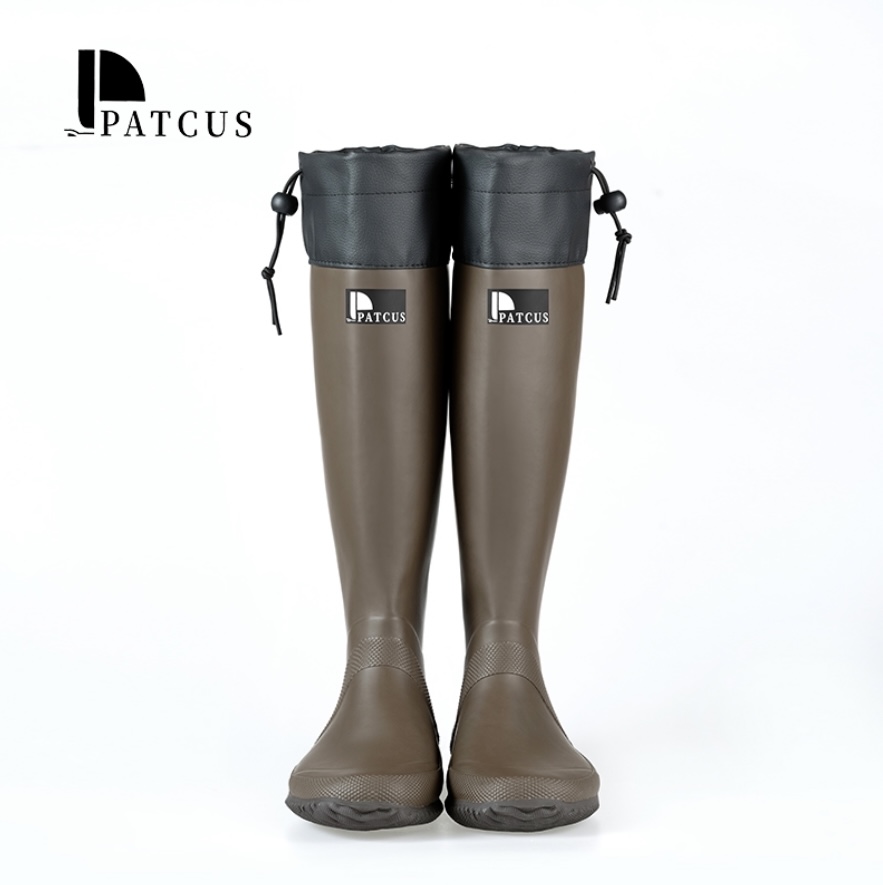
- Boot height: Consider the working environment. For deep mud or water, high - shaft boots are necessary to keep the legs dry. For general outdoor work, mid - shaft boots may provide a good balance between protection and flexibility. Measure your calf circumference to ensure a proper fit around the leg.
- Sole pattern: Look for boots with deep and well - designed sole patterns. Patterns like deep grooves, lugs, or herringbone can provide better traction on wet and slippery surfaces. According to EN ISO 20344:2021 / EN ISO 20347:2022+A1:2024, the sole should meet the slip - resistance requirements for the intended working environment.
- Lining: A breathable lining can reduce foot moisture and odor. Cotton or moisture - wicking synthetic linings are good choices. Avoid linings made of materials that can cause allergic reactions if you have sensitive skin.
- Size selection: Measure your foot length and width accurately. Try on the boots with the socks you usually wear for work. If you plan to wear thick socks in cold weather, choose a slightly larger size. Leave enough space for your toes to move freely to prevent blisters and foot pain.
- Physical properties of latex: Check the minimum operating temperature or low - temperature flexibility parameters of latex to ensure its performance and durability in cold environments. Test the elasticity of the latex by gently stretching the boot surface to see if it can quickly return to its original shape. Good elasticity indicates better wear resistance and fit.
- Cleaning and storage: After use, clean the boots with mild soap and water. Rinse them thoroughly and let them dry naturally in a well - ventilated area away from direct sunlight and heat sources. Store the boots in a cool and dry place, preferably hanging them up to maintain their shape.
4. Daily Maintenance and Precautions
Proper daily maintenance of men's latex work boots can significantly extend their lifespan. Here are some maintenance tips:
- Cleaning: After each use, remove dirt and debris from the boots. Use a soft brush or cloth to scrub the surface gently. For stubborn stains, use a mild detergent or a specialized boot cleaner. Avoid using harsh chemicals or abrasive materials, as they can damage the latex.
- Drying: Do not dry the boots in direct sunlight or near a heater. Excessive heat can cause the latex to crack and lose its elasticity. Instead, let the boots dry naturally at room temperature. Stuff them with newspaper to absorb moisture and help maintain their shape.
- Deodorizing: If the boots develop an odor, sprinkle some baking soda inside them and let it sit overnight. Then, shake out the baking soda in the morning. You can also use odor - absorbing insoles or place a few drops of essential oil on a cotton ball and put it inside the boot.
- Anti - aging: To prevent the latex from aging, avoid exposing the boots to chemicals such as solvents, gasoline, or strong acids and alkalis. Apply a latex protectant or conditioner periodically according to the product instructions. This can help maintain the flexibility and waterproofing of the latex.
- Anti - deformation: Do not fold or bend the boots sharply when storing them. If possible, use a boot tree to keep the boots in shape. Avoid stacking heavy objects on top of the boots.
- Low - temperature storage: In cold weather, ensure the boots are completely dry before storing them. If the boots are likely to be exposed to freezing temperatures, use a boot warmer or store them in a warm place to prevent the latex from becoming brittle.
- Handling after chemical contact: If the boots come into contact with chemicals, immediately rinse them with a large amount of water. If the chemical is corrosive, seek professional advice on whether the boots can still be used safely.
There are also some precautions to avoid. Do not expose the boots to long - term sunlight, as ultraviolet rays can accelerate the aging of the latex. Do not place the boots near high - temperature heat sources, such as radiators or stoves, which can cause the latex to melt or deform. Do not use strong solvents to clean the boots, as they can dissolve the latex and damage the boots. And never use ordinary latex work boots in situations where certified safety boots are required, such as environments with heavy machinery or sharp objects, as they may not provide adequate protection.
5. Industry Standard and Parameter Reference
This section lists the international standards, testing methods, or verifiable parameters relevant to men's latex work boots:
ParameterRecommended ReferenceWhy It MattersSlip resistanceEN ISO 20344:2021 / EN ISO 20347:2022+A1:2024 where applicableHelps evaluate outsole grip on wet or contaminated surfaces.Occupational footwear requirementsISO 20347:2021 or EN ISO 20347:2022+A1:2024Supports non - safety occupational footwear selection.Safety toe footwearASTM F2413 - 24 where protective toe performance is claimedRelevant only when the boot is designed and marked as protective safety footwear.Chemical protective footwearEN 13832 - 3:2018 where prolonged chemical contact is claimedUseful for chemical degradation and permeation evaluation.WaterproofnessASTM F2412 - 24Ensures the boots can keep feet dry in wet conditions.Elongation at breakISO 37:2017Indicates the ability of the latex to stretch before breaking, which is related to durability.
These standards and parameters are crucial for ensuring the quality and performance of men's latex work boots. They provide a basis for manufacturers to produce compliance products and for users to select suitable boots according to their specific working conditions.
6. Customer Common FAQ
Q: How do I choose between natural latex and synthetic latex boots?
A: Natural latex boots offer high elasticity and are generally more environmentally friendly. They are great for comfort and flexibility. However, if your work environment involves exposure to certain chemicals, synthetic latex boots may be a better choice as they can be engineered to have better chemical resistance. Professional Rain Boot Manufacturer can provide more detailed guidance based on your specific needs.
Q: Are latex boots slip - resistant?
A: The slip resistance of latex boots depends on the sole design. Boots with deep, well - designed sole patterns can provide good traction on wet and slippery surfaces. To ensure a high level of slip resistance, look for boots that meet the standards of EN ISO 20344:2021 / EN ISO 20347:2022+A1:2024.
Q: How do I determine the right size of latex boots?
A: Measure your foot length and width accurately. Try on the boots with the socks you usually wear for work. If you plan to wear thick socks, choose a slightly larger size. Leave about half an inch of space at the toe for comfortable movement.
Q: Do latex boots have an odor?
A: New latex boots may have a slight odor, which usually dissipates over time. To reduce the odor, you can air out the boots in a well - ventilated area or use deodorizing methods such as baking soda or essential oils.
Q: Can I wear latex boots in cold weather?
A: Latex boots can be worn in cold weather, but their performance may be affected. In very low temperatures, the latex can become brittle, reducing its flexibility and durability. Look for boots with good low - temperature flexibility or use additional insulation like thick socks.
Q: How should I clean my latex boots?
A: Clean the boots with mild soap and water. Use a soft brush or cloth to scrub the surface gently. Rinse thoroughly and let them dry naturally away from heat and sunlight. Avoid using harsh chemicals or abrasive materials.
Conclusion
In summary, men's latex work boots have both strengths, such as good waterproofing, elasticity, and flexibility, and limitations, including potential allergic reactions and vulnerability to certain environmental factors. When choosing these boots, one should consider factors like material, height, sole pattern, lining, and size according to the specific working conditions. Daily maintenance, including proper cleaning, drying, and storage, is essential to extend their lifespan. Professional Rain Boot Manufacturer can offer valuable insights into the production and selection of these boots, helping users make informed decisions to meet their work needs.
References
- EN ISO 20344:2021, Footwear - Test methods [S].
- EN ISO 20347:2022+A1:2024, Safety footwear - Requirements, testing and marking [S].
- ASTM F2413 - 24, Standard Specification for Performance Requirements for Protective Toe Footwear [S].
- EN 13832 - 3:2018, Footwear - Test methods for footwear to protect against chemicals [S].
- ASTM F2412 - 24, Standard Test Methods for Foot Protection [S].
- ISO 37:2017, Rubber, vulcanized or thermoplastic - Determination of tensile stress - strain properties [S].