


Switch to Hunting Boots: A Sustainable Choice for the Environment
Sep 20, 2026
View: 0
Leave a message
Meta Description: This article delves into the world of hunting boots, addressing common issues like leakage, cracking, and discomfort. It's suitable for hunters, outdoor enthusiasts, and those in need of reliable waterproof boots. A Professional Rain Boot Manufacturer provides insights into materials, techniques, and selections.
Keywords: hunting boots, rain boots, waterproof boots, rubber boots, boot maintenance, boot material, hunting gear
1. Core Problem Analysis
1.1 Common Causes of the Problem
When it comes to hunting boots, users often encounter several problems. One of the most significant issues is leakage. The seams of the boots, especially around the stitching and the junction of the sole and the upper, can be vulnerable points where water may seep in. Inferior stitching or low - quality adhesives used in these areas can lead to this problem.
Another common problem is cracking. Over time, the materials of the boots may age, especially if exposed to harsh weather conditions such as extreme cold or prolonged sunlight. Low - grade rubber or PVC materials are more prone to cracking.
Foot discomfort is also a concern. If the boots don't fit properly, either being too tight or too loose, or if the inner lining lacks sufficient cushioning or breathability, it can cause blisters, sore feet, or a feeling of stuffiness. Additionally, inadequate support in the arch or heel area may lead to fatigue during long - distance walks.
Regarding traction, a sub - standard outsole pattern can result in poor grip. Smooth or shallow grooves on the sole won't be able to provide enough friction on wet or slippery surfaces like muddy ground, wet rocks, or snow - covered areas, increasing the risk of slipping and falling.
1.2 Affected Usage Scenarios
The problems mentioned above can significantly impact various hunting - related scenarios. In the forest, where the ground is often covered with fallen leaves, mud, and damp soil, leakage can quickly make the hunter's feet wet, leading to discomfort and even hypothermia in cold weather. Cracking boots can expose the feet to the elements and increase the risk of injury from sharp objects on the ground.
During waterfowl hunting near lakes, rivers, or marshes, the risk of water penetration is high. Waterproof boots with good traction are essential to prevent slipping into the water and to keep the feet dry. Inadequate performance in these aspects can disrupt the hunting process and potentially endanger the hunter.
In mountainous areas, where the terrain is rough and uneven, boots need to offer proper support and grip. A lack of comfort and traction can make it difficult for hunters to navigate steep slopes and rocky paths, reducing their ability to move quietly and efficiently.
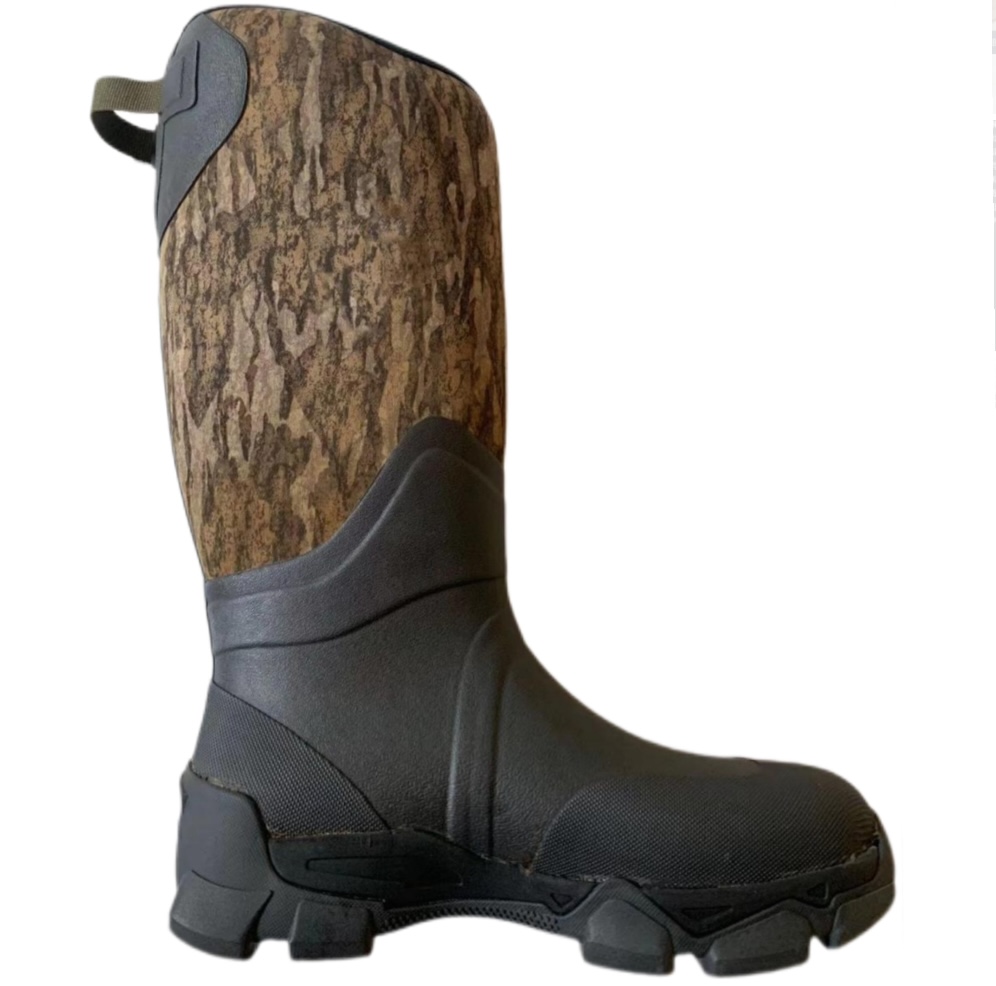
2. Product and Process Principle
Hunting boots are typically made from a variety of materials, each with its own unique properties. Let's start with the common ones:
Natural rubber is a traditional choice for hunting boots. It is harvested from rubber trees, which makes it a renewable resource. The primary advantage of natural rubber is its excellent combination of flexibility and durability. It can stretch and bend with the movement of the foot, and it maintains this flexibility even in relatively low temperatures. Rubber boots are also known for their high level of waterproofness as they form a non - porous, impermeable barrier against water. However, they can be relatively heavy compared to other materials.
PVC (polyvinyl chloride) is a synthetic plastic material that has become a popular alternative to rubber. Its main attraction is its low cost and ease of manufacturing. PVC's properties can be extensively customized through the use of additives. For example, plasticizers can be added to make the PVC boots softer and more pliable. Other additives can enhance its resistance to chemicals, making it suitable for certain industrial uses and some hunting environments where exposure to chemicals might occur. But in cold weather, PVC boots can become brittle and are more likely to crack.
EVA (ethylene - vinyl acetate) is used in some hunting boots as well. It is extremely lightweight, which is a major advantage for hunters who need to move quickly and over long distances. EVA boots offer good shock absorption, providing comfort during long - walks. However, they are less durable compared to rubber and may wear out more quickly, especially in rough terrains.
When it comes to the manufacturing process, two main techniques are widely used: injection molding and vulcanization. Injection molding is often used for PVC and EVA boots. In this process, the molten material is injected into a mold under high pressure, taking the shape of the boot. This method allows for high - precision production and is suitable for mass - production. A Professional Rain Boot Manufacturer can take advantage of this process to produce boots with consistent quality and complex designs.
Vulcanization is a crucial process for rubber boots. It involves treating rubber with sulfur and heat, which cross - links the rubber molecules, making the boot more durable, elastic, and resistant to abrasion. This process greatly enhances the performance of the rubber boots, allowing them to withstand the harsh conditions of hunting.
3. Practical Solutions and Operation Steps
Based on the principles and common problems, here are some practical solutions for choosing hunting boots:
- Material selection: If you hunt mainly in cold climates, natural rubber boots are a better choice as they are less likely to crack in the cold. For hunters on a budget or those who need boots for occasional use, PVC boots can be a cost - effective option. If lightweight and shock - absorbing properties are your priorities, EVA boots might be more suitable.
- Boot height: Consider the height of the boot based on the hunting environment. In areas with deep water, mud, or thick underbrush, high - top boots that cover the ankles and part of the calves can provide better protection. For more open and dry terrains, low - top or mid - top boots may be more comfortable and allow for greater mobility.
- Outsole pattern: Look for boots with deep, well - defined grooves on the soles. Patterns such as lug patterns or aggressive treads are ideal for hunting as they can provide better traction on various surfaces. For hunting in wet or slippery areas, soles with a high wet - friction coefficient, as recommended by EN ISO 20344:2021, are preferable.
- Lining: Choose boots with breathable and moisture - wicking linings. Fabrics like mesh or treated polyester can help keep your feet dry by removing sweat. For cold - weather hunting, insulated linings can provide extra warmth.
- Size: It's essential to get the right size. Measure your feet accurately, considering the thickness of the socks you'll wear during hunting. Boot sizes may vary between different brands, so try on the boots before purchasing. Leave some extra room in the toe area to allow for natural movement of the feet and prevent blisters.
- Testing before use: Before going on a hunting trip, wear the boots around the house or on short walks to break them in. Check for any signs of discomfort, such as rubbing or pinching. This can help you identify and address any issues before they become a problem in the field.
4. Daily Maintenance and Precautions
Proper maintenance can extend the lifespan of hunting boots. Here are some key points to keep in mind:
Cleaning: After each use, remove any dirt, mud, or debris from the boots. Use a soft brush or cloth to gently scrub the surface. For stubborn stains, a mild soap solution can be used, but avoid using harsh chemicals or strong solvents as they can damage the materials. Rinse the boots thoroughly with clean water and pat them dry with a towel.
Drying: Never dry hunting boots in direct sunlight or near a heat source. Rapid drying can cause the materials to shrink, crack, or lose their flexibility. Instead, allow the boots to air - dry at room temperature. Stuff them with newspaper to help absorb moisture and speed up the drying process.
Deodorizing: To remove unpleasant odors, sprinkle baking soda inside the boots and leave it overnight. Then, empty the baking soda the next day. You can also use odor - eliminating insoles or sprays designed for shoes.
Preventing aging and deformation: When not in use, store the boots in a cool, dry place. Avoid folding or squeezing the boots, as this can cause permanent deformation. Use boot trees to help maintain the shape of the boots.
Chemical contact: If the boots come into contact with chemicals such as pesticides or solvents, rinse them immediately with plenty of water. Refer to the product manual for any specific cleaning or treatment instructions. And always remember not to use ordinary rain boots in place of certified safety boots in environments where safety requirements are high.
5. Industry Standard and Parameter Reference
This section provides some important international standards and parameters for hunting boots to ensure their performance and safety:
ParameterRecommended ReferenceWhy It MattersSlip resistanceEN ISO 20344:2021 / EN ISO 20347:2022+A1:2024 where applicableHelps evaluate outsole grip on wet or contaminated surfaces, reducing the risk of slips and falls during hunting.Occupational footwear requirementsISO 20347:2021 or EN ISO 20347:2022+A1:2024Supports non - safety occupational footwear selection, ensuring that the boots meet basic performance requirements for the hunting environment.Safety toe footwearASTM F2413 - 24 where protective toe performance is claimedRelevant only when the boot is designed and marked as protective safety footwear, protecting the toes from potential impacts in the hunting field.Chemical protective footwearEN 13832 - 3:2018 where prolonged chemical contact is claimedUseful for chemical degradation and permeation evaluation, protecting the feet in case of contact with chemicals in the hunting area.
Do not rely on fabricated performance data. Only use exact values when they are supported by verified standards, public test reports, or user - supplied product data. If a value cannot be verified, describe the relevant test category instead.
6. Customer Common FAQ
Q: How do I choose the right material for hunting boots?
A: A Professional Rain Boot Manufacturer can offer valuable guidance on material selection. If you hunt in cold regions, natural rubber boots are recommended due to their excellent cold - resistance. For cost - effectiveness, PVC boots are a good option. And if you need lightweight boots for long - distance movement, EVA is a suitable choice.
Q: Are these boots really slip - resistant?
A: The slip - resistance of hunting boots can be evaluated according to EN ISO 20344:2021. Look for boots with outsoles that meet this standard, which indicates a certain level of grip on wet or slippery surfaces. Boots with deep and well - designed treads generally have better slip - resistance.
Q: How should I choose the right size of hunting boots?
A: Measure your feet accurately, considering the thickness of the socks you'll wear during hunting. Try on the boots and make sure there is enough room in the toe area for your toes to move freely. It's also a good idea to walk around a bit in the boots to check for comfort.
Q: Why do my new hunting boots have a strong smell?
A: New boots may have a smell due to the materials used in their production. You can try deodorizing methods such as using baking soda or odor - eliminating sprays. Aerating the boots in a well - ventilated area can also help reduce the odor over time.
Q: Can I use these boots in very cold weather?
A: It depends on the material of the boots. Natural rubber boots are more suitable for cold weather as they maintain flexibility at low temperatures. However, PVC boots may become brittle and crack in extreme cold. Check the product specifications to see the recommended temperature range for your boots.
Conclusion
In summary, understanding the core problems, product principles, and using practical solutions are essential when choosing hunting boots. A Professional Rain Boot Manufacturer can provide in - depth knowledge about materials, manufacturing processes, and industry standards. By considering factors such as material, height, outsole pattern, lining, and size, and following proper maintenance practices, you can select high - performance hunting boots that meet your needs. This comprehensive approach ensures that your hunting boots will serve you well in various hunting scenarios.