


Temperature Resistance Standards for Professional Firefighting Protective Boots
Aug 13, 2026
View: 0
Leave a message
Meta Description: Explore the temperature resistance standards for professional firefighting boots, an essential part of safety equipment in hazardous environments. This article delves into the core issues, material principles, and practical solutions, offering guidance for professionals and buyers. Professional Rain Boot Manufacturer
Keywords: Firefighting Boots, Temperature Resistance Standards, Professional Protective Boots, Rubber Boots, Boot Materials
1. Core Problem Analysis
1.1 Common Causes of the Problem
When searching for temperature resistance standards for professional firefighting protective boots, users usually aim to address several pressing issues. In high - temperature environments such as fires, the boots need to withstand extreme heat to protect the feet from burns or heat stress. Poor temperature resistance can lead to the boot material softening, deforming, or even melting, which not only reduces the protection but also poses risks like entanglement or tripping. Another common issue is that insufficient insulation may cause rapid heat transfer to the feet, resulting in discomfort, blisters, or more severe injuries over time. Moreover, in some cases, the loss of structural integrity of the boots due to heat can compromise other safety features, such as anti - puncture and anti - slip performance.
1.2 Affected Usage Scenarios
The affected usage scenarios are mainly related to firefighting operations. Firefighters need to enter burning buildings, industrial facilities, or wildfire areas where they are exposed to high temperatures from flames, hot surfaces, and radiant heat. In addition, rescue operations in post - fire sites may also involve walking on hot debris or in areas with residual heat. Another scenario is in industrial fire emergencies, where boots need to protect against high - temperature chemicals or molten materials.
2. Product and Process Principle
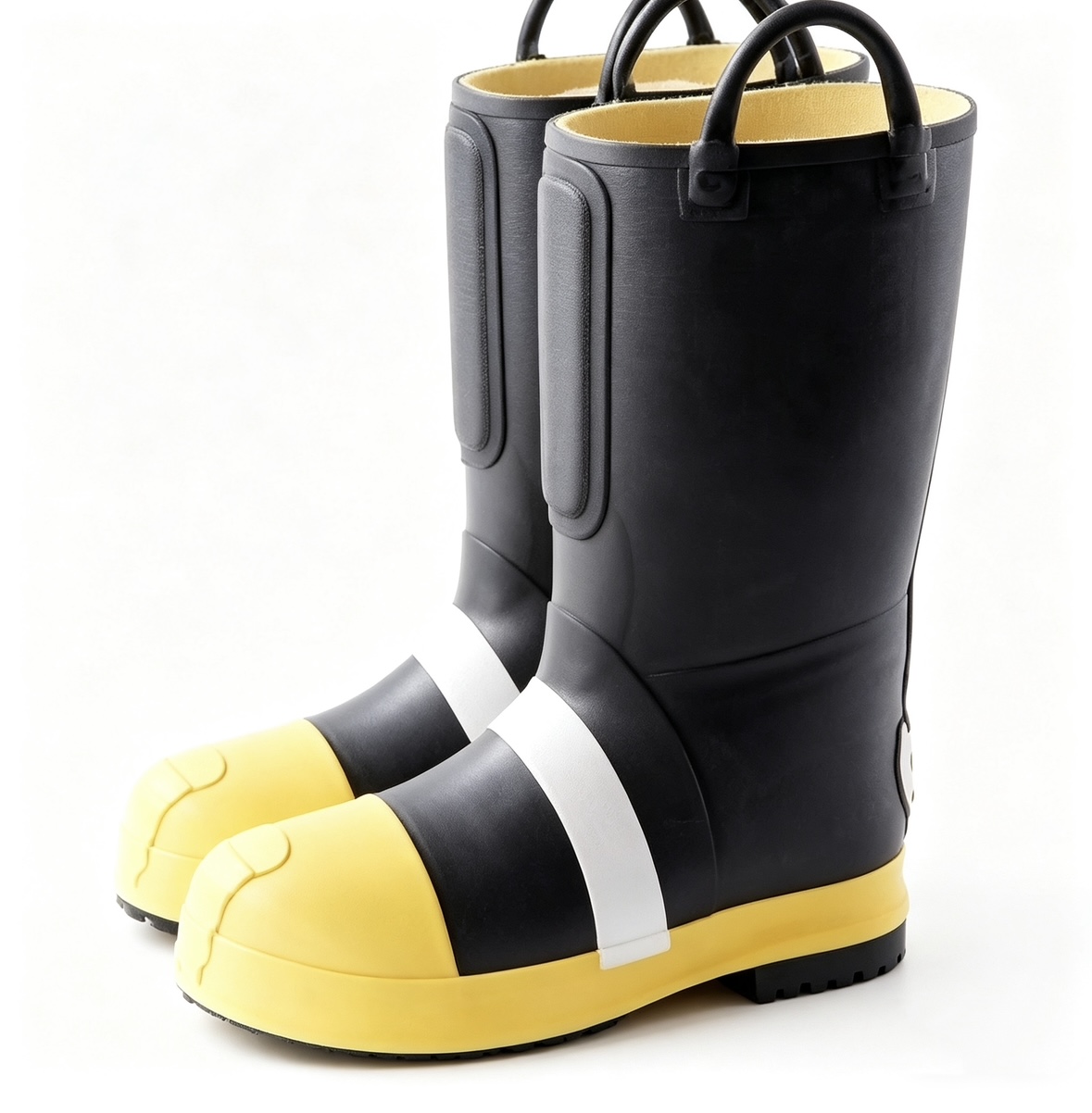
Firefighting boots are typically made from high - performance materials. Rubber is a common choice due to its good flexibility and basic heat - resistance properties. High - grade natural rubber or synthetic rubber compounds can maintain their shape to a certain extent under high temperatures. For example, some rubber compounds are formulated with additives that enhance their thermal stability. Another important material is leather, often used for the upper part of the boots. Leather can provide a certain degree of heat insulation and abrasion resistance. It has natural pores that can help with some ventilation while still offering protection. Composite materials are also being increasingly used. They combine different fibers, such as aramid fibers, with polyurethane or other polymers. Aramid fibers have excellent heat - and flame - resistant properties, and when combined with polymers, they can form a strong and heat - resistant structure.
In the manufacturing process, vulcanization is a key step for rubber boots. This process chemically cross - links the rubber molecules, improving the boots' strength, heat resistance, and durability. Injection molding may also be used for some parts of the boots, especially for creating complex shapes like soles with specialized anti - slip patterns. Professional Rain Boot Manufacturer plays a crucial role in selecting the right materials and mastering these manufacturing processes to ensure the production of high - quality firefighting boots.
3. Practical Solutions and Operation Steps
When choosing professional firefighting boots, consider the following steps:
- Material selection: Opt for boots with heat - resistant materials. Look for rubber boots with high - temperature - resistant additives or leather boots treated for better heat insulation. Composite boots with aramid fibers are also a great choice for their superior heat - and flame - resistant properties.
- Certification and standards: Check if the boots meet international or national standards for firefighting equipment, such as ISO requirements. These standards often specify the minimum temperature resistance and other performance parameters.
- Boot design: A well - designed boot will have features like thick soles and good insulation layers. The sole should be thick enough to provide a buffer between the feet and hot surfaces, and the insulation layer should be able to slow down heat transfer. Consider the height of the shaft as well; a higher shaft can offer more protection for the lower legs from heat and debris.
- Fit and comfort: Ensure the boots fit well. An ill - fitting boot can cause discomfort during long - term use, and may also reduce the effectiveness of the protection. Try on the boots with the appropriate socks and consider the flexibility of the material, which is important for mobility during firefighting operations.
- Test and inspection: If possible, test the boots in a controlled environment similar to the actual working conditions. Check for any signs of damage, such as melting, deforming, or loss of insulation after the test. Regularly inspect the boots for wear and tear, and replace them when necessary.
4. Daily Maintenance and Precautions
To maintain the performance of professional firefighting boots and ensure maximum protection, follow these daily maintenance steps:
- Cleaning: After each use, clean the boots thoroughly to remove dirt, debris, and any chemical residues. Use a mild soap and water solution, and avoid using harsh chemicals that may damage the boot material. For stubborn stains, a soft brush can be used gently.
- Drying: Allow the boots to dry naturally at room temperature. Do not place them near direct heat sources, such as heaters or radiators, as this can cause the material to dry out too quickly, leading to cracking or deformation. Stuff the boots with newspaper to absorb moisture and help maintain their shape.
- Storage: Store the boots in a cool, dry, and well - ventilated place. Avoid exposing them to direct sunlight for long periods, as UV rays can cause the material to age and degrade. If possible, store them in a boot rack or a box specifically designed for boots to keep them in good shape.
- Inspection: Regularly inspect the boots for any signs of wear, such as cracks in the rubber or leather, or loose stitching. Check the sole for signs of excessive wear, which can affect the anti - slip performance. Replace any worn - out parts or the entire boot if necessary.
- Avoidance: Do not substitute ordinary rain boots for certified firefighting boots. Ordinary boots are not designed to withstand the high temperatures and other hazards in firefighting scenarios. Also, avoid exposing the boots to sharp objects or abrasive surfaces that can damage the material and compromise the protection.
5. Industry Standard and Parameter Reference
The following are some important industry standards and parameters related to firefighting boots:
ParameterRecommended ReferenceWhy It MattersTemperature resistanceASTM F2413 - 24 which may define the minimum temperature the boots can withstand without significant degradation. For example, it might specify a certain time limit at a high - temperature threshold like 200°C or 300°C.It ensures that the boots can protect the feet in high - temperature environments during firefighting operations. Knowing the temperature resistance helps firefighters and buyers select appropriate boots for the specific hazards they may face.Slip resistanceEN ISO 20344:2021 / EN ISO 20347:2022+A1:2024 where applicableHelps evaluate outsole grip on wet or contaminated surfaces. In firefighting scenarios, floors may be wet due to water used for extinguishing fires or covered with oil or other slippery substances.Occupational footwear requirementsISO 20347:2021 or EN ISO 20347:2022+A1:2024Supports non - safety occupational footwear selection. Although firefighting boots are mainly safety equipment, these standards also provide general guidelines on the overall quality and performance of the boots.Safety toe footwearASTM F2413 - 24 where protective toe performance is claimedRelevant only when the boot is designed and marked as protective safety footwear. In firefighting, there is a risk of objects falling on the feet, so a safety toe can provide additional protection.Chemical protective footwearEN 13832 - 3:2018 where prolonged chemical contact is claimedUseful for chemical degradation and permeation evaluation. In industrial fires, there may be exposure to various chemicals, and the boots need to protect against chemical damage.
Do not invent exact performance numbers. Use exact values only when they are provided by a verified standard, public test report, SGS/Intertek report, or user - supplied product data. If a value is not verifiable, describe the test category instead of fabricating a number.
6. Customer Common FAQ
Q: What is the best material for temperature - resistant firefighting boots?
A: High - grade natural or synthetic rubber with heat - resistant additives, leather treated for heat insulation, and composite materials with aramid fibers are good choices. Professional Rain Boot Manufacturer can offer more in - depth advice on material selection based on specific usage requirements.
Q: How can I tell if a boot meets the temperature resistance standards?
A: Look for boots that are certified according to relevant international or national standards such as ASTM F2413 - 24. These standards are verified through strict testing procedures, so certified boots are more likely to meet the required temperature resistance.
Q: Can I use regular rain boots for firefighting?
A: No, regular rain boots are not designed to withstand the high temperatures and other hazards in firefighting scenarios. They may deform or burn easily, providing little to no protection for your feet.
Q: How often should I replace my firefighting boots?
A: It depends on the frequency of use and the conditions of use. Regularly inspect the boots for signs of wear, such as cracks, reduced insulation, or loss of anti - slip performance. If significant damage is found, replace the boots immediately. As a general rule, consider replacing them every few years, especially if they have been used in harsh environments.
Q: How do I clean and maintain the temperature resistance of my boots?
A: Clean the boots with a mild soap and water solution after each use, then let them dry naturally at room temperature. Store them in a cool, dry, and well - ventilated place, away from direct sunlight and heat sources. Avoid using harsh chemicals that could damage the heat - resistant properties of the material.
Conclusion
This article has explored the temperature resistance standards for professional firefighting protective boots. We've discussed core problems like heat - related boot failures, the material and process principles behind these boots, practical selection and operation steps, daily maintenance tips, and relevant industry standards. By understanding these aspects, users can make more informed decisions when choosing and using firefighting boots. Professional Rain Boot Manufacturer can serve as a valuable resource for further consultation on product knowledge and material selection.
References
- ASTM F2413 - 24, Protective Footwear Specification
- EN ISO 20344:2021, Footwear Test Methods
- EN ISO 20347:2022+A1:2024, Occupational Footwear
- EN 13832 - 3:2018, Chemical Protective Footwear
- GB/T 25295 - 2023, Rubber Rain Shoes, a relevant reference for understanding general rubber - based footwear standards