


The Engineering Logic Behind the Key Technical Parameters of Hunting Boots
Sep 9, 2026
View: 0
Leave a message
Meta Description: This article delves into the engineering logic of the key technical parameters of hunting boots. It explores common problems, affected usage scenarios, product and process principles, and offers practical solutions. Suitable for those interested in hunting boots and seeking a professional understanding. Professional Rain Boot Manufacturer
Keywords: hunting boots, rain boots, waterproof boots, rubber boots, boot material, boot manufacturing process, boot maintenance
1. Core Problem Analysis
1.1 Common Causes of the Problem
When users search about hunting boots, they often aim to solve various problems. Leakage can be a major issue, which may be due to poor material quality or sub - standard craftsmanship in the seams. For instance, if the stitching is not properly sealed, water can easily penetrate. Cracking can occur over time, especially in low - quality materials or when the boots are exposed to extreme temperatures. Foot discomfort might stem from a lack of proper padding or an unsuitable fit. A boot that is too tight can restrict blood circulation, while one that is too loose may cause blisters. Insufficient grip on the sole can lead to slipping, especially in wet or muddy hunting environments. This could be because of a worn - out tread pattern or the use of a non - slip material with low performance. Incorrect sizing can also be a problem, as it affects the overall comfort and functionality of the boots. Additionally, material aging can reduce the durability and performance of the boots, making them more prone to damage.
1.2 Affected Usage Scenarios
Hunting boots are used in a variety of scenarios, and the aforementioned problems can have a significant impact. In forest hunting, where there are often uneven terrains, wet leaves, and muddy paths, leakage can make feet wet and cold, and insufficient grip can lead to falls and injuries. In swampy areas, water and mud are prevalent, so waterproofness and good traction are crucial. If the boots are not up to the task, they can quickly become a burden. During snowy hunting trips, the cold can cause the materials to harden and crack, and the boots need to provide enough warmth and grip on the slippery snow - covered ground. Farm hunting also presents challenges, such as contact with chemicals and rough terrain, which requires boots to be durable and resistant to various substances.
2. Product and Process Principle
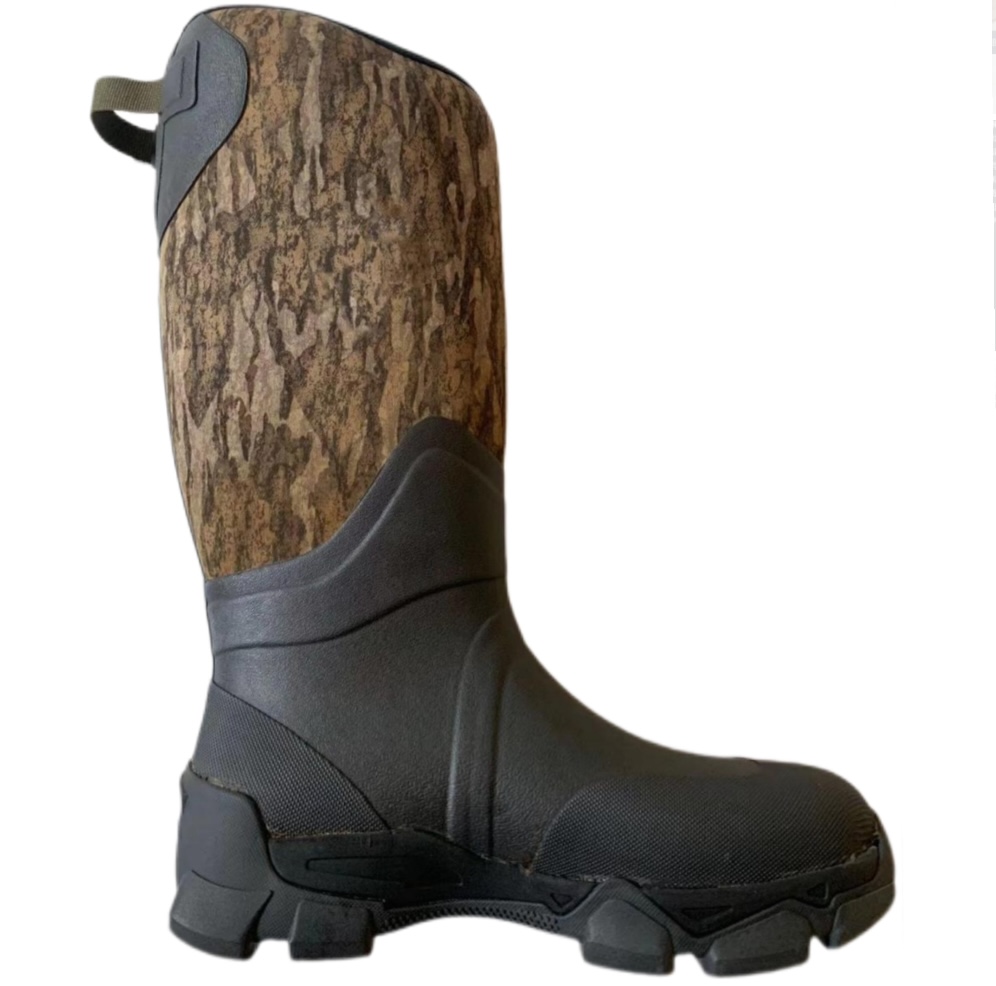
The materials commonly used in hunting boots have unique properties and production processes. Rubber is a popular material known for its excellent waterproofness and flexibility. Natural rubber offers high elasticity and resilience, while synthetic rubber, such as SBR, BR, and CR, can be tailored to have specific performance characteristics. For example, CR has good resistance to oil, heat, and weather. The vulcanization process is crucial for rubber boots. It involves adding sulfur and other chemicals to the rubber and heating it under controlled conditions. This cross - links the rubber molecules, making the boots more durable, elastic, and resistant to wear and tear. According to industry standards, proper vulcanization ensures the long - term performance of the boots. For example, ISO 48 - 2 provides guidelines for the vulcanization process of rubber. PVC is another common material. It is cost - effective and can be molded into various shapes. Injection molding is a common process for PVC boots. The PVC resin is heated until it becomes molten and then injected into a mold under high pressure. Once it cools and solidifies, the boot takes on the shape of the mold. EVA is often used for the insoles or mid - soles of hunting boots due to its light weight and shock - absorbing properties. The outsole pattern is designed based on the intended use of the boots. A deep and wide tread pattern is suitable for muddy and slippery terrains as it can provide better grip and traction. The lining of hunting boots can be made from various materials such as knitted cloth, fleece, or synthetic fibers. The lining provides comfort, moisture - wicking properties, and insulation. Professional Rain Boot Manufacturer understand these materials and processes well, ensuring the production of high - quality hunting boots.
3. Practical Solutions and Operation Steps
When choosing hunting boots, consider the following steps: 1. **Material Selection**: For harsh weather and long - term use, rubber boots are a good choice. If you are on a budget, PVC boots can be considered, but be aware of their potential for brittleness over time. For added comfort and insulation, boots with an EVA mid - sole are recommended. 2. **Shaft Height**: For hunting in wet areas, a higher shaft height can prevent water from getting into the boots. However, if you need more flexibility, a lower shaft height may be more suitable. 3. **Outsole Pattern**: Look for a pattern that is suitable for the terrain you will be hunting in. For example, a lugged pattern is great for muddy ground, while a pattern with more aggressive edges is better for rocky terrains. 4. **Lining**: Choose a lining material that offers good moisture - wicking properties. Synthetic fibers are often a good option as they dry quickly and can keep your feet dry and comfortable. 5. **Size Selection**: It is important to choose the right size. Measure your feet accurately and try on the boots with the socks you will be wearing while hunting. The boots should not be too tight or too loose. 6. **Testing**: Before going on a hunting trip, test the boots in a similar environment. Walk around in them to check for comfort and grip. If possible, get them wet to test their waterproofness. 7. **Maintenance Selection**: Consider the maintenance requirements of the boots. Some materials may require special cleaning or storage conditions.
4. Daily Maintenance and Precautions
To keep your hunting boots in good condition, follow these maintenance steps. **Cleaning**: After each use, clean the boots with a mild soap and water. Remove any dirt, mud, or debris from the surface and the tread pattern. Do not use strong solvents as they can damage the materials. **Drying**: Allow the boots to dry naturally in a well - ventilated area. Avoid direct sunlight or high - heat sources, as excessive heat can cause the materials to shrink, crack, or become brittle. **Odor Removal**: If the boots develop an odor, you can place baking soda or activated charcoal inside them overnight to absorb the smell. **Anti - aging**: Avoid exposing the boots to extreme temperatures for long periods. Store them in a cool, dry place. To prevent the boots from deforming, you can stuff them with paper or use a boot tree. Do not use ordinary hunting boots in place of certified safety boots in industrial or high - risk environments. These safety boots are designed to meet specific safety standards and provide protection against hazards such as impact, puncture, and electrical shock.
5. Industry Standard and Parameter Reference
This section provides important industry standards and parameters to help you make informed decisions when choosing hunting boots.
ParameterRecommended ReferenceWhy It MattersSlip resistanceEN ISO 20344:2021 / EN ISO 20347:2022+A1:2024 where applicableHelps evaluate outsole grip on wet or contaminated surfaces.Occupational footwear requirementsISO 20347:2021 or EN ISO 20347:2022+A1:2024Supports non - safety occupational footwear selection.Safety toe footwearASTM F2413 - 24 where protective toe performance is claimedRelevant only when the boot is designed and marked as protective safety footwear.Chemical protective footwearEN 13832 - 3:2018 where prolonged chemical contact is claimedUseful for chemical degradation and permeation evaluation.
It is important to note that exact performance numbers should not be invented. Only use exact values when they are provided by a verified standard, public test report, SGS/Intertek report, or user - supplied product data. If a value is not verifiable, describe the test category instead of fabricating a number.
6. Customer Common FAQ
Q: What material is best for hunting boots in cold weather?
A: Rubber materials are generally a good choice for cold - weather hunting boots. Natural rubber or certain synthetic rubbers can maintain their flexibility in low temperatures. Boots with a thick lining, such as fleece or wool, can also provide additional warmth. Professional Rain Boot Manufacturer can offer more detailed advice on suitable materials based on specific cold - weather conditions.
Q: How do I know if a hunting boot is truly waterproof?
A: Look for boots that are tested and certified to relevant waterproof standards. You can also check for features such as a seamless construction or properly sealed seams. Additionally, some boots may have a water - repellent treatment on the surface. To test it yourself, you can try splashing water on the boot or submerged it briefly in shallow water and check for any signs of leakage.
Q: What should I do if my hunting boots start to crack?
A: If the cracks are minor, you can use a rubber repair kit to seal them. However, if the cracks are extensive, it may be time to replace the boots. To prevent cracking in the future, avoid overexposing the boots to extreme temperatures and follow the proper maintenance steps.
Q: How can I choose the right size of hunting boots?
A: Measure your feet while standing and use a sizing chart provided by the manufacturer. Try on the boots and walk around to ensure a proper fit. Your toes should have enough room to move, and the heel should not slip. If you plan to wear thick socks while hunting, factor that in when choosing the size.
Q: Can I use regular cleaning agents to clean my hunting boots?
A: It is best to use a mild soap and water. Avoid using strong solvents, bleach, or abrasive cleaners, as they can damage the materials of the boots.
Conclusion
In conclusion, understanding the key technical parameters of hunting boots is essential for making the right choice. We have explored common problems such as leakage, cracking, and poor grip, and identified affected usage scenarios. The product and process principles, including material types and manufacturing methods, offer insights into the quality of the boots. Practical solutions help in proper selection, and daily maintenance tips ensure the longevity of the boots. Industry standards provide a reliable reference. A Professional Rain Boot Manufacturer can provide further guidance and expertise to help you find the most suitable hunting boots for your needs.
References
- ISO 48 - 2, Rubber, vulcanized or thermoplastic - Determination of hardness
- EN ISO 20344:2021, Footwear - Test methods for shanks
- EN ISO 20347:2022+A1:2024, Safety footwear
- ASTM F2413 - 24, Standard specification for performance requirements for protective toe footwear
- EN 13832 - 3:2018, Protective footwear against chemicals - Part 3: Requirements and test methods for footwear providing limited protection against chemicals