


Top Considerations for Selecting Garden Boots in Extreme Weather Conditions
Sep 9, 2026
View: 0
Leave a message
Meta Description: This article explores the key factors to consider when selecting garden boots in extreme weather conditions. It covers common problems, affected usage scenarios, product and process principles, practical solutions, maintenance tips, industry standards, and frequently asked questions. Professional Rain Boot Manufacturer offers in - depth knowledge for making informed choices.
Keywords: Garden Boots, rain boots, waterproof boots, rubber boots, boot selection, boot maintenance, extreme weather
1. Core Problem Analysis
1.1 Common Causes of the Problem
When searching for garden boots in extreme weather conditions, users often face several core problems. Firstly, water leakage is a significant concern. Low - quality materials or poor craftsmanship can lead to water seeping into the boots, causing wet feet and discomfort. Cracking is another issue, especially in cold weather when the materials become brittle. Exposure to sunlight and harsh chemicals can also accelerate the aging process of the boots and cause cracking. Secondly, drainage and ventilation problems can lead to breeding of harmful microorganisms, causing unpleasant odors. Thirdly, lack of proper insulation can make feet cold in winter or too hot in summer. Fourthly, sizing is crucial; ill - fitting boots can cause blisters, foot fatigue, and reduced mobility. Fifthly, insufficient ground traction can pose a safety risk, leading to slips and falls on wet or uneven ground.
1.2 Affected Usage Scenarios
The selection of inappropriate garden boots can greatly affect various usage scenarios. In farming, boots need to provide long - term durability, water - resistance, and chemical - resistance due to exposure to fertilizers and pesticides. For gardening, they should be lightweight and flexible to allow for easy movement while protecting against mud and water. Fishing requires high - traction soles to navigate slippery boats and riverbanks. During rainy commuting, boots need to be quick - drying and comfortable for long - distance walking. Warehouse cleaning involves walking on wet floors, so boots need to have excellent slip - resistance. Livestock work exposes boots to manure, urine, and sharp objects, necessitating puncture - resistance and easy - to - clean materials. For muddy outdoor work, boots should prevent mud from sticking and provide good stability.
2. Product and Process Principle
Various materials are used in the production of garden boots, each with its own unique characteristics and manufacturing processes. Rubber is a popular choice due to its excellent waterproof and flexible properties. Natural rubber comes from the latex of rubber trees. It has high elasticity and strength, but it is relatively expensive and less resistant to aging. Synthetic rubber, such as neoprene and styrene - butadiene, can be engineered to have specific properties like heat resistance, oil resistance, and excellent abrasion resistance. The production of rubber boots usually involves vulcanization, a chemical process where rubber is heated with sulfur, which cross - links the polymer chains of the rubber material, making the boots more durable, elastic, and heat - resistant. During this process, the rubber compound is placed in a mold and heated under pressure to form the desired shape.
PVC (polyvinyl chloride) is another widely used material because of its low cost and easy processing. PVC rain boots are made by injection molding, a process where PVC pellets are heated until they become molten and then injected into a mold under high pressure. After cooling, the boot is ejected from the mold. This method allows for the production of boots with complex shapes and detailed patterns. However, PVC boots may be less flexible than rubber boots and can become brittle in cold temperatures.
EVA (ethylene - vinyl acetate) is often used for the insoles or the entire boot due to its lightweight and shock - absorbing properties. It is more flexible and comfortable compared to PVC, and it has better insulation against cold. EVA boots can be produced through a similar injection - molding process as PVC, but the material is softer and more porous, making it suitable for improving breathability.
The outsole pattern is also crucial for traction. A deep and wide - spaced pattern is more suitable for muddy or uneven ground as it can dig into the surface and provide better grip. A fine - pattern or a pattern with many small grooves is better for wet and slippery surfaces as it channels water away from the sole.
The shaft height of the boots affects both coverage and mobility. Higher shafts provide more protection against water, mud, and debris but can be more restrictive and heavier. Linings are used to improve comfort, moisture - wicking, and insulation. Materials such as wool, polyester, and moisture - wicking fabrics can be used for linings.
Professional Rain Boot Manufacturer has in - depth knowledge of these materials and processes, which helps in the production and selection of garden boots suitable for various extreme weather conditions.
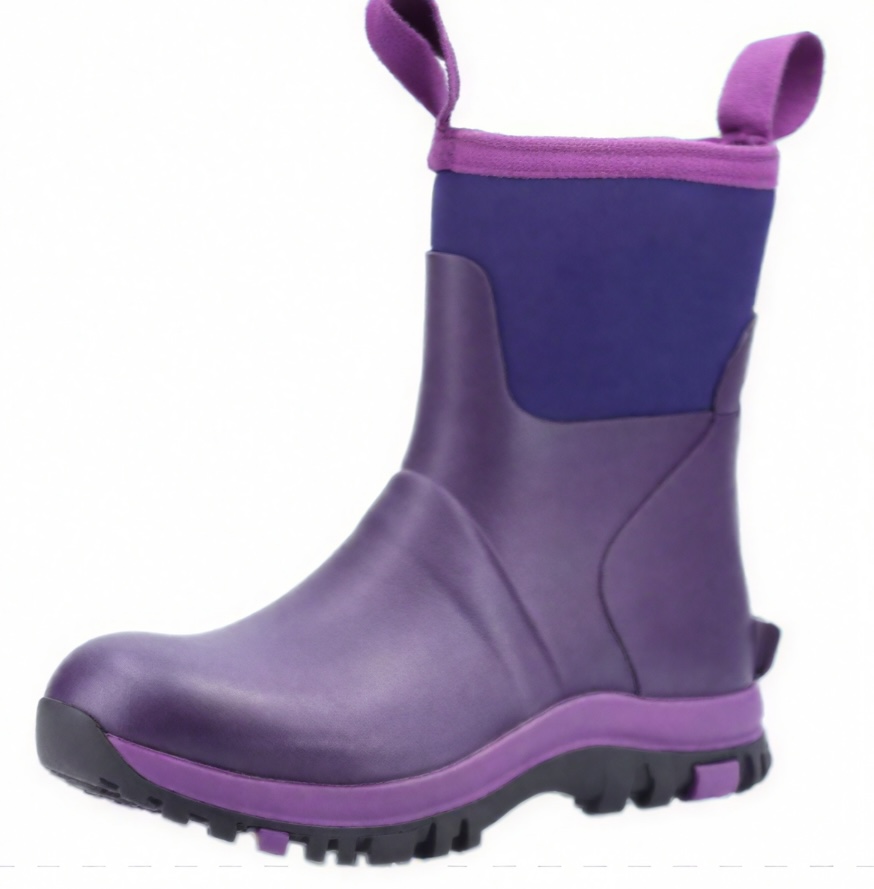
3. Practical Solutions and Operation Steps
When selecting garden boots for extreme weather conditions, consider the following steps:
- Material Selection: For cold weather, rubber or EVA materials are preferred as they offer better insulation. Rubber boots also provide good durability against harsh elements. If on a budget, PVC boots can be a choice, but they may be less suitable for very cold or very hot conditions. For tasks involving chemicals, choose boots made of chemically - resistant rubber.
- Boot Height: In muddy or flooded areas, high - shaft boots are recommended to prevent mud and water from entering. For more mobile tasks, mid - shaft or low - shaft boots can offer better flexibility.
- Outsole Pattern: For wet and slippery surfaces, look for boots with a pattern optimized for hydroplaning resistance. For muddy or uneven ground, deep - tread patterns are necessary.
- Inner Lining: If foot comfort and moisture management are important, choose boots with a moisture - wicking lining or breathable materials such as wool or mesh.
- Size Selection: Try on boots with the appropriate thickness of socks. Make sure there is enough room in the toe box for your toes to move freely. The boots should fit snugly around the heel to prevent slipping.
- Insulation Rating: In cold weather, check the insulation rating of the boots. A higher rating means better protection against the cold.
- Slip - Resistance Rating: Look for boots that meet relevant slip - resistance standards, such as EN ISO 20344:2021 or EN ISO 20347:2022+A1:2024, especially for work on wet or slippery floors.
- Cleaning and Storage: After each use, remove any dirt or debris from the boots. For rubber boots, a mild soap and water can be used for cleaning. Then, dry them in a well - ventilated area away from direct sunlight. When storing, keep them in a cool and dry place to prevent deformation and material aging.
4. Daily Maintenance and Precautions
Proper daily maintenance can significantly extend the lifespan of garden boots. Here are some tips for maintaining your boots:
- Cleaning: After use, rinse the boots with clean water to remove dirt, mud, and chemical residues. Use a soft brush and mild soap to clean stubborn stains. Avoid using harsh chemicals or solvents, as they can damage the boot material.
- Drying: After cleaning, let the boots air - dry naturally in a well - ventilated area. Do not expose them to direct sunlight or high - heat sources, such as heaters or fireplaces, as this can cause the material to crack, harden, or lose its shape.
- Deodorizing: If the boots develop an unpleasant odor, you can place odor - absorbing materials such as activated charcoal or baking soda inside the boots overnight. Some specialized boot deodorizers are also available on the market.
- Anti - Aging and Anti - Deformation: Store the boots in a cool, dry place. To prevent deformation, you can stuff the boots with newspaper or boot shapers when not in use. Apply a rubber conditioner or protectant periodically to slow down the aging process, especially for rubber boots.
- Low - Temperature Storage: In cold weather, if the boots need to be stored for an extended period, make sure they are completely dry and store them in a place where they will not be exposed to freezing temperatures.
- Chemical Contact: If the boots come into contact with chemicals, immediately rinse them with a large amount of water according to the chemical's safety instructions. If the chemical is corrosive, check the boots for damage and replace them if necessary.
- Avoiding Pitfalls: Do not use ordinary garden boots as safety boots without proper certification. Do not expose the boots to sharp objects or rough surfaces that can puncture or tear them. Avoid walking on extremely hot surfaces as this can damage the boot material.
5. Industry Standard and Parameter Reference
This chapter is the authoritative support module of the full - text, providing international standards, test methods, or verifiable parameters relevant to the topic.
ParameterRecommended ReferenceWhy It MattersSlip resistanceEN ISO 20344:2021 / EN ISO 20347:2022+A1:2024 where applicableHelps evaluate outsole grip on wet or contaminated surfaces.Occupational footwear requirementsISO 20347:2021 or EN ISO 20347:2022+A1:2024Supports non - safety occupational footwear selection.Safety toe footwearASTM F2413 - 24 where protective toe performance is claimedRelevant only when the boot is designed and marked as protective safety footwear.Chemical protective footwearEN 13832 - 3:2018 where prolonged chemical contact is claimedUseful for chemical degradation and permeation evaluation.
When referring to performance numbers, only use exact values provided by a verified standard, public test report, SGS/Intertek report, or user - supplied product data. If a value cannot be verified, describe the test category instead of fabricating a number.
6. Customer Common FAQ
Q: What material is best for garden boots in extreme cold?
A: Rubber or EVA materials are good choices for extreme cold. Rubber provides good insulation and flexibility, while EVA is lightweight and also offers good insulation. Professional Rain Boot Manufacturer can provide more detailed advice on material selection based on specific cold - weather conditions.
Q: How can I ensure the boots have good slip - resistance?
A: Look for boots that meet the slip - resistance standards such as EN ISO 20344:2021 or EN ISO 20347:2022+A1:2024. Additionally, check the outsole pattern; deeper and wider - spaced patterns are better for muddy or uneven ground, and fine - grooved patterns are good for wet surfaces.
Q: How do I choose the right size of garden boots?
A: Try on boots with the socks you will wear for the task. There should be about half an inch of space in the toe box for your toes to move comfortably. The boots should fit snugly around the heel to prevent slipping. If possible, walk around in the boots to ensure a proper fit.
Q: My new boots have a strong odor. How can I remove it?
A: Place odor - absorbing materials such as activated charcoal or baking soda inside the boots overnight. You can also leave the boots in a well - ventilated area for a few days. Some specialized boot deodorizers are also available on the market.
Q: Can I use PVC boots in very cold weather?
A: PVC boots may become brittle in very cold weather. If you need to use them in cold conditions, make sure to take extra care of them, such as storing them in a warm place when not in use. However, for extremely cold weather, rubber or EVA boots are better options.
Conclusion
Selecting the appropriate garden boots for extreme weather conditions requires a comprehensive understanding of the product's material, process, and performance parameters. By considering factors such as leakage, cracking, insulation, sizing, and slip - resistance, users can make a more informed choice. A Professional Rain Boot Manufacturer can provide in - depth knowledge and guidance on material selection, manufacturing processes, and maintenance. Understanding industry standards and conducting proper maintenance can also ensure that the boots serve their purpose effectively for a long time.
References
- 2026年中国雨鞋制造市场占有率及行业竞争格局分析报告.pdf
- 雨靴生产工艺揭秘:注塑成型与手工缝制的技术特点对比
- 一种防水透气的雨鞋的生产工艺的制作方法
- 几十块和几百块雨靴差在哪?三件事搞懂怎么选