


Tree Planting Boots: Built-In Features for Rugged, Uneven Terrain Work
Aug 13, 2026
View: 0
Leave a message
Meta Description: This article focuses on tree - planting boots, exploring their core problems, product and process principles, and solutions. It is suitable for outdoor workers, tree planters, and those interested in rain boots. Professional Rain Boot Manufacturer offers guidance on selecting and maintaining appropriate rain boots.
Keywords: Tree planting boots, Rain boots, Waterproof boots, Rubber boots, Boot material, Boot maintenance, Boot manufacturing process
1. Core Problem Analysis
1.1 Common Causes of the Problem
When searching for tree - planting boots, users often face multiple problems. One common issue is insufficient waterproofing. Profuse sweating or exposure to wet soil can penetrate the boots, leaving feet wet. This can be due to low - quality materials or inferior manufacturing processes, such as poor - quality seals at seams.
Another problem is sub - optimal non-skid property When working on rugged and uneven terrain, tree planters need boots that can provide sufficient grip. A smooth or improperly designed outsole may lead to slips and falls. Some boots' soles may have originally good grip but lose their effectiveness over time due to wear and tear.
Comfort is also a significant concern. Workers often need to be on their feet for extended periods. Boots that are too tight can cause foot cramps, while overly loose boots may lead to blisters. Additionally, if the boots are heavy, it can increase fatigue during long - term use.
Durability is yet another problem. The boots are often exposed to harsh conditions, including sharp rocks, branches, and chemicals in the soil. Low - quality materials may not withstand these conditions, leading to cracks, tears, or premature wear of the boots.
1.2 Affected Usage Scenarios
Tree - planting boots are mainly used in forestry work, where workers need to plant saplings in various terrains, such as mountains, forests, and wetlands. These areas often have uneven ground, mud, and water, which require boots with excellent waterproof and antiskid properties.
They are also applicable in environmental restoration projects. For example, when restoring damaged ecosystems by planting trees, workers need reliable boots to ensure they can move freely and safely in the project area.
In some agricultural activities, such as orcharding or planting large - scale tree farms, workers may also require these boots. They need to walk long distances in the fields and deal with wet and uneven ground, and the boots' performance directly affects work efficiency and safety.
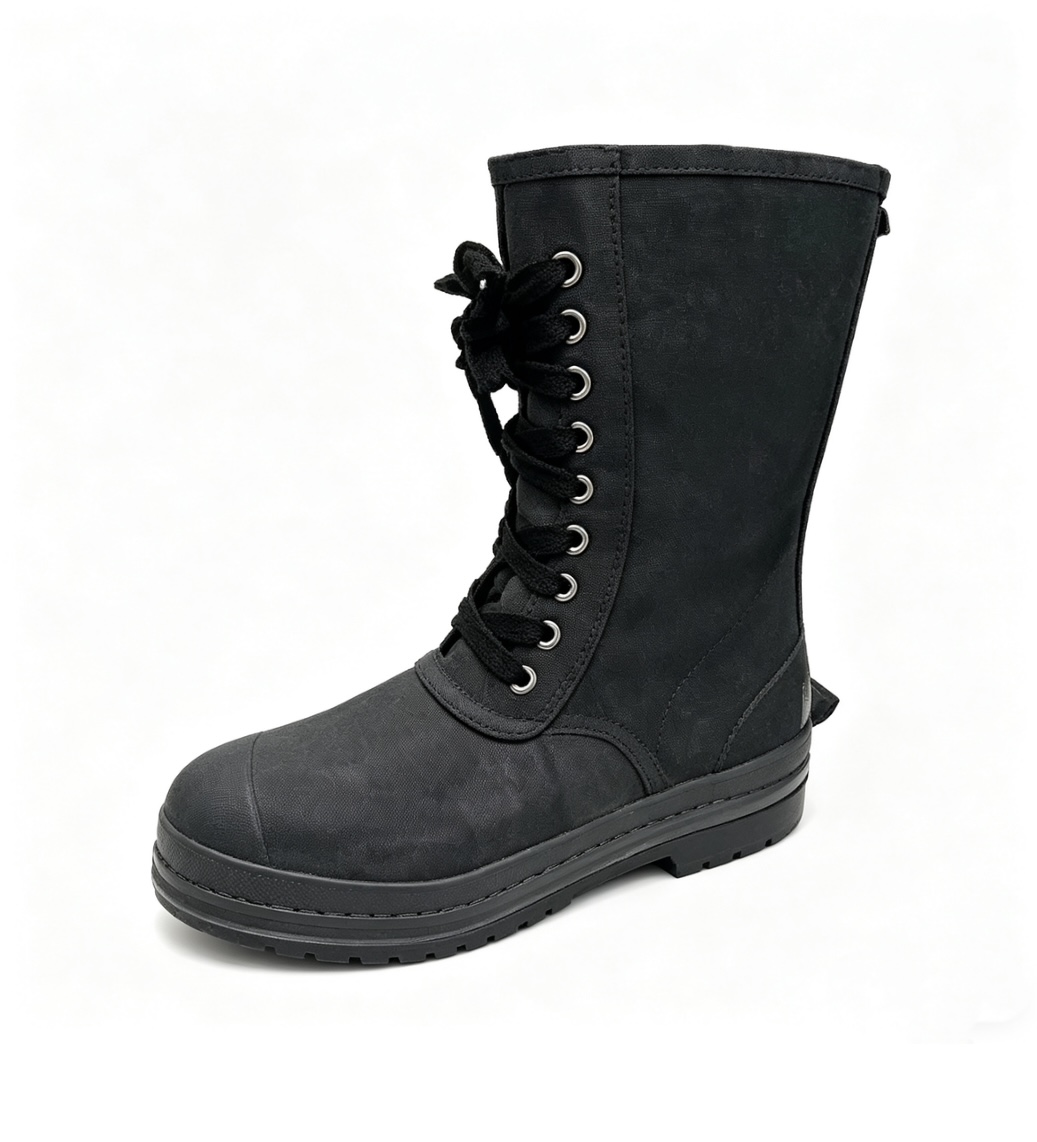
2. Product and Process Principle
Tree - planting boots are often made from various materials, each with its own characteristics. Natural rubber is a popular choice. It is derived from the latex of rubber trees. Through a process called vulcanization, the rubber is heated with sulfur or other curatives, which cross - links the polymer chains. This gives the rubber increased strength, durability, and elasticity. Vulcanized rubber can withstand a wide range of temperatures and is highly resistant to wear and tear, making it suitable for the harsh conditions of tree - planting work.
PVC (polyvinyl chloride) is another common material. PVC boots are usually made by injection molding, where the melted PVC is injected into a mold under high pressure. This process allows for the production of complex shapes and designs. PVC is lightweight, relatively inexpensive, and has good waterproof properties. However, it is less flexible and durable than natural rubber, and it may become brittle in cold temperatures.
Some high - end tree - planting boots also use EVA (ethylene - vinyl acetate) for the midsoles. EVA is a lightweight and cushioned material that can provide excellent shock absorption. It is also resistant to water, chemicals, and UV light.
The outsole pattern is crucial for antiskid performance. Patterns such as deep lugs, hexagonal honeycombs, or saw - toothed waves are often used. The deeper the outsole lugs, the better the boots can grip on uneven surfaces. According to industry standards like EN ISO 20344:2021, the depth of the outsole lugs should be greater than 3mm to ensure good防滑 performance on wet or slippery ground.
The shaft height of the boots is another important consideration. For tree - planting work, high - shaft boots are often preferred as they can provide better protection against water, mud, and debris. The lining of the boots can also affect comfort. Some boots use breathable fabrics to reduce sweating and keep feet dry. Professional Rain Boot Manufacturer can help in understanding these materials and choosing the right combination for different tree - planting scenarios.
3. Practical Solutions and Operation Steps
When choosing tree - planting boots, consider the following steps:
- Material Selection: If you work in cold regions, natural rubber boots are a better option as they remain flexible in low temperatures. PVC boots are suitable for short - term use or in areas with milder climates. For shock absorption, look for boots with EVA midsoles.
- Shaft Height: Choose high - shaft boots (above the ankle) to protect your feet and lower legs from water, mud, and sharp objects. A shaft height of at least 20 - 25 cm is recommended.
- Outsole Pattern: Select boots with deep - lugged outsoles. Check that the lug depth is greater than 3mm according to EN ISO 20344:2021.
- Lining: Opt for breathable linings, such as moisture - wicking fabrics, to keep your feet dry and comfortable during long - term use.
- Size: Ensure the boots fit properly. There should be enough room in the toe box to wiggle your toes, and the boots should not be too loose or too tight around the heel and ankle. Refer to the manufacturer's size chart when purchasing.
- Cold Resistance Rating:: If you work in cold environments, check the boot's耐寒 rating. Some boots are designed to withstand extremely low temperatures, while others are only suitable for mild - cold conditions.
- Slip Resistance Rating: Look for boots that meet relevant防滑 standards, such as EN ISO 20347:2022+A1:2024. You can also test the boots on wet or slippery surfaces before purchasing.
- Cleaning Method: After use, remove dirt and debris from the boots with a soft brush or cloth. For stubborn stains, use a mild detergent and warm water. Avoid using harsh chemicals as they may damage the materials.
- Storage Method: Store the boots in a cool, dry place away from direct sunlight. Do not store them in a compressed or bent position, which may cause deformation.
4. Daily Maintenance and Precautions
To maintain tree - planting boots, follow these daily maintenance steps:
- Cleaning: After each use, clean the boots thoroughly. Remove dirt and mud from the outsole and upper with a soft brush. For more stubborn stains, use a mixture of mild soap and water. Rinse the boots well and dry them naturally in a well - ventilated area.
- Drying: Do not dry the boots near a direct heat source such as a heater or a fire. High temperatures can cause the materials to expand, contract, or become brittle, which may damage the boots. Instead, let them air - dry at room temperature.
- Odor Removal: If the boots develop an odor, you can place a deodorizer, such as baking soda or charcoal, inside the boots overnight. This can help absorb the unpleasant smell.
- Anti-Aging Protection: Avoid storing the boots in direct sunlight for long periods as UV rays can cause the materials to age and crack. You can also apply a protective wax or conditioner to the boots to slow down the aging process.
- Deformation Prevention: When storing the boots, stuff them with newspaper or a shoe tree to maintain their shape. Do not stack heavy objects on top of the boots.
- Low-Temperature Storage: In cold weather, keep the boots away from extreme cold to prevent the materials from becoming brittle. If possible, store them in a warm room.
- Treatment After Chemical Exposure: If the boots come into contact with chemicals such as pesticides or fertilizers, wash them immediately with plenty of water and a mild detergent. If the chemical has caused damage to the boots, consider replacing them.
There are also some precautions to keep in mind. Do not expose the boots to long - term sunlight, as it can cause the materials to harden and crack. Do not place the boots near high - temperature heat sources, as it may damage the structure of the boots. Avoid using strong solvents to clean the boots, as they can dissolve the materials. And never use ordinary rain boots as a substitute for certified safety boots in high - risk work environments.
5. Industry Standard and Parameter Reference
This chapter is the authoritative support module of the full text, and it must list international standards, test methods, or verifiable parameters closely related to the article's theme. The following table shows some important parameters for tree - planting boots:
ParameterRecommended ReferenceWhy It MattersSlip resistanceEN ISO 20344:2021 / EN ISO 20347:2022+A1:2024 where applicableHelps evaluate outsole grip on wet or contaminated surfaces, which is crucial for preventing slips and falls in tree - planting work. Occupational footwear requirementsISO 20347:2021 or EN ISO 20347:2022+A1:2024Supports non - safety occupational footwear selection, ensuring that the boots meet the basic requirements for long - term work. Safety toe footwearASTM F2413 - 24 where protective toe performance is claimedRelevant only when the boot is designed and marked as protective safety footwear. In some tree - planting scenarios, there may be a risk of foot injuries from falling objects, so this standard is important. Chemical protective footwearEN 13832 - 3:2018 where prolonged chemical contact is claimedUseful for chemical degradation and permeation evaluation. In tree - planting, there may be exposure to pesticides or fertilizers, so this standard can help evaluate the boots' chemical resistance.
Do not invent exact performance numbers. Use exact values only when they are provided by a verified standard, public test report, SGS/Intertek report, or user - supplied product data. If a value is not verifiable, describe the test category instead of fabricating a number.
6. Customer Common FAQ
Q: What material is best for tree - planting boots?
A: It depends on your specific needs. Natural rubber is a great choice for durability, flexibility, and cold - resistance. PVC is more cost - effective but less durable and flexible. Professional Rain Boot Manufacturer can provide more in - depth advice on material selection based on your work environment.
Q: How can I ensure the boots have good防滑 performance?
A: Look for boots with deep - lugged outsoles (lug depth greater than 3mm according to EN ISO 20344:2021). You can also check if the boots meet relevant防滑 standards such as EN ISO 20347:2022+A1:2024.
Q: What size of boots should I choose?
A: Refer to the manufacturer's size chart. There should be enough room in the toe box for your toes to move freely, and the boots should fit snugly around the heel and ankle without being too tight.
Q: Why do my new boots have a strong odor?
A: New boots may have an odor due to the materials and manufacturing processes. You can place a deodorizer, such as baking soda or charcoal, inside the boots overnight to reduce the smell.
Q: How can I prevent the boots from cracking in cold weather?
A: Choose boots made from materials with good cold - resistance, such as natural rubber. Store the boots in a warm place when not in use and avoid exposing them to extreme cold for extended periods.
Q: How should I clean my tree - planting boots?
A: Remove dirt and debris with a soft brush or cloth. For stains, use a mild detergent and warm water. Rinse thoroughly and let them air - dry at room temperature.
Conclusion
In conclusion, tree - planting boots need to address various issues such as waterproofing,防滑, comfort, and durability. Understanding the material and process principles of the boots is crucial for making an appropriate selection. When choosing boots, consider factors like material, shaft height, outsole pattern, and lining. Regular maintenance can extend the lifespan of the boots. Professional Rain Boot Manufacturer can offer valuable guidance in material selection, manufacturing process, and maintenance. By following the information provided in this article, you can choose and maintain tree - planting boots that best suit your needs.
References
- Ten Brands Network CNPP. (2026, July 23). Rain Boots: Wrong Choice Means Wasted Money! What's the Difference Between PVC, EVA, and Natural Rubber? Retrieved from [website link]
- China Rubber Industry Association. (2024). Annual Report on the Sub - market of Chinese Rubber Products. Retrieved from [website link]
- ISO 20344:2021. Footwear Test Methods. [Publisher]
- ISO 20347:2021. Occupational Footwear. [Publisher]