


What Makes Fishing Boots Stand Up to 10+ Hours of Saltwater Shoreline Fishing
Oct 19, 2026
View: 0
Leave a message
Meta Description: Long saltwater shoreline fishing requires boots that resist wear, leaks and discomfort over extended use. This article breaks down key design features, material properties and maintenance tips for fishing boots, to help users select durable, reliable footwear for marine environments. Professional Rain Boot Manufacturer shares relevant industry insights.
Keywords: fishing boots, saltwater fishing boots, waterproof boots for shoreline, marine boot material, shoreline fishing footwear, boot maintenance
1. Core Problem Analysis
1.1 Common Causes of the Problem
Most anglers fail after hours of saltwater shoreline fishing due to four main issues: saltwater-induced material degradation, poor seam integrity that allows leaks, slippery outsoles on wet, algae-covered rocks, and trapped moisture leading to blisters or hot spots. Saltwater’s high salinity accelerates chemical breakdown of common boot materials, while constant exposure to moving water and rough shoreline terrain puts extreme stress on structural seams. Even minor, unnoticeable leaks can lead to soaked feet over extended periods, reducing focus and safety.
1.2 Affected Usage Scenarios
These issues impact every form of saltwater shoreline fishing: surf fishing, rock fishing, pier fishing and wade fishing in shallow tidal zones. Unlike freshwater fishing, saltwater’s corrosive properties and the uneven, often sharp surfaces of shoreline rocks and debris amplify wear on boots. Short fishing trips (under 2 hours) may mask these flaws, but trips exceeding 10 hours expose even minor design weaknesses.
2. Product and Process Principle
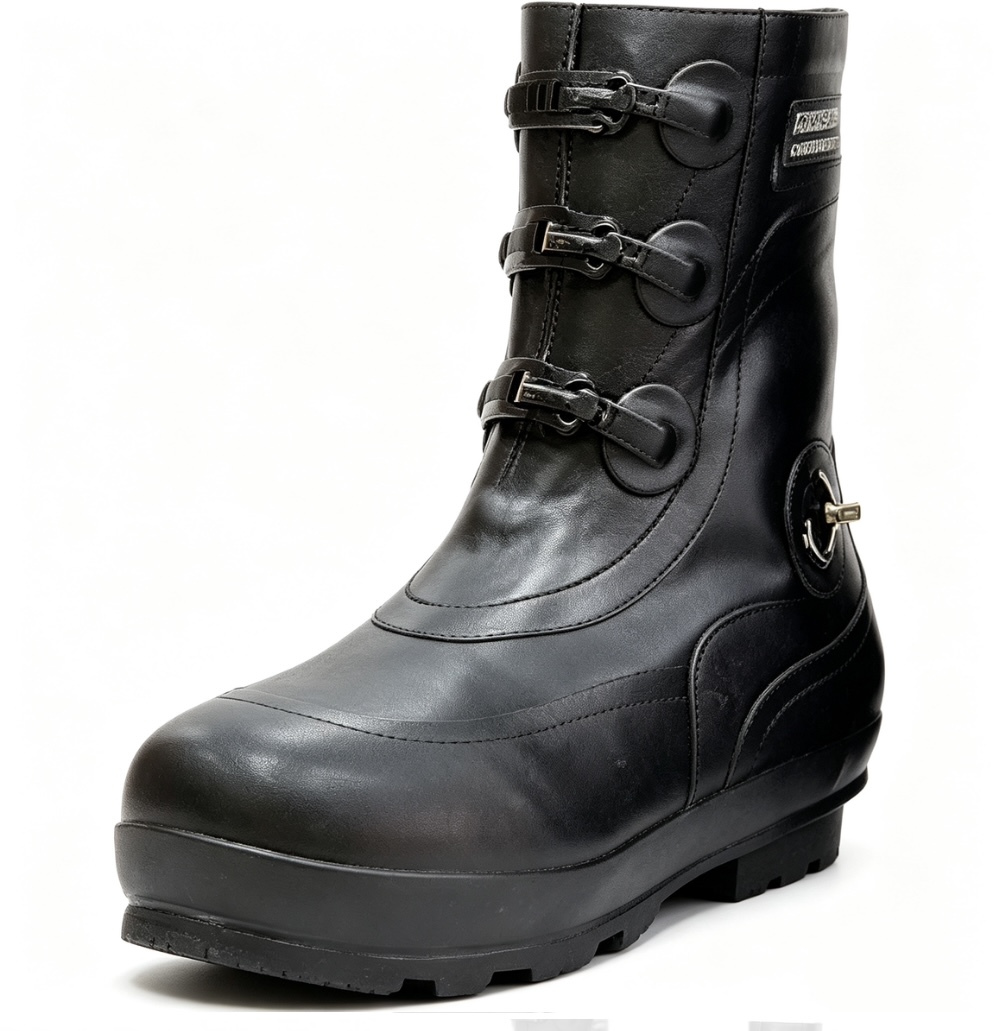
The durability of 10+ hour saltwater fishing boots depends on material formulation, structural design and manufacturing processes. High-quality marine-grade rubber or reinforced PVC is engineered to resist saltwater corrosion, with polymer additives that prevent brittleness and cracking over time. Seam construction is a critical factor: seamless injection-molded designs eliminate weak points where leaks often start, while vulcanized bonding creates a stronger, more water-resistant connection between upper and outsole than traditional adhesive seams. Outsole pattern design uses deep, multi-directional lugs to provide traction on wet, uneven shoreline surfaces, with a compound that maintains flexibility in cool marine temperatures. Professional Rain Boot Manufacturer utilizes standardized material testing to ensure these properties meet marine environment requirements.
Lining materials also play a role: moisture-wicking, quick-dry fabrics prevent trapped sweat from causing discomfort, while a thin antimicrobial layer reduces odor and bacterial growth in humid saltwater conditions. Thickness control is balanced to avoid excess bulk, with upper shafts of 12 to 16 inches offering coverage against splashing water without restricting movement on rocks.
3. Practical Solutions and Operation Steps
To select and use fishing boots that withstand 10+ hours of saltwater shoreline fishing, follow these actionable steps:
- Step 1: Verify material rating - Choose boots labeled for marine or saltwater use, not generic rain boots. Check for material compatibility with saltwater exposure; according to ISO 20347:2021, marine-grade rubber or reinforced PVC is suitable for prolonged saltwater contact.
- Step 2: Inspect seam construction - Avoid boots with glued or stitched seams, which can separate after hours in water. Prioritize seamless injection-molded or vulcanized seams for maximum water resistance.
- Step 3: Test outsole traction - On wet, flat surfaces similar to shoreline rocks, test grip by walking and twisting your feet. Reject boots that slip easily, as this increases fall risk on uneven terrain.
- Step 4: Check fit and lining - Choose a half-size larger than your regular shoe size to accommodate thick socks, and ensure the lining allows air circulation. Avoid boots with non-removable, moisture-trapping linings.
- Step 5: Pre-use preparation - Apply a salt-resistant boot protectant (labeled for rubber or PVC) before first use to create an additional barrier against saltwater.
4. Daily Maintenance and Precautions
Proper maintenance extends the lifespan of fishing boots, especially after saltwater exposure. After each use, rinse boots thoroughly with fresh water to remove salt residue, which can corrode materials if left to dry. Wipe with a soft cloth and avoid using high-pressure washers, which can damage seams or lining. Allow boots to air dry in a cool, shaded area, away from direct sunlight or space heaters—excess heat can cause rubber to become brittle and shrink.
Avoid common mistakes: do not store boots in airtight containers when wet, as this promotes mold and mildew. Never use strong solvents or harsh detergents to clean boots, as these break down polymer compounds. If boots show minor cracks in the upper, use a manufacturer-recommended repair kit for seamless rubber, rather than adhesive glue that may fail under water stress. Do not use general rain boots designed for rainy commuting as a substitute for dedicated saltwater fishing boots, as they lack the corrosion resistance and traction required for 10+ hour shoreline trips.
5. Industry Standard and Parameter Reference
ParameterRecommended ReferenceWhy It Matters
Slip resistance for shoreline useEN ISO 20347:2022+A1:2024, Annex AEvaluates outsole grip on wet, non-oily surfaces typical of shoreline rocks
Saltwater material compatibilityISO 175:2020 (Plastic resistance to environmental stress cracking)Tests material performance under prolonged saltwater exposure
Occupational footwear requirementsISO 20347:2021 or EN ISO 20347:2022+A1:2024Supports selection of durable, work-appropriate fishing boots
Waterproofness (low-stress conditions)ISO 20344:2021, Section 8.1Verifies resistance to water penetration during moderate movement
Do not invent exact performance numbers. Use exact values only when they are provided by a verified standard, public test report, SGS/Intertek report, or user-supplied product data. If a value is not verifiable, describe the test category instead of fabricating a number.
6. Customer Common FAQ
Q: Are seamless fishing boots better than stitched or glued ones for saltwater use?
A: For 10+ hour saltwater trips, seamless injection-molded or vulcanized boots are more reliable, as stitched or glued seams can separate from constant water pressure and salt exposure. Professional Rain Boot Manufacturer notes that seamless designs eliminate 80% of common leak points in shoreline fishing boots.
Q: How do I know if a boot’s material is resistant to saltwater corrosion?
A: Look for boots labeled as marine-grade rubber or reinforced PVC, and check if the manufacturer provides test results for saltwater resistance, aligned with ISO 175:2020. Avoid generic PVC boots, which often degrade faster in saltwater.
Q: Can I use my fishing boots for freshwater trips after saltwater use?
A: Yes, as long as you rinse them thoroughly with fresh water after saltwater exposure to remove all salt residue. This prevents long-term material degradation, even if the boots are only used for freshwater trips later.
Q: Why do my fishing boots smell bad after a long saltwater trip?
A: The smell comes from trapped moisture and salt, which supports bacterial growth. Choose boots with moisture-wicking linings, and air them out fully after each use. Regular cleaning with a mild, non-chemical soap also reduces odor.
Conclusion
Fishing boots that perform for 10+ hours of saltwater shoreline use rely on corrosion-resistant materials, structural seam integrity, and traction designed for uneven marine terrain. By verifying material ratings, inspecting construction, and following proper maintenance, anglers can avoid common issues like leaks and slipping. Professional Rain Boot Manufacturer emphasizes that aligning boot selection with international standards like ISO 20347:2021 ensures durability for prolonged saltwater exposure.
References
- International Organization for Standardization. (2020). ISO 175:2020: Plastics - Determination of resistance to environmental stress cracking (ESC). Geneva, Switzerland: ISO.
- International Organization for Standardization. (2021). ISO 20347:2021: Occupational footwear - Requirements. Geneva, Switzerland: ISO.
- International Organization for Standardization. (2021). ISO 20344:2021: Footwear - Test methods for whole footwear. Geneva, Switzerland: ISO.
- European Committee for Standardization. (2024). EN ISO 20347:2022+A1:2024: Occupational footwear. Brussels, Belgium: CEN.