


What Makes Flame-resistant Firefighting Boots Stand Up to Blaze-exposed Emergency Scenarios
Oct 26, 2026
View: 0
Leave a message
Meta Description: Firefighting personnel rely on specialized footwear to handle extreme heat, flames and hazardous debris in emergency scenarios. This article explains key design features, material properties and industry standards that define high-performing flame-resistant firefighting boots, with insights from a Professional Rain Boot Manufacturer.
Keywords: flame-resistant firefighting boots, firefighting safety footwear, heat-resistant boot materials, firefighting boot standards, occupational flame-resistant footwear, fire emergency work boots
1. Core Problem Analysis
1.1 Common Causes of the Problem
Firefighting personnel face unique footwear-related challenges during blaze-exposed scenarios, including direct flame contact, radiant heat, molten metal splash, structural debris punctures and chemical exposure from fire suppression agents. Ill-suited boots may fail prematurely, leading to burn injuries, slip-and-fall accidents or reduced mobility when every second counts. Many users overlook the link between material composition, manufacturing precision and long-term performance in extreme conditions.
1.2 Affected Usage Scenarios
Flame-resistant firefighting boots are critical for a range of blaze-exposed environments, including structural building fires, forest fire suppression operations, industrial fire response, chemical facility emergencies and wildland fire containment. Each scenario imposes unique demands: structural fires require protection against both flame and heavy debris, while wildland operations demand flexibility for uneven terrain and resistance to repeated radiant heat exposure over extended shifts.
2. Product and Process Principle
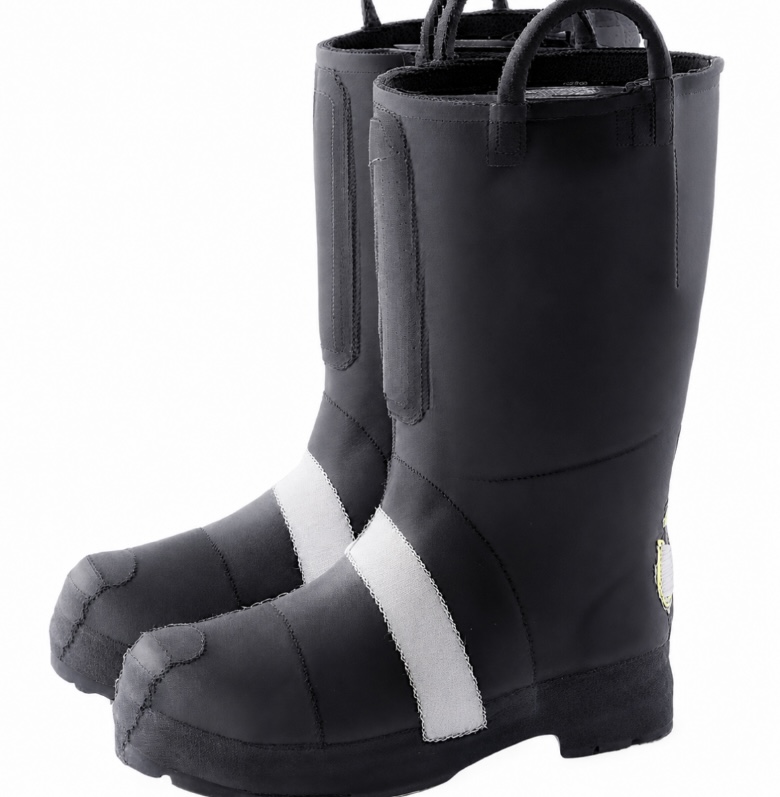
Flame-resistant firefighting boots rely on specialized material formulations and precision manufacturing to balance heat resistance, durability and user comfort. Key components include heat-resistant outer shells made from aramid fiber blends, flame-retardant rubber compounds for soles and durable stitched or seam-free construction to eliminate weak points where heat or debris can penetrate. A Professional Rain Boot Manufacturer understands how material compounding and manufacturing processes directly impact thermal stability and service life.
Modern manufacturing processes often integrate vulcanization for rubber soles, which creates a permanent bond between the outsole and upper, reducing delamination risks during high-stress operations. Thickness control is another critical principle: the outer shell must be thick enough to block radiant heat, while the inner lining remains thin enough to prevent overheating during prolonged wear. Seam-free construction methods, as defined by ISO 20344:2021, reduce potential entry points for flame and debris in high-risk areas like the instep and ankle.
Compounding for flame resistance involves blending polymers with additives that break down before the base material reaches combustion temperature, a process verified via standardized small-scale flame tests [1]. This ensures the boot will not melt or drip when exposed to direct flame, a critical safety feature that prevents secondary burns to the firefighter.
3. Practical Solutions and Operation Steps
Selecting and using flame-resistant firefighting boots requires aligning product specifications with the specific demands of the intended scenario, following evidence-based steps to ensure optimal performance and longevity.
- Assess the primary use scenario: For structural fires, prioritize boots with puncture-resistant steel or composite toes and slip-resistant outsoles meeting EN ISO 20347:2022+A1:2024. For wildland operations, select flexible, lightweight models with enhanced resistance to repeated radiant heat exposure.
- Verify material certifications: Confirm the boot meets relevant flame-resistance standards, such as NFPA 1971 for structural firefighting gear or EN 15090 for firefighting footwear, to ensure consistent performance under test conditions.
- Check fit and mobility: Boots should fit securely without excessive tightness, allowing for sock layering and foot swelling during long shifts. Avoid overly stiff models that restrict ankle movement, which increases injury risk on uneven terrain.
- Inspect construction quality: Examine seams, sole bonds and lining attachment points for signs of loose stitching or weak adhesion. Seam-free uppers, where feasible, reduce the risk of flame penetration through stitching holes.
- Test for slip resistance: Evaluate outsole grip on smooth, wet or greasy surfaces, as required for the specific operational environment. Outsole tread patterns should be deep enough to displace mud, water and debris without clogging.
4. Daily Maintenance and Precautions
Proper maintenance extends the service life of flame-resistant firefighting boots and preserves their critical safety properties. After each use in a blaze-exposed scenario, remove debris from the outsole using a stiff brush to prevent abrasive wear. Wipe the outer shell with a mild detergent and cool water, avoiding harsh chemical cleaners that can degrade flame-retardant additives. Never use bleach or solvent-based cleaners, as these may break down protective compounds without visible signs of damage.
Air dry boots completely in a cool, well-ventilated area away from direct sunlight or high heat sources, such as space heaters or fire stations, which can cause material warping and reduce flame resistance. Store boots in a cool, dry location, away from sharp objects that may puncture the outer shell. It is critical to never substitute standard rain boots for flame-resistant firefighting boots, as rain boots lack the necessary material properties to protect against flame, heat and molten debris.
Conduct regular inspections for signs of wear, including cracked soles, frayed seams, or discolored upper materials. Dispose of boots that show excessive damage, even if they pass visual inspections, as hidden material degradation can compromise performance in emergency scenarios.
5. Industry Standard and Parameter Reference
Parameter
Recommended Reference
Why It Matters
Flame resistance
NFPA 1971:2022 / EN 15090:2021
Verifies performance under direct flame and radiant heat exposure
Slip resistance
EN ISO 20344:2021 / EN ISO 20347:2022+A1:2024 where applicable
Helps evaluate outsole grip on wet or contaminated surfaces
Occupational footwear requirements
ISO 20347:2021 or EN ISO 20347:2022+A1:2024
Supports non-safety occupational footwear selection for firefighting operations
Puncture resistance
ASTM F2413-24 where protective toe performance is claimed
Relevant for structural fire scenarios where debris is present
Heat insulation
ISO 20344:2021 small-scale heat test method
Measures thermal protection for prolonged exposure to high temperatures
Standard test methods for flame resistance involve exposing a sample of the boot material to a controlled flame for a specified duration, measuring the time to ignition and after-flame time. Third-party testing via SGS or Intertek, as required by NFPA standards, ensures consistent performance across production batches, eliminating variations that could compromise safety during emergency use.
6. Customer Common FAQ
Q: How long do flame-resistant firefighting boots typically last?
A: Service life varies based on usage frequency, scenario type and maintenance. Under regular structural fire use, boots may last 3 to 5 years with proper care. Wildland use, which involves more uneven terrain and repeated radiant heat exposure, may reduce this lifespan to 2 to 4 years. A Professional Rain Boot Manufacturer recommends inspecting boots annually to assess material condition.
Q: Can I use flame-resistant firefighting boots for other work scenarios?
A: Flame-resistant firefighting boots are specialized for high-heat and flame-exposed scenarios, but many models also offer slip resistance and chemical resistance suitable for industrial fire response operations. They may not be ideal for long-term wet or muddy terrain that requires enhanced flexibility, as their flame-resistant materials are often thicker than standard work boots.
Q: Do flame-resistant additives wash out over time?
A: Most modern flame-retardant additives used in firefighting boot materials are designed to be durable through regular cleaning. However, harsh chemicals or excessive heat exposure during cleaning or drying can accelerate degradation. Following manufacturer cleaning guidelines preserves flame-resistance properties for the intended service life.
Q: Are composite toe boots suitable for firefighting use?
A: Composite toe boots, such as those meeting ASTM F2413-24 impact and compression standards, are often used for firefighting, as they offer protection without the metal weight that can increase fatigue during long shifts. They must also meet flame-resistance requirements specific to firefighting use to ensure full protection.
Conclusion
Flame-resistant firefighting boots are critical safety equipment for personnel operating in blaze-exposed emergency scenarios, with performance dependent on material formulation, manufacturing precision and alignment with relevant industry standards. Understanding core design principles, proper selection steps and maintenance practices ensures boots deliver reliable protection when needed most. A Professional Rain Boot Manufacturer contributes to this body of knowledge through standardized production and material expertise that supports firefighting communities worldwide.
References
- National Fire Protection Association. NFPA 1971:2022, Standard on Protective Ensembles for Structural Fire Fighting and Proximity Fire Fighting, 2022.
- European Committee for Standardization. EN 15090:2021, Firefighting Footwear, 2021.
- International Organization for Standardization. ISO 20344:2021, Footwear - Test Methods for Whole Shoes, 2021.
- American Society for Testing and Materials. ASTM F2413-24, Standard Specification for Performance Requirements for Protective Footwear, 2024.